
 April 4, 2026 by Editor |
In the dynamic landscape of global commerce, industrial Multinational Corporations (MNCs) operating within Singapore’s Jurong industrial estate face unique challenges in showcasing their complex facilities and operational prowess to remote stakeholders. Traditional physical site visits, while invaluable, are often constrained by geographical distance, logistical complexities, and increasingly, by evolving health and safety protocols. This necessitates a robust, enterprise-grade solution that transcends conventional video conferencing: professional virtual site visits powered by advanced B2B live streaming technology. Live Streaming Studio specializes in architecting and deploying these sophisticated systems, transforming how industrial MNCs engage with investors, partners, and regulatory bodies globally, ensuring an immersive, technically precise, and highly reliable virtual experience.
The imperative for professional streaming in this context stems from the need for absolute fidelity and operational clarity. Unlike consumer-grade streaming, B2B virtual site visits demand meticulous attention to detail in visual and auditory capture, seamless integration with existing enterprise infrastructure, and uncompromised security. Our focus is on delivering broadcast-quality production, replicating the intricate details of a manufacturing floor, a research laboratory, or a high-tech logistics hub with the precision expected by discerning professional audiences. This involves a deep understanding of multi-camera acquisition, professional audio engineering, resilient network topologies, and advanced streaming protocols designed for low-latency, high-bitrate content delivery over diverse network environments.
Architecting the Enterprise Virtual Site Visit Infrastructure
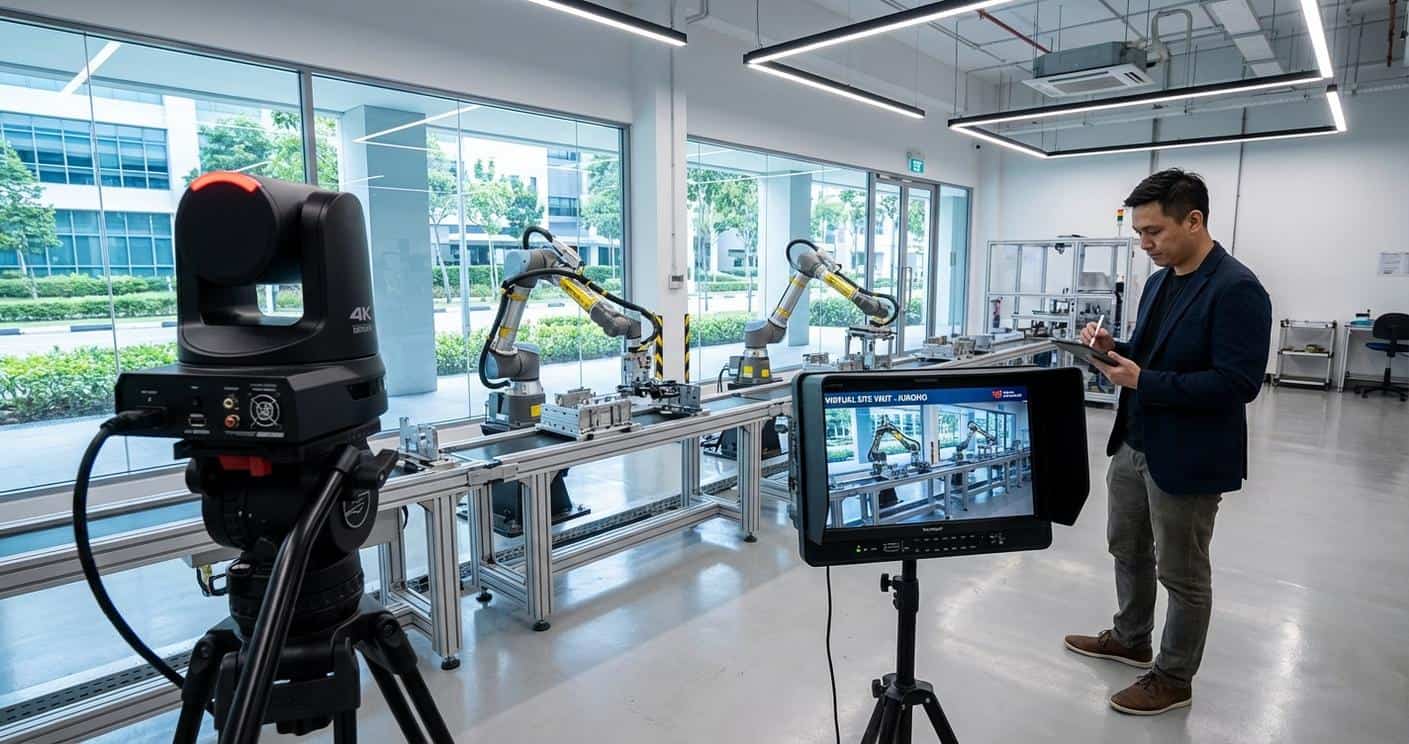
The foundation of a successful virtual site visit within an industrial MNC environment is a meticulously planned and robust technical infrastructure. This extends far beyond basic webcams and software codecs. We typically deploy a multi-camera system featuring professional 4K/UHD or 1080p SDI (Serial Digital Interface) cameras, chosen for their superior image quality, color rendition, and reliability over long cable runs. Camera selection often includes Panasonic PTZ (Pan-Tilt-Zoom) cameras for their remote operability in hazardous or inaccessible areas, complemented by Blackmagic Design URSA Broadcast G2 or Sony PXW-FX9 units for critical close-ups and detailed demonstrations.
Audio acquisition is equally critical. Industrial environments are inherently noisy; therefore, robust sound engineering is paramount. This involves deploying a combination of directional shotgun microphones (e.g., Sennheiser MKH 416) to capture specific machinery sounds or presenter dialogue, supplemented by wireless lavalier microphones for personnel moving within the facility. Advanced digital audio mixers, such as Yamaha QL series or Behringer X32, are utilized to manage multiple audio sources, apply noise reduction, equalization, and compression, ensuring crystal-clear commentary and ambient soundscapes without overwhelming industrial noise. All audio is typically routed via Dante or AES67 for network-based distribution, ensuring low-latency, synchronized audio delivery across the entire production chain.
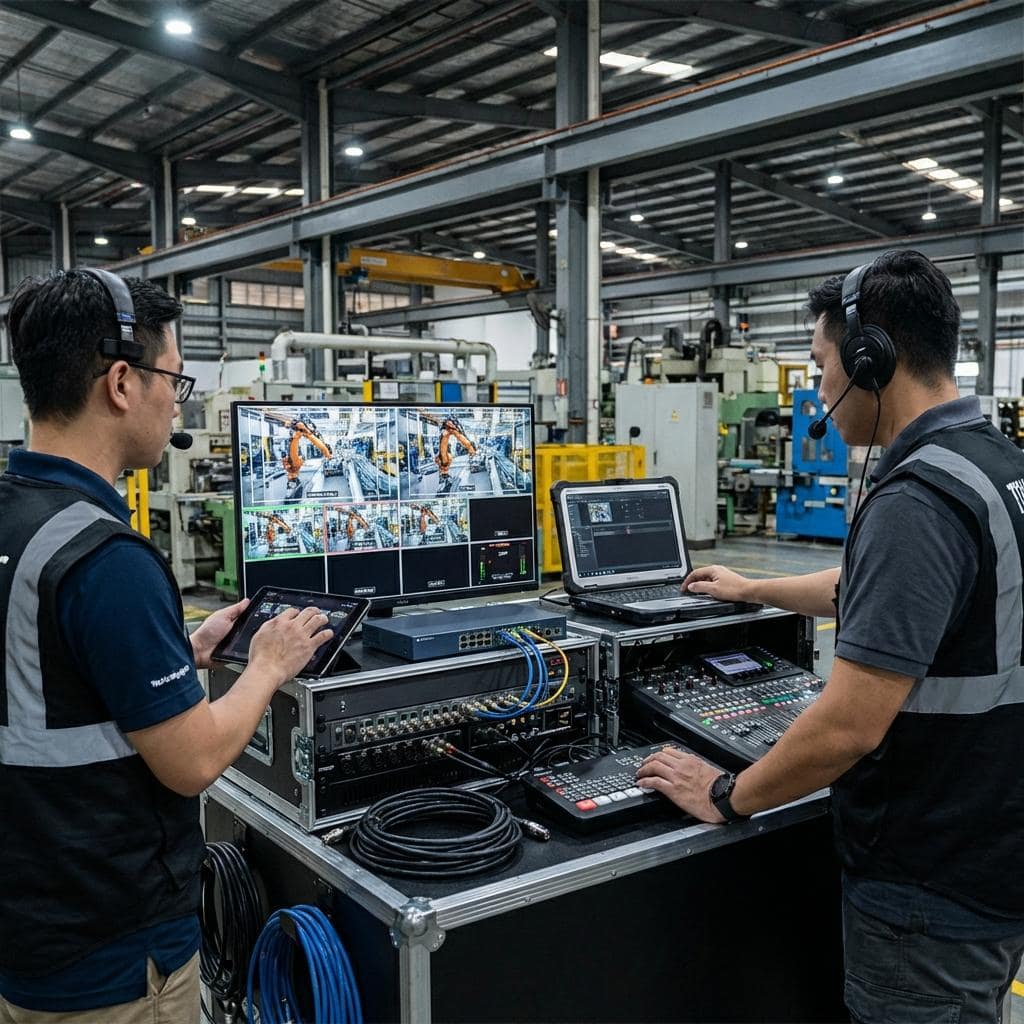
The video and audio signals converge at a central production hub. For complex multi-camera productions, an ATEM Constellation 8K or Ross Carbonite production switcher is employed. These professional switchers handle multiple SDI inputs, facilitate seamless transitions, integrate graphic overlays, and manage chroma keying for virtual backgrounds or augmented reality elements. Signal routing is managed by enterprise-grade SDI routers (e.g., Blackmagic Videohub or AJA KUMO) which provide flexibility in directing video feeds to various destinations: program output, multiview monitoring, ISO recording, and encoding systems. The entire system is designed with redundancy, incorporating dual power supplies and backup signal paths to prevent single points of failure, a critical consideration in high-stakes B2B communications.
Advanced Streaming Protocols and Network Resiliency for Global Reach
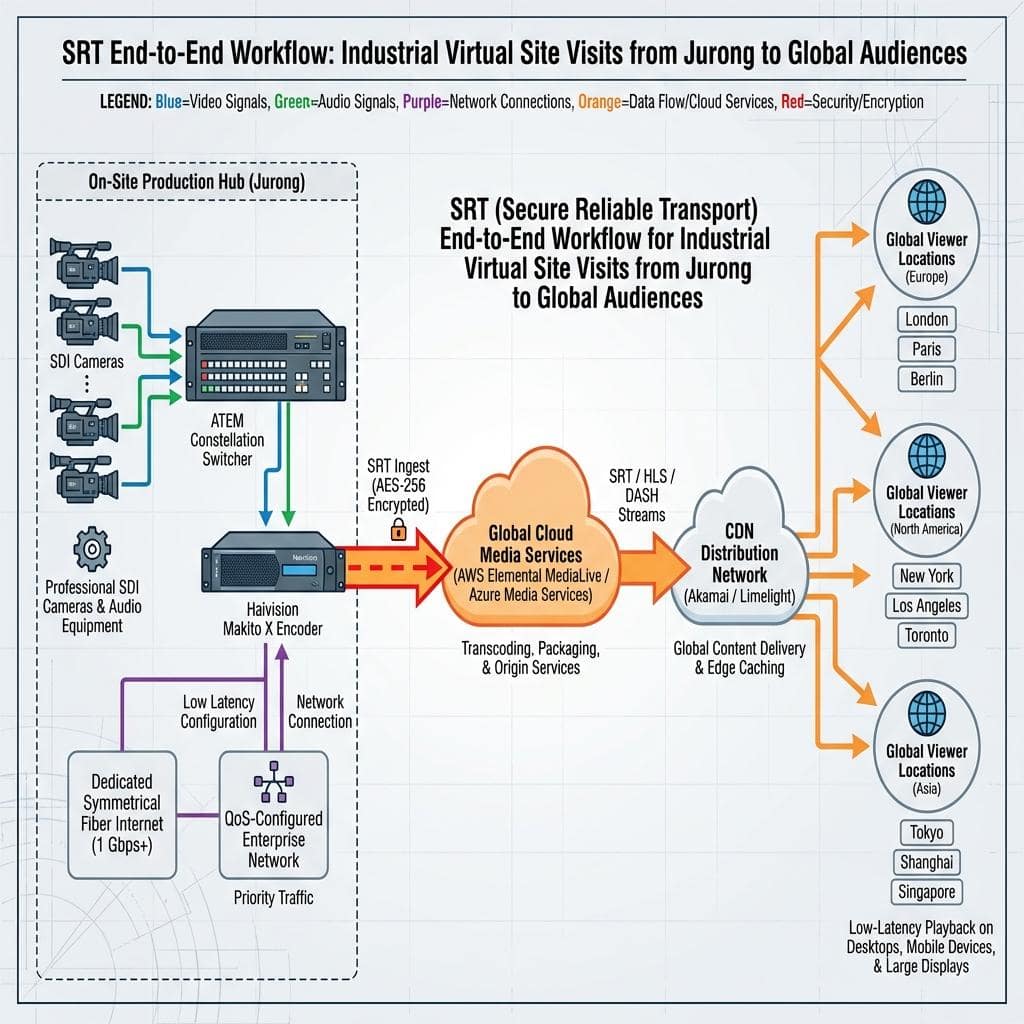
For industrial MNCs in Jurong targeting a global audience, the choice of streaming protocol and the underlying network infrastructure are decisive factors in ensuring Quality of Service (QoS) and low-latency delivery. While RTMP (Real-Time Messaging Protocol) has been a traditional workhorse, its TCP-based nature can lead to significant latency and performance degradation over unstable wide area networks (WANs) or long-distance internet connections. For mission-critical virtual site visits, we advocate for and implement the Secure Reliable Transport (SRT) protocol.
SRT, an open-source video transport protocol, is designed to overcome the challenges of unpredictable networks. Utilizing UDP (User Datagram Protocol) for its core transport, SRT incorporates a sophisticated retransmission mechanism (ARQ – Automatic Repeat Request) and robust error recovery, allowing for significantly lower latency and higher reliability than RTMP over the public internet. This makes it ideal for transmitting high-bitrate 1080p60 or 4K30 streams from Jurong to regional headquarters in Europe or North America, typically with glass-to-glass latency reduced to under 500 milliseconds, and often within 200 milliseconds, depending on network conditions. SRT streams are also AES-256 encrypted, ensuring content confidentiality, which is paramount for proprietary industrial processes. Another robust option for internal facility signal distribution or intra-network contribution is NDI (Network Device Interface), providing IP-based video, audio, and metadata transport with extremely low latency over local area networks (LANs).
Network infrastructure at the Jurong facility requires careful design. Dedicated enterprise-grade internet circuits with symmetrical bandwidth are essential, often exceeding 1 Gbps for combined production needs and multiple concurrent streams. QoS configurations are implemented on network switches and routers (Cisco, Juniper, or Aruba enterprise solutions) to prioritize streaming traffic, minimizing packet loss and jitter. For redundancy, a multi-homed internet connection with automatic failover is standard practice. Furthermore, Content Delivery Networks (CDNs) like Akamai, Limelight, or Cloudflare are leveraged for final-mile global distribution, caching content closer to end-users and dynamically routing traffic to optimize delivery performance and reduce latency for diverse international audiences. This ensures that a stakeholder in London experiences the same high-quality, low-latency stream as one in Tokyo.
Encoding Standards, Cloud Integration, and Enterprise Platform Interoperability
The encoding process transforms raw video and audio into a compressed, streamable format. For professional B2B applications, H.264 (AVC) remains widely adopted due to its broad compatibility, but H.265 (HEVC) is increasingly utilized for 4K/UHD content due to its superior compression efficiency, delivering the same visual quality at roughly half the bitrate of H.264. Enterprise-grade hardware encoders (e.g., Haivision Makito X Series, Teradek Cube/Bond) are employed for their reliability, dedicated processing power, and support for multiple output streams at varying bitrates and resolutions (Adaptive Bitrate Streaming – ABR). This allows viewers to automatically receive the optimal stream quality based on their network conditions, from 5 Mbps for 1080p to 15-20 Mbps for high-quality 4K.
The choice between cloud-based and on-premise streaming solutions often depends on the MNC’s IT policy and the specific requirements of the virtual site visit. Cloud platforms like AWS Elemental MediaLive, Azure Media Services, or Google Cloud Media CDN offer immense scalability, global reach, and pay-as-you-go flexibility, ideal for sporadic large-scale events. For sensitive or highly controlled environments, a hybrid approach or entirely on-premise transcoding and streaming infrastructure might be preferred, leveraging hardware encoders and media servers within the corporate datacenter, ensuring maximum data control and minimal reliance on external internet pathways for internal distribution. However, the global reach often necessitates integration with cloud CDNs for external audiences.
Seamless integration with existing enterprise communication platforms is critical for widespread adoption and ease of access. Virtual site visits can be integrated as a broadcast feed into Microsoft Teams Live Events, Zoom Webinars, or Cisco Webex Events, transforming these platforms from basic video conferencing tools into robust distribution channels for professionally produced content. This requires understanding API integrations, RTMP/SRT ingest capabilities of these platforms, and configuring security settings to ensure only authorized personnel can access the live stream, often leveraging Single Sign-On (SSO) authentication. Live Q&A sessions can be moderated through these platforms, with selected questions relayed to the on-site presenters via an IFB (Interruptible Foldback) system, ensuring real-time interaction and a truly hybrid experience.
Scalability, Redundancy, and Future-Proofing for Industrial MNCs
The ability to scale a virtual site visit solution is paramount for industrial MNCs with diverse and evolving communication needs. A well-designed system must accommodate anything from a small, focused technical demonstration for a few key engineers to a global investor day reaching thousands of concurrent viewers. This scalability is achieved through judicious use of ABR encoding, robust CDN partnerships, and modular production equipment that can be expanded or reconfigured rapidly. Our solutions are built to conform to SMPTE (Society of Motion Picture and Television Engineers) and ISO (International Organization for Standardization) standards, ensuring interoperability and a future-proof investment.
Redundancy is not merely a feature; it is a fundamental requirement for enterprise streaming. This encompasses everything from redundant power supplies for all critical equipment to dual encoders, primary and secondary internet circuits, and failover streaming servers. For ultra-high reliability, 1+1 redundancy is often implemented at every critical juncture, where a live backup system runs in parallel, ready to take over instantly in the event of a primary system failure, ensuring uninterrupted service. This level of planning mitigates risks associated with hardware malfunctions, network outages, or power fluctuations, providing peace of mind for high-value corporate communications.
Looking ahead, the evolution of streaming technology continues at a rapid pace. Our commitment is to continually integrate the latest advancements, such as further optimization of AV1 encoding for even greater efficiency, exploration of 5G private networks for enhanced mobility and lower latency within large industrial campuses, and advanced AI-driven analytics for viewer engagement. For industrial MNCs in Jurong, investing in a professional B2B streaming solution for virtual site visits is not merely a technological upgrade; it is a strategic enhancement of their global communication capabilities, enabling greater reach, deeper engagement, and a compelling showcase of their industrial leadership. Live Streaming Studio stands as your technical partner, translating complex requirements into seamless, high-impact virtual experiences.