
Introduction to 3D Virtual Studios
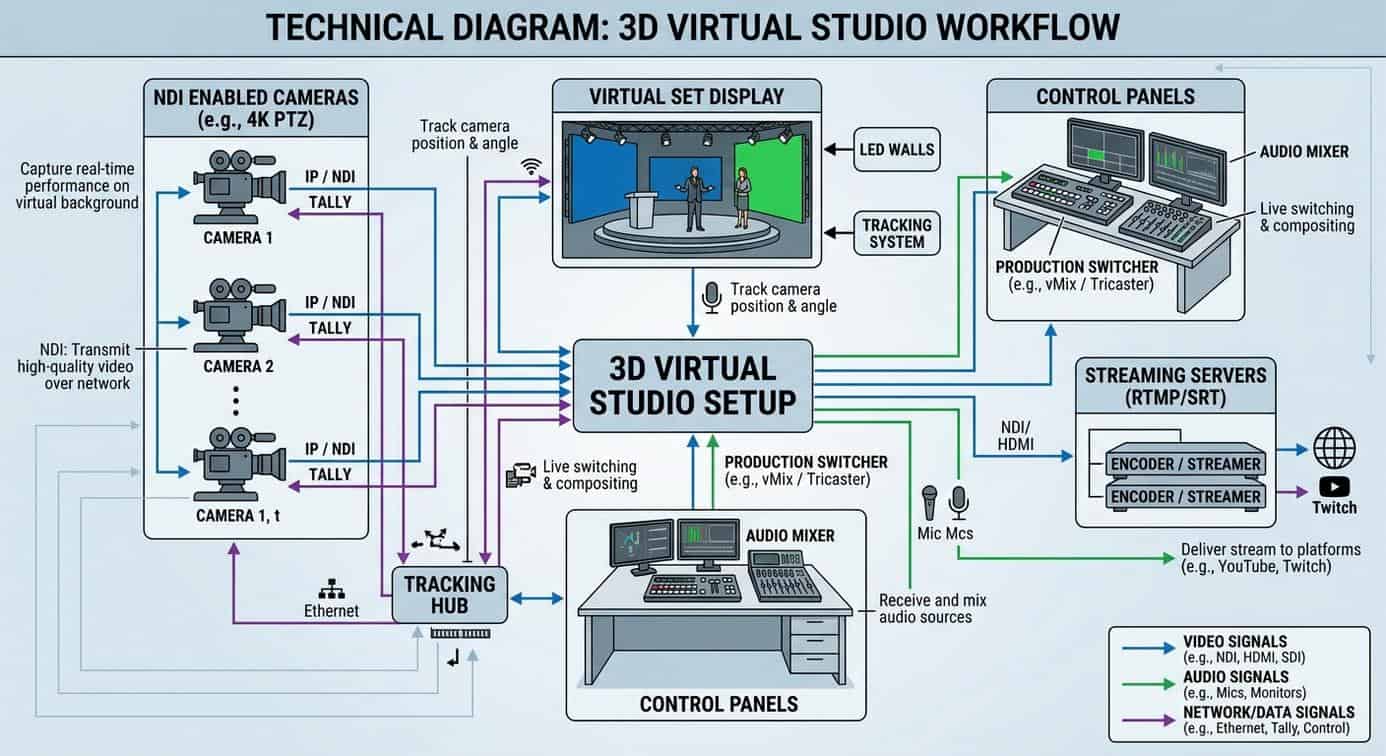
In the rapidly evolving landscape of B2B event streaming, 3D virtual studios are emerging as a groundbreaking solution that bridges the gap between traditional live events and modern hybrid productions. These state-of-the-art environments allow enterprises to create immersive, interactive experiences without the need for a physical venue. Leveraging advanced technologies, such as RTMP (Real-Time Messaging Protocol), SRT (Secure Reliable Transport), and NDI (Network Device Interface), these virtual studios provide an unprecedented level of flexibility and efficiency in event production.
The Technology Behind 3D Virtual Studios
Advanced Streaming Protocols
3D virtual studios utilize a suite of streaming protocols to ensure high-quality, low-latency video delivery. The use of RTMP continues to be a staple for its robust functionality in live streaming environments, though SRT provides additional security and reliability, ideal for professional-grade broadcasting.
Multi-Camera Production and Switching
Utilizing NDI, producers can integrate multiple camera feeds seamlessly within the virtual studio environment. This integration allows for real-time switching and ISO recording capabilities, essential for producing dynamic, multi-perspective streams without relying on complex physical setups. NDI|HX offers a compressed, lower-bandwidth variant, optimizing the data flow within constrained network environments.
Integrating Virtual and Physical Audiences
Hybrid Event Streaming Infrastructure
Hybrid events require an infrastructure capable of synchronizing virtual elements with physical audience participation. This is achieved through the synchronization of digital assets with real-time data overlays, facilitated by protocols such as SMPTE (Society of Motion Picture and Television Engineers) timecodes, ensuring accurate timing and seamless integration across platforms like Microsoft Teams, Zoom, and Webex.
Audio and Video Signal Management
Signal flow within 3D virtual studios is managed through advanced routing architectures, where SDI and HDMI 2.1 interfaces play crucial roles. Managing these signals ensures pristine quality across both audio and video outputs, with meticulous bitrate management maintaining optimal resolution and audio fidelity.
Enterprise-Grade Streaming Solutions
Cloud-Based vs On-Premise Systems
Enterprises can choose between cloud-based and on-premise solutions, each offering distinct advantages. Cloud-based systems provide scalability and flexibility, ideal for companies that prioritize dynamic interaction and remote engagement. On the contrary, on-premise systems offer enhanced control, suitable for organizations that require stringent data security and lower latencies.
Quality of Service and Reliability
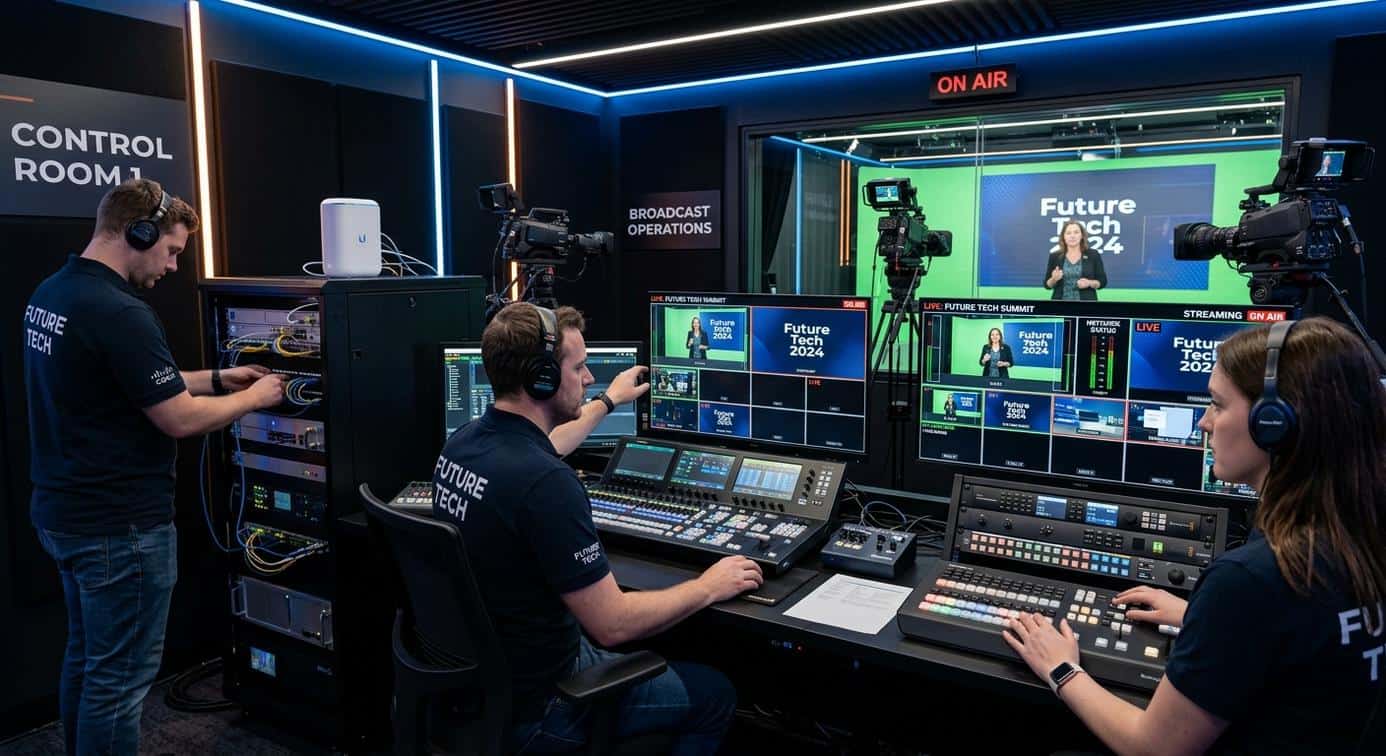
Ensuring the highest Quality of Service (QoS) is imperative for seamless streaming experiences. Redundancy and failover strategies are integrated within these systems, using ISO standards to maintain uninterrupted service amidst technical discrepancies.
Scalability for Large Corporate Events
Network Infrastructure Requirements
Supporting scalable streaming solutions demands robust network infrastructure. Employing high-bandwidth Ethernet connections, alongside wireless solutions where feasible, ensures reliable connectivity. Setup often involves intricate network topologies, with prioritization of audio and video packets to reduce latency and packet loss. VPNs and dedicated streaming routers enhance security and performance.
Actionable Recommendations for Implementation
- Choose the Right Streaming Protocol: Evaluate the specific needs, such as latency tolerance and security, to select between RTMP or SRT for your streaming architecture.
- Optimize Network Infrastructure: Ensure bandwidth capabilities meet or exceed streaming requirements to maintain high-quality output.
- Leverage Cloud Services: Use cloud services for their scalability benefits, particularly if engaging remote participants is a key aspect of your event.
- Implement Redundancy Strategies: Incorporate failover solutions to mitigate service interruptions, focusing on ISO-compliant architectures for maximum reliability.
Incorporating 3D virtual studios into your next event can revolutionize the way you engage with audiences, providing an immersive experience while minimizing the logistical challenges of physical venues. These advanced technological solutions offer a pathway to achieving impactful, professional communications at scale, tailored to the needs of modern enterprises.

Michael Koh is a production specialist and entrepreneur who founded Spring Forest Studio in 2017 to provide event and virtual production solutions in Singapore. He specialises in hybrid live streaming, XR (Extended Reality) virtual production, and studio systems integration, transitioning the business from traditional videography to advanced corporate broadcasting. Operating out of a dedicated facility at NordCom2 in Singapore, he leads a technical crew to deliver multi-camera webcasts, digital sets, and technical consultations for large-scale corporate events.