
Live Video as the Core Infrastructure for Global Alumni Engagement
International school alumni networks operate across time zones, geographies, and connectivity conditions, which makes live video a uniquely effective engagement layer. For enterprise-grade institutions, alumni programming is no longer limited to newsletters, static portals, or prerecorded updates. Live video enables synchronous participation for fundraising briefings, leadership updates, campus announcements, regional chapter meetups, career panels, and reunion broadcasts. From a production engineering perspective, the challenge is not simply distributing a stream, but designing a reliable hybrid communications environment that performs consistently for in-person attendees, remote alumni, and institutional stakeholders.
When schools serve multi-country alumni populations, the technical architecture must account for latency, network resilience, content delivery, access control, and production quality across varying client devices and enterprise networks. A robust deployment often combines on-site acquisition, baseband and IP signal routing, synchronized audio capture, encoding redundancy, cloud distribution, and platform integration with enterprise collaboration tools such as Microsoft Teams, Zoom, or Webex. The objective is to deliver a branded, low-friction live experience that strengthens alumni affinity while meeting professional standards for reliability, security, and visual consistency.
In this context, live video serves both a communications function and an institutional infrastructure function. It supports fundraising strategy, alumni relations, admissions advocacy, and stakeholder engagement. For schools with global networks, the production methodology must scale from a single-camera update to a multi-location hybrid event with program feeds, backup paths, and monitoring protocols aligned to broadcast best practices.
Designing the Production Workflow for International Alumni Programming
Event Formats and Signal Architecture
International alumni engagement events typically fall into several technical formats. A leadership town hall may use a single presenter with graphics overlays and remote Q&A. A reunion event may require multi-camera coverage, stage microphones, audience reaction capture, and live switching. A regional chapter panel may involve remote guests joining through contribution platforms, with a program feed returned to a venue or streamed to a private audience portal. Each format drives different requirements for acquisition, routing, encoding, and monitoring.
At the production layer, the signal chain begins with source acquisition. Professional deployments should prioritize SDI, or Serial Digital Interface, for camera and playback sources where cable runs and interference control matter. HDMI 2.1 can support higher bandwidth from select presentation sources, but it is less resilient over long runs unless properly extended. For IP-native environments, NDI, or Network Device Interface, can streamline camera contribution and graphics ingest on managed networks, while NDI|HX offers reduced bandwidth at the cost of higher compression latency. A production team must choose based on network design, latency targets, and operational complexity.
The program feed is typically assembled on a hardware switcher or software-based production system, then passed to an encoder for live distribution. For internal campus events, a 1080p59.94 workflow may be sufficient and bandwidth efficient. For flagship alumni ceremonies or executive sessions, 2160p30, commonly referred to as 4K/UHD, can improve archival value and perceived production quality, provided the entire chain, including capture, switching, storage, and delivery, supports the format without introducing bottlenecks.
Multi-Camera Switching and Editorial Control
Multi-camera production is the standard for high-value alumni events because it preserves pacing, creates visual authority, and allows clean transitions between speakers, audience reactions, and presentation materials. A compact three-camera configuration can include a wide master, a tight presenter shot, and a roaming or audience-facing camera. Larger events may add a dedicated slide capture input, a camera for networking moments, and a return feed for confidence monitoring.
Switching decisions should be driven by content rhythm rather than operator convenience. For example, a donor briefing benefits from clean lower-thirds, speaker-safe cut points, and predictable transitions to slide decks. A networking panel benefits from more dynamic shot selection and picture-in-picture inserts for remote participants. The director should maintain program continuity while preserving natural speaker cadence. Where remote guests are involved, a production switcher that supports keying, chroma workflows, and downstream graphics integration provides a more polished result than a direct single-source webcast.
ISO recording, or isolated source recording, is a valuable archival and compliance practice. By capturing each camera and major source independently, the institution retains edit flexibility for highlight reels, post-event fundraising assets, and internal review. ISO files also support error correction when a live cut needs refinement for future distribution. For international school networks, this archival layer becomes especially useful because alumni content often has a long shelf life and can be repurposed across regional chapters.
Streaming Protocols, Encoding Standards, and Distribution Strategy
Choosing Between RTMP, SRT, and RTMPS
Distribution protocol selection has a direct impact on latency, stability, and security. RTMP, or Real-Time Messaging Protocol, remains widely supported for ingest into many streaming platforms and is still common in enterprise webcast workflows. RTMPS adds TLS encryption to the RTMP workflow, which is useful when content must traverse untrusted networks with improved transport security. However, RTMP-based workflows are not ideal for contribution over unstable links because they are more sensitive to packet loss and long-haul jitter.
SRT, or Secure Reliable Transport, has become a preferred contribution protocol for professional live events because it combines encryption, packet recovery, and performance over variable networks. For alumni events originating from off-campus venues, regional chapter gatherings, or hotel ballrooms, SRT is highly effective when internet quality is inconsistent. It can maintain stream integrity on links with fluctuating latency, provided the encoder and receiver are properly configured for latency buffers and bandwidth headroom. For enterprise clients, the practical benefit is fewer transport failures and more predictable stream behavior during critical moments.
A well-designed workflow may use SRT for contribution from a remote venue into a central production environment, then RTMPS or a managed cloud output for distribution to authenticated viewers. This hybrid routing approach is common when a school wants a controlled, branded experience while preserving operational resilience. The engineering goal is to match protocol behavior to the risk profile of each segment in the path.
Codec Selection, Bitrate Management, and Latency Control
Codec choice shapes bandwidth requirements and decoder compatibility. H.264 remains the most interoperable codec for enterprise streaming because it is broadly supported across browsers, mobile devices, and collaboration platforms. H.265, also known as HEVC, offers better compression efficiency and is appropriate for internal distribution or managed playback environments, especially when 4K delivery is required. The tradeoff is device compatibility and, in some workflows, higher processing overhead.
Bitrate must be planned against audience geography and platform constraints. A 1080p live stream commonly ranges from 3 Mbps to 6 Mbps depending on motion complexity, frame rate, and encoder efficiency. A 4K feed may require 8 Mbps to 20 Mbps or more, depending on codec settings and quality targets. Enterprise operators should set conservative bitrate ceilings when many viewers are on corporate networks, campus Wi-Fi, or mobile connections across regions. Variable bitrate behavior should be tested against platform ingest limitations and firewall policies before the event.
Latency requirements should be mapped to use case. A recruitment-style alumni update may tolerate 10 to 30 seconds of glass-to-glass delay. A live panel with audience interaction benefits from lower latency, especially when questions are taken via chat or moderated Q&A. Protocol buffering, encoder presets, transcoding layers, and CDN behavior all affect latency. For synchronized hybrid events, production teams should also account for audio delay alignment, display processing on venue screens, and return video paths into remote guest monitoring tools.
Audio, Monitoring, and Signal Integrity in Hybrid Alumni Events
Audio Routing and Speech Intelligibility
In alumni programming, audio quality often determines audience retention more than camera resolution. Speech intelligibility, consistent gain structure, and controlled room acoustics are essential. A typical event microphone set may include wireless handhelds for emcees, lavalier microphones for presenters, and boundary or ambient microphones for audience interaction. These sources should be mixed through a professional audio console with proper gain staging, EQ, compression, and mix-minus routing for remote guests.
For hybrid interaction, talkback systems are essential. They allow the production team to coordinate with speakers, stage managers, and remote guests without bleeding producer communications into the program feed. If remote contributors are present, a mix-minus return ensures they hear the program minus their own delayed voice, reducing echo and cognitive distraction. This is a standard broadcast practice and should be treated as a baseline requirement rather than an advanced option.
Audio transport over IP, including Dante in managed environments, can simplify routing between consoles, DSP devices, and networked stage boxes. However, the network must be designed with QoS, or Quality of Service, policies that protect low-latency audio packets from congestion caused by general data traffic. In a school or university setting, this matters because event traffic often shares infrastructure with administrative systems, guest Wi-Fi, and building operations.
Monitoring, Confidence Feeds, and Quality Control
Multiview monitoring is indispensable for live alumni events. Operators need a consolidated view of camera sources, graphics, program out, confidence return, encoding status, and audio meters. A professional monitor wall or multi-view output should display signal health clearly enough to detect black frames, drift, clipping, or encoder faults before they affect the audience. Audio meters should be calibrated so that speech remains consistent within a controlled operating window, avoiding distortion or excessively low loudness.
Confidence monitoring also extends beyond the control room. Presenters benefit from a return monitor showing program output, timer cues, and slide progress. Remote guests should receive a program return through a managed meeting platform or contribution tool with predictable latency and a stable reference frame. When alumni events involve simultaneous in-room and online audiences, this coordination becomes central to pacing and speaker confidence.
Enterprise Network Infrastructure, Redundancy, and Platform Integration
Network Requirements and Failover Design
Enterprise streaming requires a network architecture that is intentionally separated from general office traffic whenever possible. Dedicated VLANs, managed switches, and properly allocated uplinks reduce the risk of congestion and broadcast interruptions. For critical events, dual internet connections from diverse providers create a meaningful failover strategy. A bonded or automatically failover-capable encoding system can switch between primary and backup WAN links if packet loss or outage thresholds are exceeded.
Redundancy should exist at every level of the workflow. A practical design may include dual encoders, redundant power distribution, backup media sources, spare microphones, and isolated recording of the event on-site. For important institutional announcements, a second program path can be configured for emergency continuity, even if only one stream is exposed publicly. The operating principle is straightforward, critical alumni events should not depend on a single point of failure for video, audio, network, or power.
Power continuity is equally important. Uninterruptible power supply, or UPS, systems should cover control equipment, network gear, and encoding hardware. Where events are staged in older school facilities or remote campuses, power quality may vary significantly, so line conditioning and load planning should be part of pre-event engineering. For large productions, generator-backed infrastructure may be appropriate, especially when outdoor ceremonies or formal celebrations are involved.
Integration with Teams, Zoom, and Webex
Many alumni events require integration with enterprise collaboration platforms, not because these tools replace professional streaming systems, but because they enable interaction, speaker contribution, and controlled participation. Microsoft Teams, Zoom, and Webex can serve as remote guest ingress points or internal stakeholder viewing platforms. The technical task is to integrate these platforms cleanly into the broader production architecture without sacrificing presentation quality.
Best practice is to treat collaboration software as a contribution endpoint, not the entire production environment. Remote guests can join through a managed meeting room, then be ingested into the switcher via a capture interface or IP return. This approach preserves broadcast-style control over framing, audio processing, and graphics insertion. For panel discussions, a producer can moderate speaker order, mute states, and question flow while the technical director maintains a coherent program feed. This is especially important for schools with regional stakeholders who expect a polished, institutionally consistent experience.
Authentication, access control, and data handling must also be addressed. Private alumni briefings may require registration gates, tokenized access, or authenticated viewing portals. If the event includes donor messaging or strategic institutional updates, the access model should align with the school’s privacy and governance policies. Security is not an afterthought in enterprise streaming, it is part of the production design.
Operational Best Practices for Scalable Alumni Engagement
Planning, Rehearsal, and Run-of-Show Discipline
Technical reliability begins well before the live day. Every alumni event should include a pre-production checklist covering encoder configuration, camera color matching, graphics file validation, internet throughput testing, audio line checks, and remote guest rehearsal. Signal tests should verify both peak and sustained bandwidth, not just nominal internet speed. If the venue is overseas or the audience is concentrated in multiple regions, test viewing from different geographies and under realistic firewall conditions.
A detailed run-of-show is critical. It should map speaker order, graphics cues, remote guest handoffs, backup contingencies, and timing for Q&A. Production teams should document who controls the live switch, who manages remote participants, who monitors the stream health dashboard, and who has authority to trigger fallback procedures. When the event is tied to an alumni campaign or donor appeal, timing precision directly affects engagement outcomes.
Cloud-Based Versus On-Premise Production
Cloud production offers flexibility for distributed teams, remote collaboration, and geographically diverse alumni audiences. It can reduce the logistics burden when multiple chapters participate from different countries. Cloud workflows are especially effective when switching, graphics, and moderation can be centralized while field contribution arrives via SRT or browser-based capture. However, cloud systems depend on stable connectivity and predictable platform behavior, which means they must be designed with tolerance for network variability.
On-premise production offers tighter control over signal paths, local monitoring, and latency. For flagship school events on campus or at a major venue, on-premise infrastructure often delivers superior consistency. The most robust strategy for international school networks is often a hybrid model, on-site acquisition and local switching for core content, paired with cloud distribution, cloud archive, and remote contribution tools for global participation. This model balances control, scalability, and operational efficiency.
For enterprise clients, the decisive factor is not whether a workflow is cloud or on-premise, but whether it can be reproduced reliably, scaled across event types, and maintained by the available technical staff. Documentation, configuration management, and repeatable engineering templates are essential. The more standardized the workflow, the easier it is to support recurring alumni programming across multiple regions and academic terms.
Conclusion, Building a Durable Global Alumni Communication Platform
Live video has become a strategic infrastructure layer for international school alumni engagement. When engineered properly, it transforms one-to-many announcements into interactive, branded, and dependable events that support community building across borders. The strongest implementations are built on broadcast principles, solid signal routing, disciplined audio design, resilient IP transport, redundant internet paths, and integration with enterprise collaboration tools. They also recognize that alumni engagement is not a one-off webcast, but a recurring operational program that benefits from standardization and technical governance.
For schools seeking to strengthen international networks, the practical path forward is clear. Specify the event format in technical terms, define latency and quality targets, select the right combination of SDI, NDI, SRT, and RTMPS transport, design for redundancy, and rehearse every critical pathway. By approaching alumni engagement as a professional live production challenge, institutions can deliver stable, high-quality experiences that reinforce trust, extend reach, and build long-term community value.
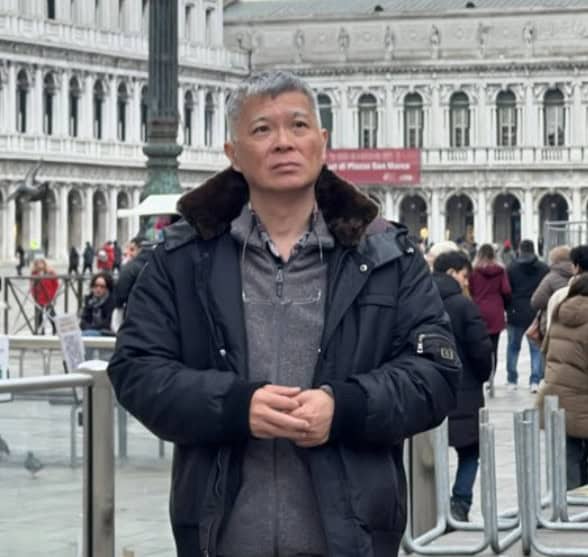
Michael Koh is a production specialist and entrepreneur who founded Spring Forest Studio in 2017 to provide event and virtual production solutions in Singapore. He specialises in hybrid live streaming, XR (Extended Reality) virtual production, and studio systems integration, transitioning the business from traditional videography to advanced corporate broadcasting. Operating out of a dedicated facility at NordCom2 in Singapore, he leads a technical crew to deliver multi-camera webcasts, digital sets, and technical consultations for large-scale corporate events.