
Introduction to XR in B2B Event Streaming
Extended Reality (XR), encompassing Virtual Reality (VR), Augmented Reality (AR), and Mixed Reality (MR), offers unprecedented opportunities for Singaporean tech firms focused on B2B event streaming and hybrid production. By leveraging XR technologies, these enterprises can push the boundaries of traditional streaming methodologies, creating engaging and immersive experiences for corporate audiences. The inclusion of XR in live event streaming challenges traditional production by integrating highly interactive elements that require robust infrastructure, seamless protocol integration, and advanced production workflows.
With increasing demands for hybrid events that cater to physical and virtual audiences, companies need to adopt state-of-the-art technologies. This article explores the strategic use of XR, providing technical insights for Singaporean tech firms to enhance their streaming capabilities.
Integrating XR into Streaming Workflows
To successfully incorporate XR into live event streams, a comprehensive understanding of current streaming protocols and encoding standards is essential. Protocols such as Secure Reliable Transport (SRT) and Real-Time Messaging Protocol (RTMP) are pivotal for ensuring secure and stable content delivery. With XR, the need for low-latency interaction and high-bandwidth transmission is paramount, especially when dealing with live 360-degree video feeds.
Key considerations include:
- Bandwidth Management: XR applications can require significantly higher bandwidth, especially in 4K/UHD resolutions. Strategic planning in bandwidth allocation is necessary to prevent congestion and ensure smooth streaming.
- Latency Optimization: Employing adaptive bitrate streaming technologies ensures that XR content is delivered with minimal delay, maintaining real-time interaction.
- Encoding Standards: Utilizing H.264 and H.265 codecs efficiently supports high-quality streaming with reduced data consumption, crucial for XR, where real-time processing is essential.
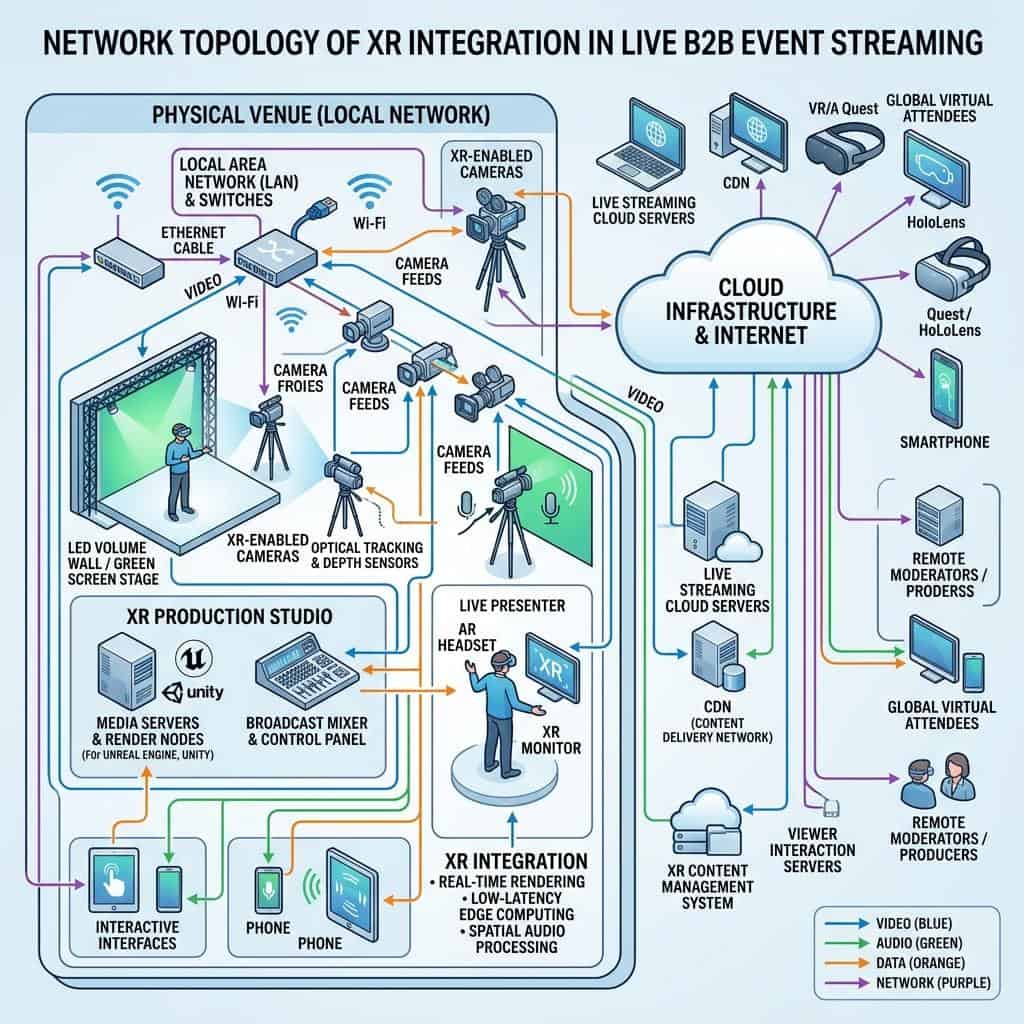
Production Workflows for XR Events
Seamlessly integrating XR into production workflows involves intricate multi-camera setups, advanced signal routing architectures, and detailed audio-video synchronization. Using Network Device Interface (NDI) and Serial Digital Interface (SDI) networks allows for efficient linking of multiple cameras, enhancing dynamic XR content creation.
Some implementations might involve:
- Multi-camera Setups: Coordinating cameras to capture multi-angle views, essential for realistic XR experiences.
- Audio/Video Signal Routing: Precise planning of audio and video signal pathways, employing matrix switchers to manage complex routing needs.
- Talkback Systems: Implementing full-duplex audio systems for effective communication between production crew and on-site talent.
Technical Infrastructure for XR Support
Deploying a robust network infrastructure is fundamental for XR streaming events. A combination of cloud-based and on-premise solutions offers flexibility and scalability. Enterprises must consider quality of service (QoS) measures, redundancy, and failover strategies to maintain seamless operations.
Network Topologies
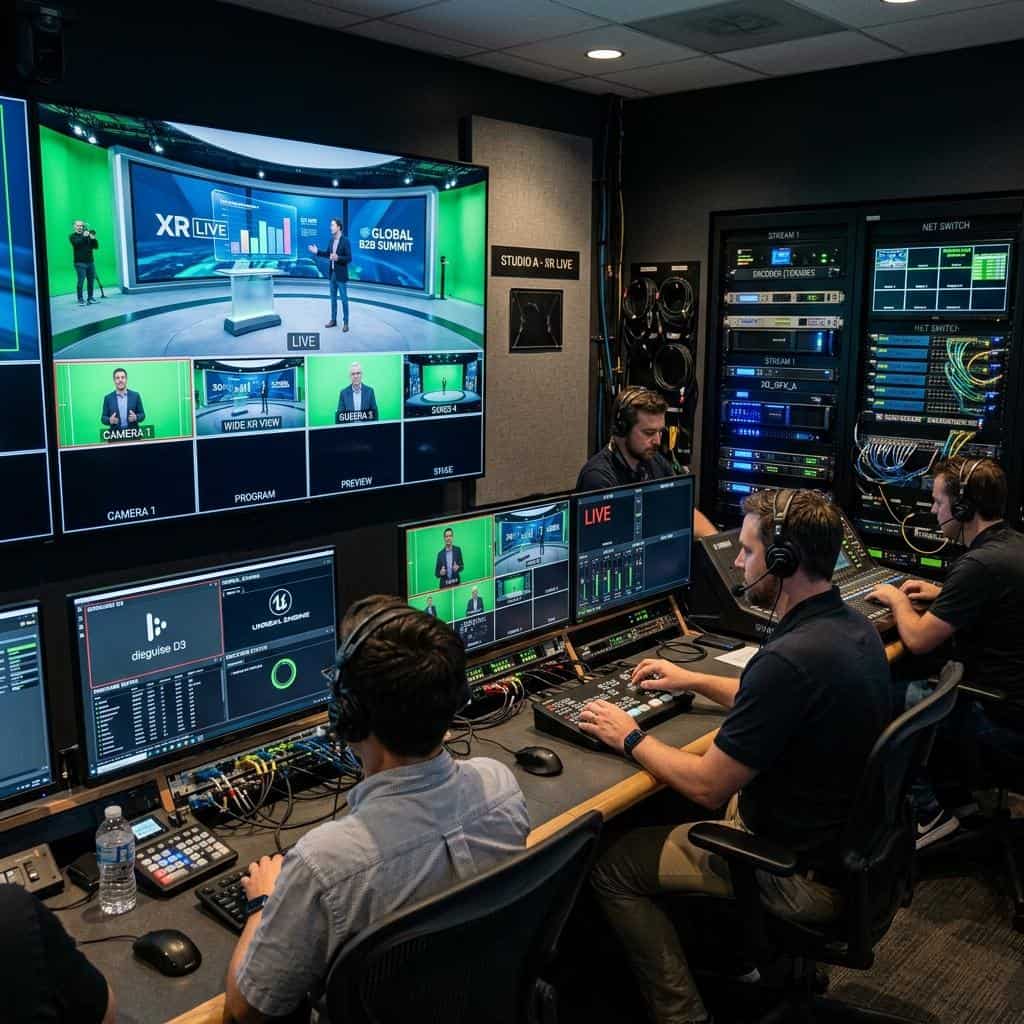
Designing network topologies that support large-scale XR events requires meticulous planning. Integrating ISO standards with professional audio-video networking ensures reliability and performance:
- Hybrid Network Architectures: Leveraging both cloud and on-premise solutions to maximize resource availability and reduce latency.
- SMPTE Compliance: Ensuring synchronization across devices to meet professional broadcast standards.
Scalability and Quality Assurance
Scalability considerations are essential as enterprises expand their streaming capacities. Implementing scalable solutions such as cloud virtual machines (VMs) or content delivery networks (CDNs) helps manage increased demand. Proactive monitoring and maintenance are crucial to uphold enterprise-level quality standards and ensure a seamless hybrid event experience.
Integrating XR with Enterprise Platforms
Integrating XR with platforms like Microsoft Teams, Zoom, and Webex enhances interaction and broadens engagement during hybrid events. These integrations must support high-definition video and audio with capabilities to manage interactive XR content seamlessly.
Actionable Recommendations
For enterprises looking to embrace XR:
- Invest in Advanced Encoding Technologies: Use cutting-edge encoding hardware and software to support XR’s intensive requirements.
- Build a Scalable Network Infrastructure: Plan networks with scalability in mind, incorporating failover systems to mitigate risks.
By strategically integrating XR, Singaporean tech firms can lead the way in B2B event streaming, transforming the way global audiences experience corporate events. The convergence of XR with streaming technologies promises to redefine engagement, offering limitless possibilities.

Michael Koh is a production specialist and entrepreneur who founded Spring Forest Studio in 2017 to provide event and virtual production solutions in Singapore. He specialises in hybrid live streaming, XR (Extended Reality) virtual production, and studio systems integration, transitioning the business from traditional videography to advanced corporate broadcasting. Operating out of a dedicated facility at NordCom2 in Singapore, he leads a technical crew to deliver multi-camera webcasts, digital sets, and technical consultations for large-scale corporate events.