
Why Hybrid Summit Transformation Demands Broadcast-Grade Planning
Corporate summits have changed from fixed-room, single-audience events into distributed production environments that must serve in-room delegates, remote executives, sales teams, partners, and regional stakeholders at the same time. A traditional summit built for a ballroom or conference center can no longer rely on a single lectern camera and a basic presentation feed if the goal is to deliver engagement, reliability, and measurable reach. The technical challenge is not simply adding a webcast layer. It is converting an event into a resilient hybrid production system that preserves content fidelity, maintains low-latency communication, and protects the experience for both physical and virtual attendees.
A successful hybrid conversion starts with the same principles used in broadcast engineering, signal integrity, transport redundancy, synchronized switching, and disciplined audio governance. In a B2B environment, the audience expects clear speaker capture, intelligible translation or interpretation if required, consistent graphics, and stable playback across enterprise networks. For enterprise decision-makers, the event must also integrate with existing collaboration platforms such as Microsoft Teams, Zoom, or Webex, while preserving compliance, brand control, and data security. That requires production infrastructure built around professional standards such as SDI, NDI, RTMP, RTMPS, SRT, and SMPTE timing practices, rather than improvised consumer-grade tools.
In a typical summit transformation, the objective is to create a production architecture that supports a main stage, breakout sessions, plenary keynotes, sponsor inserts, and remote presenters without compromising the in-room experience. The technical solution often combines a multi-camera acquisition package, redundant encoding, bonded or dual-path internet uplinks, confidence monitoring, ISO recording, and a routing strategy that keeps the program feed, record feeds, and platform outputs separate. When that structure is designed correctly, a traditional summit becomes a hybrid event with measurable operational resilience and better stakeholder reach.
Assessing the Existing Summit Environment and Defining Hybrid Objectives
Venue Signal Path Review and Infrastructure Audit
The first step in converting a summit is an end-to-end audit of the venue signal path. This includes stage I/O, camera locations, cable routes, control room position, power distribution, lighting conditions, audience sightlines, and available network drops. In many convention environments, the ballroom has strong power but limited dedicated bandwidth for upload, which means the production team must determine whether the venue internet can support contribution encoding or whether a separate bonded cellular and fiber strategy is required. The audit also identifies whether the venue uses SDI infrastructure, whether HDMI 2.1 is needed for source devices, and whether there is an existing audio DSP, analog snake, or Dante network available for feed extraction.
For a summit with keynote and panel formats, the production design should specify camera coverage based on stage geometry. A practical baseline is a three to five camera arrangement, typically one locked wide shot, one or two operable close cameras, a roving audience camera if interactivity is planned, and a dedicated slide capture or confidence input. If the summit includes remote speakers, the technical design must also include a return monitor workflow, talent confidence feeds, and a clean video path for downstream platform distribution. These details matter because latency, framing, and speaker comfort directly affect the success of hybrid delivery.
Technical Requirements Definition for Physical and Virtual Audiences
A hybrid summit must satisfy two different consumption contexts. The in-room audience needs a large-format visual experience, intelligible room audio, and stage presentation support. The virtual audience needs compressed but high-quality video, low-latency interaction where applicable, and continuity across session breaks. That leads to separate technical requirements for program output, record output, and platform output. The in-room display path may remain at 1080p or 4K/UHD depending on the venue screens and projection system, while the streaming output is usually optimized for 1080p at 25, 30, or 50/60 frames per second, depending on the event region and content type.
In Singapore and other enterprise hubs with strong expectations for reliability and executive polish, the event technology stack must be designed for dense business networks, strict venue access control, and international speakers joining across time zones. That means clear codec choices, predictable bitrate ladders, and session scheduling that accounts for remote contributor availability. The production plan should also define whether sessions are live only, live plus recorded, or live with clipped on-demand repurposing after the summit. Each decision affects encoder profiles, storage, and archive management.
Designing the Hybrid Production Architecture
Multi-Camera Acquisition, Switching, and Signal Routing
A robust summit hybridization begins at acquisition. Professional cameras should output clean, synchronized video over SDI where possible, because SDI remains highly stable for baseband transport in live environments. HDMI 2.1 is useful for select sources such as laptops or specialty devices, but it is less desirable as the primary backbone in long-run event deployments. If IP-based contribution is part of the design, NDI or NDI|HX can be used for some camera and presentation workflows, but only after confirming network segmentation, bandwidth headroom, and switch support for multicast or controlled unicast traffic.
At the switching layer, the production environment should use a broadcast-capable video switcher that supports key/fill graphics, lower thirds, picture-in-picture, and multi-view monitoring. The switcher should receive program sources through properly labeled SDI routing, with frame sync or scan conversion where needed. For live summits that include PowerPoint or Keynote presentations, the preferred method is a dedicated presentation capture workflow rather than screen-sharing over collaboration software. That preserves image sharpness and avoids desktop notifications or UI artifacts appearing in the program feed.
Signal routing should be documented as a logical map, from source to switcher to encoder to platform and archive. Every path should be traceable. The practical goal is to separate operational feeds into distinct outputs, including the live program, a clean feed without graphics, an ISO recording of key cameras when required, and a backup program capture. This structure improves editorial flexibility, shortens post-event turnaround, and supports corporate communications teams that may need edit-ready footage for internal distribution.
Audio Engineering, Mixing, and Talkback Strategy
Hybrid event success depends heavily on audio, often more than video. Speech intelligibility is non-negotiable for executive summits, panel discussions, and product announcements. The audio system should combine wired lavaliers, headset microphones, boundary microphones for panel tables, and audience capture if Q&A is central to the program. All sources should be managed through a professional digital mixer or audio console with appropriate gain staging, high-pass filtering, dynamics control, and EQ shaping for speech clarity. Microphone choice must match presenter movement, stage size, and clothing requirements.
Where possible, the audio feed to the stream should be a dedicated mix-minus or stream mix, not the same house mix used for the ballroom PA. The reason is simple, the virtual audience benefits from a mix optimized for broadcast clarity, while the room system may prioritize acoustic reinforcement and presentation impact. Separating those workflows prevents feedback, reduces room coloration in the stream, and allows the audio engineer to control levels independently. Talkback systems should be included for communication between director, camera operators, audio, and stage management. On a complex summit, a clear intercom layer reduces missed cues and improves switching precision during remote speaker roll-ins and live transitions.
Encoding, Transport, and Platform Integration
Choosing Between RTMP, RTMPS, and SRT for Contribution
Transport design determines whether the event reaches the platform cleanly and on time. RTMP, Real-Time Messaging Protocol, remains widely supported for platform ingestion, especially where compatibility is essential. RTMPS adds TLS encryption and is preferred when enterprise security policies require encrypted contribution. However, for primary contribution between venue and remote control room or cloud ingest point, SRT, Secure Reliable Transport, is often superior because it is built for packet loss recovery, jitter tolerance, and more stable delivery across unreliable networks.
For a summit taking place in a dense urban venue with variable uplink conditions, a dual-path strategy is recommended. The encoder can send a primary SRT contribution stream over fiber and a secondary path over bonded cellular or a separate ISP circuit. This gives the technical director a failover route if the primary connection degrades. Bitrate should be selected based on the target resolution, motion complexity, and available headroom. A 1080p stream for corporate keynote content frequently sits in the 5 to 8 Mbps range for H.264, while higher motion or sharper graphics may require more headroom. H.265 can improve efficiency, but it must be validated against platform compatibility and decoder performance across the enterprise audience base.
Cloud-Based Versus On-Premise Streaming Control
The choice between cloud-based and on-premise streaming control is strategic. Cloud production platforms offer remote accessibility, dynamic scaling, and distributed operator access, which is useful when decision-makers, language teams, or regional stakeholders are joining from different locations. On-premise workflows preserve local control, reduce dependency on external internet services, and can simplify some security reviews. In practice, many enterprise summits use a hybrid control model, local switching and acquisition in the venue, cloud distribution or backup graphics services, and remote monitoring for senior stakeholders.
For enterprise platforms such as Teams, Zoom, and Webex, the event should be integrated through approved meeting or webinar workflows rather than improvised screen capture. That means planning how the program feed enters the collaboration platform, how speaker return video is handled, how Q&A is moderated, and whether attendees join as viewers, panelists, or interactive participants. In a high-profile summit, moderation layers and pre-show technical rehearsals are essential. Remote speakers should be tested on camera framing, uplink quality, and audio behavior well before the live schedule begins.
Redundancy, QoS, and Failure Management
Network Engineering and Quality of Service
Hybrid production becomes enterprise-grade when redundancy is built into every critical layer. Network architecture should include separate VLANs or logically separated paths for production traffic, corporate guest traffic, and venue operations where possible. Quality of Service, QoS, should be applied to protect encoder traffic, control protocols, and remote contribution packets from congestion. Uplink testing should be performed at the actual event time of day, because many venues experience different contention profiles during daytime conference use versus evening load windows.
From a practical engineering perspective, the network plan should specify primary and secondary internet access, monitored latency, packet loss thresholds, and a defined failover trigger. If SRT is used, latency buffers can be adjusted to tolerate brief instability, but the plan must still define what happens if the primary route fails entirely. Auto-failover encoders, hot spare laptops for graphics playback, and backup power through UPS systems are standard safeguards. Audio consoles, switchers, and encoders should be connected to conditioned power with sufficient runtime for graceful shutdown or switchover. These details matter because summit disruption at executive level carries reputational and financial cost.
ISO Recording, Confidence Monitoring, and Operational Visibility
ISO recording is especially valuable in summit environments with multiple speakers and fast content changes. Recording individual camera feeds alongside the program feed allows post-event editorial teams to refine highlights, recover missed reactions, and produce executive recap content without depending only on a single line cut. Confidence monitoring should include multiview displays for director, technical producer, audio, and streaming operator. Ideally, these monitors show source status, audio meters, encoding status, and platform health indicators.
A mature hybrid workflow also includes timecode discipline or at minimum a consistent session clock for editorial alignment. While not every event requires SMPTE timecode across every device, the underlying principle of synchronization remains critical. If the summit later feeds an internal communications archive, training library, or regional marketing asset, synchronized assets significantly reduce post-production effort and improve content value.
Execution Outcomes and Practical Recommendations for Enterprise Summits
What a Successful Transformation Looks Like
When a traditional summit is transformed correctly, the most visible change is not only that remote viewers can watch, but that both audiences experience a coherent, technically stable event. The in-room delegates hear clean speech, see sharp slides, and benefit from polished stage transitions. Remote attendees receive a stable, branded stream with accurate audio balance, minimal latency, and clear session segmentation. The production team operates from documented workflows, with source redundancy, platform coordination, and recovery procedures built into the event plan rather than added as an afterthought.
From a business perspective, the hybrid summit produces better attendance elasticity, stronger regional participation, and more usable content after the event. For corporate stakeholders, that translates into improved lead capture, internal communication reach, and executive accessibility. The technical investment is justified when the event architecture supports direct participation, not just passive viewing. The strongest hybrid productions are designed like live broadcast operations, with enterprise collaboration constraints layered on top.
Implementation Guidelines for Enterprise Clients
Enterprise clients should approach hybrid summit production through a structured checklist. First, define the audience model, including in-room capacity, remote viewer count, and interactive participant roles. Second, complete a technical site survey that covers power, lighting, camera placement, audio pickup, and internet availability. Third, confirm the codec, transport, and platform requirements early, including whether RTMP, RTMPS, or SRT is the preferred contribution method. Fourth, establish a redundant plan for switching, audio, encoding, and uplink. Fifth, rehearse with remote presenters, interpreters, and moderators on the exact production stack that will be used live.
For large corporate events, production quality depends on disciplined execution. Use clearly labeled cabling, documented patching, monitored encoder health, and defined operator roles. Keep a program feed separate from clean records. Protect the event with UPS-backed power and secondary connectivity. Validate collaboration platform integration with real network conditions. Most importantly, design the summit as a system, not as a collection of isolated devices. That systems approach is what turns a traditional summit into a hybrid success, with broadcast-grade reliability, enterprise compliance awareness, and a polished experience for every stakeholder in the room and online.
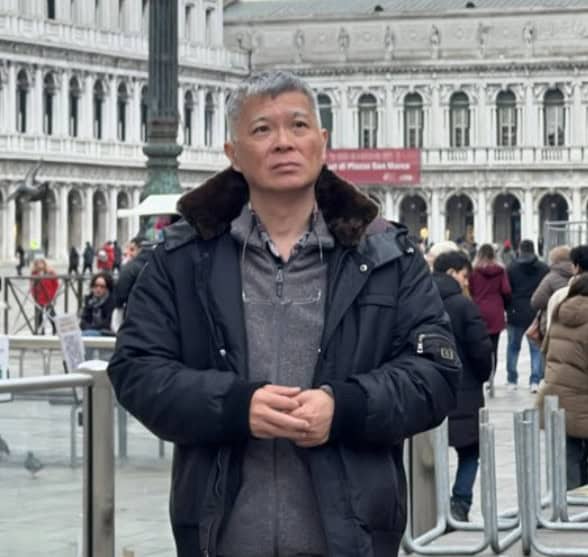
Michael Koh is a production specialist and entrepreneur who founded Spring Forest Studio in 2017 to provide event and virtual production solutions in Singapore. He specialises in hybrid live streaming, XR (Extended Reality) virtual production, and studio systems integration, transitioning the business from traditional videography to advanced corporate broadcasting. Operating out of a dedicated facility at NordCom2 in Singapore, he leads a technical crew to deliver multi-camera webcasts, digital sets, and technical consultations for large-scale corporate events.