
Introduction to Cinematic Corporate Events
In the fast-evolving landscape of B2B event streaming, the demand for high-quality production values akin to Hollywood films has become paramount. Corporate events are no longer simple presentations; they are cinematic experiences that engage audiences both physically and virtually. This fusion of filmic technology and live streaming is reshaping the way enterprises communicate their message, offering an immersive experience that captivates viewers.
Leveraging Hollywood Technology in B2B Streaming
Corporate events are utilizing the same technologies that create blockbuster films to enhance live production quality. From multi-camera setups to advanced post-production techniques, these elements ensure that a corporate event is just as compelling as a top-tier movie premiere.
Advanced Production Workflows
A seamless cinematic experience in corporate events requires a well-orchestrated production workflow. Utilizing SDI and HDMI 2.1 connections allows for high-resolution video feeds, while NDI (Network Device Interface) technology facilitates the efficient routing of video streams on the same network without degrading quality.
Camera and Video Switching Systems
Deploying professional-grade cameras and switchers enables dynamic shot composition. Systems such as the Blackmagic ATEM or the Ross Video Carbonite switcher offer robust solutions for live event production, supporting transitions, graphics integration, and real-time effects.
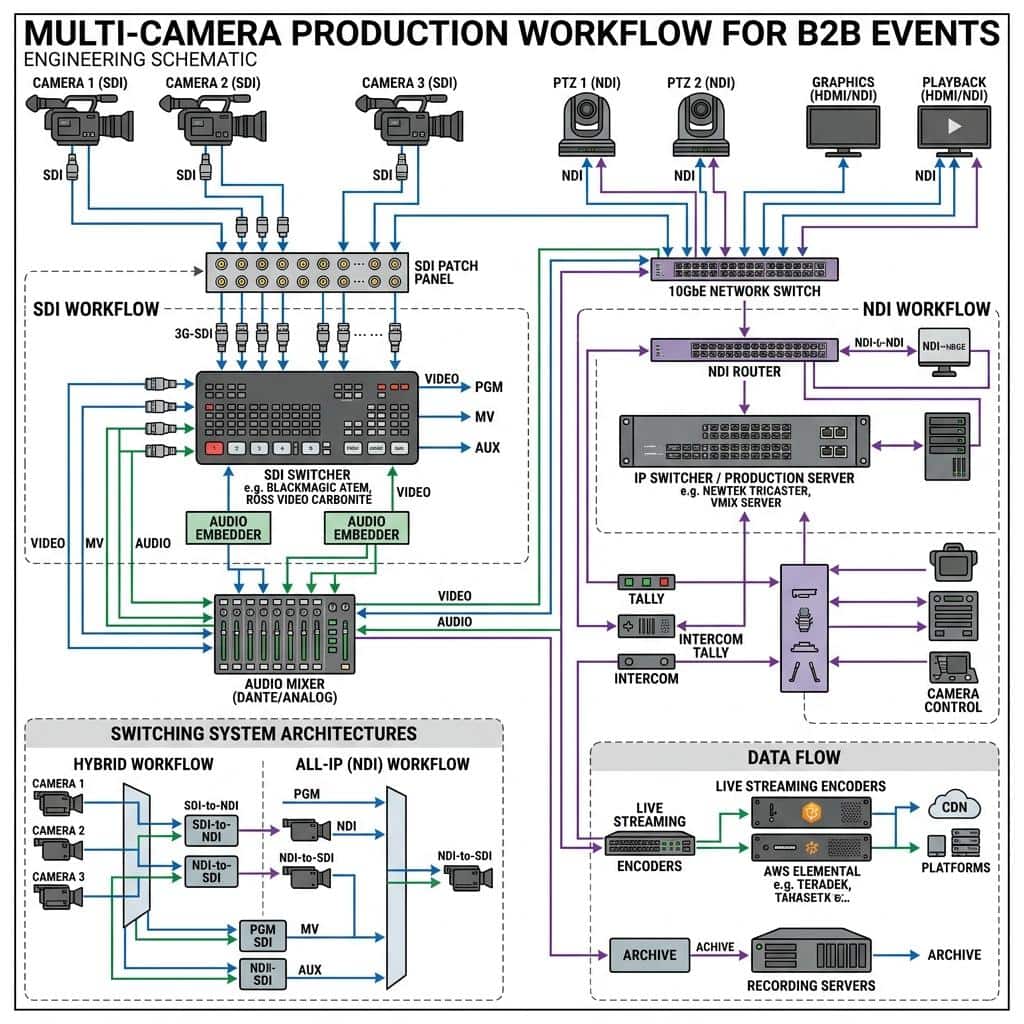
Hybrid Event Streaming Infrastructure
The convergence of in-person and virtual audiences necessitates a robust hybrid event streaming infrastructure. This setup ensures seamless delivery, regardless of audience location.
Enterprise-Grade Streaming Protocols
SRT (Secure Reliable Transport) and RTMP (Real-Time Messaging Protocol) provide reliable solutions for maintaining quality and low latency in live broadcasts. Utilizing H.264/H.265 encoding helps manage bandwidth while ensuring crisp video quality.
Scalability and Network Infrastructure
Scalability is crucial for accommodating large corporate audiences. Implementing CDN (Content Delivery Network) solutions can ensure minimal buffering while reaching global participants. Network infrastructures must support adequate bandwidth and redundancy to prevent outages.
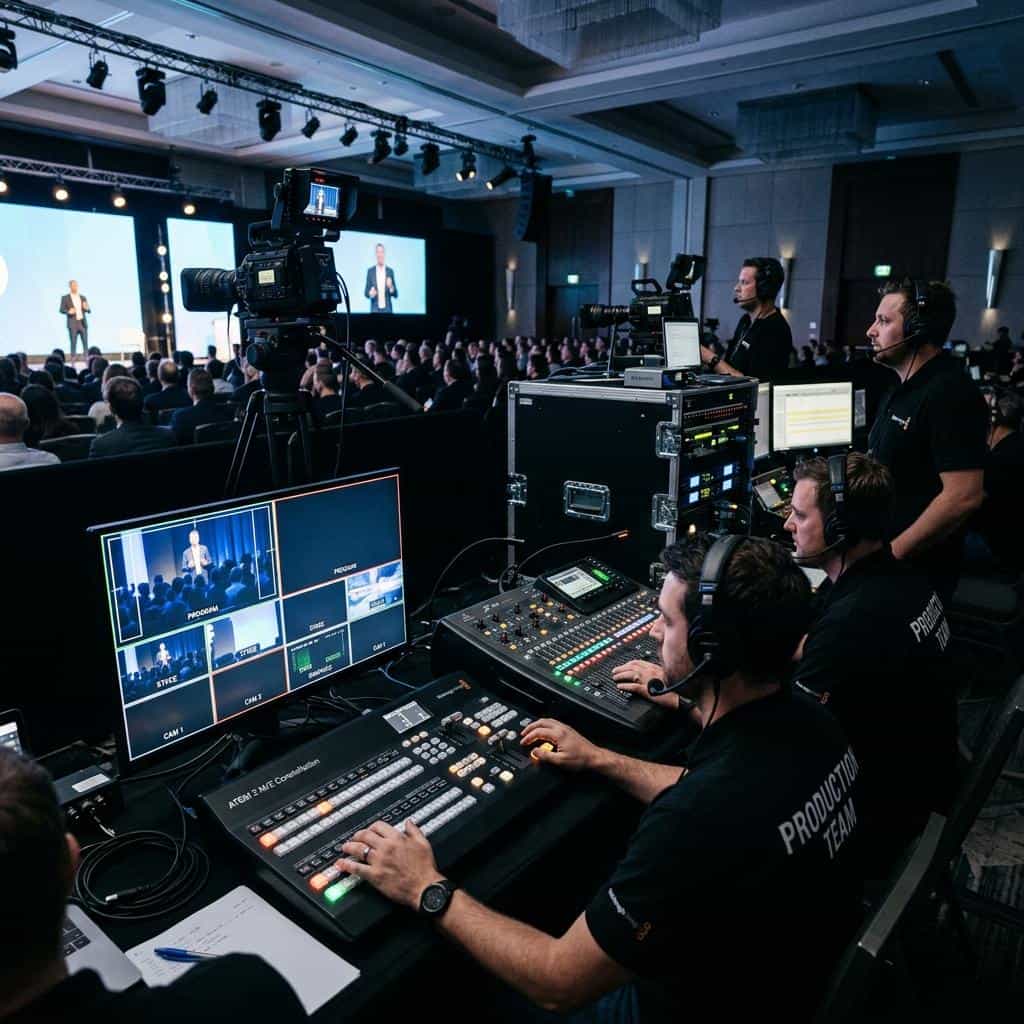
Audio/Video Signal Flow and Routing Architectures
Understanding the intricacies of signal flow is critical for high-quality event production. SDI routing, combined with audio mixing boards such as the Yamaha QL series, allows for clean audio and video paths. Redundancy strategies, like incorporating additional encoders, provide failover safeguards.
Cloud-Based vs. On-Premise Solutions
Choosing between cloud-based and on-premise streaming solutions depends on specific enterprise needs. While cloud solutions offer flexibility and scalability, on-premise setups can provide enhanced control and security. Integrations with platforms like Microsoft Teams, Zoom, or Webex are fundamental for hybrid events.
Actionable Recommendations for Enterprise Streaming
For enterprises looking to adopt a cinematic approach, investing in high-quality, professional-grade equipment is critical. Further, training technical staff in advanced production workflows and signal routing increases the chances of producing a seamless event. Balancing technical depth with practical application ensures not only engagement but also reliability in broadcast solutions.
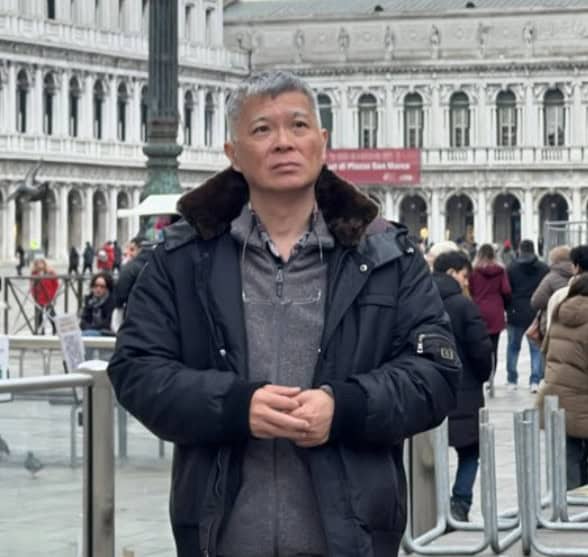
Michael Koh is a production specialist and entrepreneur who founded Spring Forest Studio in 2017 to provide event and virtual production solutions in Singapore. He specialises in hybrid live streaming, XR (Extended Reality) virtual production, and studio systems integration, transitioning the business from traditional videography to advanced corporate broadcasting. Operating out of a dedicated facility at NordCom2 in Singapore, he leads a technical crew to deliver multi-camera webcasts, digital sets, and technical consultations for large-scale corporate events.