
Hybrid event production in Singapore has reached a level of operational complexity that requires far more than a camera feed and a webinar login. Corporate conferences, leadership summits, product launches, investor briefings, and regional town halls now depend on tightly coordinated physical and virtual experiences that must behave as a single system. In that environment, a custom mobile app is not a convenience layer. It is the orchestration plane that binds registration, agenda delivery, audience engagement, speaker management, networking, analytics, and streaming access into one controlled workflow.
For enterprise event planners, AV engineers, IT directors, and production managers, the app becomes the interface between the audience and the production stack. It also becomes a critical integration point for live streaming infrastructure, venue networks, cloud distribution, and collaboration platforms such as Microsoft Teams, Zoom, and Webex. When designed correctly, the app reduces friction across the entire hybrid event lifecycle, from pre-event onboarding through post-event analytics, while supporting the technical requirements of multi-camera switching, synchronized program delivery, and secure access control.
Singapore is a particularly demanding environment for hybrid production. Venues frequently host multilingual audiences, multinational leadership teams, and cross-border stakeholders who expect low-latency interaction, polished UX, and enterprise-grade reliability. That means the app must support secure authentication, scalable content delivery, and seamless interoperability with broadcast and streaming workflows. It must also align with local operational realities, including venue-specific network constraints, strict security policies, and the need to coordinate with in-house IT teams and external production vendors.
Custom Mobile Apps as the Control Layer for Hybrid Event Operations
A well-engineered mobile app acts as the operational control layer for the hybrid event, not merely a digital brochure. It centralizes attendee identity, content routing, interaction design, and data capture. For physical attendees, it can provide agenda management, speaker bios, floor plans, session reminders, and in-venue polling. For remote attendees, it can surface live program feeds, session switching, Q and A moderation, private networking tools, and post-session on-demand assets. For production teams, it can become the bridge between front-end engagement and back-end live systems.
Identity, Access, and Audience Segmentation
Enterprise hybrid events typically require role-based access control. The app should support authenticated login tied to single sign-on, enterprise identity providers, or event-specific credentials. This enables segmentation by attendee type, for example internal leadership, media, customers, partners, or VIP clients. Role-based access is especially important when different user groups require different session permissions, file downloads, or networking privileges. In high-security corporate environments, this also supports restricted sessions, executive briefings, and embargoed announcements.
From a technical perspective, the app can integrate with tokenized authentication flows that gate access to RTMP, RTMPS, SRT, or cloud-based player endpoints. If the event uses session-specific virtual rooms, the app can dynamically assign streams and content modules based on user permissions. This avoids exposing the entire event program to every participant and supports compliance requirements for sensitive corporate content.
Agenda Orchestration and Session Logic
The hybrid event agenda should not be treated as static content. It should be delivered as a live data model that can update in real time as sessions change, speakers run long, or breakouts are restructured. A custom app can consume event scheduling data through API endpoints and render updates immediately across iOS, Android, and web clients. This is essential when production teams need to switch the program feed, change stream destinations, or redirect audiences between keynote, breakout, and sponsor content.
In practical terms, the app can function as a front-end controller for the event’s run-of-show. If the keynote overflows, the app can send push notifications, reassign viewers to a holding page, and provide a one-tap transition into the next session. For large regional events in Singapore, where attendees may be distributed across conference rooms, hotel ballrooms, and remote offices, that real-time logic prevents confusion and reduces support load.
Streaming Infrastructure and Protocol Design Behind the App Experience
The mobile app is only as effective as the infrastructure feeding it. For B2B hybrid events, the underlying streaming architecture must be designed around predictable latency, resilient signal transport, and adaptive delivery. The app may only present the experience, but the production backbone determines whether that experience is stable, synchronized, and professional.
Protocol Selection, Latency, and Transport Strategy
RTMP, or Real-Time Messaging Protocol, remains common for ingest into encoders and cloud platforms, particularly when integrating established live production workflows. For contribution links between venues, control rooms, and remote production centers, SRT, or Secure Reliable Transport, is increasingly preferred because it provides packet loss recovery, encryption, and more robust performance across unpredictable networks. RTMPS can be used where secure RTMP transport is required. For local production networks, NDI and NDI|HX are useful for IP video transport between cameras, switchers, graphics systems, and replay devices, especially when deploying flexible multi-camera workflows.
In a Singapore hybrid event, latency management matters because audience expectations for interaction are higher when live polling, executive Q and A, or panel moderation are tied to the stream. Low-latency contribution is only useful if it remains stable under load, which means the app, player, and distribution layer should be aligned with the same latency target. For many enterprise programs, a practical balance is ultra-low latency for production monitoring and slightly higher but stable delivery latency for audience playback, particularly when using live captions, translation, and moderated chat. The production team should not over-optimize for the absolute lowest latency if that compromises jitter tolerance or stream continuity.
Encoding, Bitrate, and Adaptive Delivery
For HD corporate events, H.264 encoding remains a widely supported baseline across enterprise players and collaboration tools. H.265, also known as HEVC, can be advantageous for bandwidth efficiency, especially for 4K/UHD workflows, but it must be validated against player compatibility, device support, and platform constraints. The app should support adaptive bitrate delivery so remote viewers on constrained networks can continue watching without interruption. In practical terms, this means the origin service should provide multiple renditions, and the app player should select the correct stream profile dynamically.
Bitrate management should be aligned to content complexity, motion level, and target distribution platform. A keynote with static slides and controlled camera movement can operate efficiently at a lower bitrate than a product demo with motion graphics, audience cutaways, and fast stage lighting transitions. The production team should coordinate the encoder profile with the content plan rather than relying on a generic preset. This is where the app supports operational quality indirectly, because a smooth playback experience reduces drop-off and lowers pressure on technical support.
Cloud Distribution, On-Premise Control, and Hybrid Routing
Most enterprise events benefit from a hybrid distribution model. The venue side may use on-premise switching, local SDI routing, and dedicated production encoders, while the audience-facing delivery uses cloud-based streaming infrastructure and content distribution networks. The mobile app becomes the unifying layer between those domains. It can expose a single branded interface even when one session is delivered from a private cloud origin and another is routed from a local encoder through a managed media stack.
When organizations require strict control over content sovereignty, an on-premise or private cloud architecture may be preferred. In that model, the app still serves as the client endpoint, but authentication, stream management, and content access are hosted inside the enterprise environment. This can be important for board meetings, financial briefings, internal leadership summits, or events involving regulated information. For broader stakeholder events, a public cloud distribution model can scale more efficiently, especially when large numbers of remote attendees join from different regions.
Production Workflows, Signal Flow, and Multi-Camera Integration
The most effective hybrid events are built on disciplined production workflows. A custom mobile app should be designed with awareness of how cameras, switchers, audio mixers, graphics engines, and streaming encoders interact. This is essential for live event production teams that need to keep physical and virtual experiences aligned in real time.
Multi-Camera Production and Switching Architecture
Corporate events in Singapore often use multi-camera setups that include a locked-off wide shot, one or two speaker close-ups, audience reaction cameras, and a roaming handheld or robotic PTZ camera. These feeds are typically switched through a production switcher, then delivered as a program feed to the encoder and, where required, an ISO recording system for post-event editing or compliance archiving. The app can support the switching strategy by exposing synchronized session metadata, presentation slides, and interactive prompts that match the live show flow.
In a well-managed workflow, the switcher operator, graphics operator, audio engineer, and app content manager work from the same show caller script. If a sponsor segment needs to be inserted or a speaker is delayed, the app can update attendee-facing messaging immediately while the director adjusts the program feed. That reduces dead air and maintains perceived production quality. The app also helps preserve context when the main feed changes angles or transitions to slide content, because the agenda and session labels remain visible to the audience.
Audio Architecture and Talkback Coordination
Audio is frequently the most underestimated component in hybrid events. The app cannot compensate for poor intelligibility, unstable mix-minus routing, or inconsistent microphone gain staging. Professional events should use disciplined audio signal flow, with clear separation between audience reinforcement, program mix, and remote participant return audio. Mix-minus is especially important when remote speakers or virtual panelists are brought into the production.
Talkback systems, intercom, and cue lighting are critical for coordination between stage management and control room staff. While these systems operate behind the scenes, the mobile app can improve the attendee side by providing live alerts, session transition notices, and push notifications when speakers return after a break. For multilingual Singapore events, captioning and translation workflows can also be surfaced through the app to improve accessibility and reduce cognitive load on attendees.
Presentation Sync, Slides, and Live Interaction
One of the strongest use cases for a custom app is synchronized presentation support. When the slide deck, live Q and A, and polling interface are tied into the same event data system, the attendee experiences a coherent program rather than disconnected media fragments. This is especially important in hybrid formats where the in-room audience sees the stage, while the remote audience depends on the app for contextual cues.
Using API-driven synchronization, the app can display speaker names, current session titles, and interactive elements that change as the stage direction changes. For example, a financial services town hall may shift from a keynote to a live poll to an executive panel, and the app should reflect that progression without manual refreshes. This reduces friction and improves engagement quality, particularly for large corporate audiences who expect concise, branded, and reliable navigation.
Network, Security, and Reliability Requirements for Enterprise Deployment
Hybrid event success depends on network engineering as much as content design. In Singapore, venue networks vary significantly in quality and access policy, so enterprise deployments should assume that the app, the stream, and the control systems all require proper network validation before show day.
Bandwidth Planning and Quality of Service
The app itself may not consume the same bandwidth as a live stream, but it becomes a critical endpoint when loading video players, embedded assets, push notifications, and session chat. At the venue, wired connectivity should be prioritized for production systems, especially encoders, switchers with IP control, graphics systems, and any devices carrying mission-critical streams. Quality of service, or QoS, should be applied where the network supports it, with traffic prioritization for program video, control data, and voice traffic.
For large events, redundant uplinks are essential. A bonded or failover-capable internet path can protect against single-carrier outages. If the app relies on cloud APIs, those services should be tested against venue firewall rules, DNS resolution behavior, and TLS certificate validation. This matters because a successful live stream can still be undermined by a broken API call, delayed push notification, or player timeout. The app team and the production team must test the entire chain, from device connection to final playback.
Redundancy, Failover, and Operational Continuity
Enterprise events should be designed with redundancy at every critical point. That includes primary and backup encoders, power protection, redundant network paths, and fallback communication methods between control room staff. The app can support continuity by serving as a broadcast control surface for attendee messaging, including stream replacement links, session rescheduling, and emergency notices. If one stream path fails, the app becomes the fastest route to move the audience to an alternate source.
ISO-aligned operational discipline also matters. While ISO standards do not prescribe every live event workflow, they reinforce the value of documented processes, asset control, and repeatable operational management. For enterprise clients, that translates into production runbooks, version-controlled app builds, tested rollback procedures, and clearly assigned responsibilities across event technology, IT, and venue teams.
Integration with Enterprise Platforms and Measurable Event Outcomes
In a Singapore hybrid event, the app must integrate cleanly with the tools the organization already uses. That includes Microsoft Teams for internal collaboration, Zoom for interactive sessions, Webex for corporate communications, and CRM or marketing automation platforms for post-event follow-up. The app should not create a separate content silo. It should connect live participation to business systems that capture attendance, engagement, and follow-through.
Platform Interoperability and Meeting Bridge Design
When remote participants need to join as panelists or speakers, the production team may use a meeting bridge workflow that brings collaboration-platform audio and video into the main production chain. The app can provide the audience-facing interface while the back-end bridge handles speaker ingress. This is especially effective for executive panels or analyst briefings where a few presenters must join from external offices or overseas locations.
For audience analytics, the app can capture dwell time, session attendance, poll responses, chat activity, and content interaction. These metrics are valuable only when they are tied to the actual production timeline. If a keynote segment runs longer or a breakout is delayed, the analytics should reflect the real event sequence. That level of precision helps enterprise teams evaluate session performance, content relevance, and technical reliability.
Practical Implementation Guidelines for Enterprise Teams
To deploy a custom mobile app successfully for a Singapore hybrid event, the production plan should include a technical discovery phase, network testing, prototype validation, and a full rehearsal with real devices. The app vendor, streaming engineer, venue IT staff, and show caller should review authentication flows, content update methods, stream failover logic, and push notification timing well before the event begins. Every critical path should be tested under realistic conditions, including high concurrent logins and live content updates.
Enterprise teams should also validate device compatibility across current iOS and Android versions, corporate-managed devices, and browser-based access for desktop users. Accessibility features, including caption availability, readable contrast, and intuitive navigation, should be included from the start. The event should not rely on post-launch fixes to solve core usability problems. For high-stakes corporate production, reliability and clarity are part of the technical specification.
When executed properly, the custom mobile app becomes the glue that holds the hybrid event together. It connects the live camera workflow, the encoded program feed, the attendee experience, and the enterprise communication stack into one coherent system. In Singapore’s competitive corporate events environment, that coherence is what separates a merely functional livestream from a professionally engineered hybrid production. For organizations that demand control, scale, and measurable audience engagement, the app is not a secondary feature. It is the operational layer that makes the entire event architecture work.
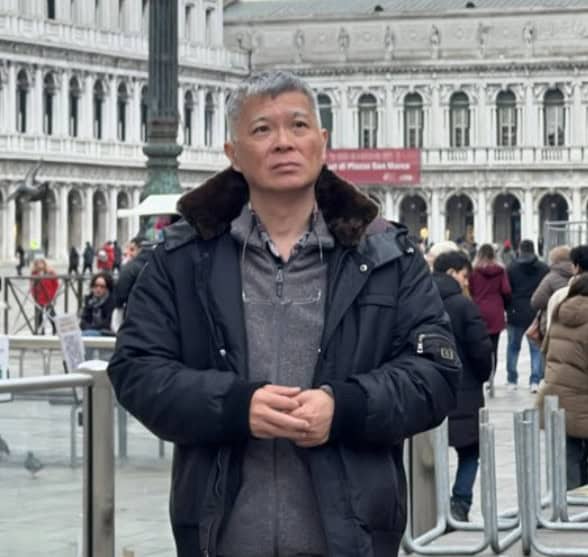
Michael Koh is a production specialist and entrepreneur who founded Spring Forest Studio in 2017 to provide event and virtual production solutions in Singapore. He specialises in hybrid live streaming, XR (Extended Reality) virtual production, and studio systems integration, transitioning the business from traditional videography to advanced corporate broadcasting. Operating out of a dedicated facility at NordCom2 in Singapore, he leads a technical crew to deliver multi-camera webcasts, digital sets, and technical consultations for large-scale corporate events.