
Singapore has become one of the most technically demanding and commercially attractive destinations for live event production, especially for weddings that must serve both an in-room celebration and a remote global audience. For production teams supporting multicultural ceremonies, multinational guest lists, and high-touch hospitality experiences, the technical challenge is not the wedding itself, but the precision required to translate a physical event into a reliable, elegant, low-latency hybrid broadcast. The objective is not consumer streaming. The objective is professional-grade live event delivery with broadcast discipline, enterprise network resilience, and consistent audiovisual fidelity from ceremony to reception.
In a Singapore wedding environment, the production design often has to accommodate ballroom architecture, heritage venues, rooftop spaces, or waterfront locations where RF coordination, ambient lighting, acoustic control, and internet backhaul all affect the final output. A successful hybrid wedding workflow combines multi-camera acquisition, clean audio capture, synchronized switching, robust encoding, and secure distribution across platforms such as Microsoft Teams, Zoom, Webex, or a private CDN. That workflow must also respect the live nature of ceremony timing, the emotional sensitivity of the event, and the expectation that every remote viewer sees and hears the event with minimal latency and stable quality.
For enterprise event teams, the Singapore use case is especially relevant because it sits at the intersection of high-density urban infrastructure, international connectivity, and premium hospitality standards. Whether the audience is in London, Sydney, Dubai, or San Francisco, the technical architecture must preserve intelligibility for vows, clarity for speeches, and visual consistency across mixed lighting environments. That requires a production engineering approach, not a consumer livestream mindset.
Hybrid Wedding Production Architecture for Singapore Venues
Every reliable hybrid wedding begins with an accurate assessment of signal flow, venue topology, and audience distribution. Production engineers should define the event as a three-part system: acquisition, contribution, and distribution. Acquisition covers cameras, microphones, lighting, intercom, and local switching. Contribution covers the transport of the program feed to the streaming encoder or cloud gateway. Distribution covers the platform, destination endpoints, and any recording or archival outputs.
Venue Survey and Signal Path Planning
Before load-in, a technical site survey should verify power availability, network access, cable routing, line-of-sight constraints, and any restrictions on RF or cable runs. In many Singapore hotels and event spaces, the physical layout includes long banquet corridors, mirrored surfaces, chandeliers, and split-level ballrooms. These conditions require intentional placement of cameras and audio hardware to avoid occlusion and comb filtering. The production team should map the primary ceremony positions, the stage or dais, the exchange area, the reception entrance, and any roaming coverage points for reactions and hospitality moments.
Signal paths should be documented with input and output counts, cable types, and contingency routing. For professional workflows, SDI, Serial Digital Interface, remains the standard for long-reach, low-latency camera transport in mission-critical environments. HDMI 2.1 can be useful for short runs from presentation laptops or consumer-grade sources, but it is not the preferred backbone for complex live events. Where IP video is appropriate, NDI, Network Device Interface, or NDI|HX may be integrated for auxiliary sources, confidence monitors, or secondary feeds, provided the network design supports multicast, bandwidth segmentation, and deterministic latency control.
Camera Topology and Switching Design
A typical multi-camera wedding setup for a premium Singapore event may include a locked-off wide shot of the ceremony, a tight camera on the couple, a third camera for audience reactions, and a mobile operator for processional and reception coverage. For a higher-end production, a fifth position can serve as an elevated safety angle or a dedicated detail camera for décor, rituals, or cultural elements. All sources should be genlocked where the production chain requires tight switching behavior, especially if the output is destined for a vision mixer and an ISO recording system.
The switching core should be a professional video switcher capable of handling the required resolution, frame rate, and color space, commonly 1080p at 25, 50, or 60 frames per second depending on the delivery standard and venue requirements. For corporate-grade streaming in Singapore, many teams standardize on 1080p50 or 1080p60 for motion clarity, while maintaining a separate recording strategy for archival masters. If the event requires UHD, 4K workflow planning must include upstream camera support, switcher input capacity, graphics engine compatibility, and significantly higher storage and uplink requirements.
Graphics, Titles, and Remote Participation
Weddings intended for a global audience frequently include remote attendee names, bilingual lower thirds, schedule slates, or virtual guest acknowledgment segments. These elements should be built into the graphics workflow as part of the live show control plan. If the audience includes remote speakers, toast contributors, or family members joining from overseas, the production team should manage return video paths and program feed hygiene so that virtual participants do not introduce latency-induced interruptions into the ceremonial flow.
A strong practice is to separate the clean program feed from the graphics-bearing stream output. The clean feed supports archival, editing, and alternate destination use, while the live program feed includes lower thirds, custom wedding branding, and live titles. That separation also allows downstream teams to repurpose the recording for post-event highlights without embedded platform overlays.
Audio Engineering, Intercom, and Intelligibility Standards
For wedding streaming, audio quality defines the experience more decisively than image resolution. Remote guests will tolerate slight imperfections in framing before they tolerate muffled vows, clipped speeches, or unstable mix levels. The production design should therefore treat audio as the primary success metric. This means using direct microphone capture, disciplined gain staging, acoustic isolation, and real-time monitoring by a qualified audio engineer.
Microphone Strategy for Ceremony and Reception
Recommended capture typically includes lavalier microphones for officiants or speakers, handheld wireless microphones for toasts, boundary or ambient microphones for room response, and direct console feeds from any house PA or ceremony system. Where musicians are involved, separate sources should be captured for instrumental clarity and not only mixed-room bleed. In Singapore venues with ornate interiors and reflective surfaces, reverberation management is critical, because excess room energy can obscure speech intelligibility even when the source level appears healthy on a meter.
The live mix should be built around a broadcast-style program feed, not a front-of-house mix intended solely for the room. A dedicated streaming mix can compensate for audience noise, music peaks, and conversational dynamics with more controlled compression and equalization. Audio levels should be monitored in dBFS in the digital domain, with headroom maintained to avoid clipping. If a production uses an analog stage path, conversion points should be minimized and documented to prevent cumulative noise and phase issues.
Intercom, Talkback, and Show Control
Professional event streaming in a hybrid wedding environment requires clear communication between camera operators, the vision mixer, audio engineer, and stage manager. Intercom systems or talkback channels reduce cueing errors during processionals, blessings, speeches, and live remote participation. This is especially important when timing is culturally sensitive and must align with ritual moments that cannot be repeated.
Show calling should use a clean rundown with timing marks for entrance, vows, ring exchange, speeches, and reception transitions. If remote guests are being brought into the event live, the stage manager must coordinate latency, muting, and visual acceptance cues so the interaction feels deliberate rather than improvised. This is standard professional practice in hybrid event production.
Streaming Protocols, Encoding, and Distribution Infrastructure
Once the live program feed is built, the next layer is contribution and distribution. The most common protocols in enterprise event delivery remain RTMP, Real-Time Messaging Protocol, RTMPS for encrypted transport, and SRT, Secure Reliable Transport, for resilient contribution over unpredictable networks. RTMP is still widely used for platform ingestion, while SRT has become a preferred transport option when teams require packet loss recovery, latency control, and more reliable delivery over public internet links.
Encoder Configuration and Codec Selection
Encoding decisions should align with the event’s destination and available uplink. For broad compatibility, H.264 remains the most widely supported codec for live event streaming. H.265, also known as HEVC, can provide improved compression efficiency, but only when platform support, decoding capacity, and operational compatibility are confirmed. For most hybrid wedding deployments, H.264 at a conservative bitrate offers the best balance of reliability and distribution reach.
Bitrate selection should reflect resolution, frame rate, motion complexity, and network stability. A 1080p program feed typically requires a carefully chosen bitrate window that does not overdrive the upload path. Teams should avoid aggressive bitrate settings that create dropped frames or encoder instability. Keyframe intervals, audio codec configuration, and constant bitrate or variable bitrate strategy should be aligned with the platform ingestion spec and the encoder hardware. All of these settings should be tested before the event, not adjusted live unless the engineering team has a clear rollback plan.
Latency Management and Destination Platforms
Hybrid events frequently balance latency against quality. A wedding remote audience often prefers stability over ultra-low latency, but interactive segments such as remote toasts or family blessings benefit from reduced delay. Production teams should evaluate latency budgets by stage, from camera sensor to switcher, switcher to encoder, encoder to platform, and platform to viewer. Each stage contributes to the total delay, and each destination platform handles buffering differently.
If the event includes live remote participants, use a structured return path with echo suppression, mute discipline, and a dedicated producer controlling remote inserts. Microsoft Teams, Zoom, and Webex can be integrated into the event architecture as participation endpoints, but they should be treated as managed contribution sources rather than informal side tools. Dedicated devices, isolated browser profiles, and separate audio routing are essential to prevent feedback loops and unstable conferencing behavior.
Cloud, On-Premise, and Hybrid Distribution Models
For Singapore weddings with international guests, the distribution model can be entirely cloud-based, entirely on-premise, or hybrid. Cloud-based delivery simplifies geographic reach and redundancy, especially when guests are distributed globally. On-premise systems provide more control over routing, monitoring, and local recording. Hybrid models are often the most resilient, with a local encoder feeding a cloud platform while a secondary recorder captures an ISO master or clean program for post-event archival.
Enterprise teams should consider dual-stream or backup-stream design for high-value weddings. That may include a primary RTMPS destination and a parallel SRT contribution to a separate ingest point or backup cloud environment. Redundant internet paths, such as primary fiber with 5G or bonded cellular failover, can preserve the event if the venue network degrades. Failover must be tested under load, because a theoretical backup path is not operational proof.
Network Engineering, Redundancy, and Quality of Service
Network design is the difference between a premium hybrid experience and an unstable webcast. Professional streaming requires more than available bandwidth. It requires predictable latency, packet delivery, traffic prioritization, and environmental isolation from venue guest traffic. In enterprise deployments, a dedicated network segment or private service should be reserved for production traffic whenever possible.
Bandwidth Planning and Uplink Discipline
For a stable program feed, upload bandwidth should exceed the selected bitrate with sufficient margin for control traffic, retransmissions, and overhead. The design should not depend on a network path operating at its theoretical maximum. A professional streaming engineer will validate actual throughput, jitter, and packet loss using test instruments and real-time monitoring, not assumptions. Where the venue network is shared, the production team should negotiate a dedicated VLAN, traffic shaping, or a separate uplink service to protect the live stream from guest congestion.
Quality of service, QoS, should be enforced for mission-critical packets where the infrastructure permits it. If NDI is used locally, the network must be designed for sustained high-bandwidth multicast or unicast transport. If SRT is used over the internet, the engineer must account for retransmission behavior and route stability. Wi-Fi should never be the primary path for mission-critical camera or encoder links. It may be acceptable for ancillary control apps, but not for the main program chain.
Monitoring, Redundancy, and Failover
Operational monitoring should include multiview confidence, audio meters, encoder health, network statistics, and destination status. A dedicated production monitor wall or multiview display allows the engineer to see program, preview, ISO, return feed, and remote participant windows at the same time. Redundancy should cover power, network, signal path, and recording. Uninterruptible power supplies, UPS, should protect switchers, encoders, routers, and network switches. Where possible, critical devices should sit on conditioned power with separate circuits to avoid a single point of failure.
Recording should occur locally even when the stream is live. ISO recording of individual cameras, along with a master program recording, gives the production team flexibility for post-event edits, archival compliance, and highlight versioning. SMPTE, Society of Motion Picture and Television Engineers, standards remain relevant when teams discuss timing, signal integrity, and workflow consistency across professional equipment. While not every wedding requires full broadcast infrastructure, every premium wedding benefits from production discipline that aligns with broadcast best practice.
Practical Implementation Guidance for Singapore Wedding Clients
For corporate planners, AV managers, and production teams booking destination weddings in Singapore, the best results come from aligning creative expectations with technical realities early in the planning cycle. That means confirming venue internet policy, power allocation, setup windows, load-bearing restrictions, audio rehearsal time, and camera positions before vendor lock-in. It also means selecting a production partner that understands both hospitality execution and live broadcast engineering.
Pre-Production Checklist for Enterprise-Grade Delivery
- Confirm venue network access, upload capacity, and backup connectivity options.
- Map all camera positions, cable paths, and power sources during the site survey.
- Specify the desired resolution, frame rate, codec, and destination platform in advance.
- Test microphones, wireless frequencies, and console routing during rehearsal.
- Establish a show rundown with remote participation cues and contingency timing.
- Verify encoder settings, backup recording, and failover logic before doors open.
- Monitor the stream from an external endpoint, not only from the local production room.
For Singapore specifically, venue density and international audience expectations make preparation especially important. Guests joining from multiple time zones need a stream that is consistent, secure, and easy to access. If the event includes private family moments, access control should be implemented through authenticated links, restricted platform access, or enterprise meeting controls. If the event includes bilingual or multilingual content, captions or live transcription can be added as a service layer, provided the capture workflow supports it with acceptable accuracy and timing.
Ultimately, destination weddings in Singapore are no longer just local ceremonies with remote observers. They are distributed live productions that demand the same engineering rigor found in enterprise conferences, product launches, and executive town halls. The production team must build an infrastructure that serves emotional significance without compromising technical stability. That means disciplined signal routing, robust audio capture, managed latency, platform-aware encoding, and redundant transport paths. When those elements are executed correctly, the result is a wedding experience that feels intimate in the room and fully present to the global audience watching in real time.
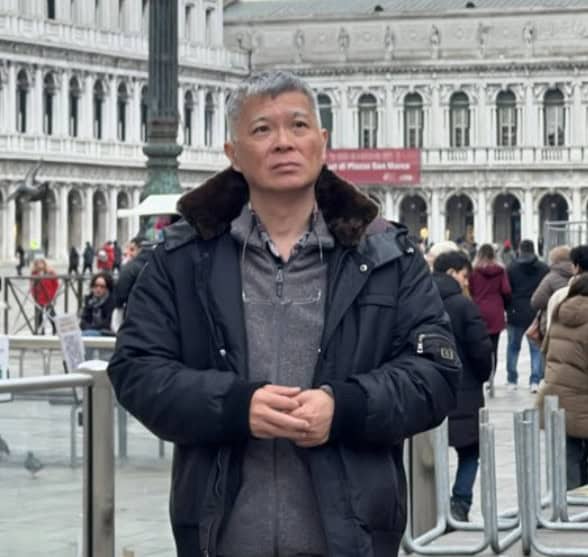
Michael Koh is a production specialist and entrepreneur who founded Spring Forest Studio in 2017 to provide event and virtual production solutions in Singapore. He specialises in hybrid live streaming, XR (Extended Reality) virtual production, and studio systems integration, transitioning the business from traditional videography to advanced corporate broadcasting. Operating out of a dedicated facility at NordCom2 in Singapore, he leads a technical crew to deliver multi-camera webcasts, digital sets, and technical consultations for large-scale corporate events.