
Introduction to Digital Diplomacy with Live Video
Digital diplomacy represents a modern approach for governments and international organizations to manage relations with stakeholders worldwide. In an era where real-time communication is pivotal, live video streaming offers unprecedented opportunities for engaging with diverse audiences, ensuring transparency, and fostering trust. This discussion delves into the technicalities involved in crafting efficient live streaming infrastructures tailored for digital diplomacy.
Infrastructure for Global Live Streaming
Essential Streaming Protocols and Standards
Choosing the right streaming protocols is crucial for effective communication. Secure Reliable Transport (SRT) is favored for its resilience in traversing unreliable networks, while Real-Time Messaging Protocol (RTMP) serves as a backbone for streaming to platforms like Facebook Live and YouTube. For diplomatic events, the integration of RTP (Real-time Transport Protocol) ensures compatibility with enterprise communication tools.
Network Requirements and Failover Strategies
Global events demand robust network architectures with redundancy at their core. Load-balanced multiple Internet Service Providers (ISPs) and advanced firewall configurations contribute to high availability and disaster recovery. Implementing Quality of Service (QoS) practices ensures a seamless streaming experience.
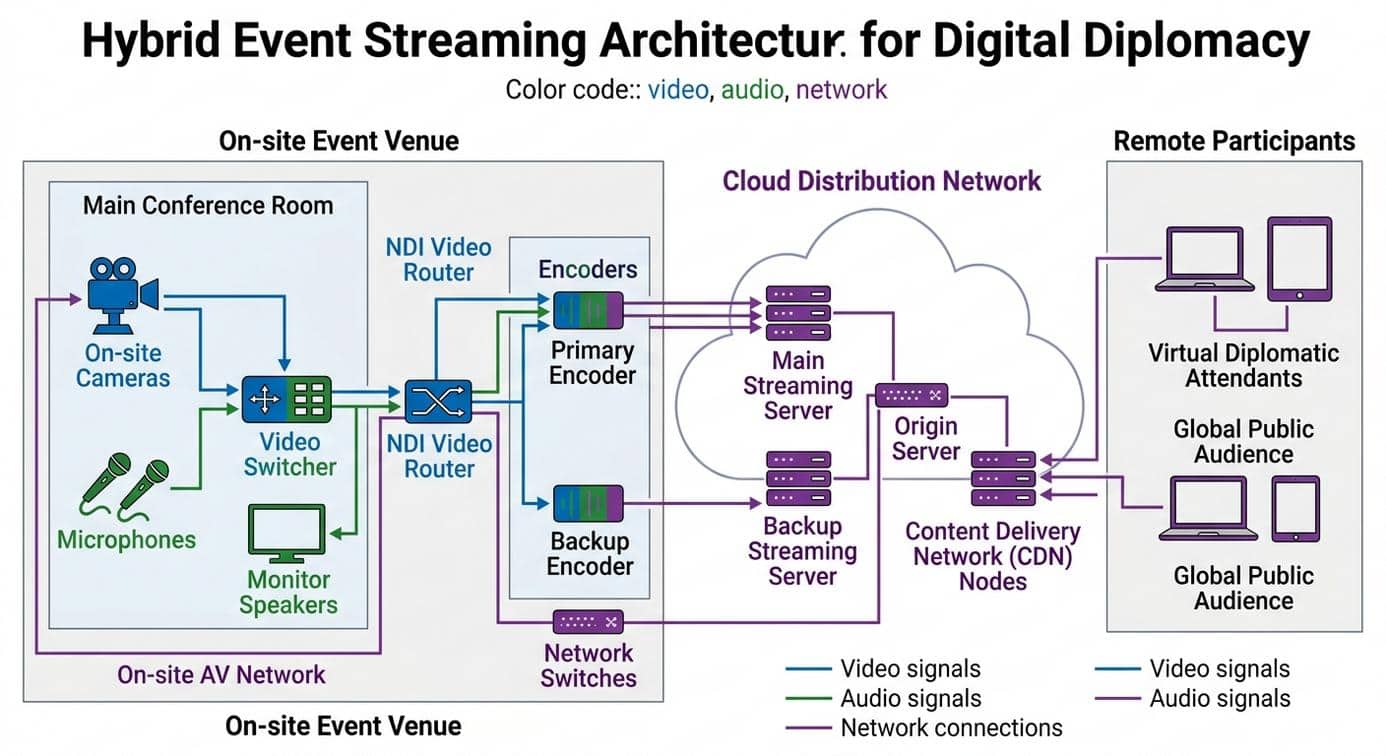
Combining Physical and Virtual Participation
Hybrid Event Streaming Technology
The hybrid model integrates on-site and online audiences. Utilizing advanced tools like Network Device Interface (NDI) for efficient video routing and integration significantly reduces latency. Video encoders capable of handling H.264/H.265 codecs ensure high-quality outputs for both local and remote attendees.
Audio/Video Signal Flow Optimization
In hybrid events, maintaining audio/video synchronization is paramount. Employing SDI (Serial Digital Interface) connections guarantees uncompressed, full-bandwidth signals, thus minimizing latency. Audio processing units handle duplex communication between event moderators and participants seamlessly.
Enterprise-Grade Multi-Camera Production
Switching Systems and Video Control Rooms
Implementing multi-camera setups enables comprehensive coverage of diplomatic events. Professional video switchers, equipped with features like virtual PTZ (Pan-Tilt-Zoom) controls and tally systems, enhance live production capabilities. Control rooms outfitted with multiview monitoring and talkback systems ensure precise coordination between camera operators.
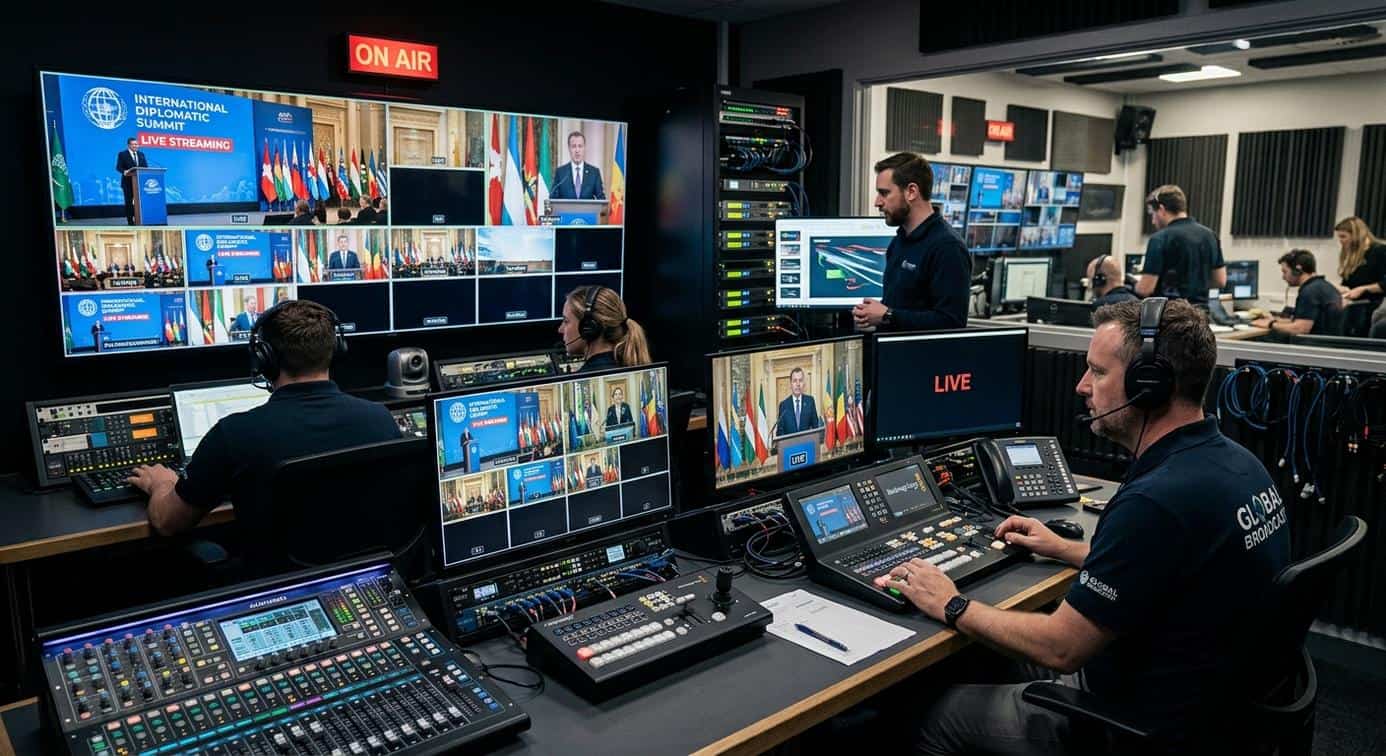
Encoding and Distribution Technologies
Enterprise environments leverage cloud-based services to distribute content globally. Encoding solutions such as AWS Elemental MediaLive offer scalable options, converting inputs to various formats suited for different devices and platforms. This flexibility is crucial for reaching stakeholders in diverse locations.
Implementation Strategies and Best Practices
Integrating with Enterprise Platforms
Integrations with platforms like Microsoft Teams and Zoom provide intuitive user interfaces while ensuring secure and compliant communication channels for governmental agencies. Custom APIs facilitate the embedding of live streams into secure portals, maintaining confidentiality and exclusivity for specific audiences.
Scalability and Redundancy Planning
Scalability is achieved by adopting microservices architectures and containerization technologies. Simultaneously, redundancy is fortified through geographically distributed servers that align with international data governance standards, ensuring uninterrupted service.
By implementing these advanced strategies and leveraging cutting-edge technologies, international bodies can conduct digital diplomacy effectively, strengthening relations without geographical limitations.
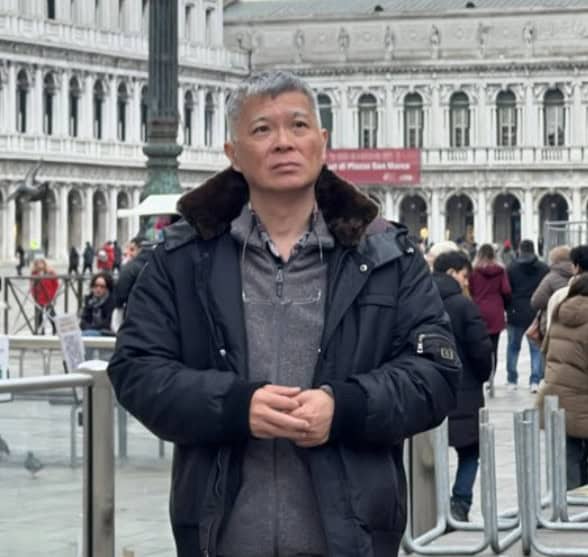
Michael Koh is a production specialist and entrepreneur who founded Spring Forest Studio in 2017 to provide event and virtual production solutions in Singapore. He specialises in hybrid live streaming, XR (Extended Reality) virtual production, and studio systems integration, transitioning the business from traditional videography to advanced corporate broadcasting. Operating out of a dedicated facility at NordCom2 in Singapore, he leads a technical crew to deliver multi-camera webcasts, digital sets, and technical consultations for large-scale corporate events.