
Exclusive Nuptials as a Broadcast Class Event
High-end wedding broadcasts sit at the intersection of luxury event production, live multi-camera television workflow, and enterprise-grade streaming infrastructure. For corporate event planners, AV professionals, production managers, and IT directors, the technical challenge is not simply to transmit video from a venue. The objective is to deliver a polished, low-latency, visually consistent, and operationally resilient broadcast that preserves exclusivity while serving a distributed audience across physical and virtual touchpoints. In premium weddings, every production decision carries reputational weight. Camera placement must be discreet yet comprehensive. Audio must remain intelligible in acoustically complex environments. Network paths must tolerate venue constraints, while encoding and distribution layers must sustain broadcast reliability under real-world load.
Professionalism in this context depends on disciplined systems engineering. A luxury wedding may appear intimate to guests, yet the broadcast architecture behind it often mirrors a small-scale corporate live event or hybrid conference. That means structured signal flow, redundant transport, calibrated color pipelines, controlled audio routing, managed comms, and a distribution design that can interface with private viewing platforms, enterprise collaboration tools, or secure webcast portals. The standards of RTMP, RTMPS, SRT, NDI, SMPTE, and ISO-based operational practices matter here because they define the boundaries of consistency, interoperability, and resilience. When the production brief requires elegance on site and technical transparency behind the scenes, the streaming system must behave like a broadcast plant, not a consumer webcast.
Production Design for Discreet, High-Quality Wedding Coverage
Multi-camera blocking and camera topology
A professional wedding broadcast usually benefits from a minimum of three camera positions, with larger or more ceremonial productions expanding to five or more. A typical configuration includes a wide master shot, a locked-off medium shot on the couple and officiant, and a roaming or cutaway camera for guest reactions, detail inserts, and aisle coverage. For premium executions, a jib, gimbal, or compact PTZ camera may be used, but the choice depends on venue aesthetics, sightline restrictions, and operator footprint. The key production principle is visual discretion. Camera housings, cabling, and operator movement should remain invisible to the live audience whenever possible.
Signal transport should be selected based on distance, electrical environment, and production complexity. SDI remains the most robust choice for point-to-point camera transport in many temporary event builds, especially where 3G-SDI or 12G-SDI can support 1080p50, 1080p60, or 2160p formats depending on the workflow. HDMI 2.1 can be relevant for short runs or compact consumer prosumer devices, but for mission-critical live events, HDMI is usually converted into a more production-friendly transport as early as possible. For IP-based facilities and larger systems, NDI and NDI|HX can reduce cabling and simplify routing, though bandwidth planning and network QoS become essential. A single full NDI stream can demand substantially more network capacity than NDI|HX, which uses compressed transport and is often more suitable for shared switches and temporary environments.
Switching, tally, and operator workflow
At the control layer, a live switcher should be treated as the operational center of the broadcast. Whether the system uses an SDI router feeding a hardware production switcher or an IP-native environment with software switching, the director needs predictable transitions, source labeling, multiview confidence, and tally integration. In a wedding setting, switch decisions should prioritize continuity and emotional timing, not aggressive visual punctuation. Hard cuts are often preferable to elaborate transitions, because they preserve ceremony gravity and reduce visible production distraction. Dissolves may be used sparingly for prelude, reception, or highlight segments, but they should not interfere with the dignity of the ceremony feed.
Talkback systems are equally important. Intercom or wireless comms allow the director, camera operators, audio engineer, and streaming technician to coordinate entrances, vows, readings, and music cues. A professional workflow normally includes a program feed, clean feed, and at least one isolated recording path. ISO recording of each camera source is valuable for post-event editing, backup recovery, and quality assurance. In premium settings, an isolated audio recording from the mixing desk, plus ambience capture from room microphones, provides redundancy if the live mix requires correction later.
Audio Engineering for Speech Intelligibility and Musical Fidelity
Microphone strategy and acoustic control
Audio is the most failure-sensitive component of a wedding broadcast. Viewers will tolerate modest video imperfections more readily than muffled vows or clipping during speeches. The capture strategy should begin with source selection. Lavaliers on the officiant and principal speakers, discreet plant microphones near musical performers, and boundary or shotgun microphones for ambient room capture can create a balanced mix when deployed with proper gain staging. For vows, a pair of wireless lavaliers, ideally frequency-coordinated and monitored for RF stability, provides a dependable primary source. For ceremonies in reverberant venues, such as chapels with reflective surfaces or large ballrooms, directional microphone placement and careful EQ become essential.
The audio chain should preserve headroom and avoid noise buildup. Typical professional practice keeps average speech levels well below clipping, with peaks managed through compression only where needed. A dynamic range approach is preferable to aggressive loudness processing because wedding ceremonies often shift between soft spoken vows and high-energy musical passages. Digital mixers with scene recall, matrix routing, and insertable processing allow engineers to prepare for each phase of the event. A dedicated mix-minus can support remote participants or officiants joining from another location, particularly in hybrid ceremony scenarios that include virtual family members or remote blessings.
Monitoring, calibration, and backup capture
Professional monitoring should include both loudspeakers and closed-back headphones, with the engineer checking not only content but room response, RF health, and latency alignment. If the event uses distributed audio for in-room playback, delay compensation may be required to keep ceremony sound coherent across zones. For live streaming, audio must be synchronized to video within acceptable lip-sync tolerance. In practice, a properly tuned workflow should maintain perceptual sync throughout the event, even when encoder buffers, network conditions, and platform processing introduce variable delay.
Backup is mandatory. An independent stereo recorder at the mixer, a secondary recorder embedded in the switcher or production server, and, where possible, camera-mounted scratch audio give the production team recovery options. This is standard operational discipline in broadcast and should be applied with the same rigor in wedding productions as in enterprise conferences. Redundancy is not excess, it is preservation of asset value.
Streaming Infrastructure, Protocol Selection, and Encoding Standards
RTMP, RTMPS, and SRT in event delivery
Transport protocol selection determines how the broadcast exits the venue and reaches the destination platform. RTMP, or Real-Time Messaging Protocol, remains common for ingest to many destination endpoints because of its broad compatibility and straightforward integration. RTMPS adds TLS encryption for a more secure transport layer, which is appropriate when the distribution path includes sensitive enterprise or private-viewer contexts. For contribution workflows, SRT, or Secure Reliable Transport, provides superior resilience over unpredictable networks by using packet recovery, encryption, and latency control. It is especially useful when sending a feed from a venue encoder to a remote master control location, cloud switching node, or disaster recovery endpoint.
In high-end wedding operations, a dual-path design is often the most practical. One path can use primary SRT contribution from venue to cloud or remote control room, while a parallel RTMP or RTMPS stream delivers to the final viewing destination if the platform requires it. This structure separates contribution from distribution and supports failover if the primary path is interrupted. Latency targets should be realistic. Contribution links may run with several seconds of latency for stability, while end-user viewing latency depends on platform architecture, transcoding depth, and network conditions. The operational goal is stable, synchronized delivery, not ultra-low latency at the expense of reliability.
Codec configuration and bitrate management
For video encoding, H.264 remains the most interoperable codec for live distribution, while H.265, also known as HEVC, can improve compression efficiency at the expense of broader compatibility and higher processing load. For premium broadcasts, 1080p50 or 1080p60 is often the practical sweet spot, particularly where destination devices vary and bandwidth must remain disciplined. If a production is built around UHD, the entire chain must be validated, from camera output and switcher format to encoder capacity, transport bandwidth, and destination platform support. Frame rate should align with regional production standards and venue lighting conditions. In Singapore and across PAL-region workflows, 50 Hz-based timing is often operationally relevant, especially where local production crews and venue systems are configured around that standard.
Bitrate selection must reflect content complexity and network headroom. Static ceremony footage compresses efficiently, while crowd movement, floral detail, and lighting effects increase scene complexity. Variable bitrate or carefully managed constant bitrate profiles can be used depending on platform ingest requirements. The encoding profile should be stress-tested with actual venue footage before the event, not simply bench-tested in a studio. Audio should be encoded at a clean, stable bitrate with proper sample rate and channel assignment, typically stereo for standard delivery and multichannel only if the destination path fully supports it. GOP structure, keyframe interval, and encoder buffer settings must match the streaming platform’s ingest rules to avoid instability or dropped frames.
Network Architecture, Redundancy, and Hybrid Audience Integration
Venue network design and QoS planning
Many luxury venues were not designed as broadcast facilities, so network planning must begin with a site survey. The production team should verify available internet service, uplink stability, Ethernet access points, VLAN segmentation, and any restrictions imposed by venue IT. If bonded cellular, dual-WAN routing, or managed internet handoff is required, it should be tested in the actual event location. The network design should isolate production traffic from guest Wi-Fi whenever possible. Shared public networks introduce jitter, congestion, and security risks. A professional event stream should operate on a dedicated circuit or dedicated logical segmentation, with QoS policies applied to prioritize live contribution traffic.
For IP-based production, switch capacity, multicast considerations, and power over Ethernet budgeting must be evaluated in advance. If PTZ cameras, control panels, or audio endpoints use IP transport, latency and packet integrity become operational parameters, not abstract networking terms. Managed switches with sufficient backplane throughput and properly configured IGMP snooping can support reliable source distribution in larger temporary environments. Network monitoring should include throughput, dropped packet rate, and uplink utilization throughout rehearsal and live operation.
Hybrid event integration and platform interoperability
Some weddings now include remote family participation, live remarks from overseas guests, or private viewing for invited attendees who cannot travel. In those cases, the broadcast may need to integrate with enterprise collaboration platforms such as Microsoft Teams, Zoom, or Webex. The technical challenge is conversion between broadcast-grade production and conferencing-grade participation without degrading the ceremony feed. A bridge system can take the program output and format it for the target platform while returning remote participant audio as a controlled source into the mix. Careful echo cancellation, echo reference management, and audio routing discipline are essential. If remote speakers are introduced, a producer should manage them as a separate contribution lane rather than embedding them casually into the program mix.
Where privacy is critical, secure access control, authenticated viewer portals, and stream tokenization should be used. High-end weddings often require invitation-only access, and the delivery stack should support that requirement through secure links, expiration controls, and platform-level moderation. The principles are the same as in corporate hybrid events, confidentiality, access management, and predictable delivery must be designed in from the start.
Operational Excellence: Rehearsal, Failover, and On-Site Execution
Rehearsal methodology and technical checklists
A professional wedding broadcast should undergo a full technical rehearsal that includes camera shading, audio line checks, encoder verification, internet failover testing, and switcher recall validation. The rehearsal should simulate the actual ceremony order, including processional timing, vows, ring exchange, first kiss, speeches, and recessional. This allows the production team to confirm exposure consistency, white balance, media playback cues, and comms discipline. If lighting changes during the event, the shader or technical director should have predefined scene or camera presets to maintain visual continuity. Color temperature consistency matters more than elaborate grading during a live event, because mismatched cameras are immediately noticeable on a large display or streaming feed.
Documentation should include a signal flow diagram, IP addressing plan, power distribution map, and contact matrix for production leads and venue staff. These assets reduce ambiguity and accelerate recovery if a component fails. ISO-style operational discipline, while not specific to weddings, offers a strong framework for repeatability, accountability, and post-event review. That is especially useful when multiple departments, such as event planning, venue operations, and external streaming vendors, must coordinate under time pressure.
Redundancy architecture and contingency paths
Every premium live stream needs a contingency path. At minimum, this includes backup power, a secondary encoder, alternate internet access, and spare capture media. For critical ceremonies, a second independent camera path can protect against lens failure, operator error, or cable damage. Uninterruptible power supplies should cover switchers, encoders, network switches, and critical audio components. If the venue has generator support, the production team still needs UPS-backed ride-through protection to cover short transfer events. The system should be able to fail over without visible disruption to the audience.
From a service perspective, professionalism is measured by how little the audience notices the complexity behind the scenes. The best wedding broadcast is one where the delivery appears seamless, the audio remains clear, the image is stable and elegant, and the guests, both in-room and remote, experience the ceremony as an intentional, premium event. That outcome is achieved through rigorous engineering, disciplined operational planning, and a production standard that treats the wedding with the same technical seriousness as a corporate live broadcast or executive hybrid summit.
For enterprise clients seeking high-end wedding broadcasts, the correct approach is to build a broadcast-grade workflow around the venue, not improvise a webcast on top of consumer hardware. Use professional switchers, controlled transport protocols, calibrated audio, resilient networking, and secure distribution. Validate every signal path, rehearse every cue, and maintain redundancy at every critical point. That is how exclusivity is protected, and how professionalism is preserved in a live environment where there is no second chance.
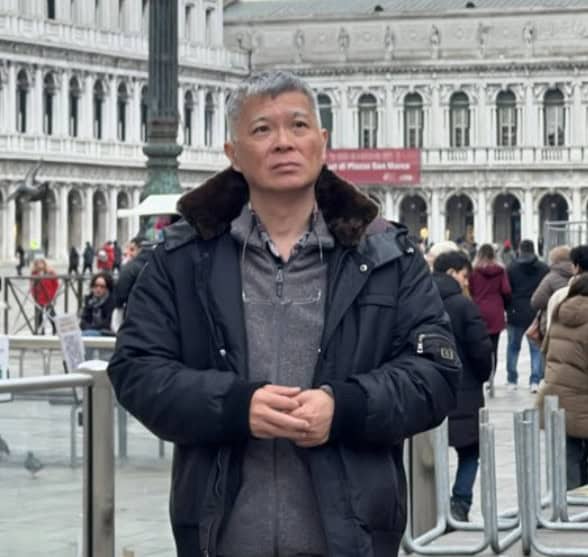
Michael Koh is a production specialist and entrepreneur who founded Spring Forest Studio in 2017 to provide event and virtual production solutions in Singapore. He specialises in hybrid live streaming, XR (Extended Reality) virtual production, and studio systems integration, transitioning the business from traditional videography to advanced corporate broadcasting. Operating out of a dedicated facility at NordCom2 in Singapore, he leads a technical crew to deliver multi-camera webcasts, digital sets, and technical consultations for large-scale corporate events.