Hyper-Realistic Sets: Creating Corporate Worlds with 3D Virtual Production
In the world of corporate event streaming and hybrid production, the demand for immersive, hyper-realistic environments has surged. 3D virtual production technology offers unprecedented opportunities for businesses to construct intricate corporate worlds that truly captivate audiences. Leveraging this technology requires a deep integration of advanced streaming protocols, cutting-edge production infrastructure, and creative vision.
Understanding 3D Virtual Production
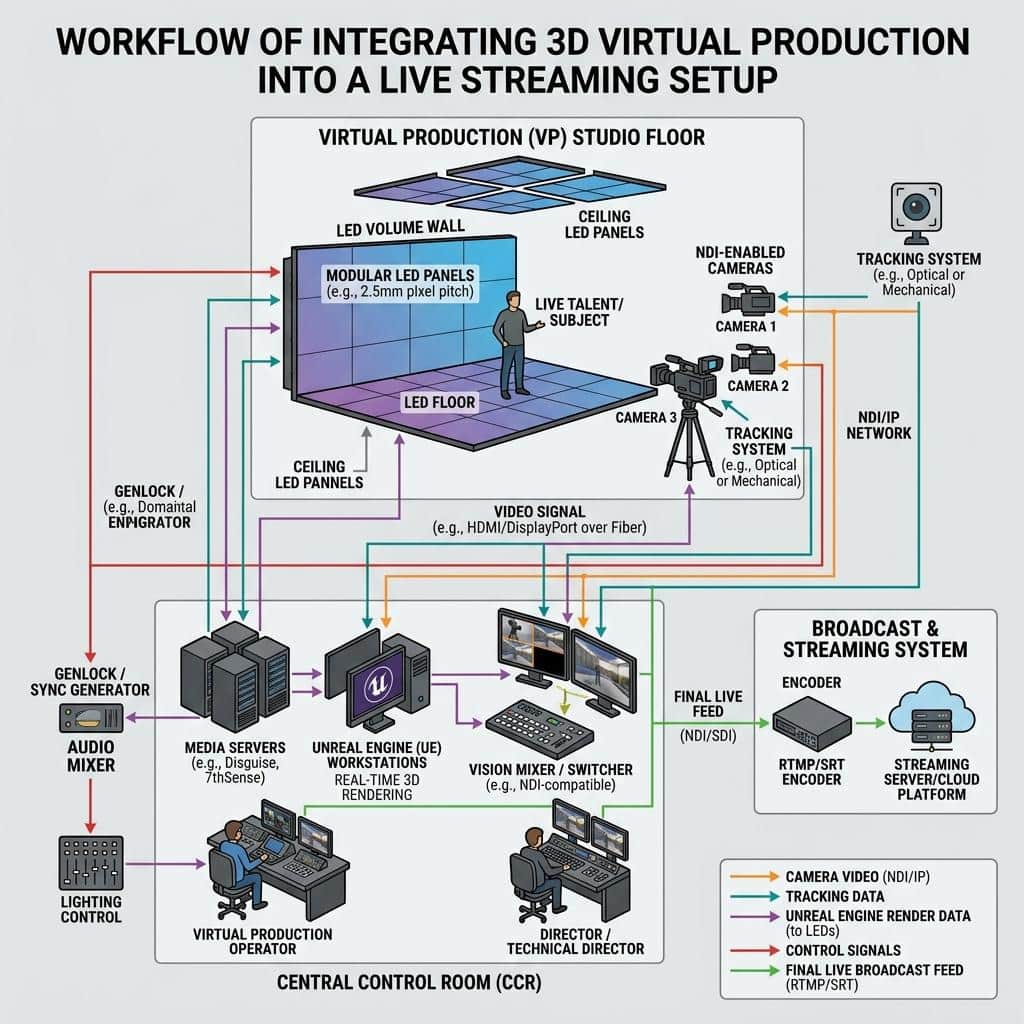
3D virtual production fuses live-action footage with computer-generated imagery (CGI) to produce realistic scenes that would be impossible or costly to achieve in physical settings. This involves using LED panels, camera tracking systems, and real-time rendering engines to create dynamic environments.
The Role of LED Panels and Camera Tracking
LED panels provide the backdrop on which the 3D environments are projected. High-resolution panels with precise color calibration ensure that the images are seamless and compelling. Camera tracking systems like NDI (Network Device Interface) track camera positions in real-time to maintain the correct perspective of CGI elements.
Integrating Live Production Workflows
Incorporating 3D virtual sets into live production involves seamless integration with traditional live-switching technologies. Systems like SDI (Serial Digital Interface) route high-definition video signals from multiple cameras to a central switcher, enabling dynamic scene changes in real-time. RTMP (Real-Time Messaging Protocol) and SRT (Secure Reliable Transport) are critical for reliable streaming, ensuring minimal latency and high-quality feeds.
Streaming Protocols and Encoding Standards
Utilizing protocols like RTMP and SRT allows for secure and efficient live streaming. RTMP is widely used for low-latency streaming, while SRT supports data encryption and error correction, crucial for maintaining quality across various network conditions. Understanding bitrate management and H.264/H.265 encoding can further optimize streaming performance, ensuring clarity and stability throughout the broadcast.
Building a Scalable Streaming Infrastructure
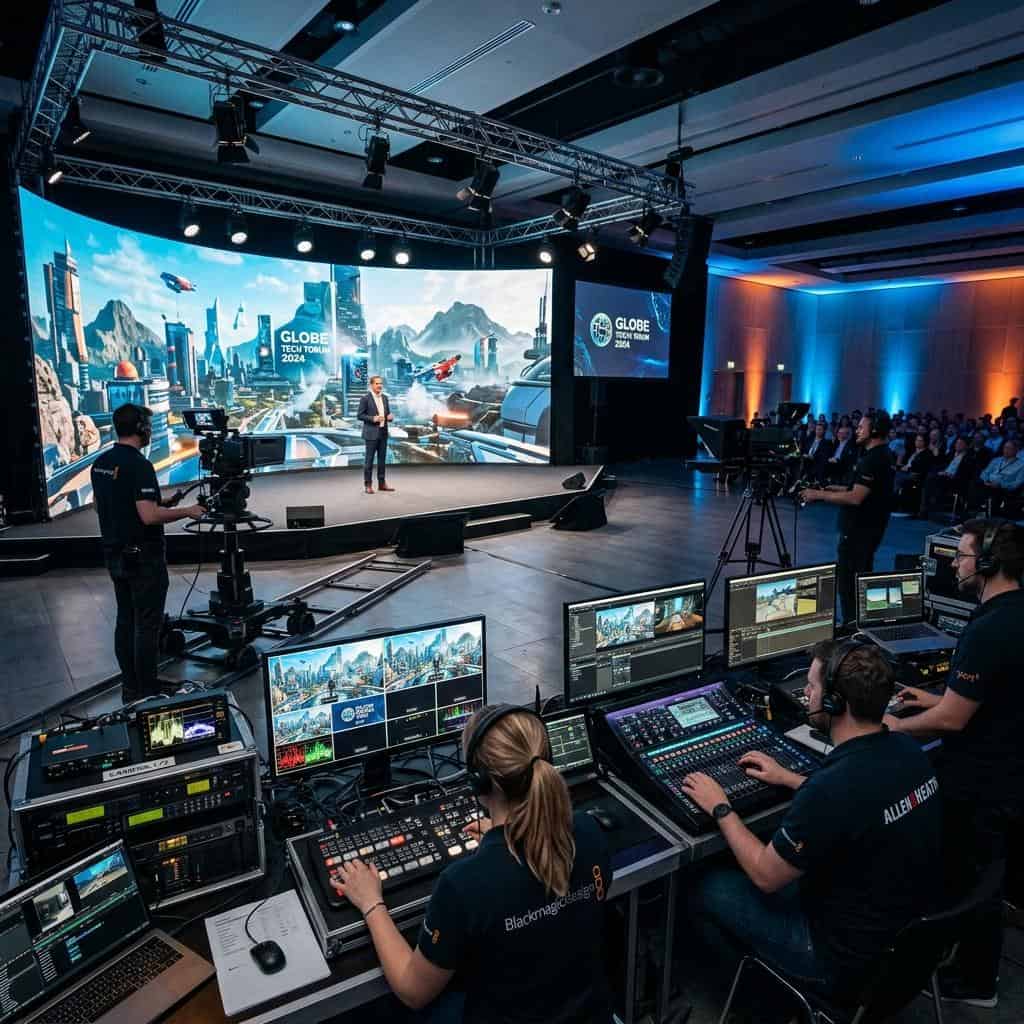
Enterprises need to build robust streaming infrastructures that can accommodate both physical and virtual audiences. Hybrid events require setups that cater to in-person attendees and online viewers, necessitating a blend of cloud-based and on-premise solutions.
Network and Signal Flow Architecture
Establishing a scalable network involves sophisticated routing of audio and video signals. Utilizing VLANs (Virtual Local Area Networks) allows segmented and secure data flow, while NAT (Network Address Translation) can be employed to manage public IP addresses efficiently. Redundancy and failover strategies are crucial, employing solutions such as load balancing across multiple servers to prevent downtime.
Practical Implementation and Industry Standards
Adhering to industry standards such as SMPTE (Society of Motion Picture and Television Engineers) and ISO can ensure interoperability and quality across all elements of production. These standards guide everything from color calibration to signal integrity, vital for producing professional-grade broadcasts.
Real-World Enterprise Case Studies
Consider a corporation hosting a global conference with virtual sets tailored to distinct regional themes. Utilizing NDI-enabled cameras and SRT for secure streaming, the production team orchestrates an event that blends live speakers in realistic virtual environments. Compliance with SMPTE standards guarantees consistency and professionalism, while robust networking ensures audience engagement worldwide.
Conclusion: Crafting Immersive Corporate Experiences
3D virtual production empowers businesses to craft immersive, memorable experiences that transcend traditional corporate settings. By integrating advanced production protocols and scalable infrastructures, enterprises can deliver high-quality hybrid events that resonate deeply with their audiences.
At Live Streaming Studio, we provide expert solutions to navigate the complexities of B2B event streaming and virtual production. Contact us to explore how our technologies can bring your corporate vision to life.
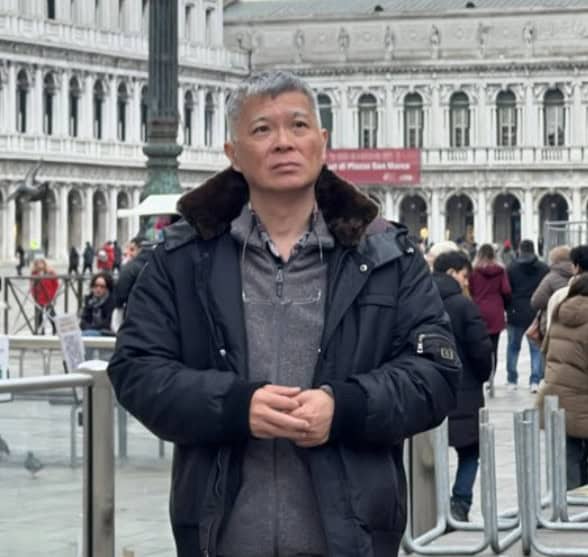
Michael Koh is a production specialist and entrepreneur who founded Spring Forest Studio in 2017 to provide event and virtual production solutions in Singapore. He specialises in hybrid live streaming, XR (Extended Reality) virtual production, and studio systems integration, transitioning the business from traditional videography to advanced corporate broadcasting. Operating out of a dedicated facility at NordCom2 in Singapore, he leads a technical crew to deliver multi-camera webcasts, digital sets, and technical consultations for large-scale corporate events.