
Introduction to Immersive Branding in B2B Event Streaming
The integration of Extended Reality (XR) in B2B event streaming offers enterprises a revolutionary way to engage audiences by placing products virtually into the customer’s hands. As businesses strive to differentiate themselves in digital marketing, XR emerges as a critical tool within the sphere of hybrid production and streaming services, particularly for enterprise clients organizing large-scale virtual and hybrid events.
Leveraging XR for Product Placement: A Technical Exploration
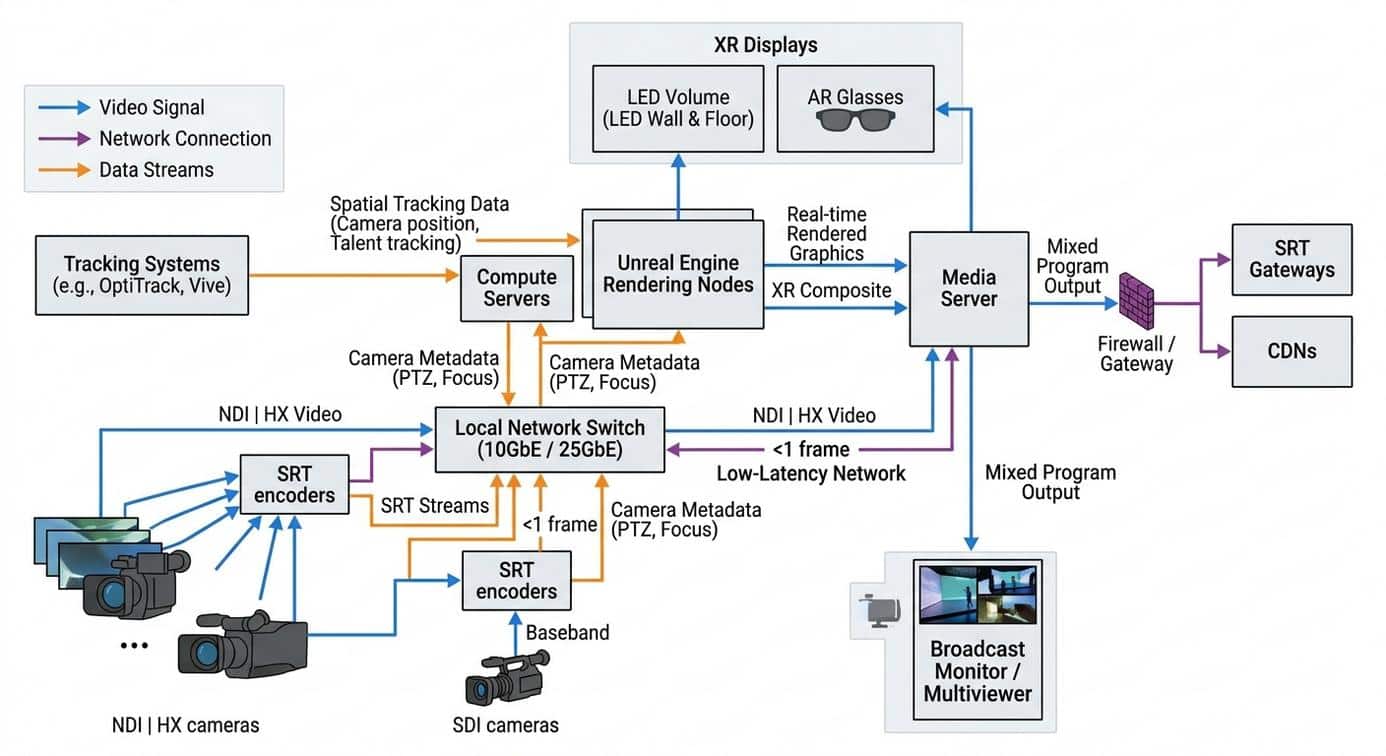
Implementing XR in live event production is a complex process that involves synchronizing various technologies and protocols such as NDI (Network Device Interface), RTMP (Real-Time Messaging Protocol), and SRT (Secure Reliable Transport). XR creates a virtual environment where customers can interact with digital product models, which requires advanced rendering and real-time interaction capabilities.
Understanding XR Display Technologies
The deployment of XR in live events revolves around display technologies like LED walls and VR headsets, which offer high-resolution visuals driven by powerful GPUs and robust CPU architectures. The choice of these components impacts the overall fidelity and success of the immersive experience: 4K/UHD resolution, HDMI 2.1 interfaces, and specific refresh rates are crucial for achieving seamless interactivity.
Infrastructure Requirements for XR Event Streaming
Enabling XR in streaming requires an enterprise-grade infrastructure. At the core, there’s a necessity for high-bandwidth, low-latency networks capable of handling heavy data loads typically exceeding 10 Gbps, especially when integrating multiple video sources and interactive elements across platforms such as Microsoft Teams or Zoom.
Architecting Scalable Production Setups
Scalability is addressed through cloud-based solutions like AWS and Azure, offering elasticity for production resources and storage, with robust security protocols aligned to ISO standards ensuring enterprise-level data protection.
Network Design and Protocol Integration
Critical to this setup is the use of standards like SMPTE for timing and formatting, alongside SRT and RTMP to secure and transport video streams effectively. A well-designed network integrates video switching systems, audio mixers, and encoders to manage video/audio signal routing and ISO recording efficiently.
Implementation Strategies for Hybrid and Virtual Events
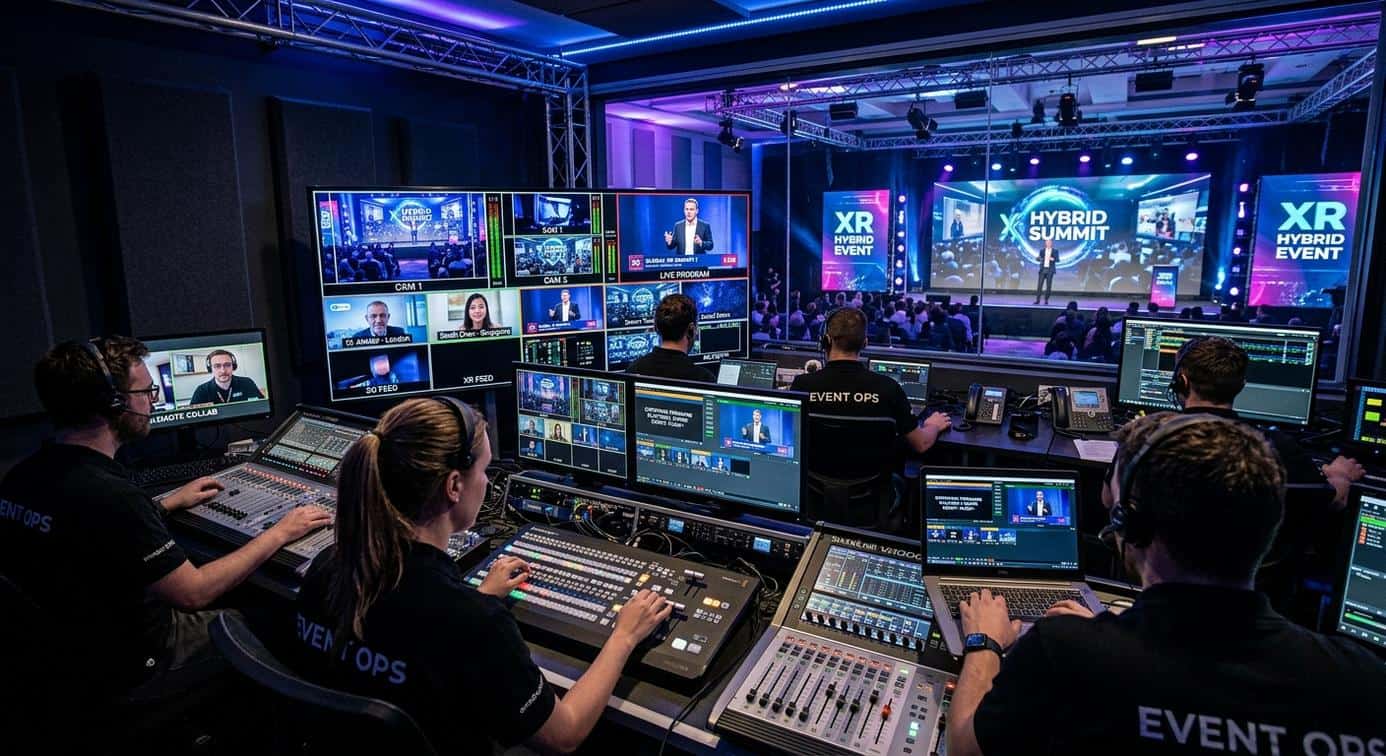
When deploying XR in hybrid events, the focus is on seamless integration between physical and virtual environments. This includes setting up multi-camera arrangements, using SDI (Serial Digital Interface) for professional-grade video delivery, and NDI|HX for efficient video over IP workflows.
Cross-Platform Integration and Signal Management
Integrating enterprise platforms like Webex or Zoom requires meticulous signal flow design to maintain synchronization across all channels. Advanced encoding (H.264/H.265), latency optimization techniques, and multiview monitoring ensure the highest quality of service and experience.
Recommendations for Optimizing XR Solutions
To make the most of XR in virtual product placements, enterprises must focus on the redundancy and failover strategies to maintain uptime and performance. Choosing reliable encoding protocols, adequate network redundancy, and adopting a hybrid cloud/on-premise infrastructure model are critical for a robust solution.
Our recommendations include proactive QoS management, bandwidth optimization strategies, and leveraging cutting-edge production technologies to ensure successful XR integrations in B2B event streaming environments.
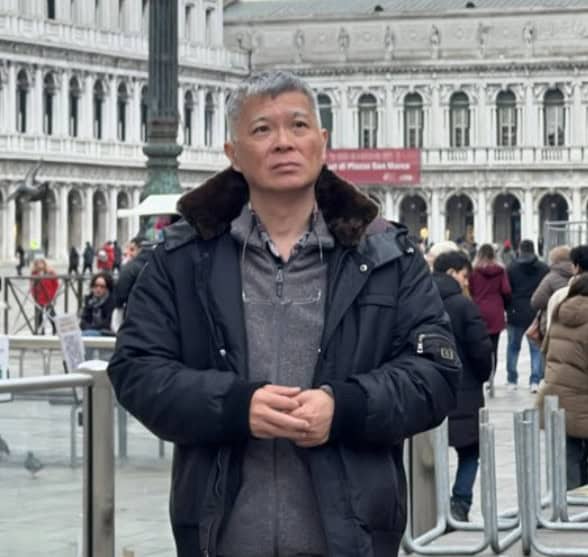
Michael Koh is a production specialist and entrepreneur who founded Spring Forest Studio in 2017 to provide event and virtual production solutions in Singapore. He specialises in hybrid live streaming, XR (Extended Reality) virtual production, and studio systems integration, transitioning the business from traditional videography to advanced corporate broadcasting. Operating out of a dedicated facility at NordCom2 in Singapore, he leads a technical crew to deliver multi-camera webcasts, digital sets, and technical consultations for large-scale corporate events.