Integrated chat moderation has become a core production function in enterprise live streaming and hybrid events. In a corporate town hall, investor briefing, product launch, training webcast, or multi-site leadership summit, chat is no longer a side channel. It is a parallel communication layer that can either improve engagement and feedback quality or destabilize the program if it is unmanaged. For production teams operating in B2B environments, chat moderation must be designed with the same discipline applied to program video, audio routing, encoder configuration, and network resilience. That means treating moderation as part of the overall event architecture, not as a last-minute administrative task.
In practical terms, integrated chat moderation sits at the intersection of event operations, audience management, platform governance, and compliance. The moderator is not simply filtering messages. The role includes maintaining discourse quality, escalating technical issues, capturing audience questions for speakers, applying policy controls, and preventing disruptions that can damage the credibility of an enterprise event. When a hybrid event spans an in-room audience, remote executives, distributed employees, and external stakeholders, chat moderation also becomes a control point for information flow. The objective is to keep discussions on track without reducing interactivity, while protecting the integrity of the program feed, the communications plan, and the brand environment.
For enterprise clients, the challenge is amplified by platform diversity. Microsoft Teams, Zoom, Webex, and enterprise webinar environments all implement different moderation models, different permission hierarchies, and different logging capabilities. These platforms may be integrated into a broader live production stack using RTMP, RTMPS, SRT, NDI, or dedicated virtual event platforms, and each integration introduces timing, role, and workflow considerations. A technically sound moderation plan therefore needs to align user roles, production control surfaces, content review processes, and network infrastructure. In high-stakes corporate events, this alignment is what keeps the conversation professional, compliant, and useful.
Why Integrated Chat Moderation Is a Production Control Function
Integrated chat moderation should be understood as part of live program control. In a traditional broadcast environment, control room staff manage source switching, audio levels, graphics, and timing. In a hybrid event environment, moderators manage a parallel stream of audience input that can influence the pacing and direction of the show. When chat is integrated with Q&A queues, speaker prompts, and backstage coordination, it becomes an operational layer that affects editorial flow.
Managing audience interaction without compromising the run of show
Every corporate live event has a run of show, and that document defines timing, speaker transitions, cueing, and technical checkpoints. Chat moderation must map to the run of show. This means the moderation team needs to know when audience questions are welcome, when discussion should be restricted to monitored Q&A, and when the audience should be redirected to support channels. For example, in a quarterly business review streamed to regional offices and remote participants, the moderator may allow procedural questions during the first segment, then switch to a formal queue once the executive presentation begins. That transition should be synchronized with the producer, the technical director, and the webcast platform operator.
Integrated moderation is also essential for protecting speaker focus. Unfiltered chat can introduce off-topic commentary, duplicate questions, confidential requests, or technical troubleshooting that distracts from the program. In enterprise environments, this is not just a user experience issue. It is a governance issue. A moderated channel lets the production team preserve the professionalism expected in board-level, investor, or customer-facing communications.
Moderation as part of governance, compliance, and record retention
Many organizations retain live event logs for audit, compliance, or post-event analysis. Chat logs may be subject to retention requirements, internal communications policy, privacy controls, or records management rules. For Singapore-based enterprise events, this becomes especially relevant in environments that must align with internal data handling policies and local governance expectations. Moderation workflows should therefore include message retention, export capability, access restriction, and role-based permissions. In regulated sectors, the moderation stack should also support traceability, so that flagged or removed messages can be reviewed after the event if needed.
From a technical perspective, moderation systems should integrate with identity and access management controls. Single sign-on, directory-based user roles, and session authentication reduce the risk of unauthorized participation. For enterprise webinars and hybrid meetings, access policies should be defined before the event rather than adjusted live. The production team should know which participants can post publicly, which can post only to moderators, which can submit questions, and which require escalation to an internal help desk.
Building the Moderation Architecture into the Streaming Workflow
Integrated chat moderation works best when it is designed into the production topology. The moderator console, the platform control panel, the speaker support channel, and the technical operations layer should all be coordinated. This is especially important in multi-camera productions where a show caller, vision mixer, audio engineer, and streaming engineer are already operating in a tightly timed environment.
Platform roles, permissions, and queue design
Most enterprise event platforms support some combination of host, co-host, panelist, moderator, attendee, and support roles. These roles should be mapped to functional responsibilities. A moderator may review incoming questions, tag technical issues, forward audience prompts to the speaker, or suppress inappropriate content. A producer may curate the final queue. A technical support agent may respond to connectivity or audio issues in a private channel. This separation is essential because it prevents a single inbox from becoming a bottleneck.
A practical implementation pattern is to use multiple channels for different message types. Public chat can be enabled for engagement questions and professional commentary. A private Q&A queue can collect agenda-related questions for review. A backstage coordination channel can connect the producer, moderator, A/V lead, and platform operator. A technical help channel can route attendee issues away from the main discussion. This segmentation reduces noise and allows the moderation team to prioritize messages based on event value and operational urgency.
Integration with event control systems
In higher-end productions, chat moderation may be tied to the event’s control environment through APIs, webhooks, or operator dashboards. That allows moderation actions to be synchronized with polling, speaker handoff, lower-third graphics, and audience state changes. For example, when an executive panel begins, the producer can trigger the platform to restrict chat to Q&A only, while the moderator filters submissions and forwards selected items into the speaker view. If the platform supports it, moderation actions can also be logged alongside timecode markers for post-event review.
When building these workflows, latency matters. If the moderation queue is delayed by poor platform responsiveness or overloaded browser clients, the audience experience degrades. The production team should test queue refresh rates, moderator permissions, and API response behavior during rehearsal. The goal is to ensure that moderation decisions are reflected quickly enough to maintain conversational continuity without introducing visible lag or confusion.
Technical Infrastructure for Reliable Moderation in Hybrid Events
Moderation quality depends on infrastructure. An event team can have excellent policy and still fail operationally if the platform, network, or device stack is unstable. In enterprise live streaming, chat moderation is only as effective as the supporting technical environment.
Network design, bandwidth, and redundancy
Moderators, producers, and technical staff often operate from the same venue LAN or from distributed workstations. Their access should be protected by enterprise-grade network design. Dedicated event VLANs, QoS policies, and separate internet uplinks reduce contention with program video traffic. If the show uses RTMP or RTMPS contribution to a cloud destination, the streaming encoder should have priority and the moderator workstations should be placed on a stable control network with reserved bandwidth for platform access, file transfers, and remote support tools.
For larger events, dual ISP failover, bonded internet, or secondary cellular backup should be considered for the production layer. While chat traffic itself is lightweight, moderation tools often depend on the same connectivity as the broader event platform. If the moderator cannot access the control panel, the event loses a critical operational safeguard. In live production, redundancy should extend to endpoint devices, browser profiles, and authentication methods. A backup laptop, tested login credentials, and a documented recovery path are basic requirements, not optional extras.
Encoding, delivery protocols, and synchronized audience experience
Although chat moderation is not part of the video encode path itself, it sits within the same audience delivery workflow. If a hybrid event uses H.264 or H.265 encoding for a 1080p or 4K program feed, the moderator experience must align with the audience playback window. If the video is delayed by 15 to 30 seconds due to cloud distribution or platform buffering, chat timing should be managed so that moderators do not respond to questions based on an earlier program moment. This is especially important in Q&A sessions, where misalignment between stream latency and chat handling can create confusion.
For low-latency workflows using SRT, moderation can be more tightly synchronized with the live show, but the production team still needs to validate end-to-end delay across the contribution chain, cloud processing layer, and playback client. In NDI-based production environments, especially in facility-connected control rooms, chat moderation can be coordinated with switching, graphics, and speaker cues through intercom or operator messaging. The principle remains the same: moderation should be timed to the same production clock as the rest of the event.
Audio, talkback, and operator communications
Technical moderation is easier when the production team uses proper talkback systems and comms architecture. The moderator needs a reliable channel to the producer, technical director, and session host. In a live show, a private comms path is often more valuable than a text channel because it reduces response time during fast-moving segments. A clear audio communication workflow also helps resolve audience issues quickly. For example, if a participant posts that the interpreter feed is missing or the captions are not visible, the moderator can escalate the issue to the appropriate operator without interrupting the public discussion.
Professional event environments should also consider captioning and accessibility workflows. If live captioning or interpretation is part of the event, the moderation team should know how to direct language-specific questions, accessibility concerns, or transcript requests. This improves inclusivity while reducing unnecessary noise in the main chat stream.
Operational Best Practices for Professional Chat Control
Strong moderation is a blend of policy, staffing, and real-time judgment. It works best when the production team defines clear rules, trains moderators before the event, and uses the platform consistently.
Pre-event moderation policy and escalation paths
Before the event, establish a written moderation policy. Define which topics are on-topic, which language is prohibited, how technical issues should be reported, and what constitutes escalation. For enterprise events, moderation criteria should include brand safety, confidentiality, competitor references, off-topic promotion, harassment, and repeated disruption. The policy should also define the approval threshold for public posting. Some organizations allow free public chat. Others use pre-moderation for all messages. Many enterprise events use a hybrid model, where trusted internal attendees can post freely while external participants are moderated.
The escalation path must be equally clear. If a participant posts a legal or investor-relations question, does the moderator forward it to the producer, the legal team, or the presenter’s assistant? If a technical issue affects multiple attendees, does the moderator send a standardized response in chat, notify support, or switch the floor to the help desk? These decisions should be rehearsed so the team can execute them quickly during the live event.
Moderation staffing and workload management
Large events require more than one moderator. A single person cannot simultaneously monitor chat, curate questions, manage policy exceptions, and communicate with the production team when audience volume is high. A scalable structure separates responsibilities. One person can screen messages, another can triage technical issues, and a lead moderator can decide which questions reach the presenter. For executive town halls, product briefings, and large employee meetings, this division of labor improves both speed and accuracy.
Workload management should also account for time zones, especially in multinational events. If the audience includes APAC, EMEA, and North America, chat velocity and issue types may vary throughout the program. For Singapore events with regional participation, moderators should be briefed on language mix, expected participation patterns, and local timing sensitivities. A distributed moderation team can hand off coverage across time zones while maintaining a consistent policy framework.
Using moderation data for post-event improvement
After the event, chat logs are a valuable operational dataset. They reveal where audience interest peaked, which topics required clarification, which questions repeated, and where technical friction occurred. This information can be used to refine the run of show, improve speaker preparation, and adjust future moderation rules. If many attendees ask about a deployment timeline, for example, the content team may need to address that topic earlier in the presentation or provide a more visible supporting slide. If numerous participants report audio issues, the production team should examine codec settings, routing, or platform-side playback behavior.
Post-event analysis should not be limited to message volume. It should also assess moderation response time, escalation success, and issue resolution quality. In enterprise streaming, operational excellence comes from feedback loops. Chat moderation is one of the clearest sources of live audience intelligence available to the production team.
Implementation Guidance for Enterprise Streaming Teams
For enterprise clients building a repeatable hybrid event model, integrated chat moderation should be standardized alongside encoding profiles, camera switching templates, and audio routing schematics. The most effective deployments use the same rigor applied to SDI or HDMI 2.1 signal management, ISO recording, program feed distribution, and cloud uplink protection.
Recommended deployment approach
- Define moderation policy, escalation categories, and response ownership before the event is scheduled.
- Map chat roles to platform permissions, identity controls, and internal communication channels.
- Test moderation workflows during rehearsal alongside switching, graphics, and speaker handoff.
- Validate network reliability, browser compatibility, and account authentication on every moderator workstation.
- Align chat handling with stream latency, session timing, and Q&A presentation rules.
- Maintain redundancy for devices, connectivity, and access credentials.
- Capture logs for post-event review and operational improvement.
In a well-run corporate streaming environment, integrated chat moderation is not a cosmetic feature. It is a control mechanism that protects the audience experience, supports speaker performance, and reinforces the professionalism of the event. When built into the production architecture with the same care given to video transport, audio quality, and platform stability, moderation keeps discussions focused, productive, and aligned with business objectives. For enterprise event teams, that is the standard that matters.
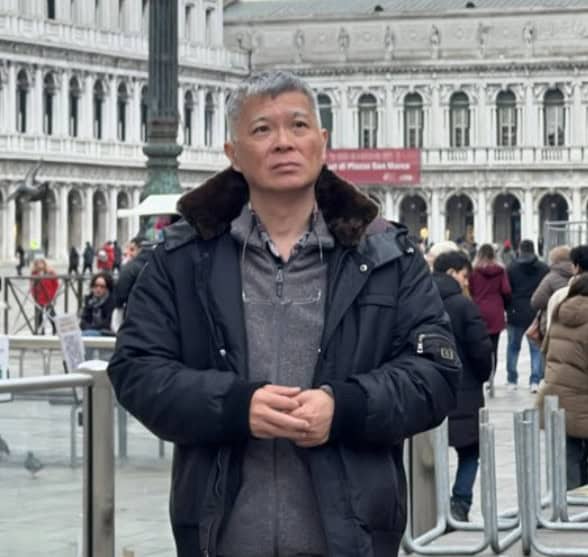
Michael Koh is a production specialist and entrepreneur who founded Spring Forest Studio in 2017 to provide event and virtual production solutions in Singapore. He specialises in hybrid live streaming, XR (Extended Reality) virtual production, and studio systems integration, transitioning the business from traditional videography to advanced corporate broadcasting. Operating out of a dedicated facility at NordCom2 in Singapore, he leads a technical crew to deliver multi-camera webcasts, digital sets, and technical consultations for large-scale corporate events.