
Interactive Q&A is one of the most demanding formats in hybrid event production because it exposes every weakness in the signal chain, every timing issue in the contribution path, and every coordination gap between the stage, the control room, and remote participants. For corporate events, town halls, product launches, analyst briefings, and internal leadership meetings, the question period is often where audience engagement is measured most directly. If the Q&A experience is unstable, delayed, or poorly integrated, the event feels disconnected for both the front row and the home screen. For enterprise production teams, the technical objective is clear, build an interactive environment where in room attendees and remote viewers can submit, queue, hear, and see questions with broadcast-grade reliability, low latency, and controlled audio and video quality.
Delivering that experience requires more than a simple webinar platform. It requires a designed architecture that connects presentation capture, audio routing, multiview monitoring, streaming encoders, moderation tools, and conferencing or webcast integration into a single operational workflow. The strongest hybrid Q&A systems are built around professional production principles, including deterministic signal flow, redundancy, managed network transport, and clear roles for the technical director, audio engineer, streaming operator, moderator, and stage host. When designed correctly, interactive Q&A becomes a structured live production element rather than an improvised add-on.
Designing the Interactive Q&A Signal Chain for Hybrid Events
Interactive Q&A starts with a reliable signal chain from the room to the remote audience and back again. In a corporate environment, the production team may be feeding a program output to a streaming encoder, a conferencing bridge, and an ISO recording system at the same time. The question and answer workflow must fit inside that architecture without introducing echo, phase issues, or unacceptable latency. A typical enterprise design uses SDI, Serial Digital Interface, for core camera and switcher routing, HDMI 2.1 where presentation laptops or peripherals require direct ingest, and NDI, Network Device Interface, or NDI|HX only when network conditions and latency budgets support IP-based contribution.
Program, return, and confidence monitoring
The program feed is the primary output carried to the remote audience. For interactive Q&A, the production team should also establish a return feed, often a confidence monitor or clean feed that allows speakers on stage to see remote questions, moderated prompts, or the tally of queued audience submissions. Multiview monitoring is essential, because the technical director must monitor camera sources, graphics, program output, audio meters, and returned platform feeds simultaneously. In a high-pressure boardroom or plenary environment, this monitoring layer is what prevents a remote question from being missed or an on-screen lower third from covering key presentation content.
Latency budgets and audience synchronization
Latency is one of the defining variables in interactive Q&A. A fully interactive system that includes live audience submission, moderator approval, and remote speaker response should be designed with a clear latency budget. Contribution paths using SRT, Secure Reliable Transport, can tolerate public internet variability while maintaining stable delivery, but the round-trip time can still exceed what feels natural for conversational exchange. RTMP, Real-Time Messaging Protocol, remains common for contribution to web platforms, though it is generally less resilient than SRT across unstable networks. For remote Q&A sessions with live back-and-forth, the team should define whether the event is a near-live webcast with moderated interaction or a true conversational hybrid session with minimized delay, because those are different engineering targets.
In practice, many corporate events use a split approach. The remote audience receives a program stream encoded at a stable bitrate, often 6 to 12 Mbps for 1080p production or higher for 4K/UHD workflows, depending on the platform and content complexity. Questions from remote participants travel through the event platform or meeting layer, are moderated in a separate operator interface, then delivered to the stage through a return monitor, confidence display, or in-ear communication. This reduces the risk of direct audience audio into the main PA while preserving interactivity.
Audio Architecture for Clear Questions and Controlled Returns
Audio design is the most important element in interactive Q&A because intelligibility determines whether questions feel meaningful. Corporate hybrid productions require disciplined microphone management, gain structure, echo control, and routing between the room reinforcement system and the streaming mix. The live house mix and the stream mix should not be identical in many cases. The room may need more ambient reinforcement for in-person attendees, while the stream mix needs tighter vocal focus, controlled dynamics processing, and cleaner transitions between presenter mics, handheld audience mics, and remote return audio.
Microphone strategy for in-room questions
For front row and audience Q&A, the best practice is to deploy dedicated handheld wireless microphones or distributed boundary microphones, rather than relying on open room pickup. Wireless handheld systems offer higher intelligibility and better control over off-axis noise, while boundary microphones can work in boardrooms or smaller breakout rooms when seating is fixed and acoustics are manageable. Every audience microphone should be routed through the console with proper gating, EQ, and level normalization. A predictable target is a speech-forward mix with enough headroom to avoid overload, typically leaving several dB of safety margin before the limiter stage.
Talkback systems are equally important. The moderator, stage manager, and technical director need a private communication path that does not go to program. In larger corporate productions, this is often implemented through intercom hardware integrated with camera ops, graphics operators, and audio engineers. Clear talkback reduces dead air during question handoffs and allows the production team to manage remote microphones, confidence monitors, and cueing without visible interruption.
Remote audio integration and acoustic hygiene
When remote participants ask questions over a conferencing platform such as Microsoft Teams, Zoom, or Webex, the audio integration must be handled carefully to avoid echo and feedback loops. The conferencing platform should either be treated as a discrete return source or embedded into the overall production through a dedicated virtual audio interface and mix-minus configuration. Mix-minus ensures that the remote participant hears the program minus their own voice, which prevents echo and improves conversational naturalness. Acoustic echo cancellation inside the conferencing software is useful, but it should not be relied on as the only safeguard in a professional production environment.
For enterprise-grade events, the audio engineer should confirm that the Q&A return path has consistent sampling rates, typically 48 kHz in professional production environments, and that the codec chain does not introduce unnecessary artifacts. Speech clarity is often more important than extreme fidelity, but the audio must remain artifact-free, especially when board members, clients, or external experts are speaking on record.
Video Switching, Graphics, and Audience Visibility
Video in an interactive Q&A session is not only about showing the speaker. It is about maintaining situational awareness for both in-room and remote viewers. A well-designed switching plan combines camera coverage, presentation capture, motion graphics, and question display into a stable visual language. The technical director should have access to wide room shots, medium presenter shots, audience reaction shots, and any camera angle assigned to the person asking the question. This is especially important in large conference halls where audience microphones are positioned at aisles or staging points.
Multi-camera production and shot selection
Multi-camera systems in hybrid corporate events generally use SDI-connected cameras for reliability and low latency. A compact production switcher can manage the show flow, while larger events may require a routing matrix and dedicated camera shading. Camera shading, or paint control, ensures consistent exposure and white balance across angles, which matters when the program feed includes both presenters under stage lighting and audience members under different ambient conditions. The operator should preserve accurate skin tones and prevent exposure jumps when cutting from stage to audience microphone.
If the event includes remote questions projected on screen, graphics should be designed for readable, high-contrast display. Lower thirds, question identifiers, and speaker names should follow an established brand system but remain technically legible from the back of a ballroom and on smaller home displays. For hybrid events, it is often effective to place moderated questions in a dedicated question card format rather than overlaying dense text on the presenter camera. This keeps the visual structure simple and lowers cognitive load for viewers joining from Teams, Zoom, Webex, or an embedded event portal.
ISO recording and post-event reuse
ISO recording, where each camera is captured as a discrete isolated feed, adds significant value for enterprise events with compliance, training, or marketing reuse requirements. In interactive Q&A, ISO recordings allow post-production teams to re-edit the question segment, replace a lower-performing angle, or generate internal clips for executive communications. A synchronized program recording should also be captured, because it provides the definitive live version of the event. Timecode alignment and file naming conventions are essential when multiple operators and devices are involved. SMPTE standards remain foundational in this area, particularly for time reference, color management, and professional workflow consistency.
Network Infrastructure, Protocols, and Redundancy
Hybrid Q&A is only as strong as the network infrastructure supporting it. Enterprise productions must treat the venue network as a broadcast system, not an office convenience layer. Managed switches, VLAN segmentation, quality of service, and carefully documented IP addressing are core requirements. Video and control traffic should be separated where possible, and all devices that depend on live switching or return feeds should be validated before show day. For IP-based camera and production devices, NDI bandwidth planning must account for the number of sources, the codec variant in use, and whether traffic is staying on a local production LAN or crossing a broader enterprise network segment.
SRT, RTMP, and contribution architecture
SRT has become a preferred contribution protocol for many remote production workflows because it is designed to withstand packet loss and variable network conditions while protecting content over public internet paths. RTMP remains widely supported for ingest and integration, especially with established platform workflows, but it is generally less resilient than SRT under adverse network conditions. In enterprise environments, the choice often depends on platform compatibility, firewall policy, and latency objectives. For large corporate events, a practical pattern is to use SRT for contribution from remote sites or overflow rooms, then convert to platform-native distribution at the final stage.
For critical events, redundancy should exist at multiple layers. That includes dual encoders, dual internet connections from diverse carriers when possible, redundant power through UPS systems, and backup playback of slides or pre-recorded segments. If interactive Q&A is mission critical, there should also be a backup moderation workflow in case the primary platform interface fails. In a board meeting or investor event, losing the question queue is operationally significant, not merely inconvenient.
Cloud-based versus on-premise production
Cloud-based production platforms provide flexibility, rapid scaling, and remote accessibility, particularly when distributed teams need to join from different regions. However, cloud workflows do not eliminate the need for local engineering. Cameras, microphones, switchers, and encoders still need properly engineered capture and transport. On-premise production offers greater deterministic control, lower local latency, and simplified integration with room audio and display systems, which is why many high-stakes enterprise events continue to use a primarily local signal chain with selective cloud distribution. The strongest architecture is often hybrid, with local capture and switching, cloud-based moderation or engagement tools, and platform distribution tuned to the event objective.
Operational Workflow for a High-Confidence Q&A Segment
Execution matters as much as infrastructure. A polished interactive Q&A requires a repeatable workflow that starts with pre-event testing and ends with documented post-event review. The technical team should rehearse microphone handoffs, remote question intake, speaker cueing, and display behavior before the live event. The moderator should know how questions enter the queue, how they are approved, and how they are visually indicated on the confidence monitor or presentation display. This avoids hesitation on stage and reduces dead air between questions.
Preflight checks and show-day procedures
Before doors open, the production team should verify video lock, audio line checks, packet stability, and encoder health. A multiview should confirm that all sources are active and correctly labeled. The platform moderation queue should be tested with a dummy submission to confirm that remote question intake is functioning. If the event spans multiple rooms or includes overflow seating, the team should validate that each room has independent audio zoning and no accidental feed overlap. For international corporate events, especially in venues such as Singapore where enterprise meetings often include regional stakeholders and cross-border connectivity, a structured test of firewall rules, network access, and platform authentication is essential.
During the live segment, the Q&A should be controlled by a single authoritative workflow. Questions from the room are handed to the moderator, while remote questions are filtered, grouped, and prioritized through the moderation interface. The host should see a clean cue, the stage manager should maintain communication with the technical director, and the audio engineer should manage live mic levels without abrupt transitions. If a question requires a shared slide or source document, the graphics operator should be ready to recall a prebuilt template or screen source without disrupting the show flow.
Scalability for enterprise audiences
At scale, interactive Q&A becomes a bandwidth, moderation, and routing problem. A global town hall with thousands of remote viewers may not allow every participant to speak live, so the platform must support text-based questions, prioritization, and selective live audio escalation. The system architecture should separate viewer distribution from the question workflow so that a surge in audience traffic does not affect the core program stream. This is where cloud-based engagement tools and enterprise meeting platforms complement the production stack. The audience can submit questions through the platform, while the production team maintains editorial and technical control over what reaches the stage.
The best enterprise Q&A systems also plan for accessibility and compliance. Captions, transcription, and clear speaker identification improve usability and support internal documentation. Where required, the production team should coordinate with legal, compliance, and IT stakeholders to ensure that recordings, transcripts, and question archives are retained according to corporate policy. This is especially important for leadership communications, financial briefings, and regulated industry events.
Building a Reliable Front Row to Home Screen Experience
Interactive Q&A bridges the physical and virtual audience only when the entire production stack is engineered as one system. That system includes camera acquisition, audio routing, encoding, network transport, moderation, display logic, and operator communication. The technical goal is not merely to make remote questions possible. The goal is to make them feel native to the event, with clear sound, stable video, controlled latency, and a workflow that supports the host rather than distracting from the message.
For enterprise clients, the practical recommendation is to treat interactive Q&A as a design brief during the earliest event planning phase. Define the audience mix, the expected number of remote participants, the level of interactivity, the platform integration requirements, and the redundancy profile before equipment is selected. Choose SDI or IP workflows based on venue scale and transport needs. Select SRT, RTMP, or platform-native ingest based on reliability and latency targets. Build a mix-minus audio architecture, a clear moderator path, and a monitoring environment that lets the operator see everything that matters in real time. With those elements in place, the front row and the home screen are no longer separate experiences. They become one coherent production environment built for enterprise communication.
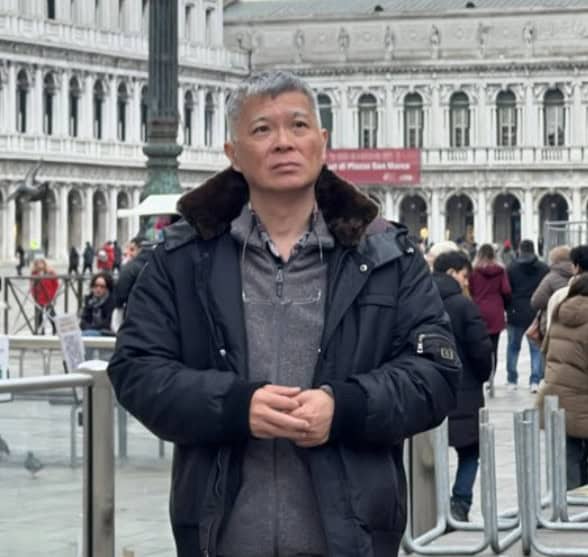
Michael Koh is a production specialist and entrepreneur who founded Spring Forest Studio in 2017 to provide event and virtual production solutions in Singapore. He specialises in hybrid live streaming, XR (Extended Reality) virtual production, and studio systems integration, transitioning the business from traditional videography to advanced corporate broadcasting. Operating out of a dedicated facility at NordCom2 in Singapore, he leads a technical crew to deliver multi-camera webcasts, digital sets, and technical consultations for large-scale corporate events.