
Multi-language audio toggling has become a core engineering requirement for global corporate events, annual general meetings, product launches, training broadcasts, and hybrid conferences managed from Singapore. For enterprise event teams operating across APAC, EMEA, and North America, the challenge is not simply translating spoken content. The real task is designing a deterministic audio architecture that can carry multiple language feeds, maintain lip sync, preserve intelligibility, and deliver reliable user-selectable playback across physical venue screens, webcast players, and unified communications platforms such as Microsoft Teams, Zoom, and Cisco Webex. When executed properly, multi-language audio is a control-layer problem, a signal-routing problem, and a network-delivery problem at the same time.
Singapore is a particularly strong operations hub for this workflow because it supports regional connectivity, multilingual production teams, and enterprise-grade infrastructure with access to dense carrier ecosystems, cloud regions, and broadcast-qualified facilities. That combination matters when a global platform requires one program feed in English, separate interpretation channels in Mandarin, Japanese, Korean, Bahasa Indonesia, or Thai, plus local compliance variants for different territories. The technical objective is to let audiences switch audio tracks without disrupting video continuity, without introducing codec drift, and without creating operational ambiguity for floor technicians, interpreters, or remote production directors.
Architecting Multi-Language Audio for Enterprise Hybrid Events
At enterprise scale, multi-language audio should be designed as a fully mapped signal chain, starting at source capture and ending at audience-side selection. A robust workflow typically begins with a clean program mix, one or more isolated interpreter outputs, and clearly separated return paths for monitoring and talkback. The audio team must define a channel plan early, because the routing matrix affects every downstream system, from the digital audio workstation to the encoder to the content delivery layer.
Channel mapping and interpretation workflows
In a standard multi-language setup, the original language feed is treated as the primary program audio, often labeled as channel 1. Additional language feeds are distributed as discrete auxiliary channels, sometimes as individual mono channels or as stereo pairs depending on the platform constraints. Professional interpretation booths or remote interpretation encoders supply these feeds. In a venue-based environment, each interpreter receives program audio via a clean line feed, ideally with separate microphone and floor audio mixes to support accurate real-time translation. Talkback is essential so the production director can communicate cues, schedule changes, or speaker handoffs without leaking into the audience feed.
For hybrid events, the channel map must remain consistent between the in-room system and the online delivery stack. If the program is captured over SDI with embedded audio and then passed to an encoder that outputs RTMP or SRT, the audio channel order has to be preserved end to end. This includes identifying whether the encoder supports multi-track AAC, whether the platform accepts multiple audio programs, and whether the player exposes track toggling through HTML5 media controls or a custom application layer. If the destination is a conferencing platform such as Teams, Zoom, or Webex, the capability set changes significantly, because these systems often limit user control over multiple audio tracks and may require alternate workflows such as separate language breakout sessions, simultaneous interpreters, or distinct event streams.
Latency budgets and intelligibility targets
Multi-language workflows must control latency tightly. Interpretation systems can tolerate slightly different delivery timing if the platform is not intended for direct lip-synchronous playback, but the difference between the program feed and translated feed still has to remain operationally acceptable. In live event production, the audio path should be engineered to avoid excessive buffering at the encoder, unstable jitter on the transport layer, and unnecessary transcoding hops. AAC audio at 48 kHz is common in live streaming chains, but the codec choice and bitrate must be matched to the platform and to speech intelligibility requirements. For corporate speech content, clarity matters more than stereo imaging, so mono distribution is often the most efficient format for language channels, especially when bandwidth efficiency and packet resilience are priorities.
From a technical standpoint, intelligibility is driven by source microphone placement, acoustic treatment, gain structure, and compressor tuning. A multilingual event is especially sensitive to room tone and stage wash because interpreters amplify any ambiguity in the source. Production teams should maintain consistent levels around nominal speech targets, avoid clipping in the front end, and keep headroom available for applause, audience questions, and presenter movement. In practical terms, the console output must stay clean enough for downstream encoding without requiring aggressive post-processing that can introduce pumping or phase artifacts.
Streaming Protocols, Encoders, and Multi-Track Delivery
Once the audio architecture is defined, the next layer is transport. Enterprise live streaming from Singapore typically relies on RTMP, RTMPS, SRT, or managed contribution systems that ultimately hand off to a cloud distribution layer or a private event platform. Each protocol has different implications for multi-language audio toggling, redundancy, and operational complexity.
RTMP and RTMPS in controlled enterprise environments
RTMP, the Real-Time Messaging Protocol, remains widely supported for contribution into many event platforms. When used in secure form as RTMPS, it provides encryption in transit, which is important for corporate presentations, executive briefings, and confidential product announcements. RTMP is stable for single-program delivery, but multi-language support depends on the receiving platform. If the destination platform cannot expose multiple audio tracks, the production team may need to create separate stream instances per language or use a custom player architecture that can access alternate audio renditions.
RTMP is useful when an event needs broad compatibility and the operational team wants predictable encoder behavior. However, it is not the best choice for mission-critical contribution when network variability is high. In a Singapore hub scenario with regional distribution, event teams often evaluate RTMP for downstream compatibility and SRT for contribution resilience.
SRT as a contribution layer for resilient multilingual workflows
SRT, Secure Reliable Transport, is widely used for contribution over unpredictable networks because it includes packet recovery, encryption, and latency control. For multi-language audio management, SRT is especially valuable when interpretation feeds are sourced from remote locations or when the production control room is in Singapore while speakers, interpreters, or backup operators are distributed across other regions. SRT can maintain a more stable contribution path than unmanaged UDP over the public internet, particularly when the workflow requires backhaul from regional venues into a central production node.
In a well-designed SRT deployment, each audio feed can be encapsulated in a transport stream that preserves sync metadata and program timing. The operations team should define latency windows per path, monitor packet loss, and validate end-to-end delay using reference tone and timecode alignment. If the event includes remote interpreters, the contribution path should be isolated from public internet congestion by using prioritized circuits, dual ISPs, or an SD-WAN design with traffic engineering policies.
Codec selection and bitrate management
For live corporate streaming, H.264 remains the most interoperable video codec, while H.265 can improve compression efficiency in certain controlled environments, especially for 4K/UHD event distribution. Audio is typically encoded in AAC for compatibility. The key issue for multi-language delivery is not just codec choice, but whether the encoder can carry multiple audio programs without downmixing. Some professional encoders support discrete audio channel groups or multiple audio tracks in MPEG transport streams, while others are optimized only for a single stereo pair. The engineering team should verify the platform’s track support before selecting the hardware or software encoder.
Bitrate allocation must reflect the complexity of the event. A 1080p stream at 25 or 30 frames per second may be acceptable for many corporate use cases, but if the event includes intricate slides, camera switching, or on-screen product demos, higher video bitrates may be necessary. Audio generally requires only a small fraction of total bandwidth, but poor bitrate planning can still affect language clarity if aggressive compression artifacts appear in speech consonants. A practical enterprise configuration keeps audio encoding conservative enough to preserve intelligibility while reserving sufficient network headroom for the primary video payload.
Production Infrastructure for Language Switching in Singapore-Based Operations
Singapore-based event production teams often operate as regional control centers. That means the facility must support studio-grade audio routing, video switching, interpreter coordination, and remote contribution monitoring. The technical architecture should be designed around signal determinism and failure isolation. In practice, that means separate paths for production, monitoring, backup, and audience delivery.
Routing matrices, digital consoles, and monitor buses
A multilingual event usually begins with a digital mixing console capable of flexible aux sends, subgroup routing, and matrix outputs. The console should provide enough physical and logical outputs to send a clean program mix, ISO feeds from key microphones, and dedicated interpreter returns. For larger events, the audio team may use a Dante network, MADI, or AES67-compliant infrastructure to distribute audio over IP with low latency and precise clocking. A networked audio backbone enables flexible reassignment of language channels, which is particularly useful when the production must scale from a small executive webcast to a multi-room hybrid summit.
Monitor buses should be carefully planned. The engineer needs a confidence monitor for the house feed, a separate monitor for the streaming output, and an interpreter monitor path that excludes local room acoustics. If the venue includes stage confidence displays or prompter systems, the audio return must be isolated to prevent feedback loops. Talkback, cue intercom, and IFB, interrupted foldback, should be mapped to separate communication channels so that translators and technical directors can coordinate without contaminating live outputs.
Video switching and synchronized audio follow video policies
Multi-camera switching adds another layer of complexity. The technical director may be cutting between podium cameras, audience reaction cameras, slides, and remote speaker inputs, while the audio director maintains continuity across language feeds. If the event uses SDI or HDMI 2.1 sources, the switcher and router should support the required resolution and frame rate, whether that is 1080p60 for fast motion, or 4K/UHD for premium product content. For NDI or NDI|HX workflows, the team must account for network load, encoder compatibility, and latency budgets across the IP fabric.
When switching language sources, the workflow should avoid abrupt transitions that confuse viewers. The better approach is to keep video continuous and let the user select audio independently. In custom enterprise players, this usually means separating audio tracks at the application layer and preserving a consistent master video playlist. The production team should verify that player behavior remains stable when a user toggles from one track to another, especially on browsers, managed kiosks, and conference-room endpoints.
Hybrid Distribution, Platform Compatibility, and User Audio Selection
Enterprise hybrid events must serve both the in-room audience and the virtual audience without fragmenting the production plan. For language toggling, the challenge is that physical venues, web players, and conferencing platforms expose different control models. A successful deployment defines which audiences get true track selection, which audiences get separate streams, and which audiences receive interpreted breakout sessions.
Teams, Zoom, and Webex integration constraints
Microsoft Teams, Zoom, and Cisco Webex each impose different operational limits on simultaneous interpretation and multilingual delivery. In many cases, simultaneous interpretation is supported as a built-in conference feature, but this is not the same as a broadcast-grade player with multiple selectable audio tracks. For a webinar or virtual event, the platform may provide language channels within the meeting client. For a large enterprise broadcast, the production team may instead send separate streams or dedicated language feeds through a streaming platform integrated with the corporate identity and access management stack.
The implementation choice should be made before rehearsals, not on event day. If user selection is handled inside the conferencing platform, then the team needs to test host controls, interpreter assignment, session permissions, and recording behavior. If language selection is delivered through a custom web player or managed streaming portal, the QA process must cover browser compatibility, audio device switching, mobile behavior, captions, and fallback playback if a user’s selected channel becomes unavailable.
Closed captions, accessibility, and regulatory alignment
Multi-language events must also consider accessibility. Captions and subtitles should be integrated with the audio plan rather than bolted on later. In many enterprise environments, captions are generated from a combination of stenography, AI-assisted transcription, and post-event editorial cleanup. The production team should confirm how captions align with each language track, whether the captions are burned in, sidecar delivered, or exposed as selectable subtitle streams. For global platforms, compliance requirements may differ by region, so the content distribution model should support localization without compromising the live workflow.
International standards matter here. SMPTE guidelines inform broadcast timing and signal handling, while ISO-aligned operational processes can support repeatability, quality control, and documented incident response. Even when a corporate event is not a traditional broadcast, the engineering discipline should follow broadcast-style QA, including waveform monitoring, loudness verification, encoder log review, and rehearsal certification before go-live.
Redundancy, Failover, and Operational Control from Singapore
For enterprise clients, the difference between a successful multilingual event and a failed one is usually redundancy. A Singapore control room serving global stakeholders should be built with multiple layers of failover across audio, video, network, and power. The production center should operate as though every single component can fail independently.
Redundant paths and alternate language delivery
At minimum, critical events should include redundant encoders, backup network paths, uninterruptible power supply support, and a recovery plan for interpreter loss. If the primary multi-language route fails, the team should be able to fall back to a single-language program feed or a pre-routed backup stream with essential language support. For high-stakes board meetings or executive announcements, separate backup audio recorders can capture each language independently for archival and compliance purposes.
The network design should support QoS, quality of service, marking for real-time audio packets, and bandwidth reservation where possible. Dual ISPs, redundant switches, and separate physical circuits reduce the risk of a single point of failure. If the workflow includes cloud distribution, the operations team should test failover between ingest endpoints and verify whether switching introduces playlist resets, token expiration, or audio track reinitialization.
Monitoring, logging, and real-time decision making
Technical monitoring has to cover the full chain, from the microphone preamp to the audience device. That means audio meters, transport monitoring, encoder status, stream health, packet loss, jitter, and platform-side playback verification. Multiview monitoring should include all active camera sources, the program feed, the language channels, and return confidence screens. Where possible, the engineering team should use correlation timing and timecode references to verify that language switching does not create desynchronization between speech and lip movement.
Operational logging is equally important. If a viewer reports a missing language channel, the team should be able to determine whether the issue originated in the encoder, the mux, the platform ingest, or the client player. This is why detailed event documentation matters. Each multilingual production should include a channel map, routing diagram, encoder profile sheet, backup matrix, and escalation tree. In a Singapore-based regional operation, these documents also enable handover between time zones and support consistent execution across repeated corporate activations.
For enterprise buyers, the practical takeaway is clear. Multi-language audio toggling is not a cosmetic feature. It is a disciplined systems-engineering problem that requires broadcast-aware routing, platform-specific integration, and operational rigor. A Singapore hub is well suited to lead this function because it can combine multilingual production talent, network connectivity, and enterprise-grade infrastructure in one operational footprint. When the audio architecture is mapped correctly, the transport protocol is chosen for the right part of the chain, and the failover plan is tested under load, global audiences receive a seamless language experience across physical venues and virtual platforms alike.
Corporate event planners, AV integrators, production managers, and IT leaders should treat multi-language delivery as a core design requirement from the first technical planning session. Define the audience language matrix, confirm platform capabilities, validate encoder support for multiple tracks, test with real interpreters, and rehearse failover at the same rigor used for executive broadcast operations. That is the standard expected of a professional hybrid event program managed from Singapore.
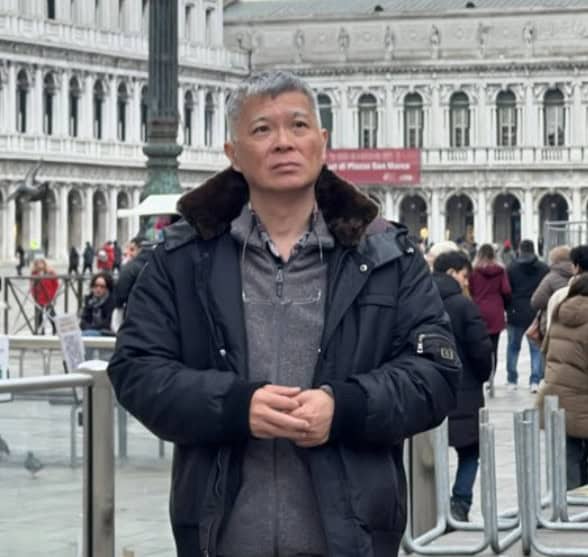
Michael Koh is a production specialist and entrepreneur who founded Spring Forest Studio in 2017 to provide event and virtual production solutions in Singapore. He specialises in hybrid live streaming, XR (Extended Reality) virtual production, and studio systems integration, transitioning the business from traditional videography to advanced corporate broadcasting. Operating out of a dedicated facility at NordCom2 in Singapore, he leads a technical crew to deliver multi-camera webcasts, digital sets, and technical consultations for large-scale corporate events.