
Participant equity is no longer a soft-skill concept reserved for event design meetings. For enterprise hybrid events, it is a production engineering requirement that directly affects audience retention, speaker effectiveness, sponsor value, and the credibility of the entire event program. When a virtual attendee experiences delayed audio, inconsistent camera framing, poor graphics readability, or a fragmented interaction path, the event communicates that remote participation is secondary. In a B2B environment, that perception damages the ROI of the event and weakens executive trust in hybrid delivery as a viable communications channel.
Achieving equity between in-room VIPs and virtual attendees requires a disciplined technical architecture. The production team must design the event as a dual-audience system, not as a live venue first and a webcast later. That means equal attention to camera design, audio intelligibility, encoding profile selection, network resiliency, cloud distribution, moderator workflow, and platform integration. Whether the event is hosted in Singapore, London, New York, or a regional corporate campus, the engineering goal is the same, deliver a consistent, low-friction participant experience across physical and virtual endpoints.
In practical terms, participant equity means the virtual audience must receive clear sightlines, intelligible program audio, reliable interaction pathways, and timely access to content that matches the pacing of the room. This is especially important for board meetings, sales kickoffs, leadership town halls, analyst briefings, and product launches where executive presence in the room often shapes the tone of the event. If a VIP panel is framed with a single locked-off camera while the in-room audience enjoys a dynamic IMAG experience, the remote audience will perceive a lower-tier production. If a presenter’s slides are legible on venue LED walls but compressed into unreadable blocks due to poor bitrate management, the virtual experience loses functional parity.
To solve this, production teams need an integrated workflow that merges broadcast-style signal management with enterprise streaming operations. The core design principle is simple, the virtual feed should be engineered as a primary distribution path, not a fallback path.
Designing the Event for Dual-Audience Parity
Participant equity begins at pre-production, long before the first cable is patched. Event planners, production managers, and AV engineers must define the virtual audience journey with the same rigor applied to VIP hospitality, room set design, and executive run-of-show timing. The technical brief should specify what virtual attendees need to see, hear, and do at every stage of the program.
Program structure and content parity
A balanced hybrid event structure avoids camera-only coverage of keynote stages while ignoring audience interaction cues. The virtual program should include a dedicated technical director, a show caller, a graphics operator, an audio engineer, and a platform moderator. For large corporate events, the control room should manage a live program feed, a backup ISO recording path, a confidence monitor, and an operator comms system with talkback. ISO recording, which captures isolated camera and audio sources, is useful for post-event edits, compliance archiving, and highlight packages without having to reconstruct the show from a compressed program feed.
The show flow should define where the virtual audience receives value beyond the room. That may include speaker close-ups, lower-third identifiers, motion graphics, slides, Q and A moderation, and synchronized polling. Enterprise events in Singapore often include multilingual audiences across APAC, which makes clear speaker identification and live captioning especially important. Participant equity is not only visual, it is informational.
Camera architecture for virtual audience clarity
VIPs in the room can infer context from stage presence, lighting, and spatial cues. Remote viewers cannot. That is why multi-camera systems are essential. A typical corporate hybrid setup may use a combination of PTZ cameras, pedestal cameras, and a dedicated slide or presentation capture source. PTZ cameras are efficient for wide venue coverage and speaker tracking, while pedestal cameras provide manual framing control for panel discussions and high-profile executives. For higher-end productions, a technical director should route all sources through an SDI baseband workflow or a hybrid SDI and NDI environment, depending on venue topology and latency requirements.
Camera switching should prioritize visual legibility for small screens. Tight shots of speakers during dense messaging segments are more effective than wide shots of a stage. For panel sessions, split or single-box framing can preserve facial detail and body language. If the venue uses LED walls or projection, the camera shading team must balance in-room exposure with streamed output so that skin tone, white balance, and stage lighting remain acceptable in both spaces.
Audio Engineering as the Core of Participant Equity
In most hybrid events, audio quality has a larger impact on perceived equity than video quality. Virtual attendees will tolerate modest video compression, but they will not tolerate intelligibility problems, clipped peaks, noisy room ambience, or inconsistent level changes between speakers. Professional hybrid production must treat audio as the primary delivery layer and engineer the signal chain accordingly.
Mic strategy, mixing, and intelligibility
Corporate event audio should be designed around speech reinforcement and stream intelligibility. That usually means lavalier microphones, headset microphones for active presenters, boundary microphones for small roundtable formats, and dedicated handhelds for audience Q and A. Each source should be routed to a digital audio console capable of scene recall, dynamic processing, matrix routing, and multichannel mixing. A separate mix-minus feed is often required for remote panelists joining through Teams, Zoom, or Webex so that their returned signal excludes their own voice and avoids feedback loops.
For the stream, the audio mix should be optimized for bandwidth-efficient speech reproduction rather than room acoustics. That includes careful EQ to reduce low-frequency rumble, compression with moderate ratio settings to control dynamic range, and loudness management aligned to platform output targets. Many enterprise streaming teams monitor loudness using LUFS-based workflows and keep the program feed consistent across all segments. In-room PA and stream mix are related but distinct deliverables.
Talkback and coordination between room and control
Participant equity also depends on operational timing. A presenter who cannot hear a clear stage cue or moderator instruction can derail both audiences. Talkback systems between stage management, camera operators, audio, graphics, and virtual moderation teams support precise transitions. In higher-stakes events, intercom matrices or wireless comms systems help coordinate entrances, presenter handoffs, and live troubleshooting without exposing operational noise to the audience.
When speakers are remote, the production team should provide a low-latency return and a structured confidence feed. The remote contributor must see the correct program context, understand who is speaking, and receive timely cueing. This is especially important when remote executives join high-visibility sessions from distributed offices, because executive appearance quality influences audience perception of the entire event.
Streaming Infrastructure, Protocols, and Network Resilience
Participant equity is only sustainable when the streaming infrastructure is built for deterministic performance. A corporate event cannot rely on consumer-grade connectivity or a single delivery path. The production design should incorporate transport resilience, encode efficiency, and redundant distribution.
Protocol selection and transport strategy
RTMP, or Real-Time Messaging Protocol, remains common for contribution and platform ingestion because of its ecosystem compatibility, but its reliance on TCP makes it less ideal for unreliable networks. RTMPS adds transport security, which is useful when secure ingest is required. SRT, Secure Reliable Transport, is widely used for contribution links because it performs packet recovery over hostile network conditions and supports encrypted delivery. For venue-to-control-room transport, NDI, including NDI|HX where bandwidth reduction is necessary, can be effective inside managed LAN environments, though engineering teams should account for multicast design, clocking, and switch configuration.
For premium hybrid events, the decision between baseband SDI and IP-based workflows depends on venue scale, operator skill, and resilience requirements. SDI remains dependable for point-to-point camera transport and minimizes interoperability risk. IP routing using NDI or SMPTE ST 2110 style principles can increase flexibility, but it demands stronger network design, managed switching, and a disciplined operational model. SMPTE standards matter here because they define best practices for timing, synchronization, and professional media interoperability. For enterprise clients, the correct protocol stack is the one that matches the technical maturity of the venue and the event risk profile.
Bitrate, resolution, and encoding discipline
Encoding is one of the most visible determinants of fairness. If in-room screens display crisp 4K/UHD graphics while the stream falls back to a heavily compressed 720p image, remote participants lose access to the same informational payload. The production team should match encode profiles to content type. Talking-head keynote delivery often performs well at 1080p with H.264 encoding and a controlled bitrate, while high-motion event packages, complex motion graphics, or branded transitions may require higher bitrates or H.265 encoding where platform support exists. Low-latency production often requires a tradeoff between compression efficiency and encode delay, which should be assessed during rehearsals.
Bitrate management must account for motion complexity, text readability, and network variability. Corporate slides with fine typography and embedded charts require more careful bitrate allocation than a simple stage wide shot. A conservative ladder for adaptive delivery can help preserve quality across diverse viewer connections, but the top rung should still be robust enough to preserve executive presentation detail.
Redundancy and failover
Enterprise events require redundancy at every critical layer. That includes dual internet uplinks, diverse physical carriers when possible, primary and backup encoders, redundant power via UPS systems, spare capture paths, and clear failover logic for cloud ingest. If the live venue uses bonded cellular or secondary WAN as a backup path, the team should test failover before show day, not assume it will work under pressure. The same principle applies to audio consoles, playback devices, and graphics systems. A hot spare media server or a mirrored presentation laptop can preserve continuity if the primary operator station fails.
Monitoring is equally important. Multiview monitoring should include program output, confidence return, audio meters, encoder status, latency measurements, and platform health. If the team cannot see packet loss, dropped frames, or audio drift in real time, it cannot preserve participant equity during a live incident.
Platform Integration and Interactive Parity
Virtual attendees feel valued when they can participate with minimal friction. That means integration with enterprise collaboration platforms and a moderation model that treats remote questions, polls, and chat as first-class production elements. Teams, Zoom, and Webex can all serve as remote contribution or attendance endpoints, but each requires disciplined configuration to avoid echo, latency mismatches, and participant confusion.
Remote contribution workflows
For panelists joining remotely, a managed contribution workflow should define camera expectations, microphone requirements, lighting guidance, and network thresholds. The production team should provide a pre-event technical check that verifies upstream bandwidth, CPU load, device audio routing, and browser or application compatibility. Remote guests need a return feed with low latency and a moderator bridge so they can respond naturally to live conversation. If the program uses platform-based interaction, the producer should coordinate a single moderation layer to prevent duplicated questions or conflicting instructions.
Chat, Q and A, and captioning
Participant equity includes accessibility and comprehension. Live captioning, whether human-operated or machine-assisted with editorial oversight, expands access for multilingual teams and improves content retention. Caption output should be integrated into the event platform and, where possible, into the IMAG or confidence systems for presenters. Q and A should be moderated centrally so that virtual questions receive the same prominence as those submitted from the room. If the event includes speaker timeboxing, the moderation workflow should allocate structured intervals for remote participation, not leave it to the end of the session as an afterthought.
Polling, resource links, and post-session content access should be synchronized between physical and virtual attendees. When the room receives a live demo, the online attendee should not be waiting for a delayed replay. The event operations team should manage content release with a unified timing plan.
Operational Best Practices for Enterprise Event Teams
Participant equity is delivered through process as much as through equipment. The strongest technical stack will still fail if the production team has no rehearsal structure, no decision tree, and no clear ownership across vendors. Enterprise clients should require a formal production plan that covers signal flow, control-room responsibilities, network ownership, platform credentials, backup procedures, and escalation contacts.
Pre-event testing and rehearsal
A full technical rehearsal should validate each camera source, audio path, graphic template, remote contribution link, and distribution endpoint. Rehearsals must include worst-case scenario testing, such as a failed primary internet circuit, a presenter swap, a slide deck reversion, or a remote guest reconnect. Teams working in Singapore or any other major business hub often face venue constraints, shared building infrastructure, and mixed connectivity environments, which makes rehearsal essential. The goal is not simply to confirm that the stream works, but to confirm that the team can preserve audience parity when something does not go according to plan.
Measuring the virtual attendee experience
Post-event analysis should look beyond simple viewer counts. Engineering teams should examine startup time, average watch duration, latency, audio complaints, rebuffering events, bitrate stability, and interaction rates. If the virtual audience leaves early or drops off during speaker transitions, that is a signal that pacing or program design is undermining equity. If the stream has excellent stability but low interaction, the moderation model may be too room-centric. Technical metrics should inform the next event design cycle.
Ultimately, participant equity is a systems engineering problem with human consequences. Virtual attendees must not feel like passive observers on the outside of a premium experience. They should receive crisp video, intelligible audio, responsive interaction, and timely access to the same strategic content delivered to VIPs in the room. When the production architecture is built around that principle, hybrid events become more than a compromise between physical and digital formats. They become a scalable enterprise communication platform that serves every stakeholder with consistent quality and measurable professionalism.
For corporate event planners, AV professionals, production managers, and IT directors, the message is clear. Treat the virtual audience as a primary constituency, design the signal chain around broadcast-grade reliability, and engineer the event so that every participant, whether seated in the front row or joining from a remote office, receives a first-class experience.
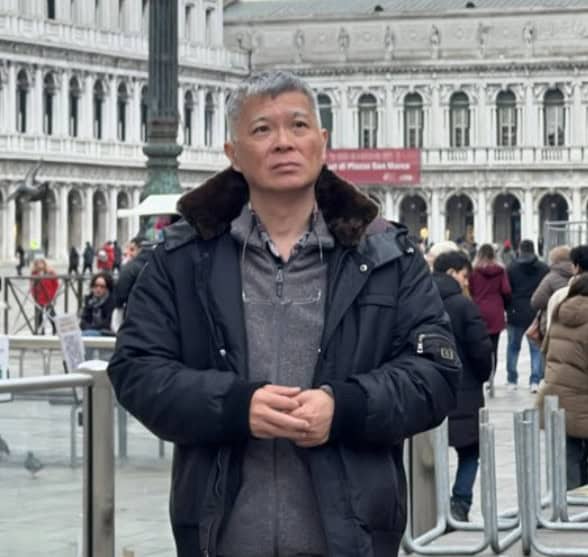
Michael Koh is a production specialist and entrepreneur who founded Spring Forest Studio in 2017 to provide event and virtual production solutions in Singapore. He specialises in hybrid live streaming, XR (Extended Reality) virtual production, and studio systems integration, transitioning the business from traditional videography to advanced corporate broadcasting. Operating out of a dedicated facility at NordCom2 in Singapore, he leads a technical crew to deliver multi-camera webcasts, digital sets, and technical consultations for large-scale corporate events.