
Introduction to Real-Time Feedback Loops in Event Streaming
In the realm of multinational corporations (MNCs), communication is key. For large-scale B2B events, real-time feedback loops play a critical role in enhancing two-way communication. Integrating such loops into hybrid and live streaming events allows enterprises to collect immediate responses from audiences, informing decisions while the event is still ongoing.
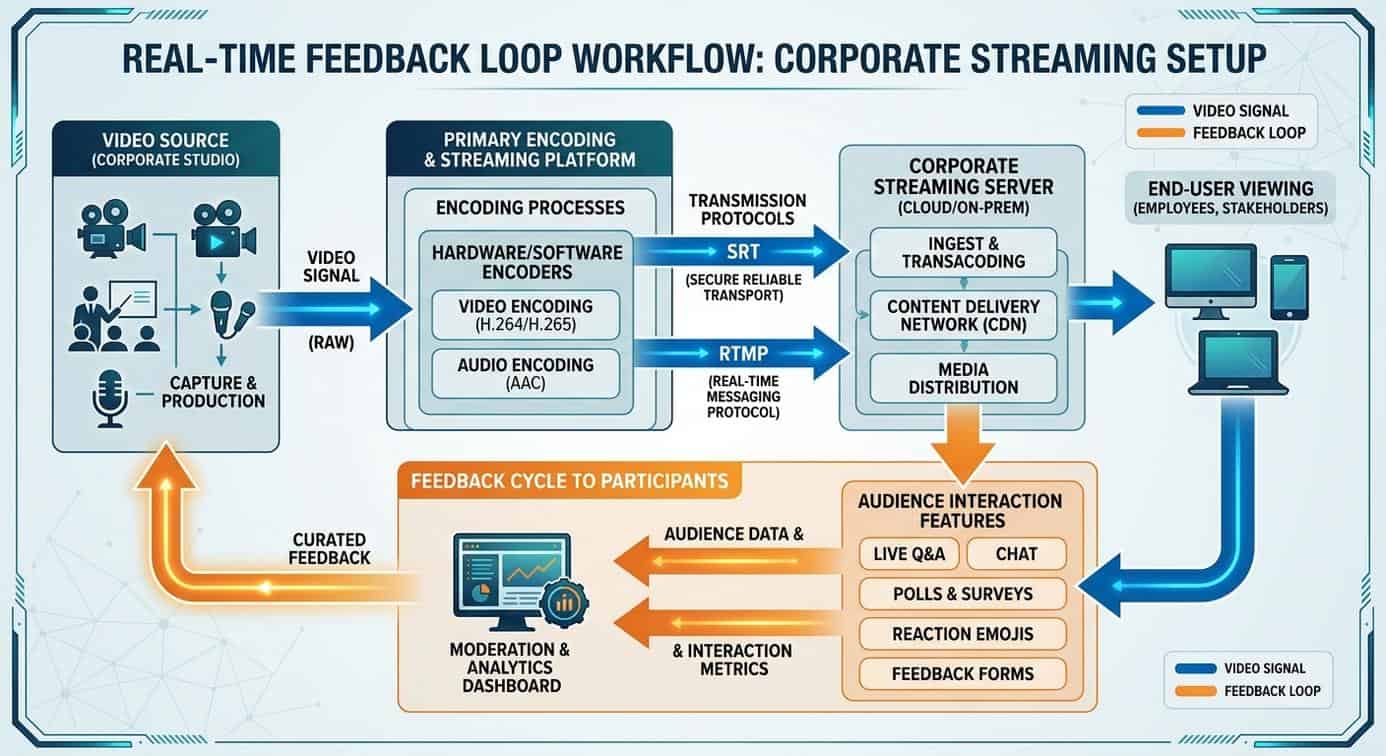
Modern event streaming technology leverages secure protocols like SRT (Secure Reliable Transport) and high-definition video standards to deliver efficient feedback mechanisms. These are integrated within enterprise streaming infrastructures, which include complex audio/video signal routing systems, multi-camera setups, and professional-grade switching solutions.
Core Components of Feedback Loops in Streaming
To understand real-time feedback loops, it’s essential to dive into their components. Primarily, they consist of capture devices, encoding technologies, and transmission protocols.
Capture Devices and Multi-Camera Production
Events utilize multiple cameras for comprehensive coverage. Cameras equipped with SDI outputs provide stable signals for professional video routing. The NDI|HX protocol is often used for efficient video distribution over IP networks within production environments.
Encoding and Streaming Protocols
Encoding is crucial for compressing video feeds. H.264/H.265 codecs efficiently manage bandwidth while maintaining quality. The RTMP/RTMPS protocols facilitate streaming to platforms. Additionally, SRT ensures low-latency and secure transmission over potentially unreliable networks.
Infrastructure for Hybrid Streaming Solutions
Hybrid events, combining physical and virtual components, necessitate robust infrastructure for seamless integration. This includes dedicated servers for streaming, reliable internet connectivity, and cloud-based solutions for scalability.
Network Architecture
A professional network setup involves redundant ISP connections and load balancing to handle traffic surges. Network optimization ensures minimal latency and high video quality.
Physical and Cloud Integration
On-premises equipment like AV switchers works in tandem with cloud services to enhance flexibility and reach. This hybrid model supports a wider audience, allowing for greater engagement and broader feedback collection.
Enterprise Platforms and System Integration
Integrating with enterprise platforms like Microsoft Teams, Zoom, and Webex is essential for effective communication during events.
System Compliance and Protocols
These platforms adhere to strict security and video protocol standards, ensuring seamless and secure integration with corporate networks.
Interactivity and Audience Engagement
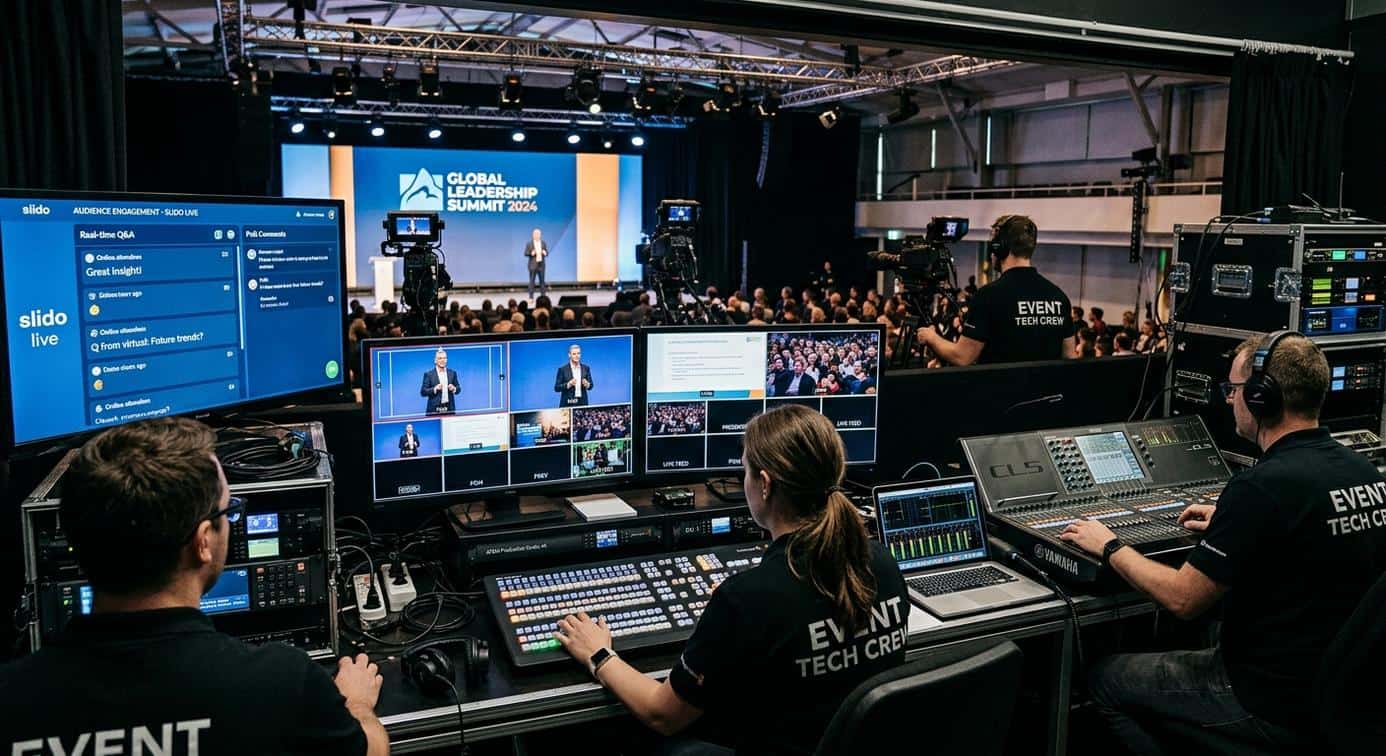
Features such as live polling, Q&A, and chat functions are enabled through integrated solutions, forming the backbone of real-time feedback mechanisms.
Scalability and Quality Assurance
Scalability in B2B events is paramount. Solutions must accommodate thousands of participants without compromising quality.
Redundancy and Failover Strategies
Incorporating redundancy ensures uninterrupted service. Failover strategies automatically delegate tasks to backup systems in case of primary system failures.
Quality Control Measures
Implementing quality control involves monitoring video/audio feeds for consistency, using tools for bitrate management, and employing color grading for optimal visual presentation.
Conclusion
Real-time feedback loops enhance the dynamic interaction of MNCs with their audiences. By leveraging advanced streaming protocols and robust infrastructure, these enterprises can ensure high-quality, secure, and interactive B2B event experiences. The integration of technologies like SRT and NDI along with sophisticated camera and encoding systems positions companies to succeed in enhancing communication and achieving strategic objectives.

Michael Koh is a production specialist and entrepreneur who founded Spring Forest Studio in 2017 to provide event and virtual production solutions in Singapore. He specialises in hybrid live streaming, XR (Extended Reality) virtual production, and studio systems integration, transitioning the business from traditional videography to advanced corporate broadcasting. Operating out of a dedicated facility at NordCom2 in Singapore, he leads a technical crew to deliver multi-camera webcasts, digital sets, and technical consultations for large-scale corporate events.