
 April 2, 2026 by Editor |
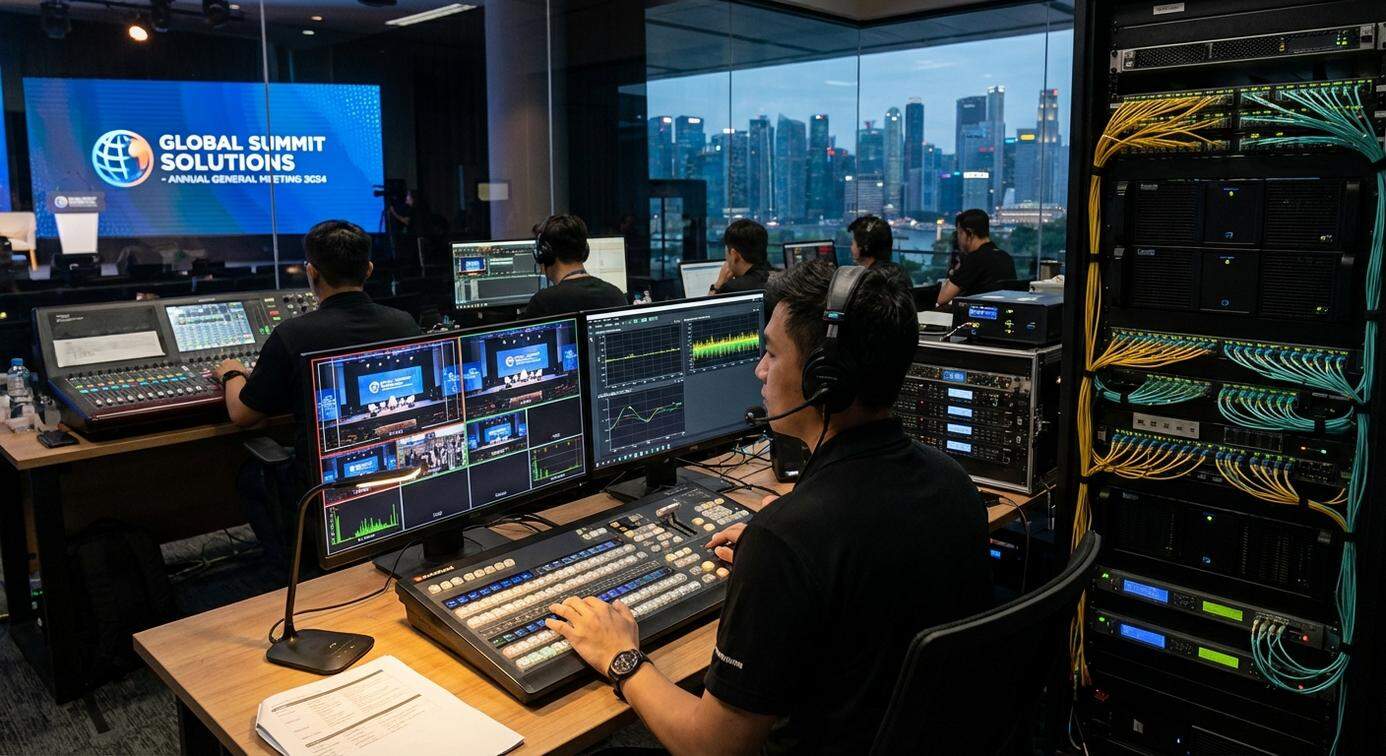
In the high-stakes environment of Singaporean corporate governance, an Annual General Meeting (AGM) represents a critical juncture for enterprise decision-makers. These events, increasingly conducted in hybrid formats, demand an absolutely flawless technical execution. Any disruption to the live stream, be it video, audio, or data, carries significant financial, reputational, and legal ramifications. Signal integrity, the measure of a signal’s quality and its immunity to distortion or degradation, becomes paramount. While traditional copper-based cabling has served as the backbone for decades, its inherent vulnerabilities in demanding B2B live streaming scenarios necessitate a more robust, future-proof solution. This article provides a comprehensive technical analysis of why fibre-optic backups are not merely a luxury, but a non-negotiable component of a resilient, enterprise-grade production infrastructure for Singaporean AGMs and other mission-critical corporate events.
The Imperative of Uninterrupted Signal Flow in Corporate Governance
The successful execution of a hybrid AGM hinges entirely on the integrity of the live signal path. For multinational corporations and publicly listed companies in Singapore, an AGM is a complex symphony of shareholder participation, critical presentations, and regulatory compliance. The robust transmission of high-definition video feeds, clear multi-channel audio, and secure data streams is fundamental to maintaining investor confidence and adhering to stringent corporate governance standards. A momentary glitch, a dropped frame, or an audio dropout can disrupt proceedings, invalidate voting processes, and severely tarnish a brand’s image.
The High Stakes of Annual General Meetings in Singapore
Singapore’s sophisticated financial and legal landscape places immense pressure on corporate entities to ensure transparency and accountability during AGMs. Regulatory bodies mandate clear, uninterrupted communication for all participants, whether physically present or attending virtually via a secure streaming platform. Failure to deliver a consistent, high-quality stream can lead to regulatory non-compliance, requiring a costly re-convening of the meeting, significant financial penalties, and irreparable damage to corporate reputation. For enterprise decision-makers, the investment in a fault-tolerant streaming architecture is a direct safeguard against these critical business risks, underscoring the necessity of unparalleled signal integrity.
Identifying Points of Failure in Live Event Production Workflows
A typical B2B live event production workflow for a hybrid AGM involves numerous interconnected systems, each a potential point of failure. The signal chain commences at the source with multi-camera acquisition (e.g., 4K/UHD cameras via 12G-SDI or NDI), progresses through video switching (broadcast-grade production switchers like Ross Carbonite or Blackmagic ATEM Constellation), audio mixing (e.g., Yamaha Rivage or Dante-enabled systems), encoding (H.264/H.265 at bitrates often exceeding 20 Mbps per stream), and finally, transmission to content delivery networks (CDNs) or enterprise conferencing platforms (Microsoft Teams, Zoom, Webex) via protocols such as Secure Reliable Transport (SRT) or Real-Time Messaging Protocol Secure (RTMPS). Critical vulnerabilities exist in cabling, connectors, signal converters, network switches, and power distribution. Environmental factors, such as electromagnetic interference (EMI) or accidental physical damage, pose constant threats to copper-based infrastructure, making redundancy not just advisable, but absolutely essential for mission-critical events.
Limitations of Traditional Copper-Based Signal Transmission
While copper cabling has been the workhorse of AV production for decades, its physical properties introduce significant limitations, particularly in the high-bandwidth, long-distance, and electromagnetically dense environments often encountered during large-scale corporate events. Understanding these constraints is crucial for appreciating the inherent advantages of fibre-optic alternatives.
Electromagnetic Interference (EMI) and Radio Frequency Interference (RFI) Susceptibility
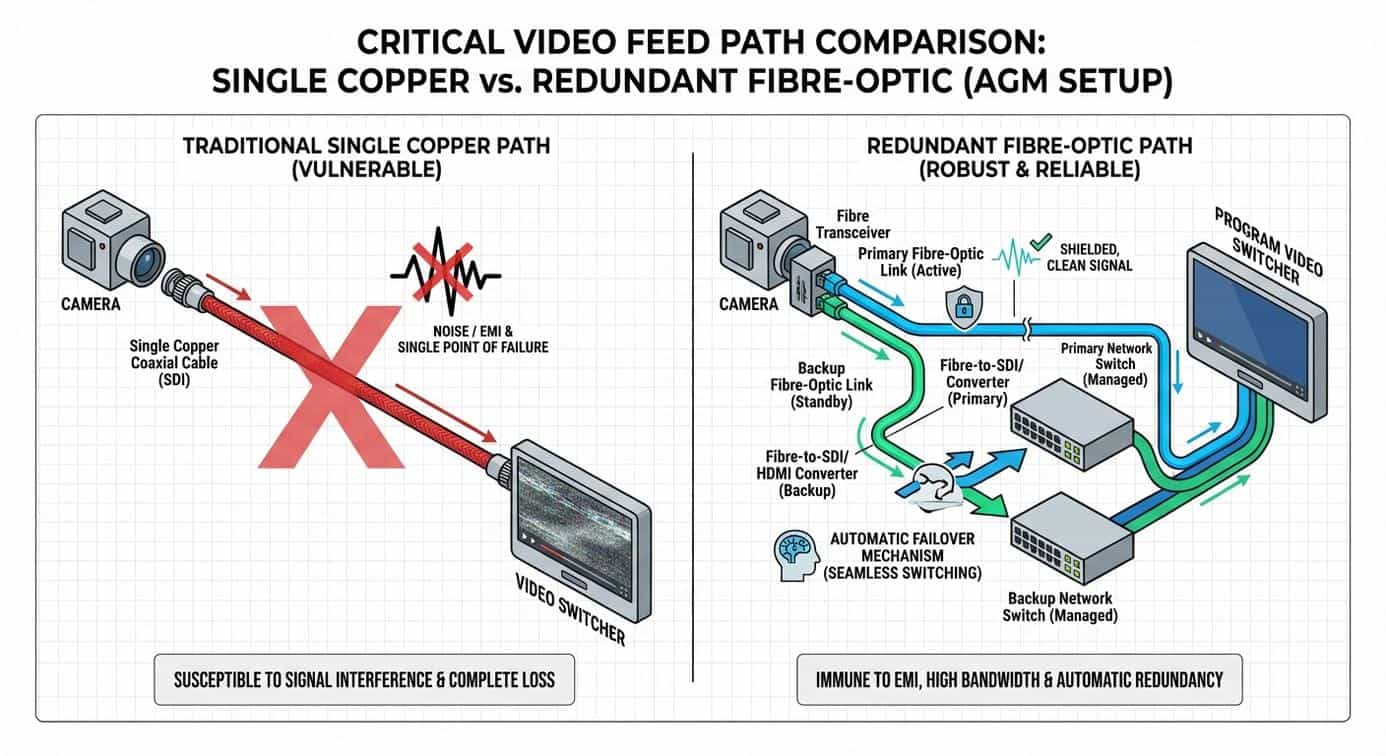
Copper cables, particularly unshielded twisted pair (UTP) Ethernet or coaxial cables, are inherently susceptible to electromagnetic interference (EMI) and radio frequency interference (RFI). These external electrical signals can induce noise into the copper conductor, leading to signal degradation. Common sources of EMI/RFI in an event venue include high-power lighting ballasts, stage lighting dimmers, wireless communication devices (UHF, Wi-Fi), power cables, and even cellular network transmissions. This induced noise manifests as visual artifacts (e.g., speckling, color shifts, lines) in video feeds, audible hums or buzzes in audio channels, and data corruption in network transmissions. Mitigating these issues with copper often requires extensive shielding, careful cable routing far from power lines, and robust grounding, all of which add complexity and cost while not entirely eliminating the risk.
Attenuation, Ground Loops, and Distance Constraints with SDI/HDMI
Signal attenuation, or the loss of signal strength over distance, is a fundamental limitation of copper cabling. For high-bandwidth signals such as 12G-SDI (Serial Digital Interface) for 4K/UHD video, maximum reliable cable lengths are severely restricted, often to under 70 meters for 4K. Standard HDMI cables are even more limited, typically to 15-20 meters before active extension or conversion is required. Exceeding these lengths without proper equalization leads to signal loss, resulting in a blank screen, intermittent video, or macro-blocking artifacts. Ground loops, another prevalent issue with copper, occur when interconnected equipment is grounded at different potentials, creating unintended current paths that introduce hums, buzzes, and video noise. These issues are notoriously difficult to troubleshoot in complex production environments and are exacerbated by long cable runs and multiple interconnected devices. These physical constraints directly impact production flexibility and system scalability, making long-distance signal transport a significant challenge without costly active extenders or repeaters.
Fibre-Optic Technology: The Backbone of Resilient B2B Streaming
Fibre-optic technology provides a fundamentally superior medium for signal transmission in professional B2B live event production, addressing the core limitations of copper with unparalleled performance and reliability. Its adoption is a hallmark of enterprise-grade streaming infrastructure.
Inherent Immunities: EMI, RFI, and Ground Loop Isolation
Unlike copper, fibre-optic cables transmit data as pulses of light through a glass or plastic strand. This optoelectronic transmission method renders fibre completely immune to electromagnetic interference (EMI) and radio frequency interference (RFI). Since no electrical current flows through the fibre core, it is unaffected by external electrical fields, power surges, or noise from adjacent electrical equipment. This inherent immunity guarantees a pristine, uncorrupted signal path regardless of the electrical noise present in the event environment. Furthermore, fibre-optic cables provide galvanic isolation between connected devices. This eliminates the possibility of ground loops, a common source of persistent hums in audio and rolling bars in video that plague copper-based systems. For mission-critical AGMs, this isolation ensures a clean signal from source to destination, drastically reducing troubleshooting time and improving overall system stability.
Extended Reach and Uncompromised Bandwidth for 4K/UHD Production
Fibre-optic cables offer significantly extended transmission distances compared to copper, often spanning several kilometers without requiring active repeaters or signal regeneration. Single-mode fibre (OS2), commonly used for long-haul applications, can transmit high-bandwidth signals over tens of kilometers, while multi-mode fibre (OM3/OM4) reliably supports runs up to several hundred meters, suitable for most large event venues. This extended reach simplifies cable routing and reduces the need for intermediate distribution amplifiers or signal converters, streamlining the production workflow. More importantly, fibre provides massive bandwidth capabilities. It can effortlessly carry uncompressed 4K/UHD video signals (e.g., 12G-SDI over fibre) or even 8K, along with multiple channels of high-resolution audio and control data, all on a single strand. This makes fibre the ideal backbone for modern multi-camera productions employing high frame rates and deep color depths, ensuring that visual fidelity is maintained from acquisition through to the final streamed output without compromise.
Fibre-Optic Signal Formats and Protocols (SMPTE ST 2110, NDI over Fibre)
The transition to IP-based production workflows has further solidified fibre optics as the preferred transmission medium. Professional standards like SMPTE ST 2110, a suite of standards for transporting uncompressed video, audio, and ancillary data over IP networks, are optimally implemented over fibre due to its immense bandwidth and low latency characteristics. SMPTE ST 2110 allows for the independent routing of video, audio, and data streams, providing unprecedented flexibility and scalability. Similarly, NDI (Network Device Interface), a popular IP protocol for high-quality, low-latency video over standard Ethernet networks, benefits immensely from fibre-optic infrastructure, especially NDI over fibre implementations that utilize 10 Gigabit Ethernet (10GbE) or faster links. Fibre ensures that the demanding bandwidth requirements of multiple NDI streams, particularly NDI|HX for efficient compression or full NDI for uncompressed quality, are met without network congestion or packet loss, which are critical for delivering a seamless hybrid event experience. Fibre also supports other crucial protocols such as Dante for audio-over-IP and traditional Ethernet for control and data, consolidating multiple signal types onto a single, robust infrastructure.
Architecting Redundancy: Implementing Fibre-Optic Backup Strategies
The inherent reliability of fibre optics is further amplified when integrated into a meticulously designed redundant architecture. For mission-critical events like Singaporean AGMs, a robust failover strategy is not optional; it is a fundamental requirement to guarantee business continuity.
Primary-Backup Fibre Paths and Automatic Failover Mechanisms
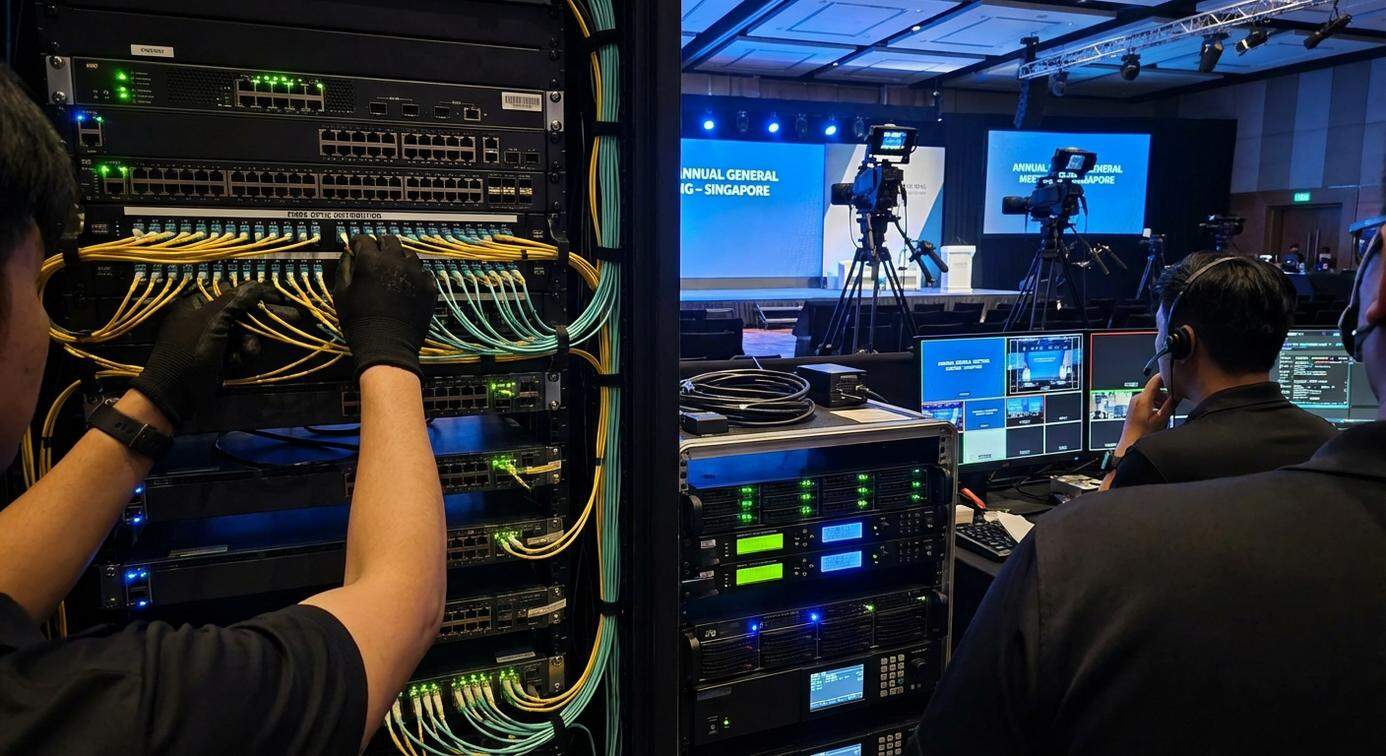
A cornerstone of enterprise-grade streaming solutions is the implementation of physically diverse primary and backup fibre-optic paths. This involves routing two entirely separate fibre runs, often via different conduits or cable trays, from critical signal sources to their destinations. In an active/standby configuration, the primary path carries the live signal, while the backup path remains ready for immediate activation. Automatic failover mechanisms, typically managed by intelligent network switches or dedicated video routing systems, continuously monitor the primary link for signal integrity. Upon detecting a failure (e.g., signal loss, excessive packet error rate), these systems automatically and instantaneously switch to the pre-configured backup fibre path, often within milliseconds, preventing any perceptible interruption to the live stream. This requires sophisticated Layer 2 and Layer 3 network protocols such as Rapid Spanning Tree Protocol (RSTP) or Virtual Router Redundancy Protocol (VRRP) for network-based failover, or purpose-built redundancy features in broadcast video routers or managed media converters. Such a system ensures that even in the event of a catastrophic cable cut or equipment malfunction on the primary line, the AGM proceeds without interruption.
Hybrid Infrastructure Integration: Fibre to Copper Converters and Media Gateways
While fibre-optic cabling forms the resilient backbone, most production environments still integrate with legacy copper-based systems at various points (e.g., camera outputs via SDI, local monitors via HDMI, older network devices via RJ45 Ethernet). High-quality, broadcast-grade fibre-to-copper converters and media gateways are essential for seamless interoperability without introducing new points of failure. These devices convert optical signals back to electrical signals for SDI, HDMI, or Ethernet, maintaining signal integrity throughout the conversion process. Enterprise-grade media converters are typically hot-swappable, feature redundant power supplies, and offer robust error correction capabilities. Furthermore, many modern professional devices (e.g., video switchers, recorders, IP codecs) feature integrated Small Form-Factor Pluggable (SFP+) module slots, allowing direct termination of fibre links into the equipment. This reduces the number of conversion points and simplifies the signal chain, enhancing overall reliability. Careful selection and deployment of these integration points are critical to ensuring the end-to-end resilience of the hybrid production infrastructure.
Enterprise-Grade Network Design for Fibre-Optic Backbones
Optimizing the fibre-optic backbone necessitates a meticulously planned enterprise-grade network design. This includes the implementation of Virtual Local Area Networks (VLANs) to segregate traffic, ensuring that critical video and audio streams operate on dedicated networks separate from general IT traffic. Quality of Service (QoS) policies must be configured on all managed network switches to prioritize real-time media packets, guaranteeing minimal latency and preventing packet loss under heavy network loads. For multicast-intensive protocols like SMPTE ST 2110 or NDI, Internet Group Management Protocol (IGMP) snooping is essential to efficiently route multicast traffic only to interested receivers, conserving network bandwidth. Furthermore, the physical layout of the fibre infrastructure must incorporate diverse routing paths, avoiding single points of failure where a single incident could compromise both primary and backup links. This often involves planning separate cable runs through different physical routes within the venue, adhering to industry best practices for data center and broadcast facility cabling standards.
Practical Considerations and Best Practices for Singaporean AGMs
Implementing a fibre-optic backup strategy for Singaporean AGMs requires more than just acquiring the right equipment; it demands rigorous planning, meticulous execution, and ongoing management by expert technical teams.
Pre-Production Planning, Testing, and Certification
The success of a fibre-optic resilient system begins long before the event day with comprehensive pre-production planning. This includes detailed site surveys to identify potential signal path obstructions, assess environmental conditions, and map out primary and backup cable routes. All fibre links must undergo rigorous testing using Optical Time Domain Reflectometers (OTDRs) to measure attenuation, identify splice losses, and verify connector quality. End-to-end signal flow testing, from camera output through to the final streamed program feed, must be performed with all active equipment powered and configured. This includes load testing the network infrastructure to simulate peak bandwidth usage during the event, ensuring that QoS policies are correctly applied and that no bottlenecks exist. Fibre connector cleanliness is paramount; microscopic dust particles can cause significant signal loss and should be inspected and cleaned with specialized tools. Comprehensive documentation of the fibre plant, including patch panel layouts and link budgets, is essential for rapid troubleshooting. Certification of all fibre runs to industry standards (e.g., TIA/EIA-568) provides a baseline for performance and reliability.
On-Site Deployment and Management of Fibre Infrastructure
During deployment, meticulous attention to detail is critical. Fibre-optic cables must be handled with care, avoiding sharp bends, crushing, or excessive pulling tension which can damage the delicate glass core. Robust cable management, including proper dressing, strain relief, and protection in high-traffic areas, is essential to prevent accidental damage. On-site technical teams must be highly proficient in fibre-optic technology, equipped with fusion splicers, inspection scopes, and cleaning kits to address any issues promptly. Real-time monitoring of all primary and backup fibre links via network management systems (NMS) or integrated video control interfaces is crucial. This allows for proactive identification of potential degradation or alerts to an active failover, enabling the team to respond immediately. Redundant power supplies for all active fibre equipment, including media converters and network switches, further enhance system resilience, protecting against single points of electrical failure. Maintaining a clean environment around fibre connections is paramount to prevent dust ingress, which is the leading cause of signal degradation in fibre systems.
Long-Term Investment and Scalability for Future Events
Investing in a high-quality fibre-optic infrastructure, including enterprise-grade cabling, transceivers, and managed network equipment, represents a strategic long-term investment for any corporation hosting regular high-profile events. Fibre is inherently scalable, capable of supporting increasingly higher bandwidth requirements as video resolutions advance to 8K and beyond, and as the complexity of hybrid events continues to grow. A well-designed fibre backbone can easily be upgraded by replacing transceivers rather than re-cabling, providing a future-proof foundation. This scalability ensures that the initial investment continues to yield returns, adapting to evolving production technologies and increasing demands for signal capacity without requiring costly overhauls. For Singaporean enterprises, this means a reliable, high-performance platform that not only meets current AGM requirements but is also prepared for the technological advancements of the next decade, solidifying their commitment to cutting-edge corporate communications.
In conclusion, the uncompromising demands of Singaporean Annual General Meetings necessitate a streaming infrastructure that prioritizes signal integrity and unwavering reliability above all else. While traditional copper-based systems present inherent vulnerabilities to EMI, attenuation, and distance constraints, fibre-optic technology emerges as the superior solution. Its immunity to electrical interference, extended reach, and immense bandwidth capacity make it the ideal backbone for carrying mission-critical 4K/UHD video, pristine audio, and secure data. By architecting redundant fibre-optic paths with automatic failover mechanisms, meticulously integrating hybrid infrastructure components, and adhering to enterprise-grade network design principles, Live Streaming Studio ensures that B2B events of paramount importance are executed flawlessly. For corporate event planners, AV professionals, and IT directors, embracing fibre-optic backup strategies is not merely a technical upgrade; it is a strategic imperative for safeguarding corporate reputation, ensuring regulatory compliance, and delivering an unparalleled hybrid event experience for every shareholder and stakeholder.