
Why Singapore’s 5G Infrastructure Matters to Hybrid Event Production
Singapore’s 5G networks are not a consumer convenience feature, they are a production enabler for enterprise hybrid events that demand deterministic latency, high uplink capacity, and operational resilience. For corporate event planners, AV engineers, production managers, and IT directors, the difference between a stable hybrid conference and a compromised broadcast often comes down to the network layer. In a modern hybrid event workflow, the venue is no longer an isolated acoustic and visual environment. It is a distributed production node connected to cloud platforms, remote presenters, interpretation services, content distribution endpoints, and internal collaboration systems such as Microsoft Teams, Zoom, and Webex. 5G is increasingly central to that architecture because it supports high-density connectivity, rapid deployment, and flexible last-mile access without the delays associated with permanent fiber provisioning.
Singapore is particularly relevant because its telecom environment has been engineered for advanced enterprise use cases, dense urban deployment, and business continuity. That matters for live event streaming because hybrid production depends on more than headline throughput. It depends on predictable latency, session stability, sufficient uplink headroom, QoS policy alignment, and the ability to handle multiple concurrent data flows, including camera contribution, intercom, graphics control, NDI, tally, remote guest return video, and cloud recording synchronization. When properly integrated, 5G becomes part of the backbone that supports contribution, coordination, and distribution across the entire event production chain.
How 5G Changes the Event Signal Chain
From fixed-line dependency to agile contribution networks
Traditional event streaming architectures rely heavily on wired connectivity, usually dual internet service provider links terminated into bonded routers, enterprise firewalls, and encoder appliances. That model remains valid for many venues, but 5G adds a powerful layer of agility for pop-up stages, roadshows, multi-site corporate announcements, and temporary conference builds. In practical terms, 5G can provide primary or secondary internet access for encoders, backup paths for contribution feeds, or dedicated data channels for camera control and return monitoring. The technical benefit is not simply mobility. It is deployment elasticity. A production team can bring a corporate town hall online in a hotel ballroom, convention center breakout room, or outdoor activation space without waiting for new fixed circuits.
For live event workflows, the signal chain typically begins with cameras feeding an SDI or HDMI 2.1 switcher, or with IP-based cameras using NDI or SMPTE ST 2110 in more advanced facilities. Audio is routed through a digital mixer, often with Dante or AES67 transport for networked audio distribution. The program feed is then encoded for transmission using H.264, H.265, or AVC-based workflows depending on latency and delivery requirements. 5G enters at the contribution edge, where it provides IP transport for one or more encoded streams, remote return feeds, cloud control traffic, or bonded uplink aggregation from several modem endpoints. For enterprise events, this is especially valuable when redundancy is mandatory and a single WAN path is not acceptable.
Latency, jitter, and uplink behavior in real production environments
Hybrid event success depends on more than peak bandwidth. Production teams must manage latency, jitter, packet loss, and uplink consistency. In a live corporate event, a delay of 2 to 3 seconds may be acceptable for a webinar-style broadcast, but interactive segments involving executive panels, live Q and A, or remote product demonstrations require tighter synchronization. SRT, Secure Reliable Transport, is widely used for contribution because it tolerates packet loss and can recover data while maintaining a manageable latency profile. RTMP, Real-Time Messaging Protocol, still appears in some workflows for compatibility, but it is generally less resilient than SRT for transport across variable networks. RTMPS adds TLS protection, but does not solve inherent transport fragility.
5G networks in Singapore can support these workflows when the production design includes measurable network budgets. A contribution encoder may require 6 to 12 Mbps for a high-quality 1080p60 stream using H.264, or 12 to 25 Mbps for higher-quality 4K/UHD contribution depending on codec efficiency, motion complexity, and destination profile. For H.265, bandwidth requirements can be lower at similar perceptual quality, but codec complexity and device compatibility must be considered. In practice, production engineers should always allocate extra uplink headroom beyond nominal bitrate, because real network conditions fluctuate. A well-designed 5G-backed system is built with both average and peak load in mind, along with failover logic that automatically reroutes traffic if signal quality degrades.
Designing Enterprise-Grade Hybrid Event Workflows on 5G
Multi-camera production, switching, and program orchestration
Corporate hybrid events frequently require a multi-camera configuration, typically including a wide master shot, presenter close-up, audience reaction camera, and content capture source. In larger productions, a PTZ camera layer may be added for stage coverage, audience panels, or overflow rooms. These sources are switched through a hardware vision mixer or software-defined production environment, with ISO recording capturing each camera feed independently for post-event editing, compliance, or archival purposes. 5G does not replace the production core. It extends it. The live switching still happens on-site, but the resulting program feed, auxiliary feeds, or remote contribution streams can be delivered across the network using 5G as the transport layer.
Where 5G becomes particularly valuable is in distributed production. A remote producer can monitor a multiview, a director can trigger graphics or clip playback, and a technical coordinator can maintain communication through talkback systems while the physical event team manages the venue. This type of hybrid production requires disciplined synchronization. Genlock, timecode alignment, and consistent frame rate standards remain essential even when some paths traverse mobile networks. For high-value corporate events, production teams should standardize on 25 fps or 50 fps for PAL-region workflows where appropriate, and ensure that acquisition, switching, encoding, and delivery are aligned to the same cadence to reduce motion artifacts and audio drift.
Audio transport, monitoring, and talkback integrity
Audio is often the most unforgiving element in a hybrid environment. Video can sometimes tolerate small delays, but speech intelligibility and remote panel coordination quickly degrade when audio paths are unstable. A professional corporate event system should implement a clear audio architecture that includes primary mixing, redundant program output, separate monitor mixes for speakers and interpreters, and isolated communication channels for stage management and crew. Networked audio systems using Dante or AES67 can simplify routing, but they also introduce dependency on IP infrastructure quality. When 5G is used for return feeds, control data, or contribution transport, the production engineer must ensure that audio sync is maintained end to end.
In practical deployments, audio should be monitored in parallel with video using calibrated headphones, reference speakers, and multiview audio meters. Program audio should remain within defined loudness targets appropriate to the delivery platform and corporate communication policy. Talkback systems should not share unprioritized consumer-grade traffic. They should be isolated, routed through dedicated intercom infrastructure, or protected by QoS policies where feasible. In a hybrid town hall, a failed intercom path can create coordination errors even if the main stream remains live. 5G can support auxiliary data paths, but it should be engineered as part of a complete production communications strategy rather than as a casual connectivity add-on.
Network Infrastructure Requirements for Reliable 5G Production
QoS, redundancy, and failover architecture
Enterprise streaming infrastructure depends on disciplined network engineering. Quality of service, QoS, must be applied wherever the environment allows it, especially when multiple traffic classes coexist, such as contribution video, cloud management, conferencing, guest backhaul, and control-plane traffic. In a hybrid event scenario, production teams should separate management traffic from media traffic and ensure that critical encoder paths receive priority treatment. Bonded connectivity solutions can combine multiple SIMs, carriers, or WAN paths to create a more resilient uplink, but bonding is only effective when the system is tested under load and failover thresholds are configured correctly.
Redundancy should be designed into every layer. This includes dual encoders where budget allows, dual power feeds for core equipment, UPS-backed network switches, and alternate delivery routes to the cloud or enterprise collaboration platform. If a venue provides fixed broadband and the production kit includes 5G as backup, failover should be tested before show day. Engineers should validate how quickly the encoder reestablishes a session, how the receiving platform handles source interruption, and whether any manual intervention is required. For premium corporate events, it is common to use primary fiber, secondary fiber on a separate provider, and tertiary 5G failover. That architecture is not excessive. It is standard risk mitigation when reputational stakes are high.
Core protocols, codecs, and transport choices
Protocol selection should be based on the event objective. RTMP remains common for compatibility with legacy ingest points, but SRT is the stronger choice for contribution over unpredictable links because it handles latency and packet recovery more effectively. NDI, especially NDI|HX, is valuable inside production systems for efficient IP video routing, camera discovery, and rapid deployment, but it is usually best treated as an internal production protocol rather than a wide-area delivery mechanism. For facility-grade IP infrastructures, SMPTE ST 2110 establishes a professional standard for professional media over IP by separating essence streams for audio, video, and ancillary data. That model is ideal for advanced broadcast environments and high-end corporate studios, although it requires a controlled network design with precise synchronization and low-jitter switching.
Codec strategy matters just as much. H.264 is still widely supported and offers broad compatibility across enterprise platforms. H.265 can reduce bitrate for the same perceptual quality, which is useful when 5G uplink headroom is constrained. However, hardware and software support must be checked in advance, especially when the stream will feed Microsoft Teams, Zoom, Webex, or a custom enterprise portal. For camera origination, HDMI 2.1 and SDI remain common transport options from source to switcher, while final contribution may be encoded to a lower bitrate profile optimized for transport rather than raw acquisition quality. The best systems separate acquisition quality from delivery quality and avoid conflating the two.
Cloud-Based Versus On-Premise Hybrid Production Models
Choosing the right operational topology
There is no universal answer to cloud-based versus on-premise production. The correct design depends on the event profile, security requirements, venue constraints, and latency tolerance. Cloud production works well when teams need distributed collaboration, remote graphics, centralized media storage, and rapid scaling across multiple sessions. On-premise production remains preferable when absolute control, low-latency switching, and local regulatory or security constraints dominate the brief. In many enterprise deployments, the optimal model is hybrid, with on-site switching and encoding combined with cloud-based distribution, recording, graphics augmentation, or remote speaker contribution.
5G strengthens both models. For cloud-first workflows, 5G supplies the last-mile link from venue to cloud ingest points, which is especially useful when fiber installation is limited or venue access windows are tight. For on-premise workflows, 5G provides resilience and operational flexibility. A production truck, portable control room, or compact rack-based flypack can rely on 5G for backup uplink while maintaining local SDI and IP switching on site. This reduces dependency on a single circuit and protects the event against access network outages.
Integration with Teams, Zoom, and Webex environments
Enterprise hybrid events frequently require integration with collaboration platforms rather than general-purpose streaming destinations. Microsoft Teams, Zoom, and Webex introduce specific constraints around frame rate, audio handling, participant ingest, and moderation. The production design should account for how remote speakers are introduced, how screen-sharing sources are captured, and whether the event uses a mediated bridge with a producer or a direct meeting-room style contribution. 5G can support these workflows by providing dependable access for remote presenters, mobile production kits, and backup connectivity for moderator stations. However, the media workflow must be aligned with the platform limitations. A pristine 4K source is not necessarily appropriate if the final enterprise platform ingests a lower-resolution meeting feed. The production goal is not maximum spec, it is controlled fidelity at the platform’s functional limits.
Implementation Guidance for Enterprise Clients in Singapore
Engineering checklist for production readiness
- Specify the event’s primary delivery mode, including live webcast, interactive hybrid meeting, or multi-site executive broadcast.
- Define latency tolerance, target resolution, frame rate, and required backup paths before equipment is selected.
- Validate uplink performance on site using realistic traffic, not just isolated speed tests.
- Use SRT for resilient contribution where network variability is expected, and reserve RTMP for compatibility-only use cases.
- Deploy dual encoders, redundant power, and independent network paths for events where continuity is business critical.
- Separate production traffic, guest traffic, and management traffic wherever the network topology allows it.
- Test audio sync, talkback, multiview monitoring, and return video behavior under failover conditions.
- Confirm platform constraints for Teams, Zoom, and Webex before switching, encoding, or resolution decisions are finalized.
For Singapore-based enterprises, the strongest production outcomes come from treating 5G as a strategic network layer, not an emergency patch. That means designing the event around real production constraints, from camera topology and mixer selection to encoder configuration, stream protection, and platform handoff. It also means aligning the venue, the AV crew, and the IT team around the same technical objective, namely stable delivery of audio, video, control, and collaboration data with the least possible risk.
When hybrid events are engineered properly, 5G expands the practical envelope of what a corporate production can achieve. It supports rapid deployment, strengthens failover planning, and enables professional-grade connectivity in environments where fixed circuits are constrained or time limited. In Singapore, that capability is particularly important because the market demands efficiency, precision, and high reliability. For enterprise clients, the result is clear, a hybrid event platform that behaves like broadcast infrastructure, supports business communications at scale, and remains resilient under real-world operating conditions.
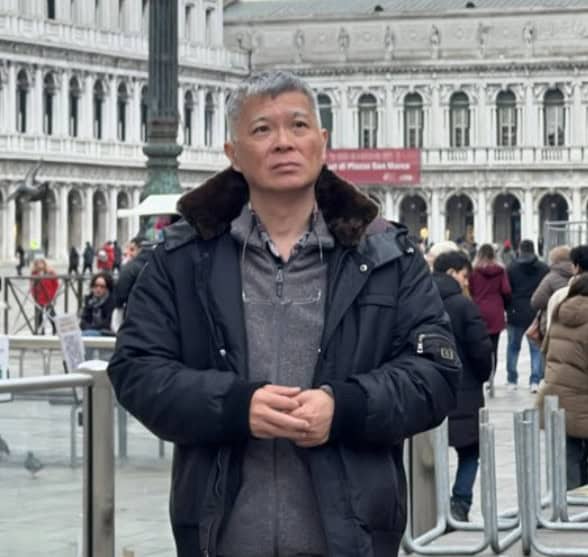
Michael Koh is a production specialist and entrepreneur who founded Spring Forest Studio in 2017 to provide event and virtual production solutions in Singapore. He specialises in hybrid live streaming, XR (Extended Reality) virtual production, and studio systems integration, transitioning the business from traditional videography to advanced corporate broadcasting. Operating out of a dedicated facility at NordCom2 in Singapore, he leads a technical crew to deliver multi-camera webcasts, digital sets, and technical consultations for large-scale corporate events.