In the evolving landscape of enterprise talent acquisition, the traditional recruitment playbook is undergoing a significant transformation. HR directors, often at the forefront of this strategic shift, are increasingly leveraging sophisticated B2B live event streaming and hybrid production solutions to enhance candidate engagement, expand outreach, and articulate employer brand narratives with unprecedented clarity and technical fidelity. This paradigm shift moves beyond rudimentary video conferencing, embracing broadcast-grade streaming infrastructure to create immersive, high-impact virtual and hybrid experiences that resonate with a highly discerning talent pool. The technical intricacies of delivering such experiences, from robust network architecture and advanced encoding protocols to multi-camera production workflows and secure content distribution, form the bedrock of a truly effective talent attraction strategy in the digital age.
Architecting Enterprise Streaming Solutions for Talent Engagement
The foundation of any successful streaming-driven talent attraction initiative lies in a meticulously designed and technically robust enterprise streaming architecture. HR directors seeking to elevate their recruitment efforts must understand that the quality and reliability of the technical delivery directly reflect on the organizational brand. This demands a departure from consumer-grade solutions, opting instead for professional systems capable of handling high-resolution video, uncompressed audio, and secure, low-latency distribution across diverse geographic locations.
Core Infrastructure Components and Signal Flow
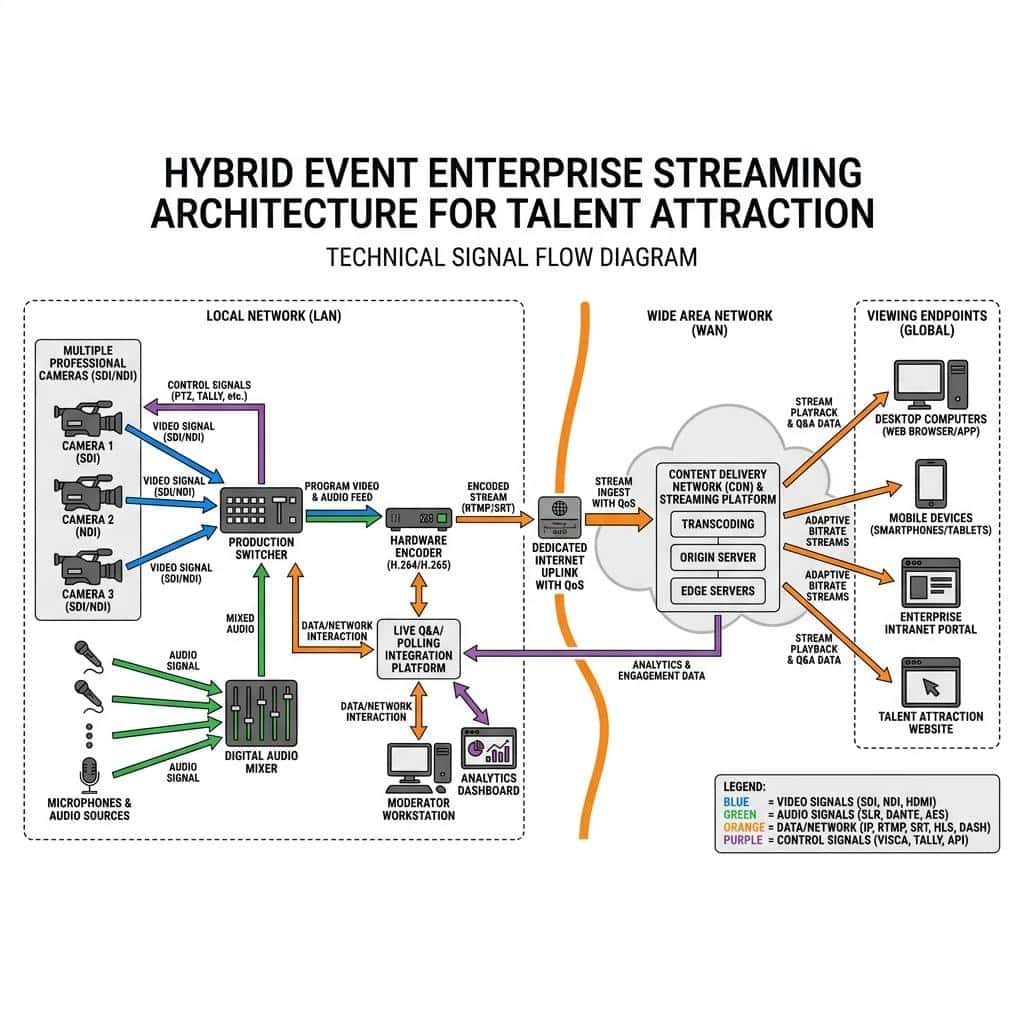
A typical enterprise streaming setup for talent engagement, whether for a virtual career fair, an executive Q&A, or an internal “day in the life” segment, involves a complex interplay of hardware and software. At the acquisition stage, professional-grade cameras such as PTZ (Pan-Tilt-Zoom) units, often with SDI (Serial Digital Interface) or NDI (Network Device Interface) outputs, are preferred for their superior image quality and control flexibility. These feeds are routed into a vision mixer or production switcher, which acts as the central control surface for selecting active camera angles, integrating graphics, and managing multiple video sources. For audio, professional condenser microphones and digital audio mixers are essential for capturing clear, intelligible speech and ambient sounds, with audio embedded into the video signal via SDI or routed separately over IP networks (e.g., Dante or AES67) for precise synchronization.
The program feed, a high-quality consolidated video and audio output from the switcher, is then passed to a professional hardware or software encoder. These encoders are critical for compressing the uncompressed video and audio into a streamable format using codecs like H.264 (AVC) or the more efficient H.265 (HEVC), which deliver excellent quality at lower bitrates. Encoding parameters, including resolution (e.g., 1080p at 30/60 fps or 4K/UHD for premium content), bitrate (typically 4-10 Mbps for 1080p), and keyframe intervals, are meticulously configured to balance visual fidelity with network constraints. Output protocols such as RTMP (Real-Time Messaging Protocol) or the more resilient SRT (Secure Reliable Transport) are commonly used for ingest to streaming platforms or CDNs (Content Delivery Networks).
Network Resiliency and Latency Optimization
Network infrastructure is arguably the most critical component for maintaining broadcast-grade quality. Dedicated, symmetrical internet connections with ample bandwidth are non-negotiable. For a 1080p stream at 8 Mbps, a minimum upload speed of 10-15 Mbps is recommended to account for overhead and potential fluctuations. Quality of Service (QoS) configurations on network routers prioritize streaming traffic, mitigating packet loss and jitter. For geographically dispersed events or critical talent attraction initiatives, leveraging a CDN is paramount. CDNs cache content closer to end-users, reducing latency and ensuring scalability for thousands of simultaneous viewers, thereby enhancing the candidate experience. Furthermore, implementing failover strategies, such as redundant encoders, dual internet service providers, or bonding multiple network connections, is essential for maintaining stream continuity and demonstrating organizational reliability, particularly during live Q&A sessions or critical presentations.
Hybrid Event Production Workflows for Virtual Talent Outreach
Hybrid events, seamlessly blending physical and virtual audiences, present a powerful model for talent attraction by extending reach beyond geographical limitations while retaining the impact of in-person interactions. HR directors can host “hybrid career days,” live executive panels, or facility tours that engage both on-site attendees and remote candidates equally effectively, provided the production workflow is technically robust.
Multi-Camera Production and Dynamic Content Delivery
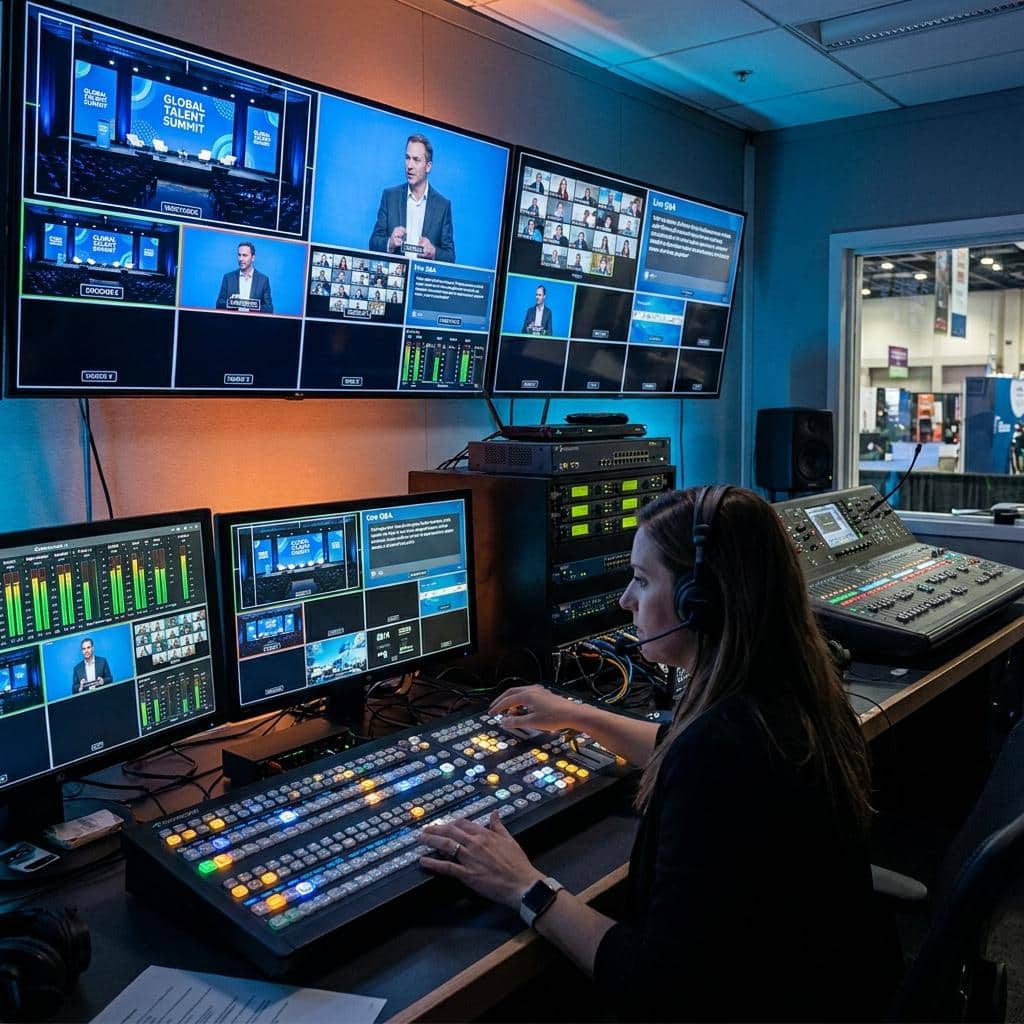
Professional hybrid production workflows necessitate a multi-camera setup to provide dynamic and engaging visual storytelling. Typically, 3-5 cameras might be employed: a wide shot for the stage or presentation area, close-ups for speakers, and potentially a roaming camera for audience interaction. Camera operators, often using professional broadcast tripods and fluid heads, capture diverse angles, while remote-controlled PTZ cameras offer flexibility in smaller breakout rooms. Lenses with appropriate focal lengths ensure sharp imagery, from wide establishing shots to tight, intimate portraits of presenters. Video switching systems, such as Blackmagic ATEM or Ross Carbonite, allow for seamless transitions between camera feeds, pre-recorded video segments, and real-time graphics or presentations (e.g., PowerPoint slides or corporate videos). Integrating graphics systems for lower thirds, branded overlays, and animated transitions elevates the production value, providing a polished, professional aesthetic that reinforces the employer brand. ISO recording of individual camera feeds is also a standard practice, providing raw footage for post-production editing or repurposing for on-demand content.
Interactive Platforms and Audience Engagement Mechanics
The success of hybrid talent attraction hinges on robust interaction capabilities. Integration with enterprise-grade platforms like Microsoft Teams, Zoom, or Webex goes beyond simple screen sharing. Advanced integrations allow for two-way audio and video contributions from remote panelists or candidates, seamless polling, Q&A modules with moderator control, and live chat functionality. For virtual career fairs, dedicated virtual booths can be created using specialized event platforms, where candidates can engage with HR representatives via live video calls (utilizing WebRTC protocols for low-latency P2P communication), download digital brochures, and submit resumes. Ensuring these interactive elements are technically stable, with sufficient server capacity and robust API integrations, is critical to prevent a disjointed or frustrating candidate experience. Furthermore, a dedicated technical director and moderation team are essential to manage the flow of questions, monitor chat, and troubleshoot any technical issues in real-time, ensuring a smooth and professional interaction for both virtual and physical participants.
Ensuring Broadcast-Grade Quality and Security in Talent Acquisition Streams
When an organization streams content for talent attraction, the quality and security of that stream are direct reflections of its operational excellence. Subpar video or audio quality, or perceived security vulnerabilities, can severely undermine recruitment efforts and damage brand reputation. Achieving broadcast-grade quality requires adherence to stringent technical standards, while robust security protocols protect sensitive organizational and candidate data.
Advanced Encoding and Transcoding for Diverse Endpoints
Delivering a consistent, high-quality viewing experience across a multitude of devices and network conditions necessitates advanced encoding and transcoding strategies. Adaptive Bitrate (ABR) streaming, typically implemented using HLS (HTTP Live Streaming) or MPEG-DASH, is fundamental. This involves creating multiple renditions of the stream at varying resolutions (e.g., 4K/UHD, 1080p, 720p, 480p) and bitrates, allowing the viewer’s device and network conditions to automatically select the most appropriate stream. This ensures optimal playback, minimizing buffering and maximizing reach. Cloud-based transcoding services offer scalable solutions for this, offloading the intensive processing from on-premise hardware and ensuring global distribution capabilities. Color grading and audio mastering during post-production or live processing ensure that the final output adheres to professional broadcast standards, presenting a polished and impactful visual and auditory experience for potential candidates.
Security Protocols and Data Privacy Compliance
Data security and privacy are paramount, especially when handling candidate information or showcasing proprietary corporate content. Utilizing secure streaming protocols like RTMPS (Real-Time Messaging Protocol Secure) or SRT with AES-128/256 encryption protects the stream from unauthorized interception during transit. Furthermore, implementing robust access control mechanisms, such as token-based authentication, geo-blocking, and IP whitelisting, ensures that only authorized viewers can access sensitive content. For hybrid events involving enterprise platforms, compliance with ISO 27001, GDPR, and other relevant data privacy regulations is crucial. This involves secure data storage, anonymization practices, and clear communication of data handling policies to all participants. Regular penetration testing and vulnerability assessments of the streaming infrastructure are also recommended to identify and mitigate potential security risks, safeguarding both corporate assets and candidate trust.
Data Analytics and ROI Measurement in Streaming-Powered Talent Strategies
The strategic deployment of B2B streaming for talent attraction is incomplete without a robust framework for data analytics and return on investment (ROI) measurement. HR directors need actionable insights to refine their strategies, optimize content, and demonstrate the tangible value of these technical investments to stakeholders.
Metrics for Virtual Event Performance
Comprehensive analytics dashboards provided by professional streaming platforms offer a wealth of data points. Key metrics include total unique viewers, peak concurrent viewers (PCU), average watch time, viewer geographic distribution, device types used, and engagement rates (e.g., clicks on call-to-action buttons, participation in polls/Q&A). By analyzing these metrics, HR teams can understand which content resonated most, identify optimal timing for events, and assess the global reach of their talent attraction efforts. For instance, a high drop-off rate during a specific segment might indicate content that needs refinement, while strong engagement with a live Q&A suggests effective real-time interaction. Tracking these performance indicators allows for continuous improvement in streaming content and delivery.
Integration with HRIS and CRM Systems for Holistic Data Insights
The true power of streaming analytics for talent attraction emerges when integrated with existing HR Information Systems (HRIS) and Candidate Relationship Management (CRM) platforms. APIs (Application Programming Interfaces) can facilitate the seamless transfer of viewer engagement data directly into candidate profiles or recruitment pipelines. This allows HR professionals to track which candidates attended specific virtual events, how long they watched, and their level of interaction. For example, a candidate who attended multiple live streams, actively participated in Q&A, and downloaded supplemental materials could be flagged as highly engaged, indicating a stronger potential fit. This holistic view enables personalized follow-up communications, tailored content delivery, and a more data-driven approach to nurturing talent leads. By quantifying the impact of streaming on key HR metrics, such as time-to-hire, candidate quality, and cost-per-hire, HR directors can unequivocally demonstrate the strategic value of professional B2B streaming in talent attraction.
In conclusion, B2B live event streaming and hybrid production are no longer niche technologies but indispensable strategic tools for modern HR directors. By embracing advanced technical infrastructure, meticulous production workflows, broadcast-grade quality standards, and data-driven insights, organizations can transform their talent attraction strategies, reaching a wider, more engaged, and ultimately higher-quality talent pool. The technical mastery of these platforms provides not just visibility, but strategic visibility, positioning the organization as an innovator and an employer of choice in a competitive global market.
Michael Koh is a production specialist and entrepreneur who founded Spring Forest Studio in 2017 to provide event and virtual production solutions in Singapore. He specialises in hybrid live streaming, XR (Extended Reality) virtual production, and studio systems integration, transitioning the business from traditional videography to advanced corporate broadcasting. Operating out of a dedicated facility at NordCom2 in Singapore, he leads a technical crew to deliver multi-camera webcasts, digital sets, and technical consultations for large-scale corporate events.