
Streamlining the Registration Flow for C-Suite Participants
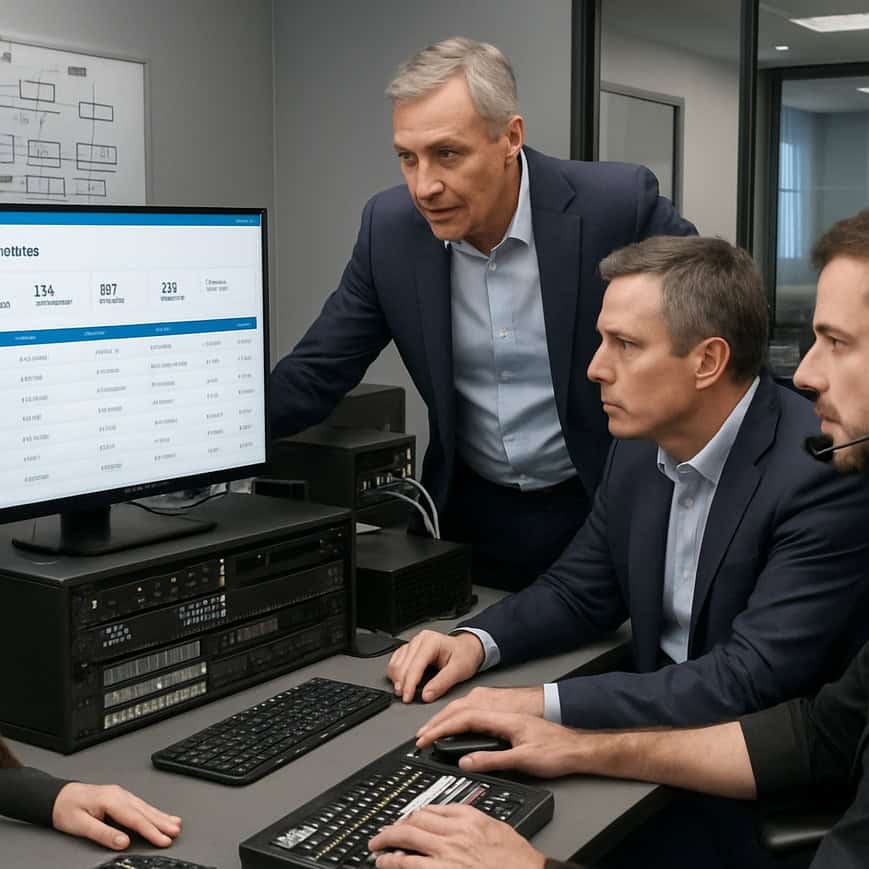
For enterprise hybrid events, the registration flow for C-suite participants is not a front-end administrative task, it is a production-critical workflow that affects security, speaker readiness, access control, bandwidth planning, and the reliability of the live stream itself. Executive attendees operate on compressed timelines, often moving between board meetings, investor calls, and travel windows. If […]
The Virtual Green Room: Preparing Speakers Before They Go Live
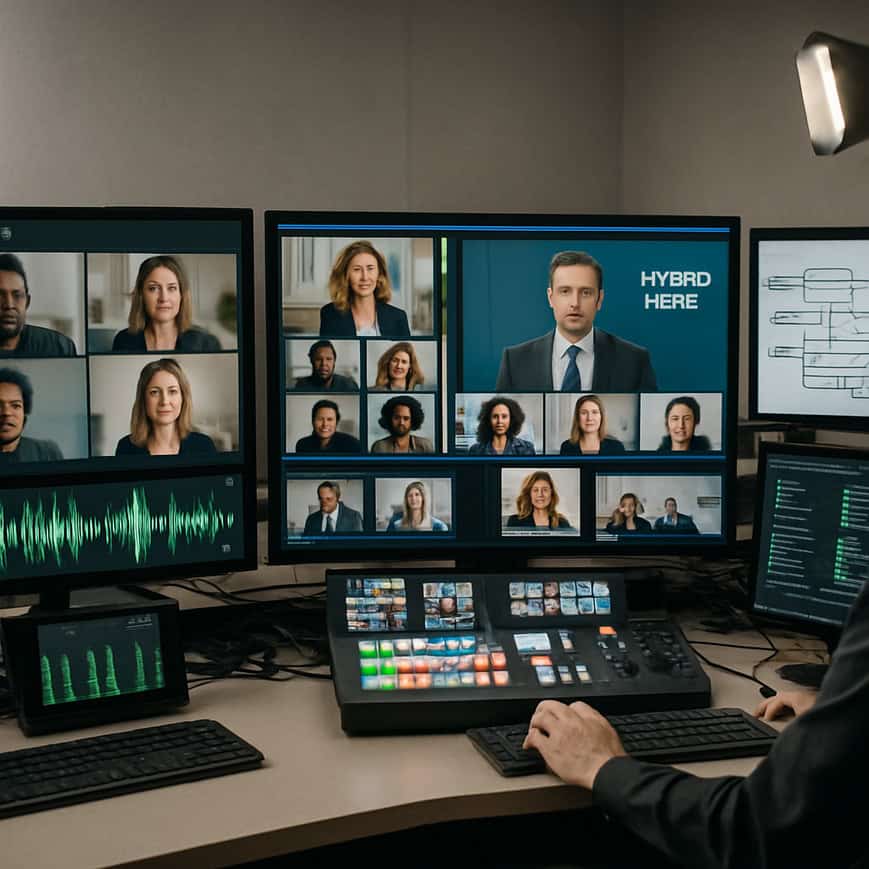
For enterprise live streaming and hybrid events, the virtual green room is not a courtesy call or a casual pre-show meeting. It is a controlled technical environment where speakers are prepared, validated, synchronized, and aligned with the production system before they appear on a live program feed. In corporate town halls, executive briefings, product launches, […]
Optimising Audio for VoIP: Ensuring Every Word is Heard Clearly
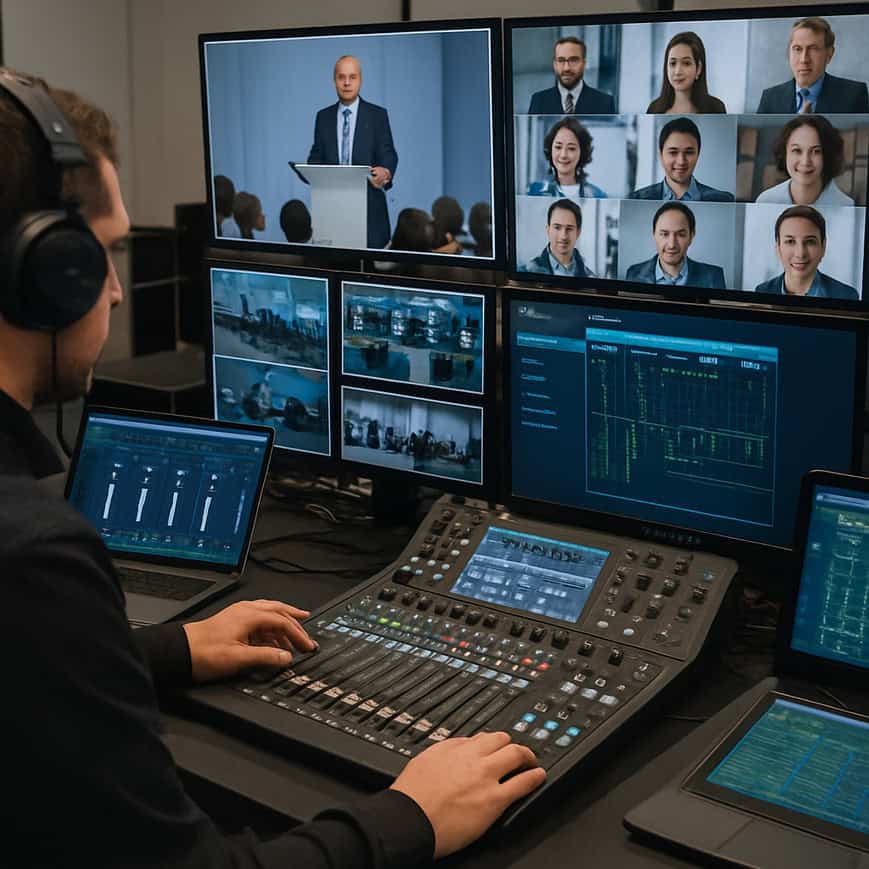
Audio clarity is the primary determinant of whether a VoIP-enabled corporate event succeeds or fails. In hybrid conferences, board meetings, investor briefings, training sessions, and multi-site executive communications, the visual layer may attract attention, but the audio layer carries meaning, authority, and comprehension. When speech intelligibility degrades, the audience disengages, remote participants miss action items, […]
Choosing Between Webex, Zoom, and Teams for Regional Hubs
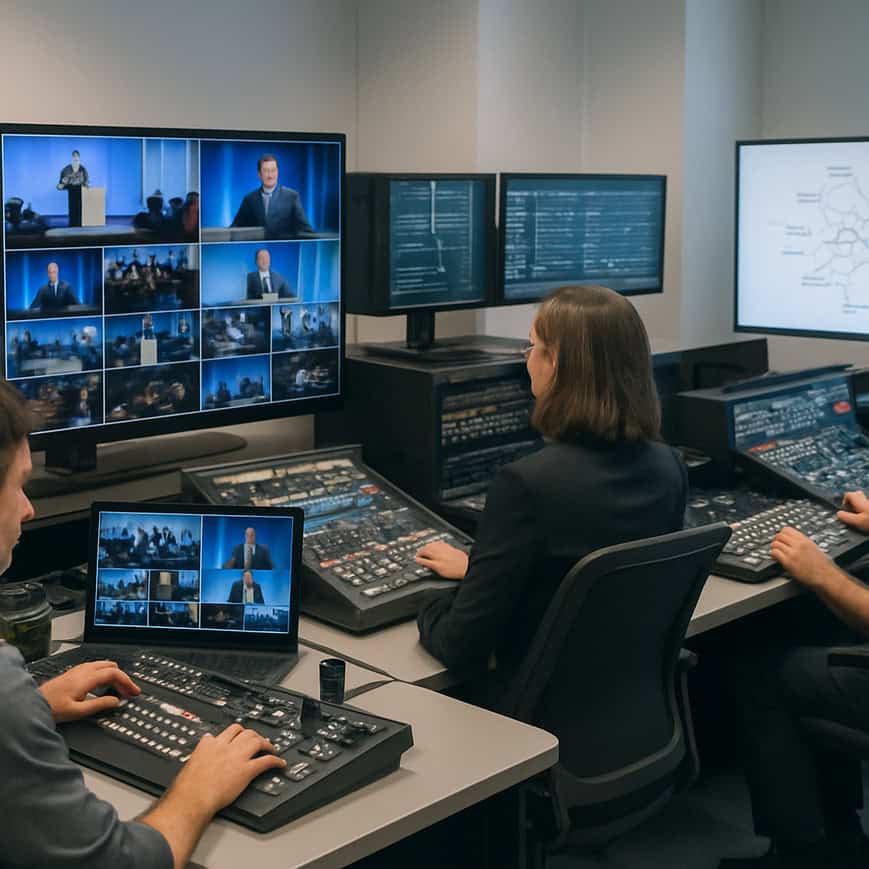
Regional hub strategy has become a defining factor in enterprise event operations, particularly for organizations running quarterly business reviews, leadership town halls, product launches, investor briefings, and distributed training programs across multiple cities or countries. When those events must originate from a regional office, travel through corporate networks, and reach both in-room audiences and remote […]
Mastering the Webinar: Advanced Tools for High-Conversion Lead Gen
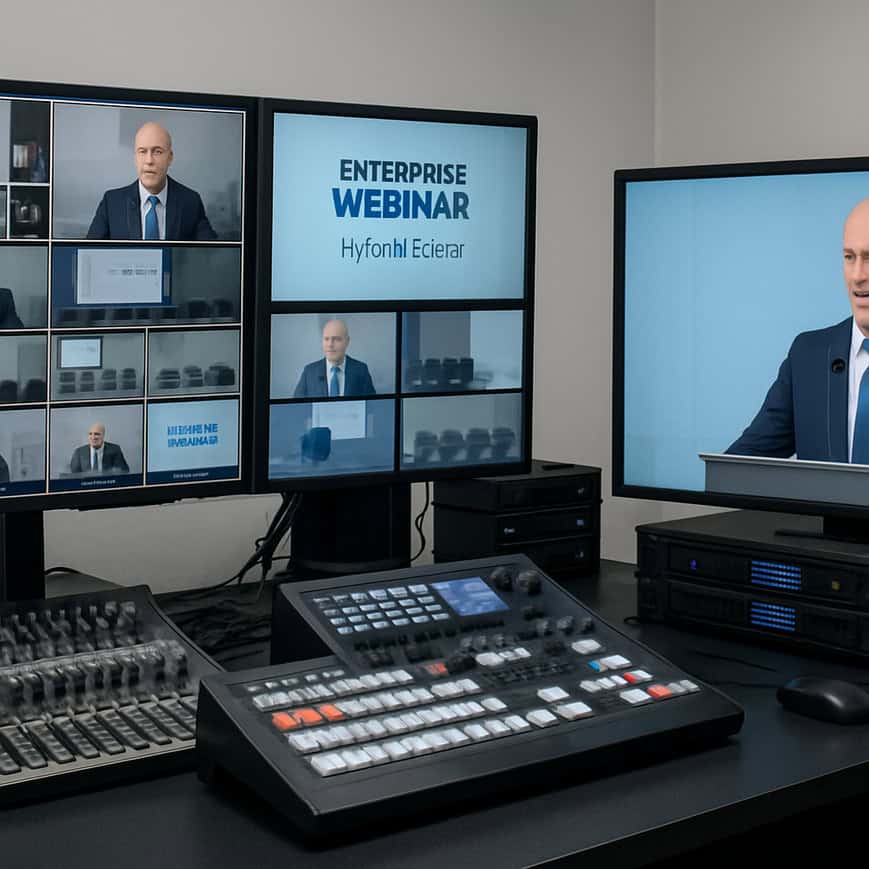
Webinars remain one of the most efficient B2B demand generation formats because they combine live instruction, controlled production, and measurable conversion paths inside a single event architecture. For corporate event planners, AV professionals, production managers, and enterprise IT stakeholders, the challenge is no longer whether to run webinars, but how to engineer them as high-reliability, […]
Beyond Basic Zoom: Professional Integrations for Singaporean MNCs

For Singaporean multinational corporations, basic meeting software is no longer sufficient for high-stakes town halls, investor briefings, product launches, training summits, and regional leadership broadcasts. The operational requirement is not simply to connect remote attendees. It is to engineer a deterministic, low-risk, brand-consistent live event environment that supports physical audiences, virtual attendees, executive presenters, and […]
Creating a “Community” Feeling in Hybrid Association Meetings
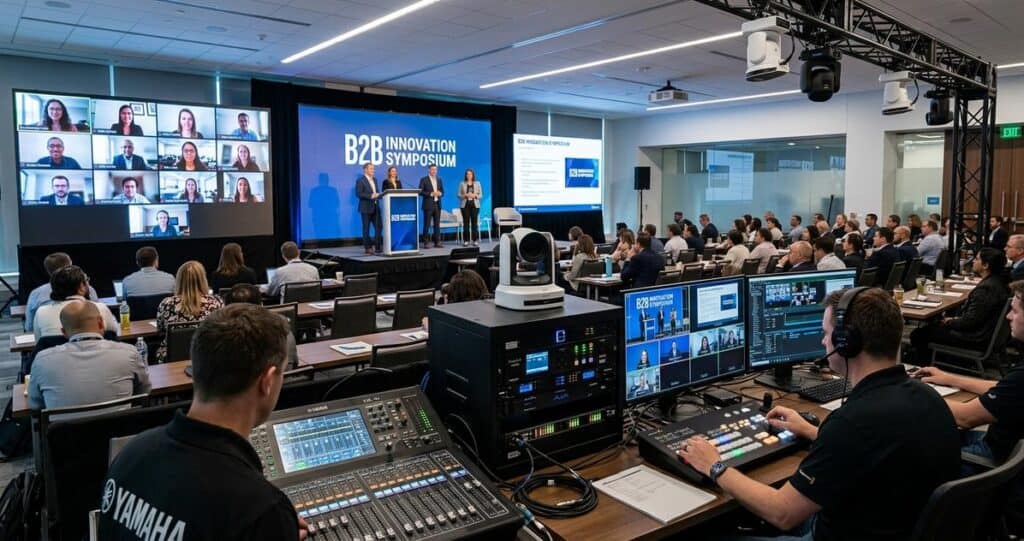
Hybrid association meetings succeed when the remote audience experiences more than a program feed. They need visual presence, intelligible audio, predictable interactivity, and production cues that make the virtual room feel operationally equivalent to the physical venue. For corporate event planners, AV professionals, production managers, and IT directors, that means designing a streaming architecture that […]
Measuring Sentiment: Real-Time Feedback in Hybrid Event Environments
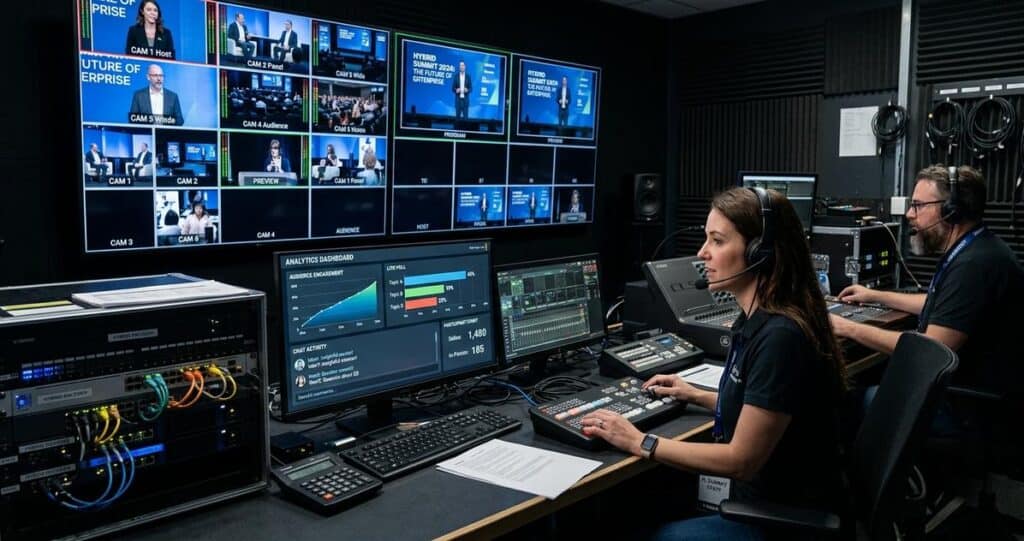
Measuring audience sentiment in a hybrid event environment is now a core production discipline, not a marketing afterthought. For corporate summits, executive town halls, investor briefings, product launches, training sessions, and multi-site internal broadcasts, the production team is responsible for more than signal integrity and platform uptime. The team must also capture, correlate, and operationalize […]
Reducing No-Show Rates: The Flexibility of the Hybrid Event Model
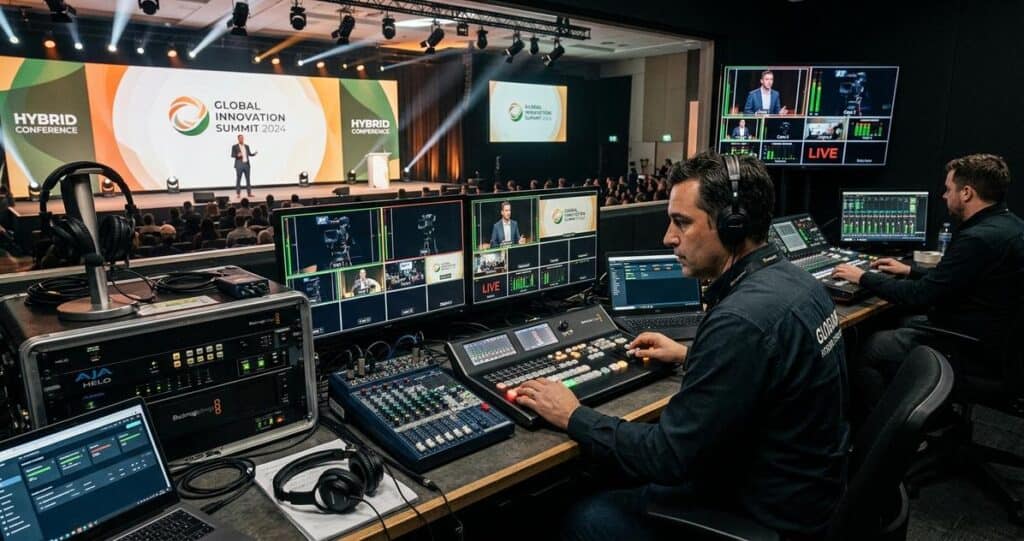
Hybrid event production has moved from a contingency format to a core delivery model for corporate communications, product launches, internal town halls, executive briefings, training programs, and investor-facing events. For enterprise teams, the primary operational advantage is not simply reach. It is attendance resilience. When a live in-room program is extended through a virtual access […]