 March 2, 2026 by Editor |
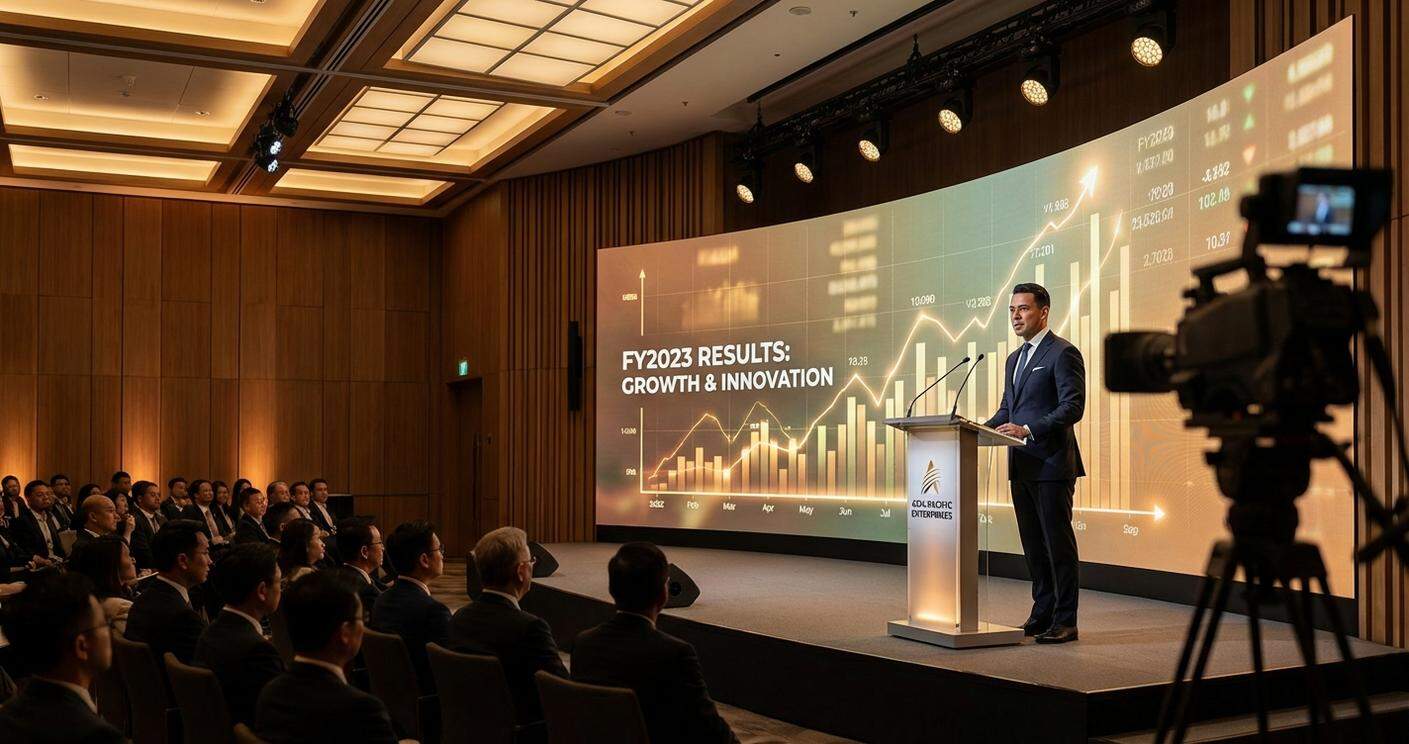
For a Publicly Listed Company (PLC) in Singapore, the Annual General Meeting (AGM) is not merely a corporate ritual; it is a mandated, highly scrutinized event with significant legal and financial ramifications. The communication must be flawless, the voting secure, and the delivery unimpeachable. In this high-stakes environment, relying on consumer-grade webinar platforms or internal IT solutions introduces unacceptable levels of risk. The modern hybrid AGM demands a broadcast engineering discipline, a framework we refer to as the AGM Gold Standard. This standard is built on a foundation of signal integrity, infrastructure redundancy, and secure distribution, ensuring that every shareholder, whether in the room or participating remotely, has a seamless and equitable experience. It involves a meticulous approach to production technology that goes far beyond a simple webcam and a software encoder. This is about deploying enterprise-grade hardware, resilient network architectures, and professional production workflows that guarantee uptime, clarity, and compliance, protecting the company’s reputation and shareholder value.
Architecting the Resilient Hybrid AGM: Signal Integrity and Redundancy
The core principle of a professional AGM stream is resilience. The entire technical architecture must be designed to withstand failure at any single point without interrupting the live feed. This begins with the foundational signal path and extends through encoding, transport, and network infrastructure. For PLCs, where every second of downtime can erode trust, a non-redundant system is a non-starter. True resilience is achieved through parallel, independent signal chains from acquisition to distribution.
The Foundational Signal Path: SDI vs. NDI
The initial transport of video and audio from cameras and microphones to the central production system is a critical first step. The two dominant professional standards are Serial Digital Interface (SDI) and Network Device Interface (NDI). An AGM Gold Standard deployment often involves a strategic combination of both. SDI is a baseband video transport standard, governed by SMPTE (Society of Motion Picture and Television Engineers) specifications like SMPTE ST 2082 for 12G-SDI, which supports uncompressed 4K/UHD signals at 60 frames per second over a single coaxial cable. Its primary advantage is near-zero latency and extreme reliability due to its point-to-point, non-IP nature. For mission-critical sources like the main podium camera or the CEO’s direct address, a 12G-SDI workflow provides the highest possible signal integrity. In contrast, NDI is an IP-based protocol that allows for the transport of high-quality, low-latency video over a standard Gigabit Ethernet network. Its strength lies in flexibility and scalability, making it ideal for secondary sources, roving Q&A cameras, or integrating presentation laptops without requiring long cable runs. A robust AGM setup uses SDI for core camera feeds and NDI for ancillary sources, all ingested into a hybrid production switcher capable of handling both signal types.
Encoding and Protocol Selection for Enterprise Security
Once the video and audio signals are mixed in the production switcher, the program feed must be encoded for internet delivery. The choice of codec and transport protocol directly impacts quality, latency, and security. The H.264 (Advanced Video Coding) codec remains a workhorse for its broad compatibility, but for high-efficiency streaming, H.265 (High Efficiency Video Coding) is superior, offering comparable quality at roughly 50% of the bitrate. This is critical for delivering a stable 1080p or 4K stream to shareholders with varying internet connectivity. The transport protocol is even more critical. While RTMP (Real-Time Messaging Protocol) and its secure variant RTMPS have been standard for years, they are susceptible to packet loss on unstable networks. The AGM Gold Standard mandates the use of SRT (Secure Reliable Transport). SRT is an open-source protocol that provides packet loss recovery, AES-256 encryption, and stable latency management over public internet connections. It functions like a digital shock absorber, ensuring that even with network fluctuations, the feed arrives at the Content Delivery Network (CDN) intact and secure.
Implementing A/B Path Redundancy
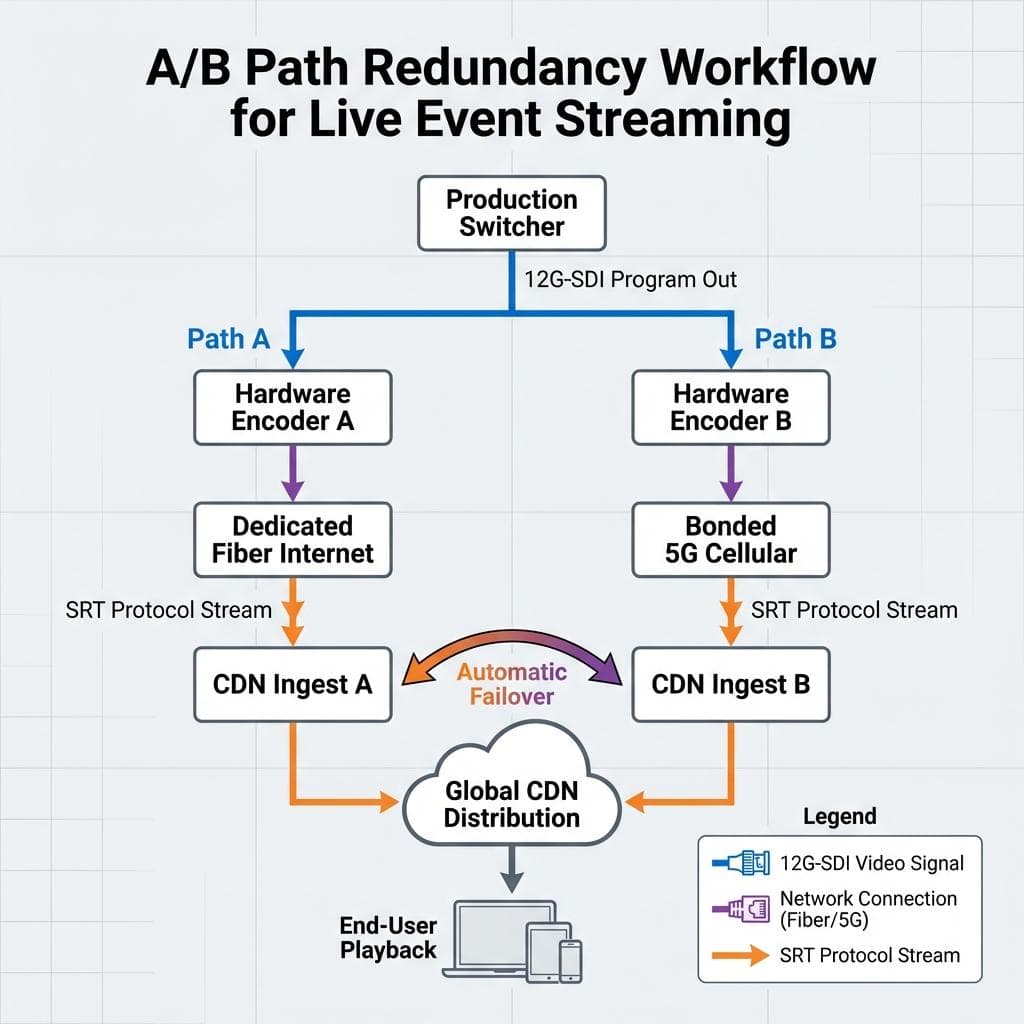
This is the cornerstone of a truly resilient stream. A/B Path Redundancy means creating two completely independent, parallel encoding and transmission chains. The program feed from the video switcher is sent to two separate hardware encoders. Encoder A might be connected to a dedicated fiber optic internet line, while Encoder B is connected to a bonded cellular solution combining multiple 4G/5G carriers. These two encoders send identical SRT streams to two different ingest points on the CDN. The CDN is configured for primary/backup ingest, so if the primary path (Encoder A, fiber line) fails for any reason, it automatically and seamlessly fails over to the secondary path (Encoder B, bonded cellular) with no interruption visible to the audience. This multi-layered redundancy across hardware, network, and service providers is the ultimate guarantee against catastrophic failure.
The Production Core: Broadcast-Grade Infrastructure for Flawless Execution
The on-site production infrastructure is the heart of the AGM. This is where raw camera feeds, audio sources, graphics, and remote participant inputs are synthesized into a polished, professional broadcast. This environment is managed by a team of specialized engineers and technicians, each with a defined role, operating broadcast-spec equipment to ensure precision and control throughout the event.
Multi-Camera Production and Switching
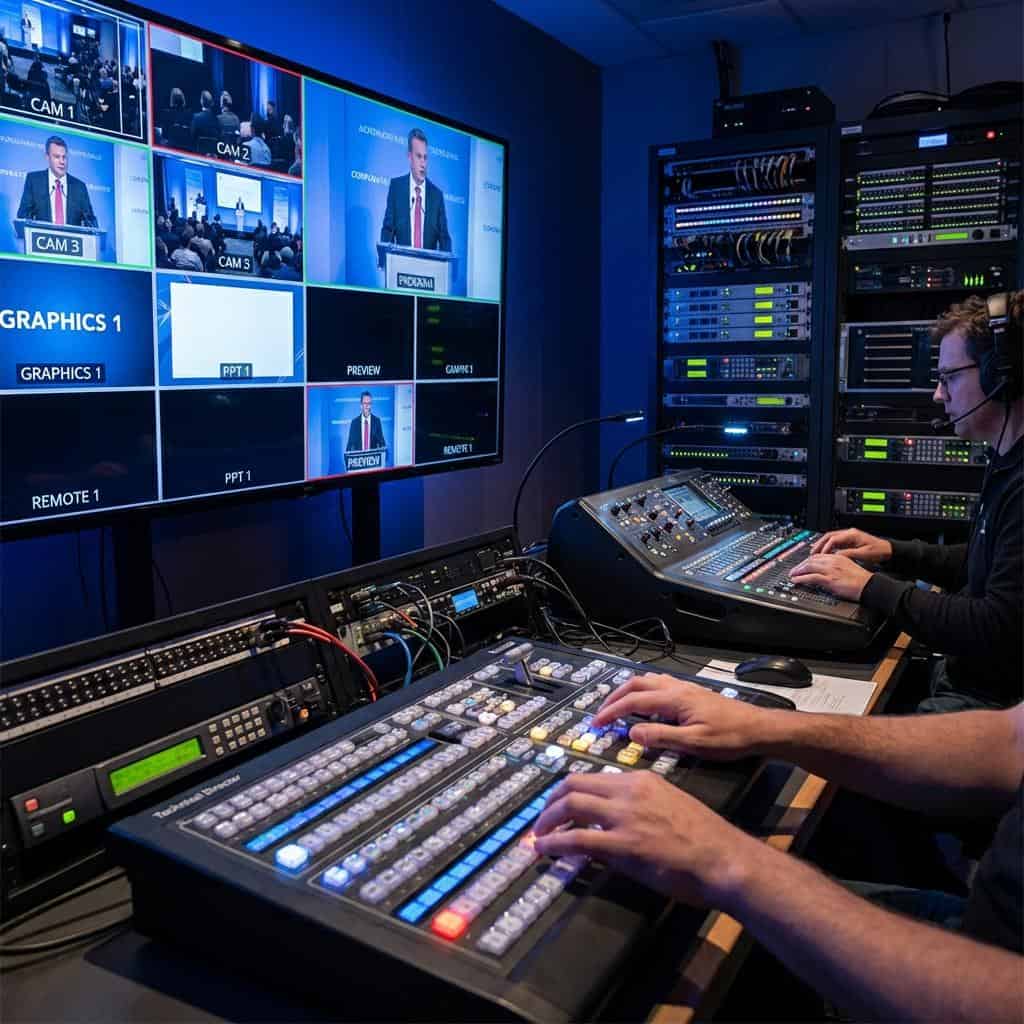
A professional AGM utilizes a multi-camera setup to provide dynamic coverage and clear views of all speakers and proceedings. This typically involves at least three to five broadcast cameras with high-quality optics and SDI outputs. These feeds are routed to a central production video switcher, such as a Blackmagic Design ATEM Constellation or a Ross Video Carbonite. The Technical Director operates the switcher to cut between different camera angles, presentation slides, and video playbacks. This operator works from a multiview monitor, which displays all available sources, as well as the live Program feed and the cued-up Preview feed. This setup allows for seamless transitions, picture-in-picture compositions for panel discussions, and the integration of lower-third graphics for speaker titles, all executed with broadcast precision.
Professional Audio Architecture: Clarity and Compliance
Audio is arguably more important than video for an AGM. Every word must be intelligible. A professional audio setup begins with high-quality microphones: gooseneck microphones for the lectern, lavalier microphones for mobile speakers, and handheld microphones for audience Q&A. These are fed into a digital audio mixing console, such as a Yamaha QL or CL series console, often using a Dante (Digital Audio Network over Ethernet) protocol for routing. An audio engineer is dedicated to monitoring levels, equalizing voices for clarity, and eliminating feedback. A critical component for hybrid events is the creation of a mix-minus feed. This is a custom audio mix sent to remote presenters that includes all program audio except for their own voice, preventing distracting echo and feedback. The final, mixed audio is then embedded into the SDI video signal for perfect synchronization before it reaches the encoders.
Integrating Q&A and Secure Voting Platforms
The interactive elements of an AGM, specifically shareholder Q&A and voting, require sophisticated technical integration. Secure, audited platforms like Lumi, Slido, or Boardroom are used to manage these processes. The technical workflow involves dedicated operator stations for moderating incoming questions and managing voting polls. These platforms are connected to the production system via NDI or by using a dedicated computer with an HDMI/SDI output. A graphics operator then keys the moderated questions or live poll results over the main program feed as lower-thirds or full-screen graphics. This integration must be seamless and real-time, providing a compliant and transparent experience for all shareholders while giving the company board full control over the proceedings.
Network Engineering for Enterprise Streaming: Beyond Bandwidth
Delivering a professional stream requires a network engineered for reliability and security, not just speed. The on-site network infrastructure must be robust and managed, while the delivery network must provide scale and protection for a global shareholder audience.
On-Premise Network Segmentation and QoS
The production network must be completely isolated from the venue’s or corporation’s general-use Wi-Fi and LAN. This is achieved by creating a dedicated Virtual LAN (VLAN) for all production equipment. Within this VLAN, managed network switches are configured with Quality of Service (QoS) policies. QoS prioritizes time-sensitive video and audio packets (like SRT and NDI) over less critical data traffic. This prevents packet loss and jitter, ensuring a stable signal flow from the production core to the encoders. Network engineers must perform a thorough analysis of the venue’s internet infrastructure, validating sustained upload speeds and latency figures well in advance of the event.
CDN Strategy: Geo-Distribution and Security
The role of the Content Delivery Network (CDN) is to take the single SRT feed from the venue and distribute it at scale to thousands of shareholders across the globe. An enterprise-grade CDN like Akamai, AWS CloudFront, or Cloudflare provides geo-distribution, caching the stream on servers located close to viewers to minimize latency and buffering. For a PLC AGM, security on the CDN is paramount. This includes implementing token-based authentication, where each viewer receives a unique, time-limited token to access the stream, preventing unauthorized sharing. Geo-fencing can be used to restrict access to specific countries, and in some cases, Digital Rights Management (DRM) can be applied to prevent recording or illegal distribution of the content, protecting sensitive financial information.
Hybrid Event Platform Integration: The Virtual Attendee Bridge
For the virtual audience, the main broadcast feed must be seamlessly integrated into a familiar enterprise platform like Microsoft Teams, Zoom Events, or Webex. This is not achieved by pointing a webcam at a screen. Instead, a dedicated hardware or software solution is used to route the main program feed directly into the meeting or webinar. This can be done via RTMP ingest, which most platforms now support, or by using dedicated appliances that convert the SDI program feed into a high-quality virtual webcam input. This ensures that remote attendees see the same professionally produced, multi-camera feed as the main webcasting audience, maintaining a consistent and high-quality experience for all participants.
In conclusion, the AGM Gold Standard is a comprehensive technical methodology. It treats corporate streaming with the rigor and discipline of live television broadcasting. By prioritizing signal integrity through professional standards like SDI and SRT, building fully redundant A/B transmission paths, utilizing broadcast-grade production hardware, and engineering a secure, managed network from end to end, Singapore’s leading PLCs ensure their most critical stakeholder communications are delivered without compromise. This approach mitigates technical risk, satisfies stringent regulatory requirements, and ultimately reinforces shareholder confidence and corporate authority in a demanding digital landscape.