
Introduction: The Evolution of B2B Event Production
The digital transformation in live event production has led corporate event planners to explore innovative solutions to balance cost, flexibility, and technology. Virtual studios are leading this transition by minimizing the physical constraints of traditional setups. These studios use green screens, advanced graphics, and real-time rendering technologies to create immersive environments without the need for costly physical set construction.
Virtual Studio Technologies: The Backbone of Modern Production
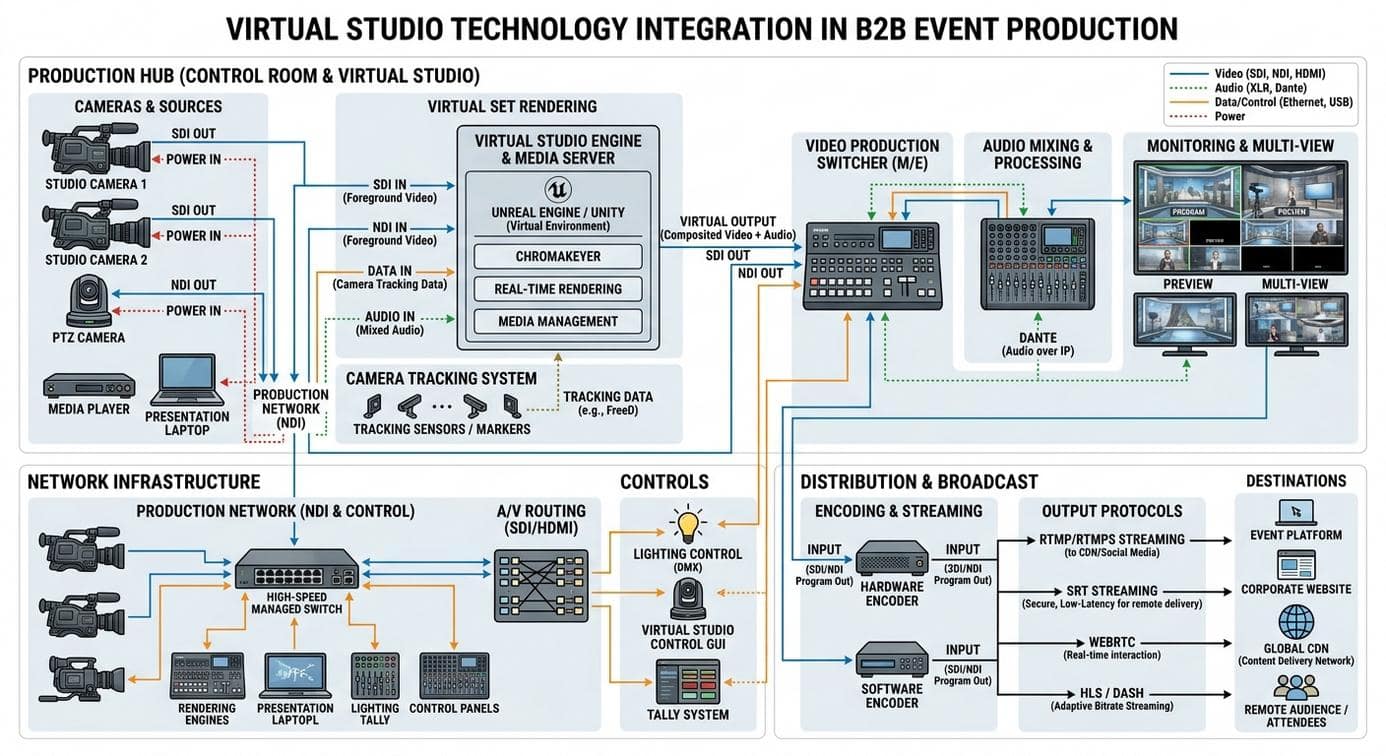
Virtual studios leverage technologies such as NDI (Network Device Interface) for seamless video over IP, SDI (Serial Digital Interface) for robust video transportation, and advanced rendering engines to construct digital environments. These components collectively reduce the logistical complexities associated with traditional stage settings.
Virtual Set Construction
By utilizing real-time 3D modeling, virtual studios recreate physical sets with exceptional detail. Tools like Unreal Engine enable photorealistic rendering, which can be adapted live to any event’s thematic needs. This flexibility allows production teams to adjust set visuals dynamically, offering cost savings on storage, transportation, and labor associated with physical sets.
Streaming Protocols and Infrastructure
The integration of secure streaming protocols such as RTMP (Real-Time Messaging Protocol) and SRT (Secure Reliable Transport) ensures the reliable and low-latency distribution of content. These technologies support multi-camera setups and facilitate high-quality live streaming necessary for corporate events.
Cost Efficiency and Scalability
Virtual studios offer unprecedented scalability. They allow the adaptation of set size and complexity without the corresponding increase in physical resources or space requirements. This aspect is particularly beneficial for enterprises looking to host large-scale hybrid events. The use of cloud-based production solutions further amplifies this scalability.
Reducing Physical and Financial Footprint
Beyond the savings on physical construction and logistics, virtual studios contribute to a reduced carbon footprint — a significant consideration for modern enterprises. By relying on virtual set technology, organizations can host environmentally sustainable events that align with corporate social responsibility goals.
Operational Agility
The integration with platforms such as Microsoft Teams, Zoom, and Webex for hybrid events allows seamless interaction between physical and virtual attendees. The flexibility to switch between live feeds and pre-recorded content enhances audience engagement without additional cost.
Technical Specifications for Enterprise Streaming
Professionals managing enterprise-grade streaming need to ensure robust infrastructure. This involves utilizing high-efficiency video coding standards such as H.264 and H.265 for optimal compression, which minimizes bandwidth usage while maintaining high resolution and frame rate.
Quality of Service (QoS) and Redundancy
Implementing QoS strategies is essential to maintaining broadcast quality. These strategies include the deployment of redundant internet connections, backup power solutions, and advanced encoding devices, ensuring continuous service in real-time environments.
Signal Processing and Networking
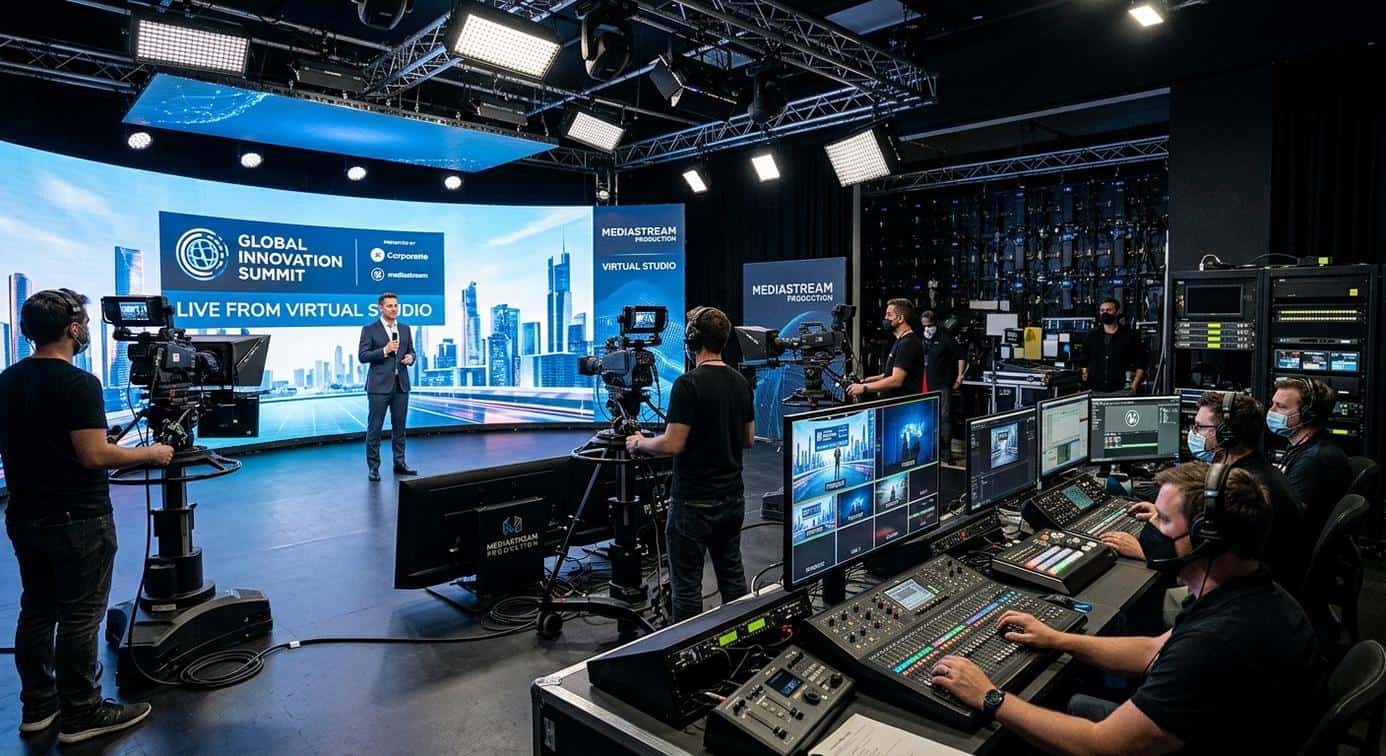
Advanced video switching systems, such as those using HDMI 2.1 and SDI interfaces, facilitate the seamless mix of audio and video signals. The employment of multiview monitoring and ISO recording allows directors to capture multiple perspectives efficiently.
Conclusion: Virtual Studios as a Strategic Enterprise Investment
The transition to virtual studio technology in B2B event streaming represents a strategic shift toward flexible, scalable, and cost-efficient production. This modern approach not only reduces traditional logistical concerns and construction costs but also enhances the ability to engage audiences through diverse, immersive experiences. By integrating virtual studios into production workflows, enterprises can future-proof their event strategies and deliver exceptional value to stakeholders.

Michael Koh is a production specialist and entrepreneur who founded Spring Forest Studio in 2017 to provide event and virtual production solutions in Singapore. He specialises in hybrid live streaming, XR (Extended Reality) virtual production, and studio systems integration, transitioning the business from traditional videography to advanced corporate broadcasting. Operating out of a dedicated facility at NordCom2 in Singapore, he leads a technical crew to deliver multi-camera webcasts, digital sets, and technical consultations for large-scale corporate events.