
Singapore’s education sector operates with a level of infrastructure discipline that mirrors high-end corporate event environments, and live streaming has become a strategic extension of that discipline. For schools, junior colleges, polytechnics, and universities, streaming is no longer limited to broadcasting graduation ceremonies or guest lectures. It now supports international admissions outreach, virtual open houses, cross-border academic collaboration, donor engagement, faculty development, and high-value hybrid events that project institutional credibility far beyond the physical campus. In this context, streaming is a production and network engineering problem, not a consumer media task. The technical challenge is to deliver broadcast-consistent image quality, intelligible audio, secure platform integration, and deterministic performance across LAN, WAN, and cloud layers while preserving the prestige of the institution.
Singapore is especially suited to this model because campus technology strategy is typically aligned with enterprise networking standards, robust fiber connectivity, and strong operational governance. Institutions that treat streaming as an integrated part of AV design gain a measurable advantage. A well-architected digital campus can deliver commencement ceremonies in 1080p or 4K/UHD, support low-latency faculty panels through Microsoft Teams, Zoom, or Webex, and route program feeds to multiple destinations using RTMP, RTMPS, or SRT. The result is a reliable hybrid production environment that is as much about reputation management as it is about signal transport. For enterprise decision-makers, the lesson is clear, school streaming should be engineered with the same rigor as a corporate product launch or shareholder webcast.
Streaming as a Strategic Asset in Singapore’s Digital Campus Model
Educational institutions in Singapore use streaming to extend the reach of physical events without compromising technical quality. A campus event that is streamed properly can function as a global front door. Prospective students in overseas markets, alumni in different time zones, corporate partners, and international faculty all consume the same event through a carefully managed program feed. That creates a direct link between technical execution and institutional prestige.
From a production engineering standpoint, the objective is to create a repeatable event workflow. This requires a defined signal path from camera to encoder, a predictable switching environment, and a distribution plan that accounts for both live and recorded delivery. In most campus deployments, the core elements include multi-camera coverage, confidence monitoring, redundant audio capture, synchronized graphics, and streaming encoders configured for bitrate stability. When the event includes academic panels, award ceremonies, or hybrid commencement programs, the system must also support speaker confidence monitoring, remote contributor return audio, and clean recording for archival use.
Campus Event Types That Benefit from Enterprise Streaming
Singaporean schools and tertiary institutions typically deploy streaming for events with high visibility and long-term brand value. These include graduation ceremonies, scholarship announcements, open houses, international symposiums, board presentations, research showcases, and parent engagement sessions. Each of these event types places different demands on the technical workflow. A ceremony may need long-form ISO recording, while a panel discussion may prioritize low-latency remote guest integration. A donor briefing may require secure access control, while a virtual open house may need multi-platform distribution and live captioning.
In each case, the production design must be mapped to the event objective. If the goal is prestige, the stream must look and sound authoritative. That means controlled lighting, clean camera framing, stable framing transitions, balanced color temperature, intelligible dialogue, and minimal latency drift. The audience may not notice the transport layer, but they immediately perceive distortion, audio clipping, dropped frames, or poor lip sync. For this reason, the technical design of a school stream is a direct component of institutional branding.
Production Architecture for Hybrid Academic Events
Effective hybrid production depends on a proper signal flow architecture. In campus environments, the most reliable workflows still depend on baseband video and disciplined routing, even when cloud distribution is involved. A typical professional setup begins with SDI, Serial Digital Interface, for camera acquisition and internal transport, with HDMI 2.1 used selectively for compatible presentation devices and laptops. For larger venues, particularly lecture theatres and auditoriums, video routing is frequently centralized through a matrix switcher or a software-defined production platform that accepts SDI and NDI, Network Device Interface, sources.
The choice between SDI and NDI is determined by venue size, infrastructure maturity, and latency tolerance. SDI remains preferred for deterministic, low-jitter camera feeds, especially where long cable runs and interference resistance matter. NDI is valuable for networked workflows, PTZ, pan-tilt-zoom, cameras, remote desktops, and distributed control rooms, because it moves video over standard IP infrastructure. NDI|HX, the high-efficiency variant, reduces bandwidth pressure at the cost of some compression overhead, making it practical for schools with constrained switch capacity or mixed-use networks. In many Singapore campus projects, the best practice is a hybrid topology, SDI for critical acquisition and NDI for distributed contribution and routing.
Multi-Camera Switching and Program Construction
A polished academic event usually requires at least three camera positions, a wide master shot, a medium shot for podium coverage, and a roaming or side-angle shot for audience reaction and award handoffs. Larger productions may add a dedicated reverse camera, robotic PTZ units for long-throw capture, and a graphics source for lower-thirds, sponsor slates, or agenda overlays. These sources are brought into a vision mixer or production switcher, where the technical director manages transitions, keying, downstream key layers, and live cut decisions.
For prestige events, ISO recording is essential. ISO, or isolated source recording, captures each camera feed separately in addition to the program output. This supports post-event editing, archival compliance, and highlight package production. When paired with timecode alignment and synchronized audio, ISO files provide the flexibility to rebuild the event if a live distribution endpoint fails or if a future promotional edit is required. In a university context, this is especially useful for admissions content, research announcements, and ceremonial archives.
Audio Workflow and Speech Intelligibility
Audio determines whether a stream feels professional or amateur. In academic venues, the audio chain usually includes lavalier microphones for speakers, gooseneck microphones for panels, wireless handhelds for audience interaction, and program audio feeds from presentation sources. All of these signals should terminate in a digital mixer with scene recall, dynamics processing, EQ, and mix-minus capability for remote participants. If the event includes interactive hybrid guests, a talkback system is required to coordinate stage management, technical direction, and camera operators without open-air communication leakage into the live feed.
For broadcast-quality speech reproduction, the target is consistent dialogue level with controlled ambient pickup. Operators should manage gain structure so that peaks remain within safe headroom and do not force encoder-side attenuation. A properly balanced mix avoids the common campus problem of visual polish paired with unclear dialogue. In hybrid academic programming, voice intelligibility has a direct effect on audience retention and institutional perception.
Encoding Standards, Protocol Selection, and Delivery Design
Once the program feed is assembled, the encoder becomes the critical handoff point to the distribution layer. Enterprise campus streaming typically uses H.264, also known as AVC, for broad compatibility and H.265, also known as HEVC, where bandwidth efficiency is needed and endpoint support is confirmed. The choice depends on target playback devices, platform ingestion requirements, and network headroom. For most live academic streams, 1080p at 25 or 30 frames per second with a stable bitrate between 4 and 8 Mbps provides an efficient balance of quality and delivery robustness. Higher-motion or visually dense content may justify higher bitrates, while internal-only streams on managed networks can support more aggressive configurations.
RTMP, Real-Time Messaging Protocol, remains common for platform ingestion because of its broad acceptance and operational familiarity. RTMPS adds TLS encryption for secure transport and is preferred when institutional policies require encrypted ingestion. SRT, Secure Reliable Transport, is increasingly important for contribution feeds between campus locations, remote control rooms, and cloud production environments. SRT is designed to survive packet loss and jitter across public internet links, which makes it well suited for remote guest contribution, off-site backup encoding, and disaster recovery routing. In contrast, RTMP is less resilient over unstable links and is best treated as a delivery protocol rather than a mission-critical contribution method.
Latency Management and Sync Control
Latency in a campus stream is not only a technical metric, it is an operational issue. If remote participants in Teams or Zoom are interacting with an in-room moderator, excessive delay disrupts conversational cadence. For interactive sessions, the target should be a carefully managed end-to-end latency budget. Contribution feeds over SRT may introduce some buffer delay for robustness, while the final delivery path can be optimized for lower delay through platform settings and encoder configuration. Audio-video synchronization must remain tight across all branches of the workflow, particularly when switching between local and remote sources.
For events with a live in-room audience and a remote audience, the design should separate confidence monitoring from contribution monitoring. The technical team needs program confidence, clean feed confidence, and return feeds that are delay-aware. That prevents feedback loops and preserves conversational timing. In enterprise environments, this is the difference between a usable hybrid event and a disjointed one.
Network Infrastructure, Redundancy, and Security in Campus Streaming
Streaming on a Singapore campus succeeds when network engineering supports production demands without competing with general IT traffic. The AV network should be segmented using VLANs, with multicast policies defined where appropriate, QoS, Quality of Service, prioritized for time-sensitive media traffic, and switch capacity validated for sustained throughput. A production network carrying NDI, control traffic, tally, and monitoring data must be planned with the same rigor as any enterprise collaboration environment. 1 Gbps may be sufficient for small installations, but 10 GbE is commonly justified where multiple high-bandwidth feeds, shared storage, and rapid file transfer are involved.
Redundancy must be explicit. That includes dual power supplies on critical devices, UPS-backed power distribution, redundant internet uplinks, bonded cellular fallback where appropriate, and secondary encoding paths for mission-critical events. A good design also separates acquisition from delivery. If the primary encoder fails, the backup encoder should already be receiving the same program feed. If the venue internet drops, the system should have a pre-approved failover route, whether through a tertiary network path or a locally recorded emergency playback strategy.
Security and Access Control for Institutional Events
Schools often stream events that are public-facing, but many also require private access controls for board briefings, student orientation materials, or internal academic sessions. Security design should include authenticated access, link governance, platform permissions, and controlled distribution of preview and archive assets. For hybrid sessions involving minors or regulated data, the institution should apply policy-based approval workflows and retention rules aligned with its governance framework. This is especially relevant in Singapore, where strong digital governance expectations intersect with institutional privacy obligations.
Encryption in transit, secure credential handling, and restricted admin access are not optional in enterprise education deployments. RTMPS, secure conference platform authentication, and hardened device management contribute to a trustworthy operating model. On the production side, access to switchers, encoders, storage, and remote monitoring interfaces should be limited to authorized operators. Operational security is part of technical resilience.
Cloud-Based Versus On-Premise Streaming for the Digital Campus
Singaporean schools increasingly use a hybrid model that combines on-premise production with cloud-based distribution. On-premise systems offer deterministic control, local recording, and lower dependency on internet variability. Cloud workflows provide elasticity, remote collaboration, and multi-destination publishing. For enterprise clients, the correct answer is rarely all cloud or all local. The better architecture is a layered one.
In a practical deployment, cameras, audio, graphics, and switching remain on site, while the final program feed is delivered to a cloud encoder, distribution service, or platform gateway. This supports scale without surrendering control of the physical event. For high-profile ceremonies, on-premise recording protects against WAN interruptions, while cloud distribution enables simultaneous delivery to multiple audiences, including international alumni, parents overseas, and partner institutions. In many cases, the production team also mirrors the stream to internal collaboration tools like Teams, Zoom, or Webex for invited participants, while the public-facing stream runs separately through a controlled broadcast endpoint.
Operational Recommendations for Enterprise Clients
Institutions planning a digital campus strategy should begin with a site survey that maps acoustics, lighting, camera sightlines, cable runs, network capacity, and audience interaction patterns. Next, define event classes by importance, audience size, and interactivity. A graduation stream and a faculty town hall do not require the same topology. Once the event matrix is defined, standardize equipment profiles, encoder presets, graphics templates, audio scenes, and failover procedures. Standardization reduces operator error and improves consistency across multiple venues.
Enterprise clients should also implement rehearsal protocols. A technical rehearsal validates the video path, audio mix, timing, platform ingestion, captions, and backup routes. Monitoring should include multiview confidence, audio meters, encoder health, and platform status dashboards. If the school intends to build global prestige through streaming, every event should feel like a controlled broadcast, not a improvised webcast.
The strongest digital campus strategies in Singapore combine AV engineering, IT governance, and brand discipline. They use the correct transport protocol for the job, apply broadcast principles to academic content, and build redundancy into the design from the start. With the right infrastructure, schools can present themselves to the world with consistency, authority, and technical polish. That is the real value of streaming for global prestige, it turns each campus event into a reliable, high-quality institutional touchpoint that scales far beyond the auditorium.
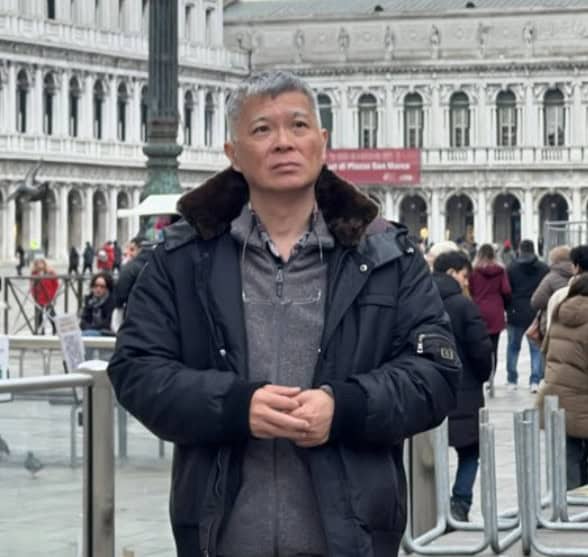
Michael Koh is a production specialist and entrepreneur who founded Spring Forest Studio in 2017 to provide event and virtual production solutions in Singapore. He specialises in hybrid live streaming, XR (Extended Reality) virtual production, and studio systems integration, transitioning the business from traditional videography to advanced corporate broadcasting. Operating out of a dedicated facility at NordCom2 in Singapore, he leads a technical crew to deliver multi-camera webcasts, digital sets, and technical consultations for large-scale corporate events.