
Premium virtual weddings and hybrid wedding productions now operate with the same technical expectations as corporate live events: deterministic signal flow, resilient transport, synchronized multi-source contribution, and polished interactive experiences that make remote guests feel present without compromising program integrity. The digital guestbook has emerged as one of the most valuable interactive layers in this environment because it transforms passive viewing into measurable audience participation. In a professionally produced wedding stream, the guestbook is not a novelty widget. It is a controlled, moderated, and technically integrated engagement system that must coexist with multi-camera production, audio engineering, platform interoperability, privacy controls, and scalable distribution architecture.
For production teams serving premium virtual weddings, the challenge is not simply collecting messages. The challenge is designing a guestbook workflow that is reliable across devices, accessible to local and remote participants, visually aligned with the event brand, and capable of surviving real-world network conditions. That means planning for low-latency contribution paths, chat moderation, media ingestion, failover behavior, content storage, and post-event archival. Whether the program is delivered over RTMP, RTMPS, SRT, or a managed cloud platform, the guestbook should be treated as a production subsystem with its own requirements for user experience, security, and operational control.
Production Architecture for an Interactive Wedding Guestbook
A premium digital guestbook begins with architecture, not aesthetics. The system should be designed around three functional layers: contribution, moderation, and presentation. Contribution is the intake path for written messages, photos, short video clips, or voice notes from guests. Moderation is the control layer that filters content, manages approvals, and enforces event rules. Presentation is the visual layer on the program feed, in a companion web portal, or in a post-event keepsake asset. Each layer must be mapped to the overall event topology so that interactive features do not interfere with the live show control path.
Contribution Paths and Device Compatibility
Guest contributions should work consistently across iOS, Android, Windows, macOS, and modern browsers. In practice, this means using responsive web forms with secure HTTPS transport, server-side validation, and media upload endpoints that support adaptive file handling. If the event includes remote family members in different regions, the guestbook interface should be lightweight enough to perform well on variable mobile networks, including 4G and 5G connections with fluctuating uplink capacity. For premium events, some production teams also offer QR code access at the venue, allowing in-person attendees to submit entries from their phones without creating friction in the ballroom.
If the guestbook accepts video greetings, the contribution pipeline should support sensible technical constraints. A practical configuration is short-form clips encoded in H.264 or H.265, with a target frame rate of 25 or 30 frames per second, stereo AAC audio, and resolution profiles that balance quality against upload reliability. Media should be normalized on ingest to a consistent output profile so that playback in the wedding stream remains visually coherent. This avoids editorial disruption when user-generated clips are inserted into a live rundown or played in a highlight sequence during a toast or intermission.
Moderation, Latency, and Content Control
Moderation is essential in a premium wedding context because the guestbook is public-facing and emotionally sensitive. Messages should pass through a moderation queue before display on the live output or on any visible public wall. Automated filtering can handle basic profanity detection, image type validation, and spam throttling, but the final approval path should remain with a human operator for high-value events. A dedicated digital stage manager or producer can manage approvals from a tablet or control laptop, ensuring only approved content reaches the presentation layer.
Latency targets should be defined early. For text entries, near real-time publication is possible with sub-second application response if the backend is properly optimized. For media uploads, the acceptable latency is determined by upload size, transcode time, and moderation workflow. In a live wedding, the guestbook does not need broadcast-grade frame timing, but it does require predictable behavior. If a message is intended to appear during the couple’s live vows or during a reception montage, production teams should lock the approval window and cue timing in the same way they manage lower-thirds or sponsor slates in a corporate event.
Secure Data Handling and Privacy Controls
Wedding guestbooks collect personal messages, names, images, and sometimes voice or video recordings. This makes security and privacy design non-negotiable. The platform should use encrypted transport with TLS, secure authentication for administrative access, role-based permissions, and controlled retention policies. For international events or clients with enterprise governance requirements, data handling should align with relevant privacy obligations and internal security policies. Where applicable, the production team should confirm consent language for media capture and clarify whether guest submissions will be displayed live, archived, or reused in a post-event deliverable.
In Singapore and other enterprise environments with strong privacy expectations, clients often prefer a clear retention schedule and a private access model rather than a public social-style wall. That is especially relevant for high-profile families, executive hosts, and guest lists that include corporate stakeholders. The technical implementation should support exportable logs, moderation audit trails, and downloadable final assets so the couple or event organizer can retain the guestbook as a controlled digital keepsake.
Streaming Infrastructure for Real-Time Guestbook Presentation
The guestbook becomes a premium feature when it is integrated into the actual show program rather than isolated in a separate webpage. That integration requires a proper production chain. In a hybrid wedding workflow, the live camera feed, pre-produced content, speaker audio, remote guest contributions, and guestbook visuals all converge at the switcher or production platform. The team may be operating a hardware vision mixer with SDI inputs, a software production stack over NDI, or a cloud-based live control system. In every case, the guestbook must be designed to work without compromising the clean program feed.
Multi-Camera Switching and Graphics Integration
A premium wedding stream often uses two to four cameras, with at least one locked-off wide shot, a ceremony close-up, a roaming gimbal or handheld camera, and potentially a dedicated detail camera for rings, décor, or audience reactions. These cameras may feed the production system via SDI over coax, HDMI 2.1 for shorter direct runs, or network video using NDI or NDI|HX when routing flexibility is important. The guestbook layer can be introduced as full-screen interstitial graphics, picture-in-picture overlays, or lower-third style message inserts on the program feed.
To preserve visual polish, the graphics package should match the event’s color palette, typography, and motion language. For example, the digital guestbook wall can be keyed into a prebuilt motion template and triggered from a rundown panel by the technical director or graphics operator. If the system supports HTML5 graphics, dynamic data can be injected directly into a browser-based overlay engine, allowing approved guest messages to appear with minimal operator intervention. This is particularly effective when combined with a multiview monitoring layout so the production team can verify frame-safe positioning, legibility, and color consistency before pushing any content live.
Audio Routing and Signal Management
Although the guestbook is primarily visual, the supporting audio infrastructure matters. If the event includes remote greetings, these clips must be loudness-normalized to avoid jarring transitions against the live ceremony audio. Production teams should monitor program audio, microphone feeds, and playback return using a calibrated mixer with clear gain staging and headroom. In a hybrid setup, talkback systems are also important, especially if a producer needs to coordinate with a live host, camera operator, or graphics operator during cue changes.
For live video contribution or remote guest appearances, audio synchronization should be checked end to end. If a guestbook clip is inserted as part of a live show segment, audio delay must be aligned to the video path to maintain lip sync. Professional productions generally manage sync through the switcher, mixer, or production software using measurable delay compensation rather than relying on ad hoc manual correction. This is the same discipline used in enterprise webinar and corporate event workflows, where even small synchronization errors are visible to audiences and diminish the perception of quality.
ISO Recording and Post-Event Deliverables
One of the most valuable technical practices for premium wedding production is ISO recording, which means recording individual camera feeds in addition to the live program output. The same approach applies to guestbook content. The production team can preserve approved submissions, live overlays, and the final program cut as separate assets for post-event editing. This makes it possible to produce a refined highlight reel, a digital keepsake reel, or an anniversary archive without reconstructing the event from a single composite stream.
ISO capture is especially useful when guestbook messages are incorporated into commemorative packages. The team can later author a polished edit that includes ceremony highlights, remote best wishes, and motion graphics from the live environment. Proper file naming, timecode discipline, and media asset management are essential so the archive remains searchable and exportable long after the event concludes.
Protocol Choices, Cloud Delivery, and Redundancy Strategy
Interactive wedding experiences are only as reliable as the underlying transport and delivery layers. If the event is transmitted from a ballroom, hotel suite, or private venue, the production team must decide whether to use direct cloud ingest, a hybrid edge workflow, or a fully on-premise control chain. Each option has tradeoffs in latency, control, and resilience. For premium engagements, the recommended approach is usually a hybrid architecture with local production control and cloud-enabled distribution.
RTMP, RTMPS, and SRT in Wedding Production Workflows
RTMP, or Real-Time Messaging Protocol, remains widely used for ingest and distribution in managed streaming environments because it is supported broadly and integrates cleanly with many encoders and platforms. RTMPS adds TLS encryption for secure transport, which is appropriate for private weddings and invitation-only links. SRT, or Secure Reliable Transport, is increasingly valuable when the contribution path traverses unstable networks or requires stronger recovery from packet loss and jitter. SRT is especially relevant when a remote producer, remote celebrant, or remote guest contributor is joining from a separate location.
For the guestbook itself, SRT is less about the user interface and more about reliable contribution infrastructure. For example, if a remote video message from family overseas is being ingested into the show, SRT can help maintain quality over lossy internet routes. The production team may then transcode and normalize that media into the event’s master profile before placing it into the guestbook queue. This reduces the risk of corrupted playback or dropped frames during a live segment.
Bandwidth Planning and Encoding Profiles
Bandwidth planning must account for the live program feed, return feeds, ancillary data traffic, remote guest submissions, and administrative access. A single 1080p program stream encoded with H.264 may be adequate for many premium weddings, while some higher-end productions may choose 4K/UHD for archival capture or venue display outputs. The decision depends on camera count, scene complexity, platform support, and downstream display requirements. If multiple feeds are being moved over IP, the network should be engineered with QoS, VLAN segmentation, and dedicated uplink capacity rather than shared guest Wi-Fi.
Encoding decisions should be made around the actual use case. H.264 remains broadly compatible and efficient for most event platforms. H.265 can reduce bitrate for equivalent visual quality, but it introduces compatibility considerations and may increase decoding complexity in some workflows. Audio should typically be encoded with AAC for broad interoperability. For live output, operators should monitor bitrate, keyframe interval, and buffer behavior so the stream remains stable across varying client connections. In practice, a production engineer should confirm that the chosen settings align with the distribution platform, the venue’s network performance, and the display hardware used for in-room monitoring.
Redundancy, Failover, and Operational Resilience
A premium wedding can only be premium if it remains stable. Redundancy should be planned at the encoder, network, power, and playback layers. Dual internet paths, where available, provide a more robust path than a single ISP connection. Bonded cellular backup may also be appropriate for critical events, particularly when the venue’s fixed-line circuit is unproven. At the equipment layer, the production team should consider backup encoders, spare capture interfaces, redundant media storage, and uninterruptible power supplies for the switcher, router, and control computers.
Failover plans should include a graceful degradation path for the guestbook. If the live visual wall becomes unavailable, approved entries can still be collected and preserved for later display. If the media ingestion queue slows, text submissions should continue uninterrupted. If a remote participant loses connectivity, the moderation team should be able to resume the workflow without disrupting the main ceremony. This separation of concerns is standard in enterprise live production, and it applies equally to high-value wedding environments where emotional moments cannot be replayed.
Implementation Guidelines for Enterprise-Grade Wedding Clients
For planners, production managers, and AV teams, the most effective implementation approach is to define the guestbook as part of the event’s technical scope from the beginning. It should appear in the production brief, the network plan, the graphics package, the rehearsal checklist, and the post-event deliverables list. When these elements are coordinated, the digital guestbook becomes a premium experience instead of an afterthought.
Pre-Production Technical Checklist
- Confirm the platform model, whether the event is fully virtual or hybrid with in-room and remote audiences.
- Define the contribution types allowed in the guestbook, including text, still images, short videos, and voice notes.
- Specify moderation workflow, approval roles, and live display rules.
- Verify network capacity, wired uplinks, backup internet, and venue firewall constraints.
- Confirm encoder settings, stream resolution, frame rate, bitrate, and audio codec.
- Test graphics overlays, browser-based display modules, and any QR code access points.
- Rehearse failover behavior, especially for ingest interruptions and stream recovery.
Rehearsal and Show-Day Operations
During rehearsal, the team should test the end-to-end guestbook path from submission to live display. This includes browser validation, moderation turn-around time, overlay insertion, and archive capture. On show day, one operator should own the guestbook queue, another should manage the live show control system, and a third should monitor stream health and distribution status. In larger productions, that separation mirrors standard broadcast discipline and prevents one operator from being overloaded by simultaneous ceremony cues, streaming issues, and user submissions.
From an operational perspective, the goal is simple: every guest interaction should feel intentional, secure, and timely. If a remote family member submits a heartfelt message, the system should capture it cleanly, route it through approval, and present it in a format that matches the sophistication of the event. That is the difference between a basic online form and a true digital guestbook experience built for premium virtual weddings.
When properly engineered, the digital guestbook becomes a high-value production asset. It strengthens emotional engagement, creates an enduring archive, and reinforces the professionalism of the entire virtual or hybrid wedding workflow. The result is a technically robust, visually refined, and operationally dependable interactive feature that meets the expectations of discerning clients and the production standards of enterprise live event delivery.
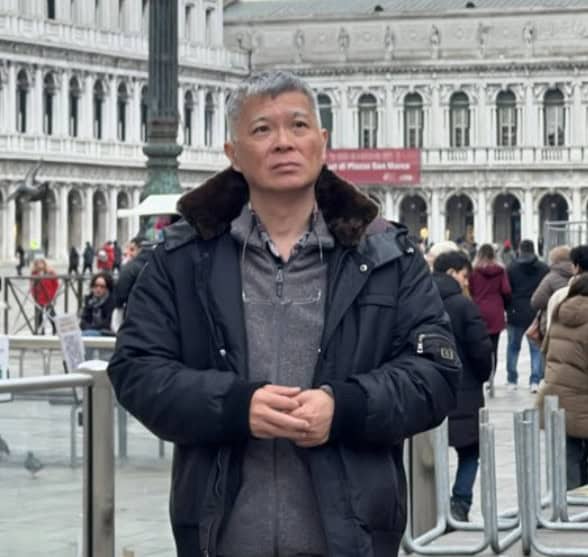
Michael Koh is a production specialist and entrepreneur who founded Spring Forest Studio in 2017 to provide event and virtual production solutions in Singapore. He specialises in hybrid live streaming, XR (Extended Reality) virtual production, and studio systems integration, transitioning the business from traditional videography to advanced corporate broadcasting. Operating out of a dedicated facility at NordCom2 in Singapore, he leads a technical crew to deliver multi-camera webcasts, digital sets, and technical consultations for large-scale corporate events.