
Introduction: Transforming Webinars with 3D Interactivity
The digital landscape for small and medium-sized enterprises (SMEs) is rapidly evolving, with interactive 3D environments taking center stage in redefining webinars. This transformation is crucial for businesses aiming to enhance engagement and bridge the gap between in-person and virtual interactions. By leveraging cutting-edge technology, enterprises can turn mundane presentations into immersive experiences.
Understanding 3D Interactive Technologies
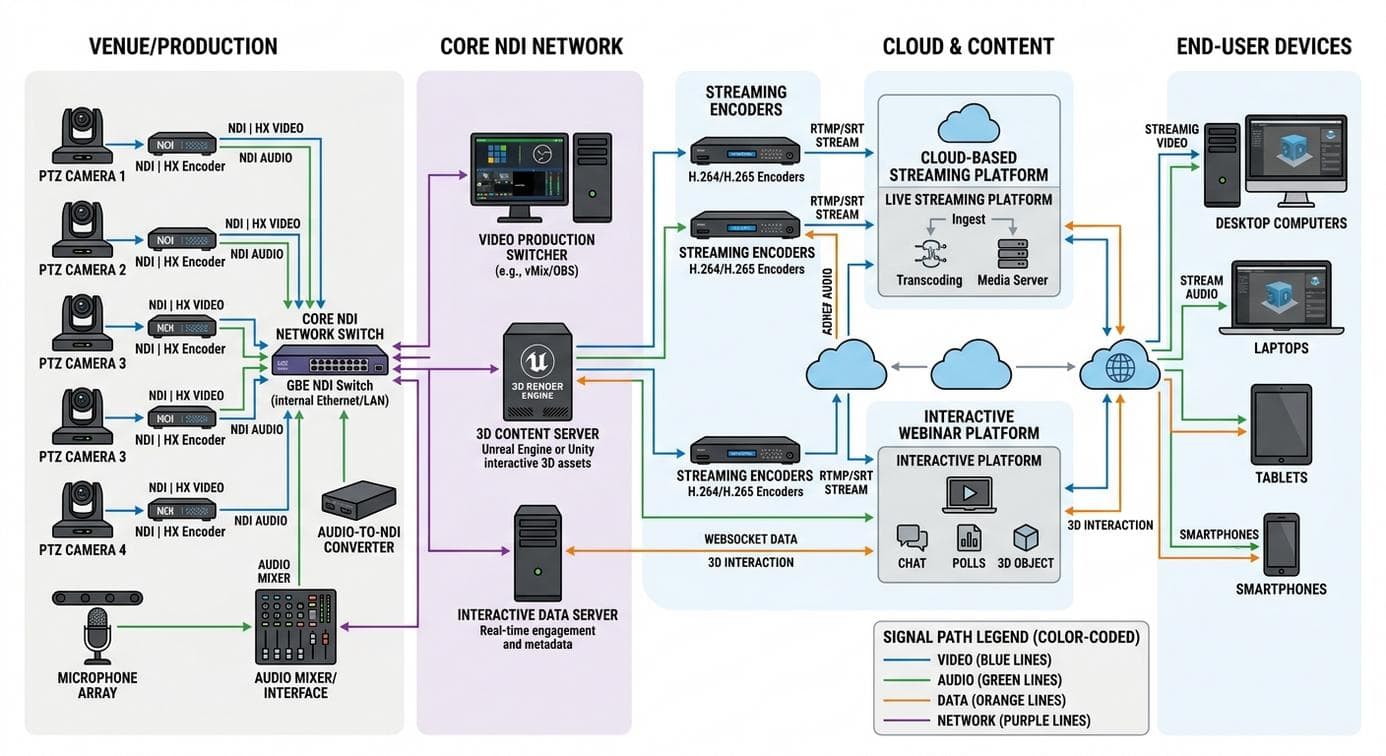
Interactive 3D environments utilize advanced technologies such as WebGL and Unity to create compelling simulations that engage audiences more deeply than traditional 2D presentations. For B2B event streaming, employing protocols like RTMP (Real-Time Messaging Protocol) and SRT (Secure Reliable Transport) ensures reliable transmission of these data-rich environments.
Implementation of 3D Environments in Business Settings
Integrating 3D environments into webinars involves a detailed setup of multi-camera systems and network infrastructure. Using NDI (Network Device Interface) for video over IP enables seamless integration of multiple video sources, enhancing the interactive experience. Industry standards, including SMPTE timecode for synchronization, ensure precise timing for all elements involved.
Advancing Production Infrastructure
For effective implementation, a robust streaming infrastructure is pivotal. This includes high-bandwidth networks capable of handling large data transfers with minimal latency. Utilizing SDI (Serial Digital Interface) alongside HDMI 2.1 allows for high-definition video feeds crucial for maintaining video quality in 3D environments.
Encoding Standards and Protocols
The choice of encoding protocols such as H.264 or H.265 plays a critical role in balancing quality and compression efficiency. These codecs, combined with network protocols, ensure efficient streaming without compromising on audio-visual integrity.
Hybrid Event Infrastructure: Physical Meets Virtual
Combining physical and virtual audience setups requires meticulous planning. Systems like cloud-based streaming services offer scalable solutions to manage varying audience sizes, while on-premise solutions provide enhanced control over quality and security. Hybrid events often rely on ISO standards for audio/video synchronization and failover strategies to maintain uninterrupted service.
Comprehensive Network Architecture
Implementing a hybrid event infrastructure involves designing a network landscape integrating both cloud services and local resources. This dual approach requires thorough understanding of bitrate management and latency optimization to deliver real-time content effectively.
Practical Production Technologies and Recommendations
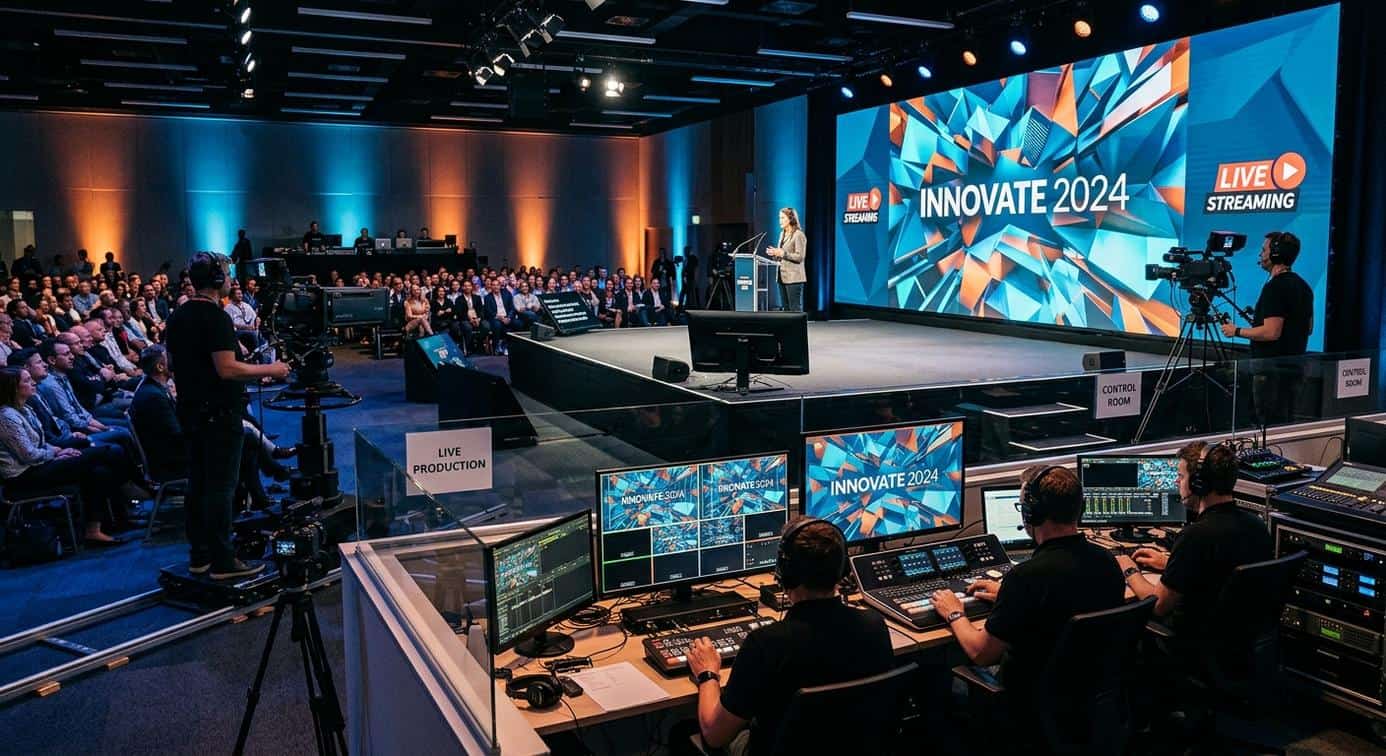
Practical application of these technologies involves setting up professional-grade equipment such as PTZ cameras, teleprompters, and talkback systems. A well-equipped control room with video switchers, encoders, and multiview monitors enables seamless switching between different content feeds.
Actionable Implementation Strategies
For optimal results, SMEs should develop a comprehensive streaming strategy aligning with their business goals. A focus on network resilience, quality of service, and redundancy strategies will ensure high reliability and audience satisfaction. Collaboration with experienced AV professionals can further streamline the transition to interactive 3D webinars.
Conclusion: Embracing the Future of Webinars
Interactive 3D environments represent the future of webinars, offering SMEs new avenues for audience engagement. By integrating advanced technologies and adhering to industry standards, businesses can transform their digital communications and stay ahead in the competitive landscape.
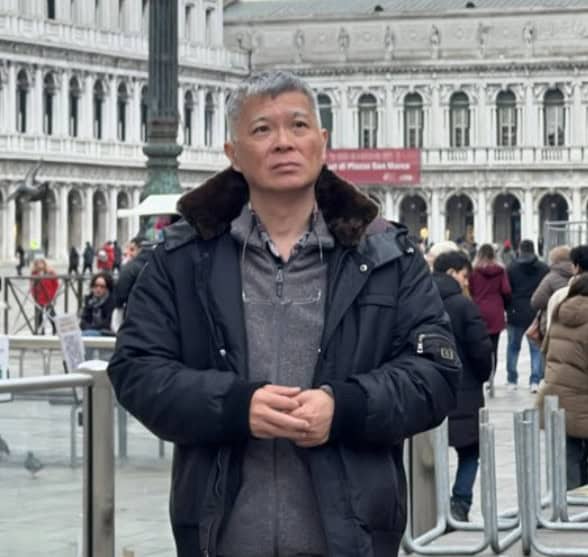
Michael Koh is a production specialist and entrepreneur who founded Spring Forest Studio in 2017 to provide event and virtual production solutions in Singapore. He specialises in hybrid live streaming, XR (Extended Reality) virtual production, and studio systems integration, transitioning the business from traditional videography to advanced corporate broadcasting. Operating out of a dedicated facility at NordCom2 in Singapore, he leads a technical crew to deliver multi-camera webcasts, digital sets, and technical consultations for large-scale corporate events.