
The Complexities of Optimising Bitrates in B2B Event Streaming
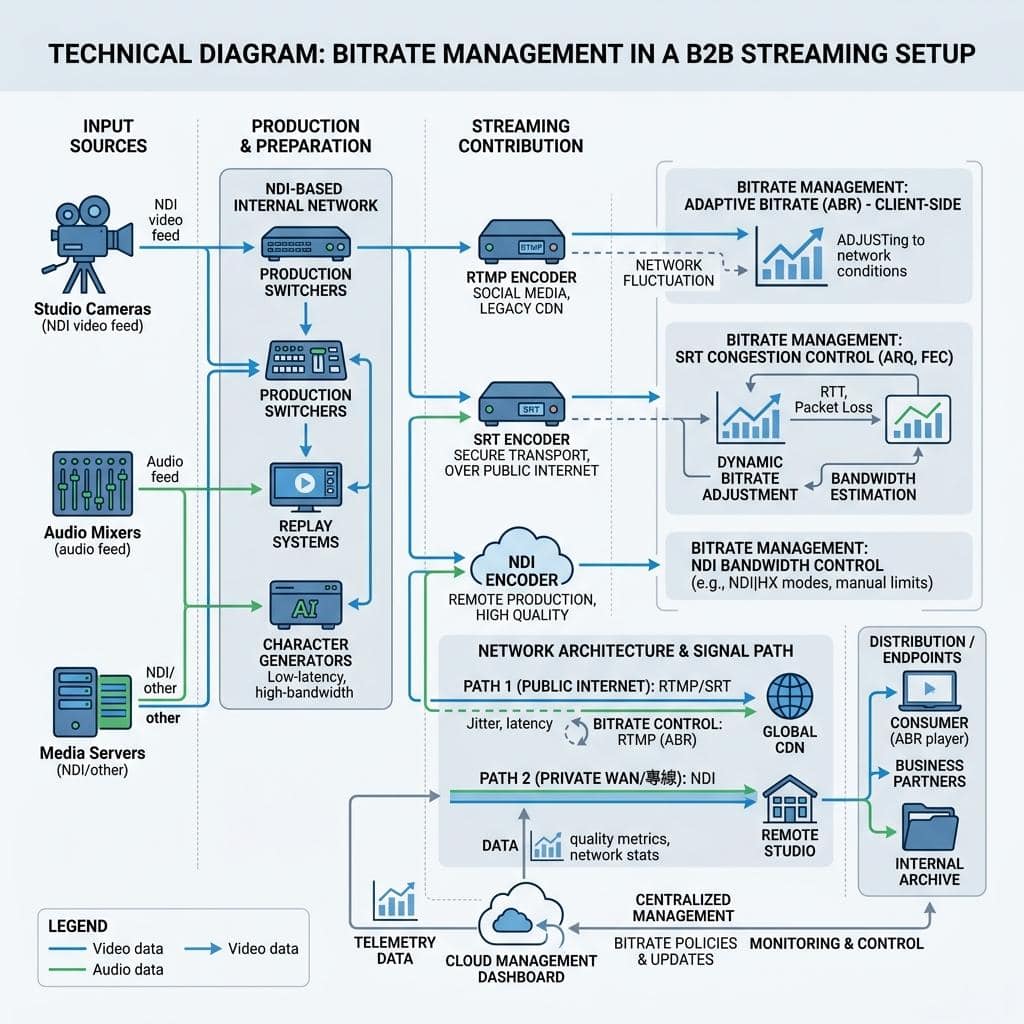
In the world of B2B event streaming, the challenge of delivering high-quality, uninterrupted streams across diverse geographical locations is ever-present. The need for optimising bitrates while ensuring seamless connectivity is crucial for corporate event planners, AV professionals, and IT directors. Understanding bitrates, codecs, and streaming protocols like RTMP (Real-Time Messaging Protocol), SRT (Secure Reliable Transport), and NDI (Network Device Interface) enables the execution of global streaming strategies without compromising on quality.
Key Considerations for Bitrate Optimisation
Effective bitrate management involves balancing video quality with available bandwidth. This is particularly important in hybrid events, where both physical and virtual audiences are present. Technologies must adapt to varying network conditions, ensuring the lowest possible latency.
Understanding Streaming Protocols and Encoding
Protocols such as SRT and RTMP are pivotal in mitigating the effects of network instability. Adoption of H.264 and H.265 encoding standards allows for efficient bandwidth usage while maintaining visual clarity.
Scalability and Infrastructure
Enterprise-grade solutions must consider scalability. Deploying cloud-based infrastructures provides flexibility and meets the demands of large corporate events. Conversely, on-premise solutions offer higher control and might be suitable for sensitive content.
Multi-Camera Production Setups and Switching Systems
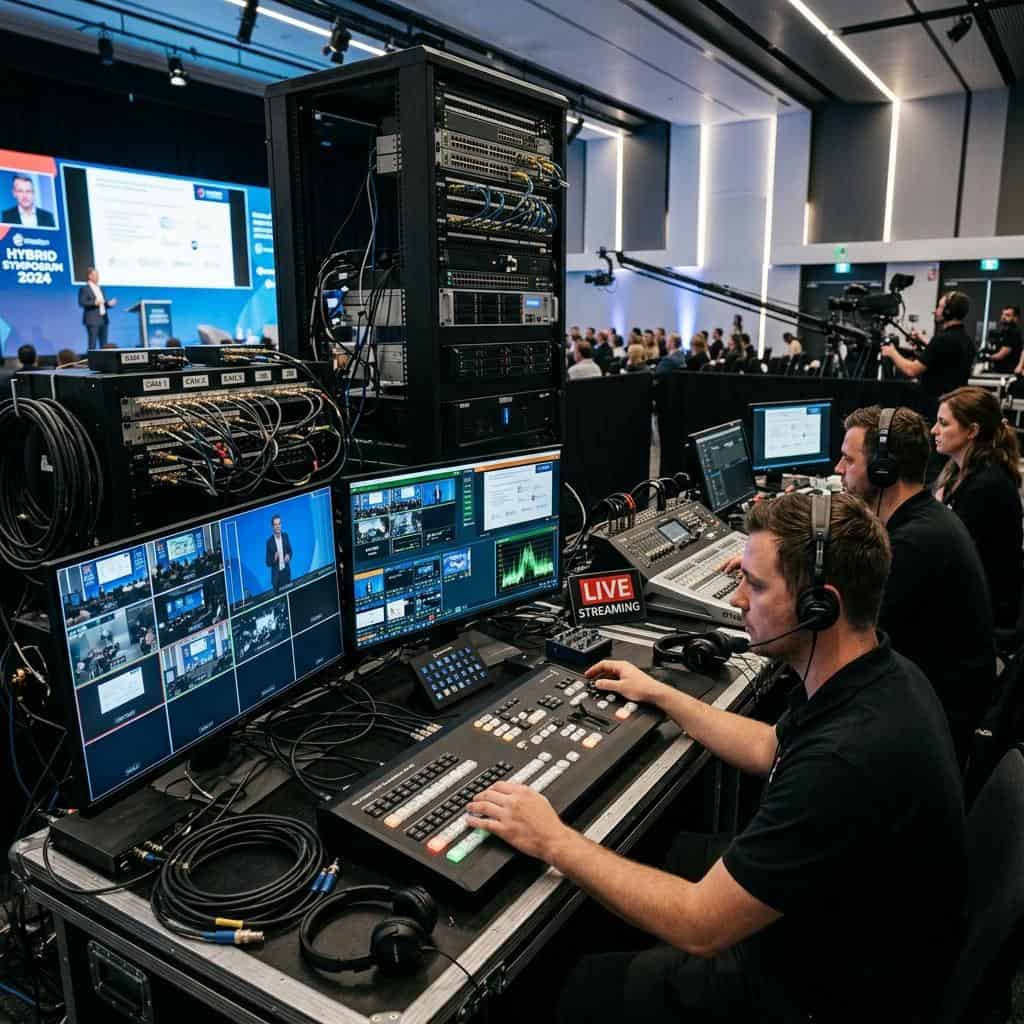
Implementing multi-camera setups enhances viewer engagement. Employing SDI and HDMI 2.1 for signal routing, along with professional video switchers, can significantly enhance production quality.
Video Switching and Signal Flow
The integration of video switching and cohesive signal flow design ensures seamless transitions between camera feeds. Proper multiview monitoring allows for real-time adjustments to meet production standards.
Network Infrastructure and Redundancy
High-performance streaming relies on robust network infrastructure. Prioritising Quality of Service (QoS) alongside redundancy and failover strategies guarantees uninterrupted streaming even in cases of network failure.
Implementing Enterprise-Grade Streaming Solutions
Implementation requires a deep understanding of network topology and bandwidth management. Proper configurations can support platforms like Microsoft Teams and Zoom, essential in hybrid enterprise environments.
Conclusion: Achieving Optimal Streaming Performance
Optimising bitrates for global connectivity demands strategic planning and expertise in integrating advanced streaming protocols and infrastructure. By adopting industry standards and maintaining efficient network configurations, enterprises can ensure their events are streamed with optimal quality and reliability.

Michael Koh is a production specialist and entrepreneur who founded Spring Forest Studio in 2017 to provide event and virtual production solutions in Singapore. He specialises in hybrid live streaming, XR (Extended Reality) virtual production, and studio systems integration, transitioning the business from traditional videography to advanced corporate broadcasting. Operating out of a dedicated facility at NordCom2 in Singapore, he leads a technical crew to deliver multi-camera webcasts, digital sets, and technical consultations for large-scale corporate events.