
Hybrid 3D events are redefining enterprise event production by combining physical stagecraft, real time streaming infrastructure, and immersive virtual environments into one synchronized experience. For corporate town halls, product launches, analyst briefings, internal leadership summits, and global partner conferences, the challenge is no longer simply broadcasting a stage to a remote audience. The technical requirement is to preserve spatial realism, speaker presence, audio intelligibility, brand consistency, and low latency interaction across both the in room audience and the virtual audience. That requires a production architecture that behaves more like a small broadcast facility than a conventional meeting setup.
In a hybrid 3D event, physical speakers may appear on a real stage, within a virtualized backdrop, or as composited talent placed into a rendered environment. Remote participants can join through enterprise conferencing platforms such as Microsoft Teams, Zoom, or Cisco Webex, while the event backbone carries contribution feeds, program outputs, return video, audio intercom, and recording signals through a combination of SDI, IP video, and managed network transport. The production engineer must manage camera shading, switcher latency, audio gain structure, encoding profiles, color matching, and failover paths while maintaining a seamless viewer experience. When executed correctly, the result is not a video call with graphics, but a true hybrid production system.
Architecting the Hybrid 3D Event Signal Chain
The signal chain is the foundation of any enterprise hybrid production. It begins at capture, moves through routing and switching, and ends at distribution to live, virtual, and archival endpoints. In physical venues, cameras typically output 3G-SDI or 12G-SDI for reliable baseband transport, although HDMI 2.1 may be used at the edge for selected sources such as laptops, media players, or presentation feeds. In larger builds, SDI remains the preferred standard because of its locking connectors, longer cable reach, and operational resilience. For IP-centric facilities, NDI, NDI|HX, or SMPTE ST 2110 can be used to move video over Ethernet, provided the network is engineered for multicast or controlled unicast transport, sufficient bandwidth, and deterministic switching behavior.
Capture, switching, and source management
Multi-camera coverage is central to the 3D hybrid format. A typical executive event may deploy a locked wide shot, two or three presenter close-ups, a roaming floor camera, and a graphics or presentation feed. For more immersive stage design, camera positions should be chosen to preserve parallax and depth cues, especially when the stage is built against LED volumes, extended set pieces, or keyed virtual backdrops. Broadcast switchers must support clean transitions between program, preview, and key layers, with optional downstream keying for logos, motion graphics, lower thirds, and motion overlays. Production teams often use a vision mixer with integrated multiview monitoring, tally, and router control so that every operator can confirm source integrity in real time.
In hybrid 3D environments, camera tracking adds a further dimension. Optical or sensor based tracking systems can provide lens data, position coordinates, and orientation metadata to render engines, enabling virtual backgrounds and composited elements that align correctly with the camera perspective. This alignment is critical when creating the impression that a speaker is physically standing within a generated environment rather than simply keyed in front of a flat backdrop. Precision depends on calibration, genlock discipline, lens metadata consistency, and a stable synchronization reference across capture and rendering nodes.
Synchronization and timing discipline
Timing is a persistent engineering concern. Any mismatch between camera capture, render latency, and return video can break the illusion of depth and presence. Professional environments therefore rely on synchronization through reference signals such as tri level sync or black burst for legacy video chains, and PTP, the Precision Time Protocol, in IP based infrastructures. When using SMPTE ST 2110, video, audio, and ancillary data are transported as separate essences and require accurate timing distribution to keep the system phase aligned. This is especially important for multi camera switching, ISO recording, and side by side local and remote monitoring, where even modest drift can produce distracting lip sync issues or mismatched cuts.
Encoding, Contribution, and Distribution for Enterprise Hybrid Streaming
Once the live production feed is assembled, it must be encoded and transported efficiently to multiple destinations. For enterprise event streaming, the choice of protocol and codec depends on whether the feed is being contributed from venue to cloud, distributed to a managed platform, or sent directly into a conferencing environment. RTMP, the Real Time Messaging Protocol, remains common for ingest compatibility in many platforms, but it is often paired with RTMPS for encrypted transport. SRT, Secure Reliable Transport, is widely used for contribution because it handles packet loss, fluctuating network conditions, and long haul transmission more effectively than legacy protocols. For low latency private contribution workflows, SRT is often preferable to RTMP when the venue has variable public internet performance or when traffic must traverse multiple segments before reaching a distribution hub.
Codec selection and bitrate management
Encoding strategy should be matched to content type, motion complexity, and available bandwidth. H.264, also known as AVC, remains the most broadly compatible choice for enterprise distribution, particularly where endpoint decoders or conferencing integrations are conservative. H.265, also known as HEVC, offers improved compression efficiency, which can be beneficial for 4K and UHD productions, but it introduces higher computational load and broader compatibility constraints. For high motion stage content, graphics heavy sequences, and camera moves across virtual environments, bitrate allocation must be sufficient to preserve edges, text sharpness, and facial detail. Conservative CBR, constant bitrate, profiles are frequently used for predictable delivery, while capped VBR, variable bitrate, can preserve quality when network conditions and platform constraints permit.
For 1080p30 enterprise distribution, practical streaming profiles commonly sit in the 4 to 8 Mbps range depending on codec, content complexity, and platform requirements. For UHD productions, bitrates increase substantially, often into the 12 to 20 Mbps range or beyond, subject to platform capability and contribution path capacity. Latency targets must also be set deliberately. If the event includes live Q and A between a physical moderator and remote attendees, end to end latency should be minimized, yet a balance must be preserved between stability and delay. Ultra low latency settings are possible in constrained environments, but the production team must test against buffering behavior, transcoding delay, and platform processing time before show day.
Redundancy, failover, and confidence monitoring
Enterprise clients require redundancy at every stage. A robust event design typically includes dual encoders, dual network paths, dual power feeds, and a backup presentation source. If the primary path uses SRT contribution into a cloud platform, a secondary path may use RTMP or a mirrored SRT session to a separate ingest endpoint. Confidence monitoring should include program out, encoded output, return video, audio confidence, and if possible, remote attendee playback verification from multiple geographies. For critical board meetings or global launches, operators should monitor packet loss, jitter, round trip time, encoder temperature, and CPU or ASIC load. Failover must be rehearsed, not merely documented, because recovery during a live event depends on operator muscle memory and predefined routing logic.
Virtual Environments, 3D Set Design, and Speaker Integration
The visual power of a hybrid 3D event comes from the integration of physical speakers into a virtual environment that feels spatially coherent. This may involve LED walls, augmented reality overlays, real time rendered environments, or chroma key compositing. The technical success of the presentation depends on matching perspective, lighting, camera height, and lens behavior to the intended virtual space. A speaker standing in a real studio can be composited into a generated headquarters atrium, product environment, or abstract data landscape, but the environment must be built with realistic scale cues and shadow logic, or the image will feel disconnected.
Keying, lighting, and color management
When green screen or blue screen is used, lighting must be even enough to avoid spill and shadow contamination, while still producing dimensionality on the talent. Key quality depends on both production lighting and camera acquisition. Higher bit depth capture, proper white balance, and accurate exposure are essential for clean edges and natural skin tones. Color management should be consistent across cameras, graphics systems, and render engines. In multi vendor workflows, the engineering team should verify color space expectations, gamma handling, and LUT, look up table, application so that the live image remains coherent from capture through distribution. Corporate identity colors, especially brand reds, blues, and metallic gradients, should be validated in the actual delivery path rather than only in preproduction renders.
Real time rendering and compositing
Real time engines can generate virtual stages, animated product environments, and data rich motion backdrops, but they must be integrated into the production switcher with predictable latency. Render nodes should be tested for frame pacing, output resolution, and synchronization with the main video router. If a render system is contributing a keyed fill and alpha feed, the production team must verify alpha integrity, key softness, and edge consistency at the selected output format. In more advanced deployments, camera tracking metadata can drive perspective corrected virtual screens, allowing presenters to interact with animated content that appears anchored in the scene. This approach is particularly effective for executive presentations, product demonstrations, and analyst briefings where technical credibility and visual clarity matter equally.
Network Infrastructure, Collaboration Platforms, and Operational Scalability
Hybrid 3D events extend beyond the stage and into the network core. Venue internet access, VLAN segmentation, QoS policy, firewall rules, and platform interoperability all determine whether the event will perform reliably. Production networks should be isolated from guest Wi Fi and general office traffic. Dedicated bandwidth, preferably with symmetrical upstream capacity, is essential for contribution feeds. Network engineers should test primary and backup circuits independently, confirm ISP handoff quality, and ensure that upstream congestion from unrelated building services cannot compromise the live stream. For IP production, switch fabric capacity, PoE budgeting, multicast configuration, and ST 2110 compatibility should be validated before equipment goes on site.
Integration with Teams, Zoom, and Webex workflows
Corporate events frequently require integration with Microsoft Teams, Zoom, or Cisco Webex for panelists, remote presenters, or internal viewing. These platforms are excellent for interactive participation, but they are not substitutes for a professional production layer. A best practice workflow uses a dedicated production environment to assemble the show, then feeds a controlled output into the collaboration platform through a virtual camera, software bridge, or hardware capture path. This preserves lower thirds, branded graphics, and cueing while giving remote participants a stable meeting interface. Return audio must be carefully mixed so that speakers on stage can hear remote contributors through monitored IFB, intercom, or confidence speakers without feedback loops or echo artifacts.
On premise, cloud, and hybrid control models
The decision between on premise and cloud based streaming should be made according to event scale, latency tolerance, and operational control. On premise infrastructure provides direct access to the venue signal chain, lower dependency on external cloud transcode steps, and tighter control over routing and monitoring. Cloud workflows excel in geographical distribution, elastic scaling, and remote production collaboration. Many enterprise events use a hybrid control model, where capture, switching, and audio mixing remain on site, while encoding, distribution, clipping, and archive occur in the cloud. This approach allows production teams to maintain frame accurate control locally while benefiting from scalable content delivery and remote stakeholder access.
Audio Engineering, Intercom, and Audience Experience
In a 3D hybrid event, audio is often more important than video because intelligibility determines whether the message is understood. Physical speakers must be captured with consistent tonal balance, controlled dynamics, and appropriate room sound rejection. Wireless microphone systems, boundary microphones, podium feeds, and audience mics should be coordinated to avoid RF conflicts and comb filtering. If the venue includes live and virtual audience participation, the audio system must manage mix minus sends, delays, and routing to prevent echo and reinjection. Digital consoles with Dante or equivalent audio over IP transport can simplify routing, but they require disciplined clocking, sample rate consistency, and network segmentation.
Intercom and talkback systems are equally important. Producer, technical director, camera operator, graphics operator, and stage manager need reliable communication so that cues remain synchronized. A hybrid event may also require separate channels for talent IFB, remote panel moderation, and interpreter feeds if multilingual support is in scope. Audio level targets should be set to broadcast appropriate loudness, with consistent headroom to preserve transient peaks. The production team should verify that program audio, playback content, and remote contributor audio all pass through a coherent gain structure before final encode.
Implementation Guidelines for Enterprise Hybrid Production
Successful hybrid 3D events depend on preproduction discipline, engineering verification, and show day redundancy. The following operational practices support stable execution at enterprise scale.
- Conduct end to end signal testing from camera acquisition through encoder output, platform ingest, and remote playback verification.
- Document every source and destination with a signal flow map, including backup paths, audio returns, and intercom channels.
- Standardize formats early, including frame rate, resolution, color space, and audio sample rate, so every subsystem aligns before rehearsal.
- Use redundant power and network services for critical encoder, router, switcher, and rendering nodes.
- Validate platform interoperability with Teams, Zoom, or Webex before event day, especially when using virtual cameras or external audio interfaces.
- Monitor live quality metrics such as bitrate stability, packet loss, encoder health, and lip sync during the entire event window.
- Record ISO sources and program output for post event review, highlight creation, compliance archiving, and executive distribution.
For Singapore and other enterprise markets with globally distributed audiences, venue choice, network quality, and regional cloud ingress points can materially affect performance. International connectivity, local internet stability, and cross border delivery latency should be considered during platform selection and routing design. For board level or investor facing programs, the production architecture should be engineered with the same discipline as a broadcast transmission chain, because reputational risk is tied directly to technical quality.
Hybrid 3D events succeed when creative ambition is matched by engineering rigor. Physical speakers, virtual environments, multi camera coverage, deterministic audio routing, resilient network transport, and professional encoding must operate as one system. When that system is designed correctly, enterprises gain a presentation format that supports executive communication, product storytelling, remote collaboration, and global scale without sacrificing visual sophistication or operational reliability.
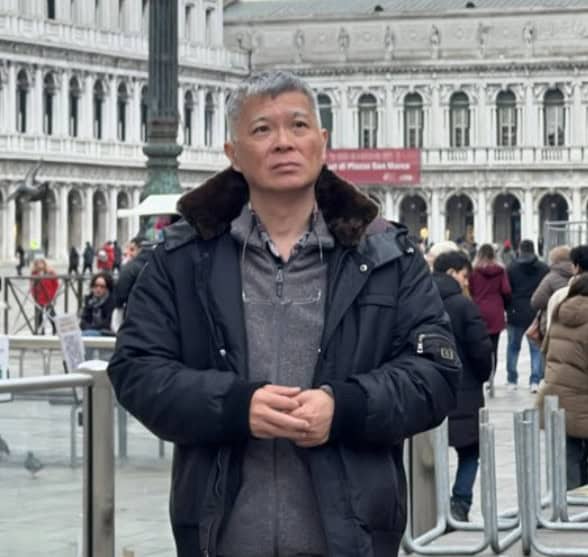
Michael Koh is a production specialist and entrepreneur who founded Spring Forest Studio in 2017 to provide event and virtual production solutions in Singapore. He specialises in hybrid live streaming, XR (Extended Reality) virtual production, and studio systems integration, transitioning the business from traditional videography to advanced corporate broadcasting. Operating out of a dedicated facility at NordCom2 in Singapore, he leads a technical crew to deliver multi-camera webcasts, digital sets, and technical consultations for large-scale corporate events.