
Engineering a Hybrid Gala Dinner for Singapore’s Corporate Event Market
A hybrid gala dinner for a Singapore audience demands more than a camera pointed at a stage and a basic webcast platform. For corporate event planners, AV engineers, production managers, and enterprise IT teams, the challenge is to reproduce the atmosphere, precision, and premium service expectations of an in-person gala while delivering a technically reliable remote experience to executives, partners, and stakeholders who may be joining from regional offices or overseas. In Singapore, where venue standards are high, networks are generally robust, and corporate events often involve multilingual content, brand-sensitive presentations, and complex stagecraft, the streaming design must be treated as a broadcast-grade production problem.
The hybrid model introduces a dual-audience requirement. The ballroom audience expects uninterrupted show flow, accurate audio reinforcement, elegant visual design, and professional cueing. The remote audience expects clear program audio, stable video, low latency, and seamless interaction through enterprise collaboration platforms. Achieving both outcomes requires a production architecture that integrates signal acquisition, switching, encoding, transport, monitoring, and redundancy into a coherent workflow. For a Singapore gala dinner, that architecture must also support local venue constraints, multinational connectivity, and strict expectations around quality of service, security, and compliance.
The most effective approach is to design the event as a managed live production environment rather than as an ad hoc stream. That means defining the program feed, ISO recording strategy, audio routing topology, upstream bandwidth, encoder profiles, failover paths, and audience interaction model before rehearsals begin. It also means aligning the production package with enterprise-grade standards such as SDI for baseband transport, NDI for IP video workflows where appropriate, SRT, Secure Reliable Transport, for contribution links, RTMP and RTMPS for platform delivery, and SMPTE-based operational discipline for timing, signal integrity, and documentation.
Production Architecture for a High-End Hybrid Gala Dinner
Camera layout and live switching strategy
A gala dinner typically benefits from a multi-camera setup that captures both the formal stage presentation and the social atmosphere of the room. In a Singapore ballroom, a practical configuration may include a locked-off wide master camera, one or two roaming long-lens cameras on tripods, a close camera for podium and speaker coverage, and a dedicated camera for sponsor or award moments. When the event includes live performances, award walk-ups, or stage movement, camera placement must account for line-of-sight, lighting angles, and obstruction from centerpieces or LED decor.
For signal transport, SDI, Serial Digital Interface, remains a reliable choice for long cable runs and deterministic routing in high-pressure live environments. 3G-SDI supports 1080p workflows, while 12G-SDI can carry 4K/UHD, depending on the production design and infrastructure. Where an IP video ecosystem is already established, NDI can reduce cabling and simplify camera-to-switcher integration, especially in facilities with managed switches and structured network design. However, NDI must be deployed carefully, with sufficient multicast planning or unicast control, traffic segmentation, and QoS policies to prevent congestion. In large venues, the decision between SDI, NDI, and hybrid routing should be based on cable distances, operator familiarity, latency tolerance, and the need for deterministic reliability.
The vision mixer or production switcher should provide at least multiview monitoring, tally, macros, downstream keying, and auxiliary outputs for confidence feeds, IMAG if used, and streaming program output. For corporate gala use, the switcher should support clean switching between presentation graphics, live cameras, sponsor loops, and pre-produced content, while preserving proper aspect ratio and safe title boundaries. If graphics are delivered from a separate media server, the switcher must accommodate synchronized playback and predictable transitions, particularly for award reveals or CEO speeches where timing is critical.
Program, clean feed, and ISO recording workflows
A robust hybrid gala production normally uses multiple record paths. The program feed is the final switched output seen by the remote audience. A clean feed removes lower-thirds or sponsor overlays if a client wants a version for post-event distribution. ISO recording captures isolated camera feeds, typically for postproduction edits, compliance archives, or highlight reels. ISO recording is particularly valuable for executive events where the final edit may need to be repurposed into internal communications, investor relations assets, or social cutdowns.
From an operational standpoint, ISO recording should be synchronized using a common time reference and clearly labeled naming convention. Timecode discipline reduces editorial friction after the event and supports accurate reconstruction of award sequences, panel discussions, and musical performances. In a hybrid gala, this recording layer is not an optional extra, it is part of the risk management strategy. If a switcher issue occurs, ISO files enable recovery and post-event correction that protects the client’s brand and content value.
Audio Engineering, Speech Intelligibility, and Remote Guest Experience
Mixing console design and signal routing
Audio quality determines whether a hybrid gala feels premium or merely functional. Corporate audiences are highly sensitive to speech clarity, music balance, and the absence of room coloration. A dedicated digital mixing console should manage microphones, playback sources, ambience mics, and any live performance inputs. Console routing must create separate buses for the room reinforcement system and the streaming program feed, because the acoustic requirements of the ballroom and the remote audience are different.
The ballroom mix may include processing for the room, such as equalization, compression, and feedback control, while the stream mix must prioritize intelligibility and consistent loudness. Remote guests do not benefit from room acoustics, so the stream mix should emphasize direct speech capture, controlled music levels, and carefully managed audience applause. If musicians are part of the program, the engineer should consider dedicated stems, direct inputs, or a separate performance mix to maintain balance across both audiences.
For corporate streaming, audio level management should be measured and monitored continuously. Nominal levels must be set to avoid clipping at the encoder input, and loudness should be kept consistent across the program. If the production uses wireless microphones, spectrum coordination becomes critical, especially in dense event environments where multiple RF systems may coexist. A proper RF plan includes coordination of frequencies, antenna distribution, and backup microphones for keynote speakers and hosts.
Talkback, IFB, and production communication
Intercom systems, talkback, and interruptible foldback, IFB, are essential for a controlled gala production. Hosts, stage managers, camera operators, graphics operators, and audio engineers need coordinated cueing so that announcements, award transitions, and sponsor acknowledgments occur without dead air. In high-stakes corporate events, communication latency and channel clarity matter. A matrix intercom or IP intercom system can provide dedicated comms paths between control room, stage management, lighting, and front-of-house positions.
Remote guests are also affected by production communication indirectly, because clean coordination reduces mistakes on the live program. A missed cue or delayed speaker handoff is visible to remote viewers immediately. For that reason, rehearsal should include comms checks, walk-on timing, audio confidence monitoring, and rehearsed fallback procedures for every critical segment.
Network Infrastructure, Encoding, and Contribution Transport
Bandwidth planning and encoder configuration
Hybrid gala streaming should be engineered from the network outward. The venue internet connection must be validated for symmetric upstream capacity, low packet loss, and stable routing. For a professional corporate event, a bonded or dedicated connectivity solution is often preferred over a shared guest network. The encoder should be matched to the delivery objective, resolution, and platform requirements. For many enterprise hybrid events, 1080p at 25 or 30 frames per second with H.264, Advanced Video Coding, remains a practical standard, though H.265, High Efficiency Video Coding, may be used for contribution efficiency where platform support and decoding endpoints permit.
Bitrate must be selected according to motion complexity, scene lighting, and platform constraints. A static podium presentation may function well at a moderate bitrate, while a gala with performances, moving lights, and dynamic camera motion may require a higher ceiling for artifact suppression. Constant bitrate, CBR, is often preferred for predictable delivery to enterprise platforms, though variable bitrate can be useful in contribution links if the transport is controlled. Keyframe interval, audio codec selection, frame rate, and color space should be standardized during rehearsal and locked for the live event.
For transport to cloud ingest points, RTMP, Real-Time Messaging Protocol, remains common for platform compatibility, while RTMPS adds transport layer security. For contribution between venue and remote production or secondary encoding sites, SRT is a stronger choice because it offers packet recovery, encryption, and resilience against jitter and transient network instability. If the event uses a hybrid control model, one encoder can feed the main platform while a second encoder creates a geographically separate backup stream. This architecture supports continuity if the primary platform ingest fails or if a last-minute delivery switch becomes necessary.
Redundancy, failover, and QoS
Enterprise clients expect failure domains to be isolated. That means redundant encoders, backup power through UPS systems, dual internet paths where possible, and documented failover logic for each critical stage of the signal chain. Quality of service, QoS, on managed switches should prioritize video, audio, and intercom traffic over nonessential venue traffic. If NDI, Dante, or other IP-based media systems are used, VLAN segmentation and multicast control must be planned before load-in, not after problems appear.
A practical failover strategy for a Singapore gala dinner includes a primary encoder on the main venue connection, a secondary encoder on a separate circuit or bonded cellular backup, and a pretested playlist or holding slide to cover platform interruptions. Monitoring should include stream health, audio peak and loudness indicators, encoder temperature, dropped frames, packet loss, and end-to-end latency. A support engineer should monitor the program feed from outside the local production network, because internal confidence monitors can mask delivery issues that are visible to remote attendees.
Integrating Singapore Gala Production with Enterprise Collaboration Platforms
Teams, Zoom, and Webex delivery models
Hybrid gala dinners often require audience participation through Microsoft Teams, Zoom, or Webex, especially when executives need to join from regional offices or global headquarters. Each platform has different expectations for frame rate, audio processing, participant management, and webinar or meeting architecture. The technical team should determine whether the remote audience will be passive viewers, interactive participants, or a controlled panel group. That choice affects how the program feed is ingested, how return audio is managed, and whether remote speakers are brought into the live show or isolated to a separate interaction layer.
For a polished enterprise implementation, the platform interface should be tested with the final encoder output, not a proxy stream. This allows engineers to validate audio delay compensation, lip-sync, screen share compatibility, and the visibility of sponsor graphics or lower-thirds. If the event includes a live Q and A segment, the moderation workflow must be defined in advance, including microphone gating, speaker approval, and timing responsibility between platform moderator and stage manager. Remote guests should not experience confusion between the in-room show and the virtual interface. Clear labeling, agenda cues, and professionally designed holding content are essential.
Security and access control
Hybrid corporate events often carry confidential announcements, leadership remarks, or unreleased business information. That makes access control a core technical requirement. Authentication, meeting registration, encrypted transport, and role-based moderation must be part of the delivery design. If the production uses private platform links or enterprise webinar registration, the event team should coordinate with the client’s IT and security teams to define access windows, host privileges, and recording permissions. For a Singapore-based event with multinational stakeholders, it is also common to align access practices with corporate governance policies and regional compliance expectations.
Operational Best Practices for a Premium Hybrid Gala Dinner
Rehearsal, cue sheet discipline, and show calling
A hybrid gala succeeds when the crew operates with broadcast discipline. A detailed cue sheet should map every speaker walk-on, award handoff, sponsor recognition, video playback, and musical sting. The director or show caller must manage transitions with enough margin to absorb real-world timing variance without exposing dead air to the stream. Rehearsals should include camera rehearsal, audio checks, streaming verification, graphics test, and network load testing. In a venue environment, even stable infrastructure can be affected by neighboring events, wireless congestion, or unexpected AV patching changes, so rehearsal needs to be more than a symbolic run-through.
Technical documentation should list all signal paths, IP addresses, encoder presets, backup procedures, and contact roles. For larger enterprise productions, a run-of-show document alone is not sufficient. Engineers require a patch list, comms matrix, failover matrix, and monitoring checklist. These documents allow the crew to respond quickly if the venue feed changes, a presenter microphone fails, or the platform ingest endpoint must be switched.
On-site monitoring and remote confidence
Monitoring must include both technical and audience-facing perspectives. On-site engineers should observe multiview displays, audio meters, stream status indicators, and local program confidence. A remote QC check is equally important. Ideally, a second engineer or technical observer watches the stream from a separate internet path and confirms that the remote presentation matches the intended program. This practice reduces the risk of silent failures that only emerge after the audience is already watching.
For a Singapore gala dinner, the final measure of success is whether remote guests feel included in the room’s energy, pacing, and prestige. That outcome depends on disciplined signal flow, clear audio, stable encoding, appropriate latency management, and a production team that treats the hybrid stream as a first-class show element. When designed correctly, the virtual experience does not feel like a compromise. It becomes a precise extension of the live event, carrying the same visual polish, technical reliability, and brand consistency expected by enterprise audiences.
Conclusion: Building a Reliable Hybrid Experience for Singapore Corporate Events
The hybrid gala dinner is now a standard requirement for enterprise events in Singapore, especially when organizations need to serve regional and global audiences without diluting the live experience. The technical solution must integrate broadcast-grade switching, disciplined audio engineering, resilient networking, secure platform delivery, and strong operational control. RTMP, SRT, NDI, SDI, and enterprise collaboration platforms each have a role, but only when deployed within a coherent workflow that prioritizes reliability and audience experience.
For corporate event planners and production teams, the most important recommendation is to design early and validate often. Define the program architecture, confirm venue connectivity, test encoder settings, verify backup paths, and rehearse the entire show flow with the same precision used on show day. With that approach, a Singapore hybrid gala dinner can deliver a premium in-room event and a technically sound remote experience that reflects the standards of the brand behind it.
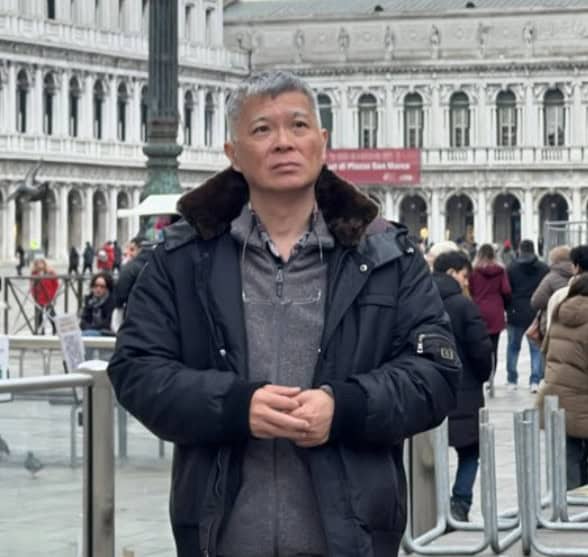
Michael Koh is a production specialist and entrepreneur who founded Spring Forest Studio in 2017 to provide event and virtual production solutions in Singapore. He specialises in hybrid live streaming, XR (Extended Reality) virtual production, and studio systems integration, transitioning the business from traditional videography to advanced corporate broadcasting. Operating out of a dedicated facility at NordCom2 in Singapore, he leads a technical crew to deliver multi-camera webcasts, digital sets, and technical consultations for large-scale corporate events.