Hybrid event production in Singapore demands a stage design that serves two audiences at once, the physical room and the remote enterprise audience receiving a program feed through Teams, Zoom, Webex, or a managed streaming platform. In that environment, the choice between LED walls and green screens is not a cosmetic decision. It affects camera exposure, lensing, shadow management, encoder workload, color pipeline integrity, latency budgets, graphics compositing, audio bleed, and the overall reliability of the show control architecture. For corporate conferences, leadership town halls, product launches, and regional sales kickoffs, the stage becomes a live systems integration problem. The display surface, capture chain, switcher, network, and distribution layer must all work together under strict time constraints.
Singapore adds a specific set of production conditions. Venues often operate under tight load-in windows, shared building infrastructure, and high expectations for visual polish. Corporate clients in Marina Bay, Suntec, Changi, and business district venues typically require broadcast-style presentation quality, multilingual content support, and clean remote participation paths. That means the production team must decide whether the stage should use an LED volume, an LED backdrop, or a chroma key environment. Each choice creates different requirements for SDI or HDMI 2.1 signal paths, NDI or NDI|HX contribution, audio routing, color calibration, lighting ratios, and redundancy planning.
From an engineering perspective, LED walls are the more deterministic imaging surface. Green screens are the more flexible compositing surface. The right answer depends on the production objective, camera movement, content density, ambient light, budget allocation, and downstream distribution method. For enterprise clients, the key is not choosing a visual effect. The key is choosing the stage architecture that preserves signal integrity and meeting-room credibility while supporting hybrid delivery at scale.
LED Walls in Hybrid Corporate Production
LED walls function as both scenic design and live content display. In a hybrid event, they can carry speaker branding, data visualizations, sponsor loops, live camera returns, remote presenter windows, and motion graphics without requiring post-production compositing. That makes them highly effective for executive events where the stage must remain camera-ready under changing presentations. Modern fine-pitch LED panels, typically used in corporate environments, support high brightness and strong contrast, which is critical in venues with mixed ambient lighting and large projector-reflective surfaces.
Brightness, Pixel Pitch, and Camera Compatibility
For camera-facing LED walls, brightness and pixel pitch must be selected together. Brightness is usually measured in nits, while pixel pitch describes the distance between LED clusters. A tighter pitch improves image fidelity on broadcast and remote camera shots, especially when talent is framed against the wall. However, the production team must also manage scan rate, refresh rate, and shutter interaction to avoid moiré, scan banding, and color breakup. Camera settings, shutter angle, and frame rate need to be matched to the LED processor output. If the wall is being captured in 4K/UHD at 50 or 59.94 frames per second, the wall refresh and processing chain must be stable enough to avoid visible artifacts.
For hybrid stages, LED walls reduce the need for keying and allow live camera shots to remain more natural. That matters in Singapore corporate venues where presenters often walk, pivot, and interact with physical props. The wall can run native IMAG, live remote guest windows, and motion design without the edge artifacts or spill suppression issues that chroma key setups can create. It also simplifies the operator workflow, because the scenic content is treated as a routed source rather than a composited element.
Signal Chain and Processing Architecture
An enterprise LED wall stage typically uses a source chain built on SDI or IP video transport into a video processor or media server, then mapped to the panel array. Many corporate production rigs use 12G-SDI for 4K workflows, though HDMI 2.1 is increasingly seen at shorter runs or in compact presentation systems. For networked contribution, NDI and NDI|HX can be used for remote graphics, laptop sources, and confidence feeds, but the final scenic feed should remain under deterministic control with clean sync management. If the production uses multiple computers for PowerPoint, video playback, live graphics, and remote guest routing, genlock and frame sync become critical to maintain seamless switching.
In a live environment, LED systems should be paired with a robust multiview monitoring stack, a preview bus, and a program bus. That enables the technical director to confirm content mapping before it hits the wall. For large events, a separate engineering monitor should track processor health, input resolution, frame timing, and signal loss alarms. Where possible, the content server should output in a matching raster to the wall processor to reduce scaling artifacts. This is especially important for event branding, lower thirds, and slide content with fine typography.
Green Screens in Enterprise Hybrid Studios and Temporary Event Builds
Green screens remain valuable when the production requires maximum flexibility in virtual scenic design or when stage footprint is limited. They are common in controlled studio environments and in temporary live environments where the team needs to composite presenters into branded virtual scenes, product environments, or split-screen remote interview layouts. For enterprise events, green screens are most effective when the entire capture chain is built around disciplined lighting, camera isolation, and consistent talent positioning.
Lighting Ratios, Spill Control, and Talent Separation
The practical challenge with green screens is not the screen itself, it is the control of reflected color and shadow contamination. Key light, fill light, and back light must be arranged so the presenter is evenly separated from the screen. The screen surface should be lit uniformly, with minimal hotspots and no visible wrinkles, seams, or uneven luminance. If the presenter is too close to the screen, green spill will contaminate hair, shoulders, and wardrobe edges, which makes chroma key extraction less stable. For corporate event speakers who move naturally, this becomes a production discipline issue, not just a camera setting.
To preserve key quality, wardrobe selection matters. Reflective or saturated green materials are unusable, and fabrics with fine moiré patterns can destabilize the keyed edge. This is especially relevant in Singapore event production where talent may include executives, product specialists, and remote speakers who are not experienced with studio blocking. The camera operator and vision mixer must maintain a safe framing zone so that the keyed composite remains consistent during cuts, reactions, and live demos.
Compositing, Latency, and Switching Considerations
Green screen workflows introduce real-time compositing load. Depending on the production architecture, keying can occur in a vision mixer, a dedicated compositor, or a media server. In all cases, the system must preserve low enough latency for live interaction with remote participants. If the event includes a speaker in the room talking to a panelist over Zoom or Teams, excessive processing delay can make conversation feel disconnected. That is why many enterprise teams prefer to reserve green screen usage for controlled segments rather than the entire show. The most reliable hybrid workflow uses green screen for pre-produced branded segments, then switches to live camera or LED scenic coverage for interactive panels and high-stakes executive remarks.
Green screen also adds bandwidth and processing implications when the feed is being sent to an encoder. If the composited output is delivered through RTMP or RTMPS for platform distribution, the bitrate must be set to preserve edge detail and avoid compression blocks around keyed edges. For higher reliability, contribution transport may use SRT, Secure Reliable Transport, especially when the remote ingest path includes variable public internet quality. SRT provides packet recovery and encryption support, making it well suited to enterprise-grade remote delivery paths.
Production Infrastructure for Singapore Hybrid Events
Whether the stage uses LED walls or green screens, the underlying production infrastructure determines show reliability. Hybrid events require a signal flow that accounts for local capture, switching, content playout, remote guest ingest, recording, and outbound distribution. The architecture typically includes cameras, audio consoles, video switchers, media servers, graphics systems, hardware encoders, monitoring stations, and network appliances. A well-designed system separates production, contribution, and distribution layers so that one fault does not interrupt the entire event.
Video, Audio, and Control Signal Flow
For multi-camera productions, SDI remains the most dependable camera transport method in professional event environments, especially when distances are predictable and the signal needs deterministic timing. HDMI 2.1 can be appropriate for short cable runs from laptops or compact sources, but it is less common for core camera transport in larger corporate venues. Audio should be mixed separately through a digital mixing console with balanced analog or digital stage inputs, then embedded into the program feed only after gain staging, EQ, dynamics processing, and mix-minus routing are verified. If remote guests are on the call, talkback systems and IFB, interruptible foldback, should be configured so presenters can hear cues without echo or feedback.
All control systems should be time-efficient and fault-tolerant. That includes tally integration, PTZ camera control if used, intercom routing, and source labeling in the switcher. For production teams handling simultaneous live camera feeds, slides, graphics, and remote panels, multiview monitoring is not optional. It is the operational backbone that allows the technical director, vision mixer, and audio engineer to maintain situational awareness.
Protocol Strategy, Encoding, and Latency Budgets
RTMP remains widely supported for outbound platform delivery, but it is not the best choice for all contribution paths because it can be more fragile on variable networks. SRT is generally better suited to contribution links that traverse the internet, especially for contribution from offsite speakers, branch offices, or remote studios. NDI and NDI|HX are useful inside a controlled LAN environment for interop between production devices, graphics systems, and operator stations. For timing-sensitive workflows, SMPTE standards and disciplined sync practices matter. Genlock, tri-level sync, and proper frame rate matching ensure that cameras, switchers, scalers, and LED processors remain in phase.
Latency must be managed at each stage. A local production bus can be near real-time, but once the stream is delivered into a conferencing platform or external distribution service, end-to-end delay increases. That is normal and should be planned for in the speaker flow. For enterprise events that require audience Q and A, the production team should build in buffer time and use moderated question handling rather than trying to force a broadcast conversation into a zero-latency interaction model.
Cloud-Based vs On-Premise Workflows for Enterprise Events
Singapore corporate clients often ask whether the production should be built around cloud tools or on-premise hardware. The correct answer depends on risk tolerance, site access, network quality, and the number of simultaneous feeds. On-premise systems offer maximum control over latency, signal routing, and fault isolation. Cloud workflows offer flexibility for remote contributors, scalable transcription, real-time collaboration, and geographically distributed teams. In practice, the most resilient hybrid production stack is often a hybrid of both approaches.
On-Premise Strengths
On-premise production is well suited to high-stakes launches, financial briefings, and board-level communications where the client wants direct control over every input. Local switchers, local recorders, and local encoders reduce dependency on external internet paths. This is especially important when the venue network is shared or when firewall policies are restrictive. ISO-aligned operational discipline, including documentation of signal routes, naming conventions, and rollback procedures, improves predictability across repeated corporate deployments.
Cloud Strengths
Cloud components are valuable for contribution from regional offices, remote keynote speakers, simultaneous translation, and post-event asset distribution. Cloud replay servers, remote graphics operators, and web-based media review can reduce the physical footprint required onsite. For enterprise customers with distributed teams across Southeast Asia, cloud-assisted workflows make it easier to coordinate rehearsals, content approvals, and live remote participation. The production team still needs strict bandwidth planning and backup contribution paths, especially if the remote presenter is joining through a conferencing platform rather than a managed SRT endpoint.
Choosing Between LED Walls and Green Screens in Singapore
The practical choice should be driven by the event format. LED walls are the preferred choice for executive conferences, town halls, awards events, and product showcases where the stage needs to look premium to both the room and the stream. They perform well under mixed lighting, support direct scenic branding, and reduce compositing complexity. Green screens are better when the event requires immersive virtual environments, space-efficient temporary studios, or frequent changes in scene style without physical rebuilds.
Use LED Walls When
- The event has a live audience and a remote audience simultaneously.
- The stage must support dynamic motion graphics, speaker IMAG, and branded scenic content.
- Camera movement is significant and you want to avoid chroma key edge issues.
- Fast setup and high visual consistency are more important than fully synthetic environments.
Use Green Screens When
- The production requires fully virtual scenes or composite-heavy presentations.
- The stage footprint is limited and scenic hardware must be minimized.
- The content design depends on tightly controlled keying and preplanned blocking.
- Remote-only or studio-style delivery is the dominant format.
For many Singapore hybrid productions, the best solution is not exclusive use of one method. A practical hybrid stage may combine a partial LED wall for live confidence and brand presence, plus a controlled chroma area for specialized remote inserts or motion graphic segments. That approach preserves flexibility while keeping the main presentation environment robust and visually strong on camera.
Implementation Guidelines for Enterprise Clients
Enterprise clients should specify the stage design only after the production team has mapped the full signal architecture, camera plan, and remote participation model. The following technical requirements should be validated before show day. First, confirm the target resolution and frame rate across all sources, including laptops, media servers, and remote guests. Second, verify that the encoding profile matches the delivery platform and the downstream playback environment. Third, test the audio chain for mix-minus, echo suppression, and microphone gain stability. Fourth, confirm failover procedures for network loss, encoder failure, and switcher fallback. Fifth, rehearse the show with the exact stage format that will be used live, because green screen blocking and LED wall camera framing cannot be approximated loosely.
For LED stages, calibrate color, brightness, and processor mapping before talent arrives. For green screen stages, lock down lighting, camera white balance, and talent movement zones early in rehearsal. For both approaches, build an engineering checklist that includes power redundancy, UPS coverage for control devices, bonded or dual internet paths where feasible, and a clean method for recording isolated camera feeds plus program output. ISO-style operational consistency, combined with disciplined broadcast engineering, reduces risk and improves repeatability across multi-city corporate programs.
In Singapore, where expectations for production quality are high and venue conditions vary widely, the hybrid stage must be treated as an integrated technical platform. LED walls offer immediacy, polish, and low-friction camera integration. Green screens offer maximum compositing freedom and scenic flexibility. The best engineering decision is the one that aligns the visual design with the transport protocol, the audience model, and the operational tolerance of the client. When the stage design, streaming infrastructure, and control systems are matched correctly, the hybrid event becomes stable, scalable, and credible for both in-room executives and remote enterprise participants.
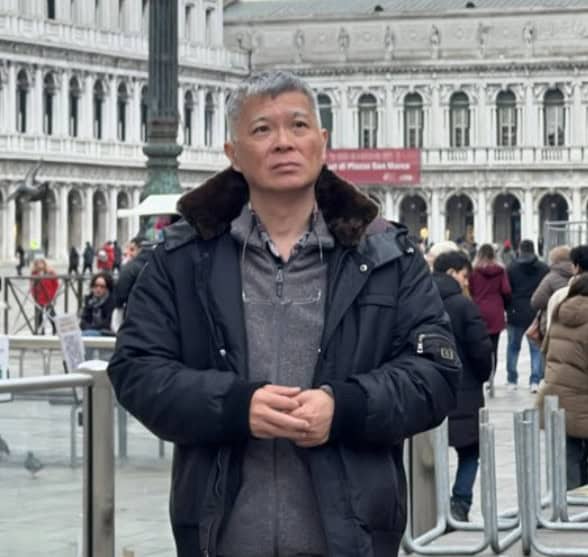
Michael Koh is a production specialist and entrepreneur who founded Spring Forest Studio in 2017 to provide event and virtual production solutions in Singapore. He specialises in hybrid live streaming, XR (Extended Reality) virtual production, and studio systems integration, transitioning the business from traditional videography to advanced corporate broadcasting. Operating out of a dedicated facility at NordCom2 in Singapore, he leads a technical crew to deliver multi-camera webcasts, digital sets, and technical consultations for large-scale corporate events.