
5G has changed the operational profile of mobile platforms in Singapore, not as a consumer convenience layer, but as a production-grade connectivity option that can support live event workflows, remote contribution, bonded uplink architectures, and low-latency monitoring for enterprise streaming. In a market where corporate town halls, financial briefings, product launches, government communications, and multinational hybrid events demand consistent delivery across physical and virtual audiences, mobile platform performance is now shaped by radio access network capability, edge availability, encoder efficiency, and transport protocol selection as much as by the application itself. For production teams working in Singapore, where venue density is high and event expectations are exacting, 5G is not simply a faster cellular connection. It is a network layer that can materially affect acquisition, contribution, interactivity, and failover design across the entire live production chain.
For B2B event streaming, mobile platform performance includes more than webpage load time or app responsiveness. It includes camera ingest from mobile production kits, secure contribution from field locations, remote speaker participation, content synchronization for hybrid audiences, and the stability of control surfaces used by production managers, IT directors, and technical directors. In Singapore, 5G deployment density, spectrum utilization, network slicing capabilities, and indoor signal behavior all influence whether a mobile workflow can function as a primary path, a secondary path, or only as an emergency backup. The practical question for enterprise teams is not whether 5G is available, but how it changes latency budgets, uplink consistency, encoder settings, and redundancy architecture for live corporate production.
5G Network Characteristics and Their Effect on Live Production Workflows
5G introduces a different performance envelope for mobile platforms because it improves throughput, reduces radio access latency, and increases spectral efficiency compared with legacy mobile networks. For event streaming, the most relevant parameters are uplink throughput, jitter, packet loss, and handover stability. A live production workflow depends on predictable transport, especially when sending camera feeds, presentation graphics, screen shares, or remote speaker video from mobile devices, bonded encoder packs, or compact contribution rigs. In Singapore’s dense urban environment, small changes in indoor coverage and cell load can produce measurable differences in stream reliability, particularly in convention centers, hotel ballrooms, corporate campuses, and outdoor activation spaces surrounded by high-rise structures.
Uplink Stability for Contribution Feeds
Most enterprise live streaming use cases are more sensitive to uplink quality than downlink speed. A 1080p contribution feed encoded at 6 to 10 Mbps using H.264 can require a stable uplink well above the nominal bitrate to absorb overhead, retransmissions, and short-term variance. For 4K/UHD contribution, H.265 may reduce bitrate demand, but the workflow becomes more dependent on encoder quality, device thermal behavior, and downstream compatibility. 5G improves the viability of mobile contribution from location, but only when the production design accounts for sustained throughput, not peak throughput. In practical deployment, production engineers should evaluate real uplink conditions at the venue, not theoretical service-tier figures, because live encoding tolerates far less variation than ordinary data transfer.
Latency Reduction and Interactive Hybrid Sessions
Interactive hybrid events, including moderated Q and A, live polling, remote panel participation, and program return feeds, benefit from lower end-to-end latency. 5G can reduce radio segment delay, which helps when remote presenters join via mobile devices or when event staff rely on mobile control applications for switching, tally, chat moderation, or confidence monitoring. However, total latency is still governed by the full path, including encoder delay, protocol overhead, CDN or cloud ingest, transcoding, player buffering, and platform-specific processing. For this reason, 5G improves the access segment, but not the entire delivery chain. In a Singapore deployment, production teams should still design for sub-5 second contribution latency only when the workflow, protocol, and platform are aligned for it, such as with SRT, WebRTC, or a tightly tuned contribution chain, rather than assuming the mobile network alone will guarantee responsiveness.
Mobility, Handover, and Venue Dynamics
Mobile platform performance in live production is also shaped by movement. Production crews operating roaming camera positions, remote interviews, or mobile reporting kits may transition between indoor and outdoor coverage zones. Handover behavior, signal consistency in lifts, backstage corridors, loading bays, and temporary event structures can affect stream continuity. Singapore venues often combine reinforced concrete construction, reflective glass, and dense RF activity, which makes RF planning essential. A technically sound workflow includes site surveys, spectrum analysis, and tests of signal quality at likely camera positions, encoder positions, and presenter walk paths. For high-value enterprise events, 5G should be treated as one element in a multi-layer connectivity plan, not as a standalone dependency.
Streaming Architecture for Enterprise Hybrid Events on 5G
When 5G is integrated into a hybrid event production architecture, the design must respect the full signal path from acquisition through encoding, transport, switching, and distribution. Professional workflows still depend on deterministic infrastructure. SDI remains a reliable baseband standard for camera chains and switcher integration, HDMI 2.1 is common for certain laptop and presentation sources, and NDI or NDI|HX may be used for IP video contribution within controlled local networks. The mobile segment, where 5G plays its largest role, typically enters the system at the contribution or remote participation layer, then feeds into a production switcher, encoding system, or cloud production platform.
Protocol Selection, RTMP, SRT, and RTMPS
For internet transport, RTMP, RTMPS, and SRT are the most relevant protocols in enterprise live streaming workflows. RTMP remains widely supported for ingest and compatibility, especially in established platforms and workflows, but it is less resilient over unstable networks than SRT. Secure Reliable Transport, or SRT, is better suited to variable mobile links because it includes packet loss recovery, configurable latency, and encryption. In a 5G context, SRT is frequently the stronger choice for mobile contribution because it can tolerate transient network variation more effectively than traditional RTMP. RTMPS adds transport security, which may be required in corporate environments where security policy mandates encrypted contribution. Production engineers should align protocol choice with the actual network behavior of the venue and the required latency profile of the event.
Encoder Configuration and Bitrate Management
5G improves the options for mobile encoding, but encoder settings still determine stream quality and resilience. For 1080p corporate events, production teams often target a bitrate range that balances image quality, motion handling, and transport stability. For 4K/UHD, H.265 can improve compression efficiency, though compatibility, decode workload, and platform support must be verified. Key encoder parameters include keyframe interval, rate control mode, audio codec choice, and resilience features such as automatic reconnection and adaptive bitrate control. A static, overly aggressive bitrate can destabilize a mobile feed under fluctuating 5G conditions. Instead, professional teams should configure a bitrate ceiling that reflects sustained uplink measurements, with enough headroom to absorb temporary congestion. Audio should be encoded using professional standards such as AAC-LC for broad compatibility, with clear attention to sample rate, channel mapping, and audio delay alignment with video.
Cloud-Based Production Versus On-Premise Control
5G enables more flexible contribution to cloud-based production environments, particularly when teams use remote switching, cloud graphics, cloud mixing, or distributed collaboration between locations in Singapore and regional offices. Cloud production can reduce travel, simplify distributed workflows, and centralize archive and distribution functions. However, cloud dependence introduces sensitivity to internet path stability and platform processing delay. On-premise production remains the preferred model for events where absolute control over camera switching, audio mixing, graphics, and compliance logging is required. In many enterprise cases, the best design is a hybrid architecture, with local baseband or IP production in the venue and cloud-based contribution, backup ingest, or post-event distribution. 5G becomes highly valuable as a resilient access path for one or more of those layers.
Multi-Camera Production, Audio Routing, and Signal Integrity in a 5G-Enabled Environment
Large corporate events in Singapore often involve multi-camera production, live switching, breakout sessions, confidence monitoring, and integrated presentations. In these environments, mobile platforms are not isolated devices. They are part of a system that includes cameras, switchers, routers, intercom, graphics engines, recorders, displays, and network fabric. The impact of 5G is strongest when it complements rather than replaces the core production infrastructure.
Multi-Camera Signal Flow and Switching Systems
A professional multi-camera event may use SDI cameras feeding a production switcher, with program output sent to an encoder or streaming appliance, while isolated camera feeds are simultaneously recorded for archive or post-production. If mobile devices or remote guests are introduced into the workflow, 5G can provide the contribution path for those sources, either directly into a cloud mix engine or into a local ingest node. In this scenario, video synchronization becomes critical. Production teams must account for variable delay between local SDI sources and mobile contribution sources, then align them using frame sync, audio delay, or switcher timing tools. Multi-view monitoring should include network status, stream health, and audio phase visibility so that operators can confirm integrity in real time.
Audio Mixing, Talkback, and Return Feeds
Audio is usually the first part of a live event to reveal transport issues. Mobile participation over 5G must preserve intelligibility, timing, and gain structure. Talkback systems, IFB, and program return feeds should be engineered so that remote speakers and mobile contributors can hear the correct reference without creating feedback loops or latency confusion. For hybrid events, a separate audio mix-minus feed is often required for remote guests. This is especially important in moderated panels, executive briefings, and technical demonstrations where clean communication is essential. 5G improves the flexibility of remote participation, but audio design still requires conventional broadcast discipline, including level management, delay compensation, and monitoring at the point of contribution.
Enterprise Network Design, QoS, and Redundancy for Singapore Deployments
Enterprise clients in Singapore need more than a fast mobile link. They need a network strategy that supports service continuity, quality of service, security, and operational visibility. Quality of service, or QoS, is particularly relevant when multiple devices share connectivity at a venue. Corporate streaming workflows should isolate mission-critical traffic where possible, prioritize contribution streams over general data usage, and define failover logic between 5G, wired broadband, and secondary mobile paths. This applies equally to venue networks, enterprise-managed event spaces, and pop-up production sites.
Redundancy and Failover Strategy
A mature streaming design uses multiple layers of redundancy. A primary path may be fiber-based internet with a bonded encoder as backup, while 5G provides tertiary or secondary contribution during line failure. Alternatively, in temporary venues or outdoor activations, 5G may serve as the primary path with a second SIM, dual-carrier bonding, or alternate ISP as failover. Production engineers should test automatic failover under live conditions, not just in lab environments. The transition must preserve the session with minimal interruption, maintain encoder synchronization where possible, and avoid observable artifacts in the program feed. For enterprise clients, redundancy is not an optional feature. It is a core requirement when event reputation, executive visibility, and investor communications are on the line.
Security and Compliance Considerations
Security policy matters just as much as performance. Live event data may include internal presentations, financial disclosures, product roadmaps, or confidential operational information. 5G workflows should therefore use encrypted contribution paths, access control for mobile devices, device management policies, and authenticated access to production platforms. When remote contributors join from mobile devices, production teams should validate platform encryption, account permissions, and secure transport from the network edge to the streaming endpoint. In regulated corporate contexts, every device used in the chain should be treated as part of the event security perimeter. This includes mobile phones, tablets, bonded encoders, laptops, and any cloud control interfaces.
Implementation Guidelines for Production Teams and Enterprise Decision-Makers
Successful 5G deployment for live event production in Singapore begins with a technical assessment, not a procurement decision. Teams should map the event format, number of sources, target resolution, latency tolerance, platform destination, and fallback requirements before deciding how 5G fits into the architecture. For a board briefing, the priority may be reliability and compliance. For a distributed panel or remote speaker session, low-latency contribution and clean audio may be the priority. For a multi-location product launch, synchronized switching, graphics consistency, and robust failover may matter most.
Recommended Operational Workflow
First, perform a venue RF and network survey to evaluate 5G coverage, indoor penetration, and any congestion hotspots. Second, test the intended encoder at the actual frame rate, resolution, and bitrate that will be used on show day. Third, validate transport protocol choice, with SRT preferred for variable mobile uplinks and RTMP or RTMPS used where platform compatibility requires it. Fourth, confirm audio routing, mix-minus paths, and return feeds for remote participants. Fifth, rehearse failover from primary to backup connectivity under live switching conditions. Sixth, verify the end-to-end chain, from camera or mobile source to cloud ingest to program output and archive.
Practical Technical Priorities
Enterprise teams should prioritize these technical controls: stable encoder headroom, strict monitoring of latency and packet loss, clear separation of program and backup paths, hardware or software encoding that can survive thermal stress, and a production control surface that exposes health metrics in real time. For hybrid events with teams in multiple locations, centralize stream orchestration so that production staff can monitor all feeds, all return paths, and all backup links from a unified interface. If NDI is used within the venue, keep it on a managed local network and avoid exposing it indiscriminately across public paths. If ISO recording is required, ensure isolated capture of each source and confirm that storage throughput matches the data rate of the selected resolution and codec.
In Singapore, 5G is now a meaningful enabler for enterprise live streaming and hybrid production, but its value appears only when it is engineered into a disciplined workflow. The strongest results come from combining 5G with professional switching, controlled audio routing, proven transport protocols, and layered redundancy. For corporate event planners, AV professionals, production managers, and IT leaders, the correct approach is to treat 5G as a high-performance access layer inside a broader broadcast-grade system. When implemented in that way, it improves mobility, resilience, and responsiveness without sacrificing the reliability that enterprise events require.
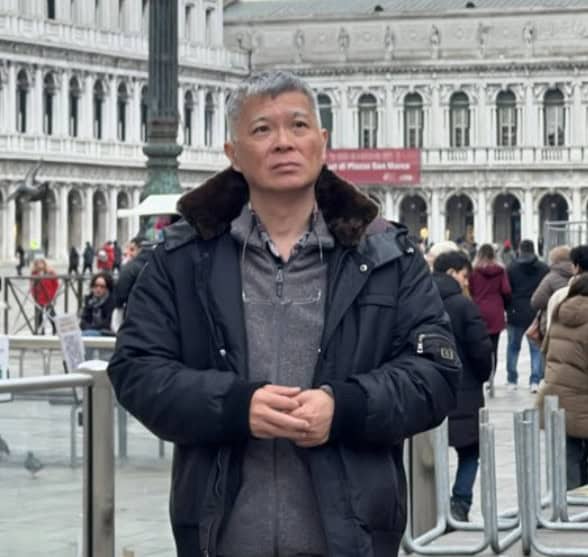
Michael Koh is a production specialist and entrepreneur who founded Spring Forest Studio in 2017 to provide event and virtual production solutions in Singapore. He specialises in hybrid live streaming, XR (Extended Reality) virtual production, and studio systems integration, transitioning the business from traditional videography to advanced corporate broadcasting. Operating out of a dedicated facility at NordCom2 in Singapore, he leads a technical crew to deliver multi-camera webcasts, digital sets, and technical consultations for large-scale corporate events.