
The Integrated Stream: Connecting Live Video with Corporate Intranets
In the complex landscape of modern corporate communications, linking live video feeds seamlessly with corporate intranets is not only technically challenging but a necessity for enhancing real-time information flow and engagement in enterprise environments. This integration is pivotal for hybrid events, where physical and virtual audiences must be aligned. Achieving this requires a concrete understanding of the technologies involved in B2B event streaming and hybrid production solutions.
Understanding the Core Technologies in Corporate Streaming
To develop an integrated streaming solution, one must first understand the technologies that make up the foundation of B2B live event streaming. Protocols such as SRT (Secure Reliable Transport) and RTMP (Real-Time Messaging Protocol) are crucial for secure and reliable video transmission. While SRT offers the advantage of low latency video transport across unpredictable networks, RTMP continues to be a reliable choice for its established presence in the industry, especially in interfacing with content delivery networks (CDNs).
Moreover, the implementation of NDI (Network Device Interface) allows for broadcasting-grade low-latency video, facilitating seamless switching between multiple camera angles and providing production teams with immense flexibility. These technologies play crucial roles in ensuring the smooth integration of live streams with corporate networks.
Architecting Streaming Infrastructure for Hybrid and Live Events
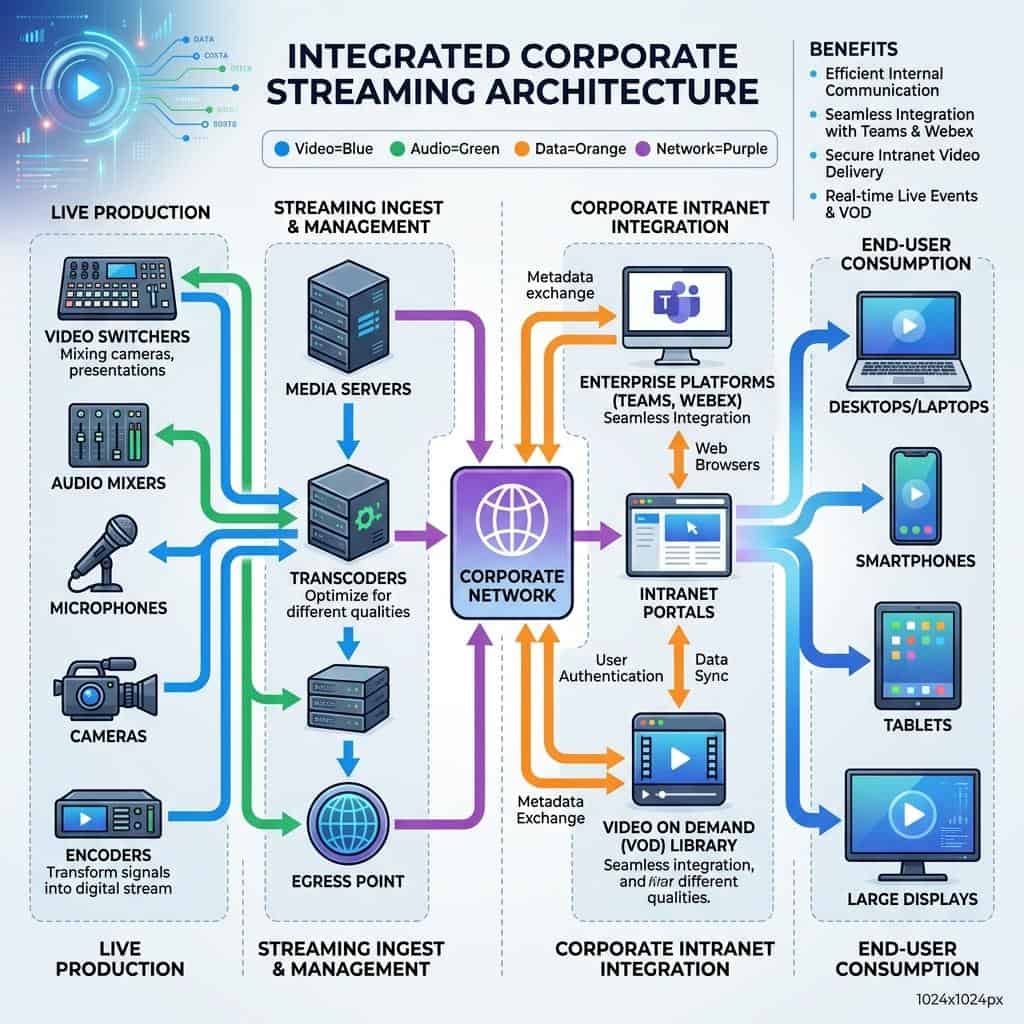
Designing an effective infrastructure involves combining both cloud-based and on-premise solutions. This hybrid system provides scalability and control, crucial for accommodating large corporate events that may simultaneously involve thousands of remote participants. Balancing on-premises stability with cloud scalability involves leveraging advanced encoders, transcoders, and redundant server configurations.
Details on Multi-Camera Production Setups
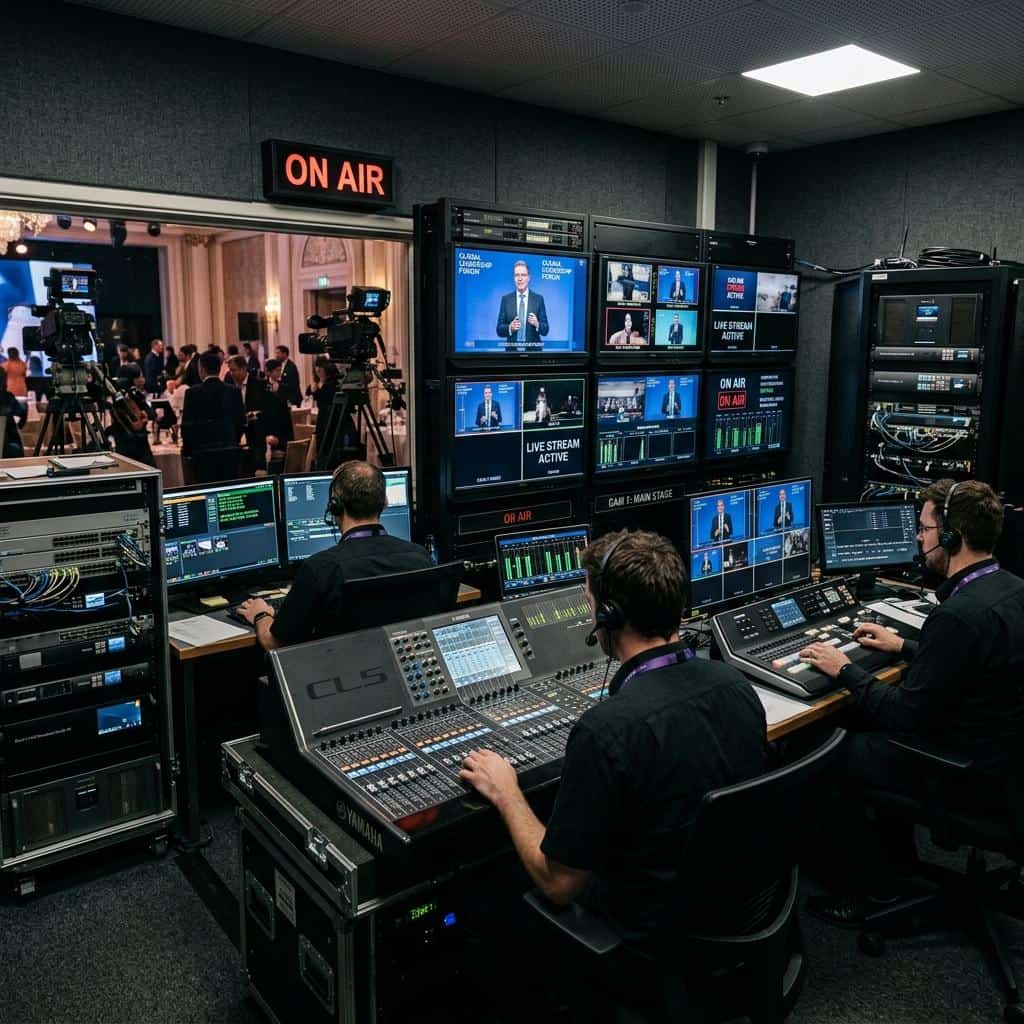
For events with a high production value, multi-camera setups are essential. Employing technologies such as HDMI 2.1 for 4K/UHD video and SDI (Serial Digital Interface) for robust signal transport ensures high-quality video output. Video switchers must intelligently route video signals to provide seamless transitions between multiple feeds, maintaining the viewer’s engagement and professional presentation standards.
Continuous monitoring through multiview systems and program feed assessments ensures that production teams maintain control over the quality and flow of live content. Efficient use of color grading and ISO recording enhances video quality, allowing for post-event content optimization.
Signal Flow and Network Requirements
Efficient signal routing is critical for integrating live streaming capabilities with corporate intranets. Signal paths must be mapped clearly, utilizing suitable interfaces and protocols for audio and video transmission. Balanced audio levels are maintained through advanced audio mixing consoles, ensuring clarity and crispness in the output.
Network infrastructure must support high bandwidth, typically above 10 Gbps, to handle multiple video and data streams. Low latency transmission facilitates real-time interactions, essential for hybrid event settings. Implementing Quality of Service (QoS) technologies prioritizes video traffic to minimize disruption, while redundancy and failover strategies ensure stream reliability even during network failures.
Integration with Enterprise Platforms
Seamless integration with enterprise platforms like Microsoft Teams, Zoom, and Webex forms the backbone of hybrid event streaming. These platforms offer built-in tools for audience engagement and data analytics, providing insights into viewership and engagement.
Ensuring Scalability and Quality
Scaling up for large events requires meticulous planning. Cloud service providers offer dynamic scaling options to meet sudden spikes in viewer demand. Balancing video quality with compression standards such as H.264 and H.265 ensures optimal performance without compromising quality.
Actionable Recommendations for Enterprise Clients
For enterprise clients looking to integrate live streaming with their intranet, a strategic implementation roadmap is essential. This includes conducting a thorough infrastructure audit, understanding audience needs, and tailoring the streaming setup to meet specific corporate objectives. Utilizing professional-grade equipment, establishing robust technical support, and continuously evaluating streaming performance will cement the foundation for successful integrated streaming solutions.
Ultimately, the integration of live video with corporate intranets requires a sophisticated blend of technologies and strategic planning to facilitate seamless communication and engagement. With the right tools and expertise, enterprises can leverage streaming technology to elevate their corporate events and communications.

Michael Koh is a production specialist and entrepreneur who founded Spring Forest Studio in 2017 to provide event and virtual production solutions in Singapore. He specialises in hybrid live streaming, XR (Extended Reality) virtual production, and studio systems integration, transitioning the business from traditional videography to advanced corporate broadcasting. Operating out of a dedicated facility at NordCom2 in Singapore, he leads a technical crew to deliver multi-camera webcasts, digital sets, and technical consultations for large-scale corporate events.