
Singapore has become a defining market for high-specification 3D virtual production because the country combines dense enterprise demand, advanced connectivity, strict operational discipline, and a mature event services ecosystem. For corporate communications, regional leadership forums, product launches, shareholder meetings, and hybrid conferences, 3D virtual production now sits at the intersection of broadcast engineering, real-time graphics, and enterprise streaming architecture. The standard is no longer a simple camera feed routed to a webinar platform. The requirement is a synchronized production environment that can support physical presenters, virtual sets, immersive brand environments, remote contributors, and distributed stakeholders with controlled latency, measurable reliability, and broadcast-grade quality.
From a B2B production engineering perspective, the value of 3D virtual production in Singapore comes from its ability to unify multiple technical layers into one coherent workflow. At the acquisition layer, multi-camera systems capture presenters, product demonstrations, and live interactions in 4K UHD or high-bitrate HD. At the rendering layer, real-time engines generate photoreal environments, data-driven motion graphics, and virtual stages. At the transport layer, protocols such as SDI, NDI, NDI|HX, SRT, RTMP, and RTMPS carry signal between the studio, control room, encoder, and remote endpoints. At the distribution layer, enterprise platforms such as Microsoft Teams, Zoom, and Webex receive the final program feed, often alongside a separate low-latency return feed for confidence monitoring, speaker support, or interactive moderation. The result is a production model that supports both physical and virtual audience engagement without compromising technical integrity.
For enterprise decision-makers, the practical question is not whether virtual production looks impressive. The real question is whether the system architecture can scale, recover from failure, preserve lip sync, maintain audio intelligibility, and deliver consistent output under live operational pressure. In Singapore, where venue density is high and event timelines are compressed, that answer depends on disciplined engineering, standardised signal flow, and end-to-end redundancy planning.
3D Virtual Production as a Broadcast-Grade Enterprise Workflow
3D virtual production is a composite workflow that blends live capture, real-time rendering, camera tracking, audio mixing, and encoded distribution into a single live pipeline. In a corporate environment, this often means combining presenters on physical set elements with a digitally extended stage, branded background, animated information panels, and remote participation feeds. The production must remain stable across the full chain, from lens to live platform.
Core signal chain and production topology
A well-designed virtual production system typically starts with camera acquisition over SDI or HDMI 2.1, depending on camera class and infrastructure design. SDI remains the preferred transport in many professional environments because it offers robust locking, long cable runs, and predictable behavior in switched production pipelines. HDMI 2.1 can be used at certain edge points, especially with newer cameras or compact systems, but it is less suited to large-scale routing unless carefully managed through conversion and cable integrity planning.
Camera feeds are then routed into a vision mixer or production switcher, often through a multiview-enabled control surface that provides operator visibility across camera sources, graphics, remote contributor feeds, and program return. For hybrid events, the switcher must also manage lower-third overlays, intro sequences, live captions where required, and return audio coordination. In more advanced installations, camera tracking data is fed into a real-time engine so the virtual environment responds correctly to viewpoint changes, maintaining correct perspective and parallax.
When the production includes a 3D environment, the rendering engine must support high frame rate output with deterministic timing. Sync references such as genlock and timecode become critical. In practice, frame accuracy matters because any mismatch between camera motion and rendered background creates visible instability. For corporate clients, this is not an aesthetic detail, it directly affects brand perception, presenter confidence, and audience trust.
Resolution, frame rate, and codec strategy
Most enterprise virtual production deployments in Singapore operate at 1080p or 2160p, depending on venue scale, display targets, and network distribution needs. Frame rates are commonly 25 fps or 30 fps for corporate broadcasts, with 50 fps or 60 fps reserved for motion-heavy demonstrations, premium product showcases, or display environments requiring smoother motion reproduction. The codec layer is chosen based on production intent. H.264 remains widely supported for live platform delivery and enterprise conferencing integration. H.265 can provide improved compression efficiency at equivalent perceptual quality, but hardware support, decoding compatibility, and platform constraints must be verified across the full chain.
Bitrate management must align with both uplink capacity and platform ingest requirements. For stable corporate live transmission, engineers commonly design around controlled constant bitrate or capped variable bitrate profiles, with careful headroom above the expected delivery threshold. The objective is not maximum bitrate. The objective is consistent encoded quality with minimal packet loss, stable latency, and predictable platform behavior.
Infrastructure Design for Hybrid Event Streaming in Singapore
Singapore’s enterprise streaming market rewards infrastructure discipline because live events often involve boardrooms, conference venues, hotel ballrooms, purpose-built studios, and remote locations connected into a single production workflow. A hybrid event system must therefore support local acquisition, intra-facility transport, platform distribution, and return communication while preserving operational control.
Network architecture, bandwidth, and latency control
Professional streaming infrastructure starts with a segmented network design. Production traffic should be isolated from guest Wi-Fi, office productivity traffic, and building automation traffic. Managed switches with QoS, VLAN segmentation, and sufficient backplane capacity are essential, particularly when multiple NDI sources, control interfaces, and media servers share the same infrastructure. NDI streams can be efficient inside a local production network, but they still consume meaningful bandwidth. Full NDI is substantially more demanding than NDI|HX, so engineers must calculate aggregate throughput rather than assuming a single-source estimate.
SRT, Secure Reliable Transport, is a critical protocol for remote contribution and contribution-grade uplinks because it is designed to withstand jitter, packet loss, and variable public internet conditions. Compared with raw RTMP, SRT provides stronger resilience for point-to-point delivery and contribution workflows, especially when sending feeds from remote offices, exhibition spaces, or backup locations into a central control room. RTMP and RTMPS still play a role in many platform ingest workflows because of their broad compatibility, but for inter-facility contribution, SRT is often the more resilient engineering choice.
Latency optimization in a hybrid environment is not only a transport issue. It is also a control-room issue. Audio processing, video encoding, platform ingest, and conferencing return paths can each add delay. For live moderation, presenters may require a low-latency confidence monitor, separate from the outgoing program feed. Engineers should measure end-to-end delay across camera to display, camera to platform, and platform to return paths. In mixed conferencing environments, a practical target is maintaining latency low enough for natural presenter interaction, while accepting that internet-based distribution always introduces more delay than local in-room monitoring.
Redundancy, failover, and operational continuity
Enterprise clients should require power, network, and encoding redundancy. At minimum, critical systems should be protected by uninterruptible power supplies, redundant network paths where venue design permits, and backup encoding capability. If the primary encoder fails, the production team should be able to switch to a secondary encoder without reconfiguring the entire distribution chain. Dual internet uplinks from separate providers are advisable for mission-critical events, especially when the event has senior leadership participation or external stakeholder visibility.
Operational continuity also depends on recording architecture. ISO recording, where each camera source is recorded separately, gives post-event teams the flexibility to rebuild segments, correct timing issues, and produce archival content for internal use or later distribution. Program recording, by contrast, captures the live edited output. In a mature virtual production workflow, both are useful. ISO recording supports editorial recovery and post-production polish, while the program record preserves the exact live experience.
Multi-Camera Switching, Audio Routing, and Virtual Set Integration
Virtual production for corporate events only performs well when switching, audio, and graphics are engineered as a single system. Each layer affects the others, and weak integration produces visible and audible defects in the final output.
Camera layer and switching workflow
Multi-camera setups are standard for executive presentations, panel discussions, and product demonstrations. A two-camera configuration can support a simple keynote with a wide master shot and a tight presenter shot. Larger events may require four to eight cameras, including roving units for audience reactions, equipment close-ups, and specialized product angles. Camera matching is critical. White balance, shutter angle, gamma profile, and lens characteristics should be aligned to prevent visible discontinuity during live cuts.
Switching systems should support clean cuts, key and fill graphics, downstream keying, multiview monitoring, and audio-follow-video workflows where appropriate. In virtual production, the switching team often works in parallel with the graphics operator and technical director to keep presenter timing aligned with the scene engine. If the virtual set includes moving elements, live data feeds, or animated charts, cueing must be rehearsed with exact timing, not approximated on the fly.
Audio design, mixing, and intelligibility
Audio engineering is a primary success factor in hybrid event streaming. Even when the visual system is highly sophisticated, poor speech intelligibility immediately undermines the production. In a Singapore corporate venue, this often means designing a microphone strategy that combines wireless lavalier microphones, handheld microphones for Q and A, and discrete program audio feeds from presentation computers or playback devices. A digital audio console with properly configured gain structure, EQ, compression, and automixing supports consistent speech levels across multiple presenters.
Talkback systems are also important in live production environments because they allow director, technical crew, and on-camera talent to coordinate without exposing production chatter to the audience. Audio should be routed with clear separation between program mix, monitor mix, conferencing return, and IFB, interruptible foldback, where used. For hybrid events, audio delay compensation must be checked carefully so that remote participants receive sync-accurate speech and do not experience distracting echo or overlap.
Virtual sets, LED walls, and real-time rendering
Virtual production may use green screen, LED volume, or composited environments depending on budget, venue, and aesthetic requirements. Green screen remains cost-effective for many corporate use cases, especially when the event requires rapid stage transformation and moderate presenter movement. LED wall environments deliver stronger in-camera realism, richer lighting interaction, and more convincing depth cues, but they require precise color calibration, refresh-rate compatibility, and higher infrastructure investment.
For Singapore clients planning executive forums or flagship product launches, the deciding factor is often not the technology alone, but the desired outcome. If the event demands premium brand immersion and camera-aware rendering, the workflow should be built around real-time 3D engine integration, tracking, and calibrated display surfaces. If flexibility, fast deployment, and controlled cost are priorities, chroma key compositing with high-quality virtual backgrounds may be the more efficient option. Both approaches can meet enterprise standards when engineered correctly.
Cloud-Based Versus On-Premise Streaming for Enterprise Events
The choice between cloud-based and on-premise streaming should be made according to security, control, scale, and operational risk. Many Singapore enterprises adopt a hybrid architecture, using on-premise production for local control and cloud services for distribution, archiving, or remote participation.
On-premise advantages
On-premise systems offer maximum control over routing, latency, monitoring, and security boundaries. They are particularly suitable for confidential executive events, financial briefings, internal town halls, and product announcements that require strict governance. On-premise switching, rendering, and encoding also allow the production team to manage all sources locally, reducing dependence on external service variability. This architecture supports direct integration with studio routers, local recorders, reference monitors, and backup workflows.
Cloud-enabled strengths
Cloud infrastructure can scale distribution, simplify remote contribution, and support geographically dispersed audiences. It is especially useful when a single event must connect offices across Singapore, the wider ASEAN region, and global leadership teams. Cloud production tools can be effective for graphics rendering, remote guest capture, content management, and post-event analytics. However, cloud dependency should never replace resilient local capture for mission-critical live events. The most reliable model is frequently a hybrid one, where local production maintains primary control and cloud services extend reach.
Enterprise platform integration
Integration with Microsoft Teams, Zoom, and Webex requires more than simply sending a program feed. Engineers must consider aspect ratio, audio channel mapping, frame rate compatibility, conferencing return delay, and speaker workflow. Some events need a dedicated presentation feed for the main audience and a separate clean feed for moderators or remote interpreters. When multiple breakout rooms or panel links are involved, bandwidth planning and moderation logic become as important as camera quality. The production system should be designed so that every platform endpoint receives a properly encoded, properly mixed, and properly labelled signal.
Implementation Guidelines for Singapore-Based Enterprise Clients
For organisations planning 3D virtual production in Singapore, the implementation process should begin with a technical discovery phase that defines event objectives, stakeholder expectations, venue constraints, delivery platforms, and risk thresholds. From that baseline, the production partner can design a signal architecture that specifies source formats, switching requirements, audio routes, encoder redundancy, network capacity, and monitoring procedures.
- Define the delivery objective first. Internal town hall, investor briefing, customer launch, or regional leadership summit each has different technical priorities.
- Standardise source formats. Align cameras, graphics systems, and playback devices to a common frame rate, resolution, and color pipeline.
- Budget for redundancy. Duplicate critical paths for power, encoder function, and internet access wherever the event risk profile justifies it.
- Measure actual network performance. Test throughput, jitter, packet loss, and latency before live day, not during the event.
- Rehearse with the final control topology. Director, technical director, graphics operator, audio engineer, and presenter support should all work against the real system configuration.
- Document the signal flow. Clear patching, labelling, and routing diagrams reduce error rates during setup and changeover.
- Validate final output on target platforms. Confirm ingest, encoding, and audio behavior on Teams, Zoom, Webex, or any enterprise streaming destination in advance.
The new standard of excellence in Singapore is not defined by a single visual effect or a single platform integration. It is defined by repeatable technical quality across live production, hybrid communication, and enterprise distribution. 3D virtual production succeeds when every engineering layer, from SDI capture to SRT contribution to RTMPS delivery, is designed for reliability, scalability, and clarity. For corporate event planners, AV professionals, production managers, and IT directors, the strategic advantage is clear. When the infrastructure is built correctly, virtual production is no longer a novelty. It becomes a dependable enterprise communication platform capable of supporting high-value live events at a professional broadcast standard.
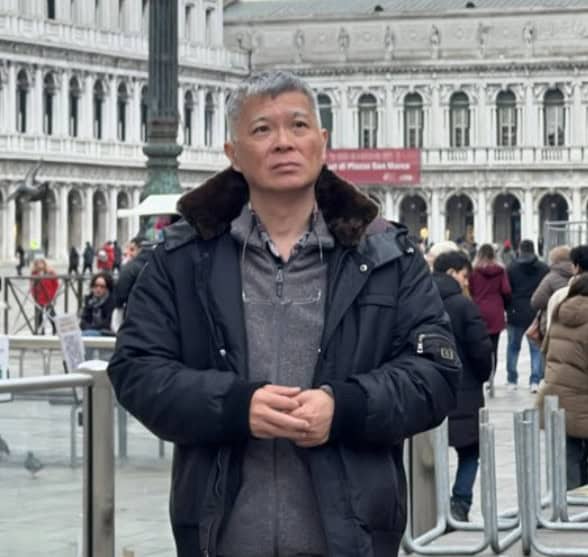
Michael Koh is a production specialist and entrepreneur who founded Spring Forest Studio in 2017 to provide event and virtual production solutions in Singapore. He specialises in hybrid live streaming, XR (Extended Reality) virtual production, and studio systems integration, transitioning the business from traditional videography to advanced corporate broadcasting. Operating out of a dedicated facility at NordCom2 in Singapore, he leads a technical crew to deliver multi-camera webcasts, digital sets, and technical consultations for large-scale corporate events.