
 April 3, 2026 by Editor |
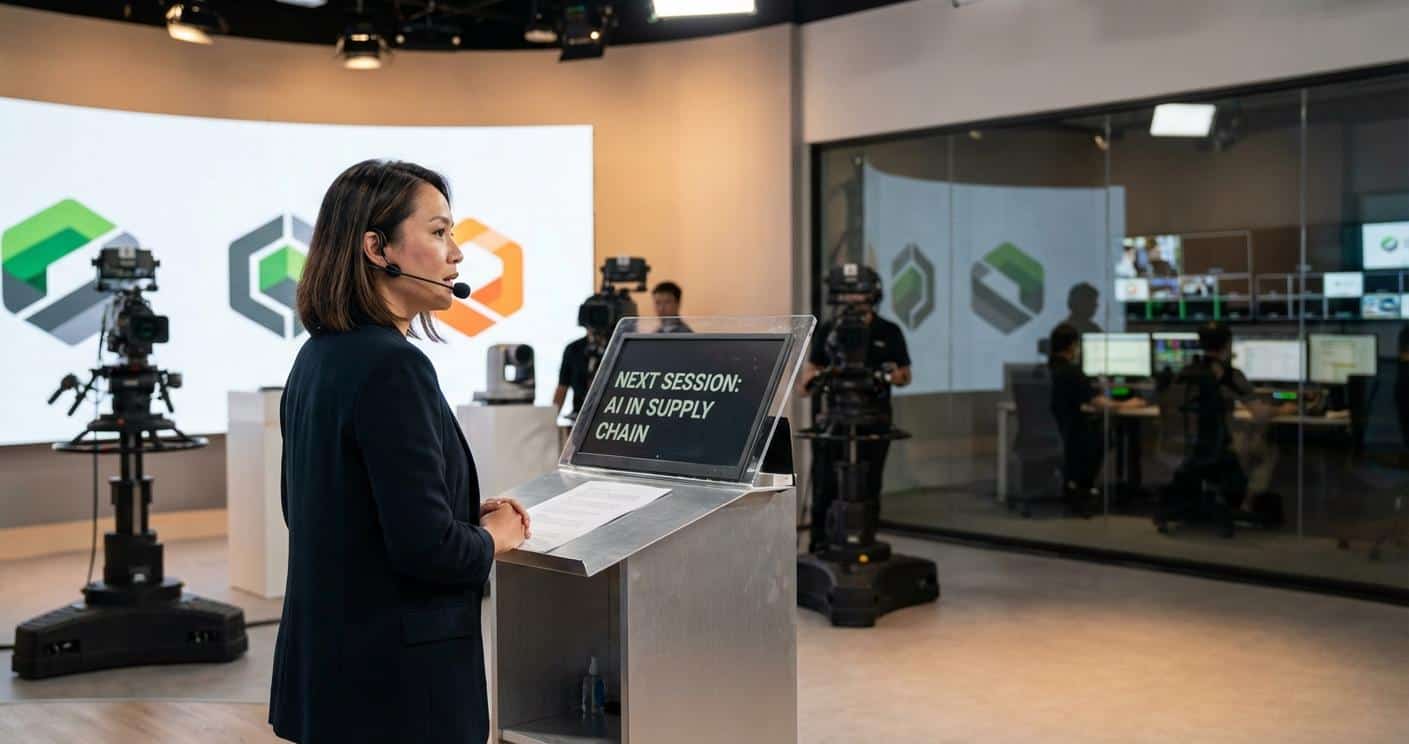
In the dynamic and highly competitive landscape of Singaporean B2B event streaming, the role of a professional moderator transcends mere presentation; it becomes a critical nexus where human expertise intersects with sophisticated technical infrastructure. Live Streaming Studio observes that a truly elevated B2B stream, especially within a hybrid event paradigm, relies not only on flawless content delivery but also on the moderator’s seamless integration into the complex technical ecosystem. This integration ensures real-time audience engagement, precise content flow, and an overall polished, broadcast-grade production that resonates with enterprise decision-makers and high-value stakeholders. The demand for highly reliable, low-latency, and interactive streaming solutions in Singapore mandates that the moderator is not an isolated performer, but a key operational component, intrinsically linked to the underlying video, audio, and network architectures.
Architectural Integration: The Moderator as a Node in the Enterprise Streaming Ecosystem
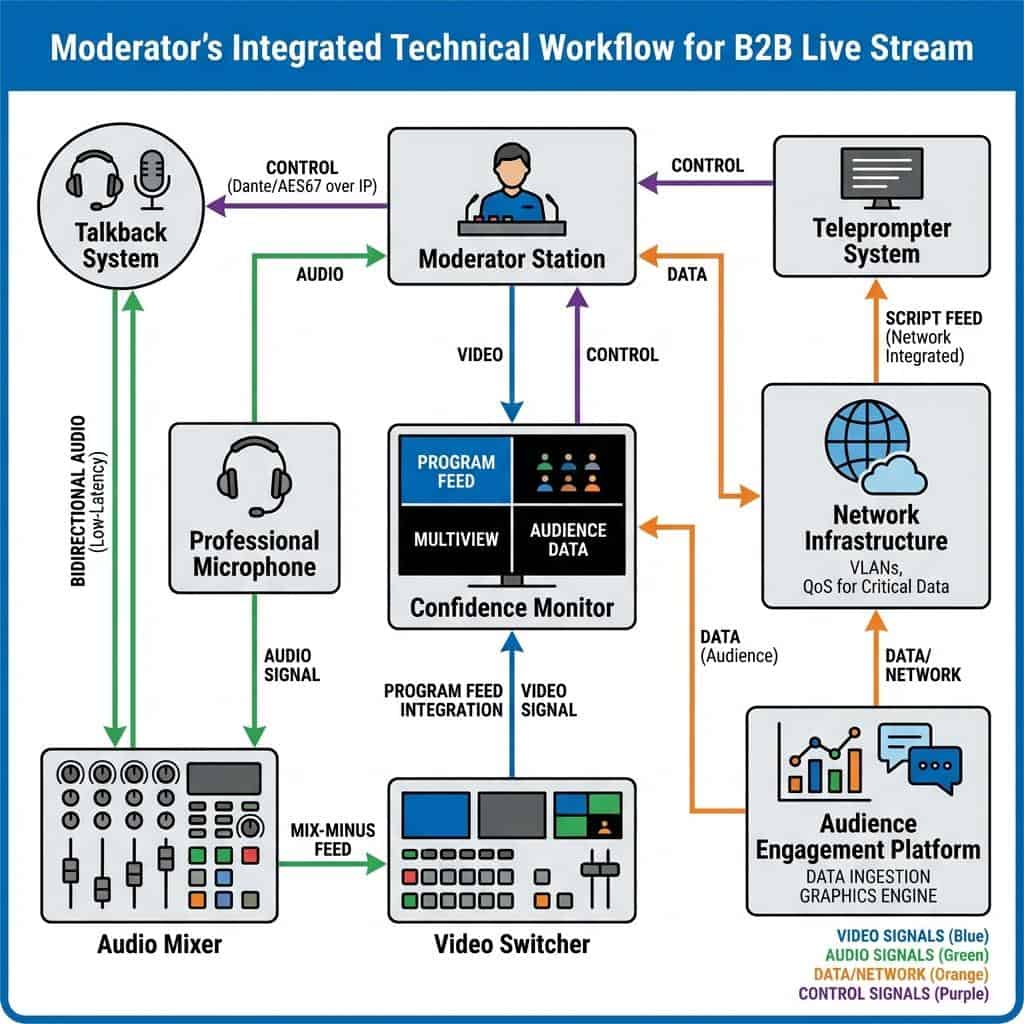
The efficacy of a professional moderator in a B2B streaming environment is directly proportional to their technical integration within the production workflow. This involves a meticulously engineered communication matrix and visual feedback loops that empower the moderator to operate with precision and confidence, regardless of whether they are on-site in a studio or remotely connected.
Synchronized Communication: Talkback Systems and Cueing Protocols
Effective moderation hinges on instantaneous and clear communication with the production control room. Professional B2B streaming environments deploy robust talkback systems, such as those offered by Clear-Com or RTS, which often leverage AoIP standards like Dante or AES67 for ultra-low-latency audio transmission over dedicated Ethernet networks. These systems provide a bidirectional, isolated audio channel, ensuring the moderator receives critical cues from the technical director, audio engineer, or producer without it being broadcast to the audience. Latency in these systems is typically minimized to sub-10 milliseconds, preventing disruptive delays that could hinder real-time instruction and response. Moreover, cueing protocols extend beyond simple audio; visual cues, such as tally lights on cameras, countdown timers on confidence monitors, or text-based prompts on a dedicated production monitor, are synchronized with the event rundown sheet. This sophisticated interplay allows the moderator to manage transitions, introduce speakers, or respond to audience questions with timing accuracy down to individual frames, crucial for maintaining the high production values expected in enterprise-grade broadcasts.
Visual Interfacing: Teleprompting and Confidence Monitoring
For a professional moderator, a consistent and accurate visual interface is paramount. Teleprompting systems, utilizing dedicated hardware prompts or software-based solutions integrated over network protocols, display scripts and key talking points. These systems must be highly reliable, with content easily updated in real-time by a teleprompting operator. The display resolution, often 1080p or even 4K, ensures legibility, while a high refresh rate (60Hz or higher) prevents motion blur during scrolling. Critically, these prompts are networked, allowing for immediate script revisions or insertion of real-time audience questions. Alongside the teleprompter, a dedicated confidence monitor provides the moderator with a clean program feed, allowing them to see exactly what the audience is viewing. More advanced setups incorporate multiview displays on the confidence monitor, presenting not only the program output but also other crucial information such as a preview feed, graphics queues, or real-time audience engagement data from platforms like Slido or Mentimeter. These visual tools, often fed via SDI or NDI streams, are essential for the moderator to maintain situational awareness and adapt their delivery dynamically.
Orchestrating Engagement: Technical Facilitation of Audience Interaction
A hallmark of successful B2B streaming, especially for hybrid events, is robust and interactive audience engagement. The professional moderator acts as the conduit for this interaction, leveraging sophisticated technical platforms that bridge the gap between presenters and a distributed audience.
Dynamic Q&A and Polling Integration for Hybrid Events
Integrating dynamic Q&A and polling functionalities into a live B2B stream requires a seamless technical backbone. Platforms such as Slido, Mentimeter, or enterprise-specific solutions are integrated into the streaming workflow, often via API connections that feed real-time data into custom graphics engines or dedicated display monitors within the moderator’s line of sight. The data, whether it be live questions, poll results, or chat messages, is ingested, filtered, and then presented to the moderator through their confidence monitor or a dedicated overlay within the teleprompter software. This process demands a secure and low-latency data pipeline. For hybrid events, the challenge is amplified, requiring the technical team to manage both physical audience questions (via roving microphones) and virtual questions, consolidating them for the moderator. The integration often utilizes a dedicated CG system, like a Chyron or Ross Xpression, to generate visually appealing on-screen graphics for questions and poll results, ensuring brand consistency and legibility for the remote audience. SRT protocol streams can be utilized for sending clean feeds of these interactive elements to cloud-based processing before re-ingestion, maintaining quality and security.
Multi-Platform Delivery and Moderator Awareness
Modern B2B events frequently require simultaneous delivery across multiple platforms: internal corporate intranets, public social media platforms like LinkedIn Live, and dedicated enterprise event portals (e.g., Microsoft Teams Live Events, Zoom Webinars, Webex Events). Each platform possesses distinct technical specifications regarding ingest protocols (RTMP, RTMPS, SRT), video codecs (H.264/AVC, H.265/HEVC), resolutions (1080p, 720p), frame rates (25fps, 30fps), and bitrates (typically 2-8 Mbps for 1080p). A professional moderator, while not directly managing encoders, benefits from understanding these technical variations. The production team provides specific guidance on content pacing, graphic density, and audience interaction strategies tailored to the technical capabilities and audience expectations of each delivery platform. This involves careful bitrate management and adaptive bitrate streaming (ABR) profiles managed at the encoding stage. For instance, a moderator might be advised to allow more time for questions on a platform known for higher latency, or to articulate complex graphics more clearly for audiences potentially viewing on mobile devices with lower bandwidth connections. The technical team ensures the optimal encoding parameters and delivery paths, potentially using cloud-based transcoders and CDNs (CDNs) for global reach and scalability, all while the moderator focuses on engagement within these technical parameters.
Resilient Delivery: Network Infrastructure and Failover for Uninterrupted Moderation
The uninterrupted presence and performance of a professional moderator are non-negotiable in high-stakes B2B streaming. This mandates an underlying network infrastructure built for resilience, redundancy, and guaranteed Quality of Service (QoS).
Robust Network Architectures for B2B Live Streams
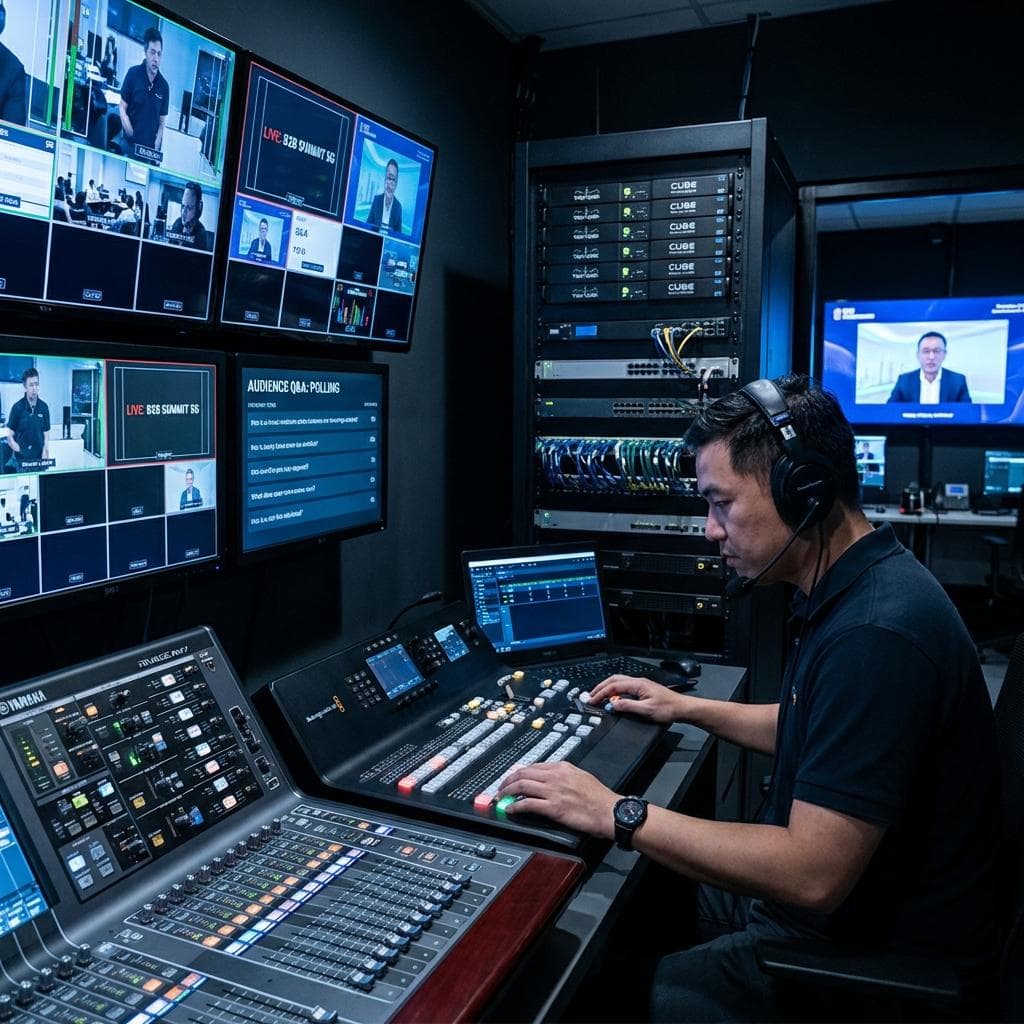
Enterprise-grade B2B streaming relies on dedicated, robust network architectures that segregate production traffic from general corporate network activity. This typically involves VLANs (VLANs) to isolate video feeds (often NDI or SDI over IP), audio streams (Dante, AES67), control signals, and internet ingest/egress. Bandwidth requirements are substantial; a multi-camera 1080p60 production utilizing uncompressed NDI for internal routing can easily consume several gigabits per second locally, while SRT or RTMP streams for internet egress demand dedicated upload speeds, often 50 Mbps or higher per destination for optimal 1080p content. QoS policies are rigorously implemented across managed switches and routers to prioritize critical traffic, such as talkback audio and control commands, ensuring minimal latency and packet loss. This prevents production-critical communications from being degraded by other network activities, guaranteeing that the moderator’s connection to the control room remains crystal clear and responsive.
Redundancy and Failover Strategies for Moderator Systems
To mitigate single points of failure, comprehensive redundancy and failover strategies are deployed. For internet connectivity, this involves multiple diverse paths, such as primary fiber optic lines paired with secondary cellular bonding solutions, configured for automatic failover. Key components supporting the moderator, including talkback systems and teleprompters, often feature redundant hardware or hot-swappable modules. For streaming encoders, active-passive or active-active redundancy is standard, where a secondary encoder automatically takes over if the primary unit fails, sometimes within milliseconds. Cloud-based streaming services typically offer geographic redundancy, distributing ingest points and delivery across multiple data centers. This ensures that even in the event of a regional outage, the moderator’s stream remains live. The monitoring of these redundant systems is continuous, often through network monitoring tools and dedicated multiviewers in the control room that display the status of all primary and backup paths. This meticulous planning guarantees that the professional moderator’s delivery remains uninterrupted, safeguarding the integrity and professionalism of the B2B event.
Elevating Production Values: The Moderator’s Impact on Technical Quality
The professional moderator is not merely a speaker; they are an integral component in shaping the technical fidelity and overall production quality of a B2B stream. Their awareness and collaboration with the technical team directly influence the seamless execution of complex video and audio workflows.
Precision Timing and Visual Cues in Multi-Camera Productions
In multi-camera B2B productions, precision timing is paramount. The moderator’s ability to adhere to precise cues, whether visual (e.g., a hand signal from the floor manager, a tally light indicator, or a countdown on a confidence monitor) or auditory (via talkback), directly impacts the technical seamlessness of the stream. This includes hitting marks for camera switches, introducing pre-recorded video packages, or transitioning to graphics overlays with split-second accuracy. Professional video switchers, such as Ross Carbonite or Blackmagic ATEM Constellation, are programmed with detailed macros that rely on these moderator cues for flawless execution. Graphics systems, like Vizrt or Ross Xpression, generate lower thirds, full-screen graphics, and data visualizations that are often triggered by the moderator’s speech or specific cues. Synchronization across all these elements is maintained through a master SMPTE timecode generator, ensuring that audio, video, and graphics are perfectly aligned, contributing to a high-quality, broadcast-level output that reflects the seriousness and professionalism of the B2B content.
Audio Excellence: Microphone Techniques and Mixing for Clear Delivery
Audio is arguably the most critical component of a B2B stream, and the professional moderator’s microphone technique is fundamental to achieving excellence. Various professional-grade microphones are deployed: discreet lavalier microphones for freedom of movement, robust headset microphones for consistent vocal presence, or shotgun microphones for specific stage placements. Each microphone type feeds into a professional audio console (e.g., Yamaha Rivage PM series, Soundcraft Vi series) where a dedicated audio engineer meticulously manages gain staging, equalization (EQ), compression, and noise gating. Crucially, a “mix-minus” feed is created for the moderator’s talkback, ensuring they hear everyone else in the control room or other participants without hearing their own voice echoing back, which can be highly distracting. The audio engineer actively monitors audio levels to comply with broadcast standards, such as ITU-R BS.1770 for loudness, preventing clipping or inconsistent volume that detracts from the professional presentation. This technical rigor in audio capture and mixing ensures the moderator’s voice is consistently clear, articulate, and impactful, elevating the perceived quality of the entire B2B stream.
The Synthesis of Talent and Technology in Singaporean B2B Event Streaming
The role of the professional moderator in Singaporean B2B event streaming is undeniably pivotal, not just for their charisma and command, but for their seamless integration into a sophisticated technical architecture. As Live Streaming Studio consistently demonstrates, elevating the standard of B2B streams moves beyond basic connectivity; it demands a synergistic relationship between human talent and advanced production technology. From the precision of talkback and teleprompting systems, through the dynamic orchestration of audience engagement platforms, to the resilience of redundant network infrastructures and the meticulous execution of audio-visual cues, every technical facet underpins the moderator’s ability to deliver an exceptional experience. For enterprise clients in Singapore, understanding this symbiotic relationship is key to investing in comprehensive streaming solutions. Partnering with a technical team that provides not only robust infrastructure but also understands how to seamlessly integrate and empower professional moderation talent is crucial. This integrated approach guarantees that B2B events are not merely broadcast but are expertly produced, highly engaging, and technically flawless experiences that genuinely elevate brand presence and deliver impactful messaging in the global corporate arena.