
The Remote Presenter: Bringing Global Experts to Singaporean Stages
In today’s interconnected world, the capability to integrate remote presenters into live events is transforming the landscape of corporate gatherings. Companies are increasingly leveraging advanced B2B live streaming technologies to bring global experts to local stages. For businesses in Singapore, a hub renowned for international conferences and events, adopting these technologies is crucial to remain at the forefront of industry innovation.
Revolutionizing Event Production with Remote Presenters
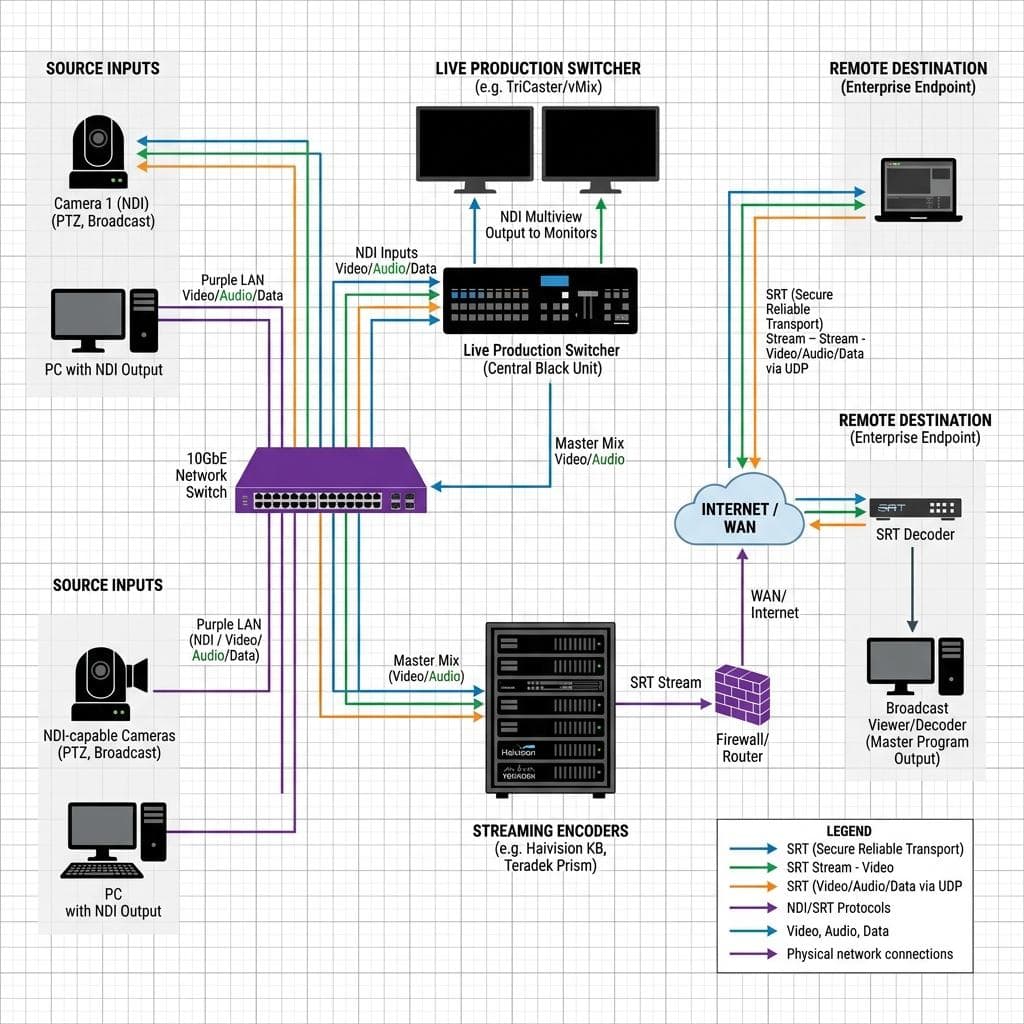
This section explores the significance of remote presenters in the context of B2B event streaming. Corporate events increasingly rely on hybrid production solutions to enhance value by integrating global expertise. Through the use of live streaming protocols such as SRT (Secure Reliable Transport) and RTMP (Real-Time Messaging Protocol), organizers can ensure low-latency, high-quality transmissions.
Streaming Protocols and Infrastructure
The backbone of successful remote presentations is robust streaming infrastructure. Implementing enterprise-grade solutions ensures reliability and quality. SRT, known for minimizing latency and packet loss, is essential for connecting remote presenters with live audiences. NDI (Network Device Interface) enables video-over-IP production networks, allowing seamless interaction between local and remote components.
Advanced Production Workflows for Hybrid Events
Hybrid events blend physical and virtual audiences, requiring sophisticated production workflows. Multi-camera setups, in conjunction with SDI (Serial Digital Interface) and HDMI 2.1 connectivity, facilitate dynamic switching and high-definition broadcasting. The use of cloud-based vs. on-premise streaming solutions depends on specific bandwidth requirements and scalability considerations.
Signal Flow and Video Switching
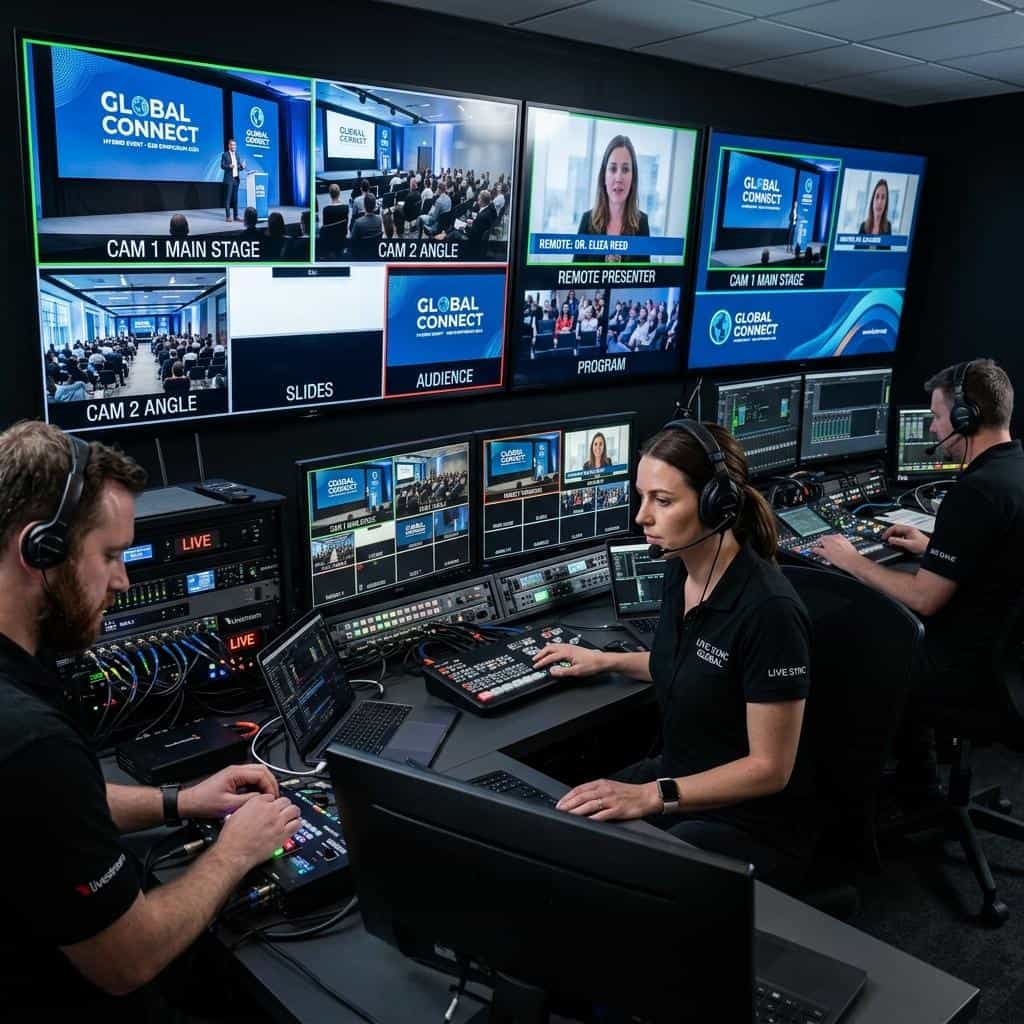
Video switching systems play a pivotal role in managing feeds from multiple cameras, remote presenters, and local sources. Solutions like NewTek’s TriCaster offer versatile integration of various input types and support for real-time transitions. Signal routing architectures must ensure minimal latency while maintaining high-quality video and audio standards.
Enterprise-Grade Streaming and Encoding Standards
For B2B environments, adopting reliable encoding standards such as H.264 and H.265 is critical to balance quality with bandwidth efficiency. These codecs are crucial in scenarios involving 4K/UHD broadcasts to large, distributed corporate audiences. Bitrate management and latency optimization are essential to maintain smooth and continuous streams.
Network Infrastructure and Quality of Service
The network infrastructure supporting event streaming must guarantee Quality of Service (QoS) to manage bandwidth allocation and prevent disruptions. Implementing redundancy and failover strategies, such as hot-swappable network configurations and load balancing, ensures uninterrupted service during broadcasts.
Implementing Redundancy for Uninterrupted Service
Redundancy is crucial in live event streaming to prevent downtime. Utilizing dual-stream encoders, distributed servers, and backup network paths can safeguard against potential failures. Integration with enterprise platforms like Microsoft Teams and Zoom allows seamless transitions between remote and onsite participants.
Scalability for Large Corporate Events
Scalability involves preparing for varying audience sizes and ensuring technical resources can handle peak loads. Utilizing content delivery networks (CDNs) can offload bandwidth stress while maintaining content integrity and speed. The strategic deployment of these systems enables seamless expansion to accommodate growing attendee numbers.
The integration of global experts through remote presentations is more than a trend; it’s a strategic necessity for competitive corporate event production. By harnessing these advanced technologies, Singaporean businesses can provide cutting-edge experiences that resonate on a global scale.
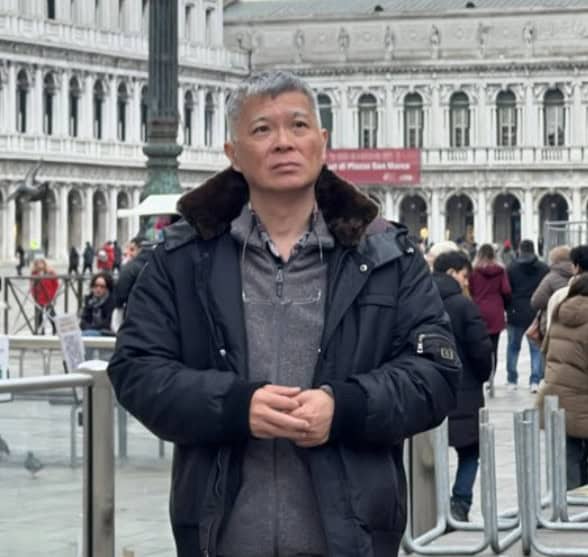
Michael Koh is a production specialist and entrepreneur who founded Spring Forest Studio in 2017 to provide event and virtual production solutions in Singapore. He specialises in hybrid live streaming, XR (Extended Reality) virtual production, and studio systems integration, transitioning the business from traditional videography to advanced corporate broadcasting. Operating out of a dedicated facility at NordCom2 in Singapore, he leads a technical crew to deliver multi-camera webcasts, digital sets, and technical consultations for large-scale corporate events.