
The Science of Immersion in B2B Event Streaming
In the realm of B2B event streaming, creating immersion is key to capturing and retaining audience attention. As digital environments rapidly evolve, 3D studios have emerged as potent tools, driving significantly higher engagement levels in enterprise settings. At Live Streaming Studio, we explore how 3D studio technology elevates hybrid production experiences, merging the physical and virtual into a dynamic viewing journey. This document will delve into the technical nuances of why 3D studios facilitate three times higher engagement in professional streaming applications.
Understanding 3D Studio Technology
3D studios leverage advanced technologies such as computer-generated imagery (CGI) and real-time rendering engines to create immersive environments that intermingle with live events. This technology immerses attendees in a virtual space that simulates physical presence, enhancing interaction and engagement.
Technical Components of 3D Studios
The backbone of 3D studios lies in integrating several sophisticated technologies:
- Real-Time Rendering Engines: Platforms like Unreal Engine and Unity offer powerful tools for producing high-fidelity 3D graphics on the fly.
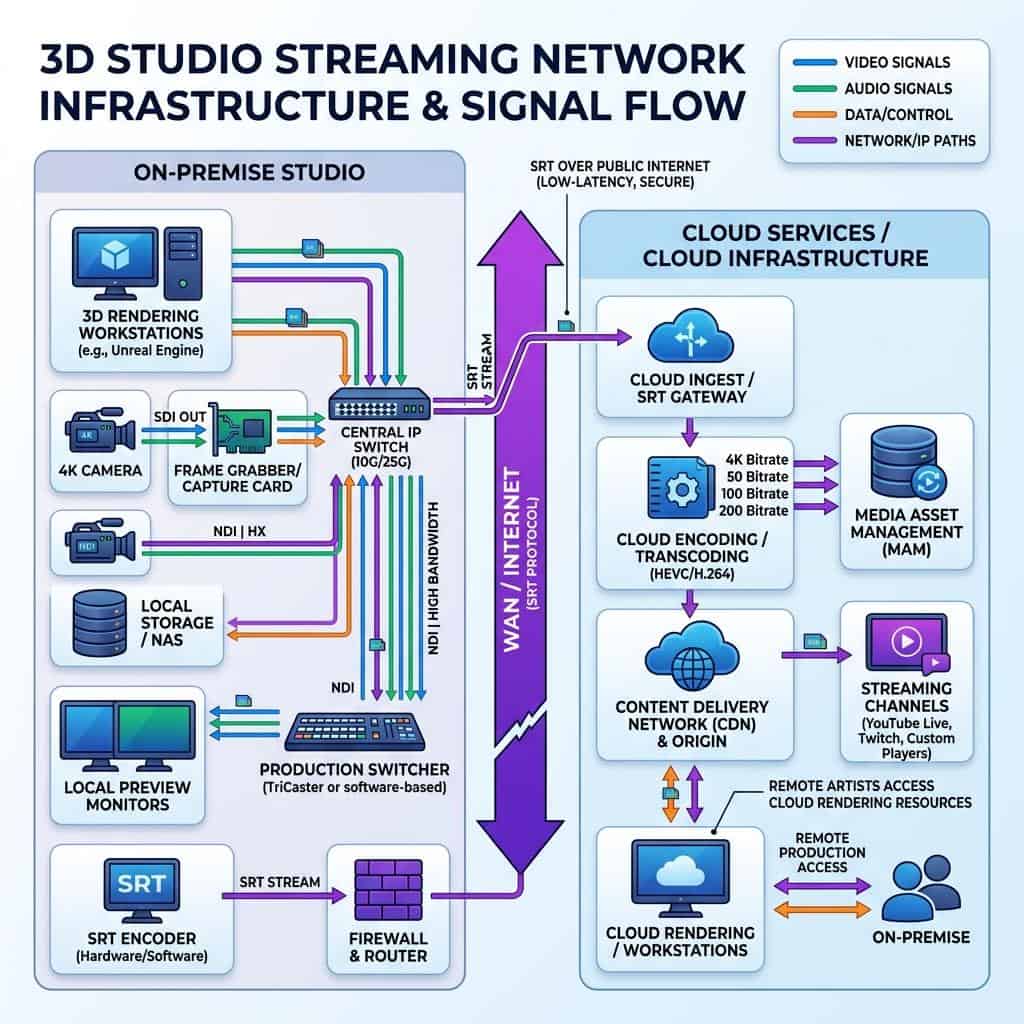
- Virtual Cameras: Using NDI (Network Device Interface) for smooth, low-latency video transmission between virtual and physical environments.
- Advanced Lighting and Texturing: To achieve realism, lighting, and texturing must align closely with the objectives of a corporate setting.
- Dynamic Interactivity: Allows user inputs to alter aspects of the event space, creating a personalized experience.
3D Studios and Engagement Metrics
Quantitative analysis attributes a threefold increase in engagement to the implementation of 3D studios. The metrics are rooted in psychological immersion—the degree to which attendees feel integrally part of the event. Research highlights:
Increased Viewer Retention
Viewers are more likely to stay longer during broadcasts that utilize 3D environments. This is facilitated by enhanced content dynamism, where continual visual interest reduces perceived time, resulting in lengthier session durations.
Higher Interaction Rates
Through interactive polls and Q&A sessions embedded within the 3D studio interface, engagement spikes as users feel their contributions shape the event’s direction.
Implementing 3D Studios in Hybrid Events
Enterprise IT teams and production managers can seamlessly integrate 3D studio technology into existing frameworks. By employing cloud-based solutions paired with high-speed network infrastructure, hybrid events can be executed with high reliability and minimal latency.
Network Infrastructure and Protocols
Effective deployment relies on robust network architectures:
- Secure Reliable Transport (SRT): For dependable low-latency streaming.
- Real-Time Messaging Protocol (RTMP): Widely adopted for efficient data routing and live broadcast.
- SDI (Serial Digital Interface): Ensures high-definition video transfers are synchronised across devices.
Technical Implementation Steps:
- Employing high-bandwidth dedicated circuits to mitigate buffering issues.
- Adopting scalable cloud-based encoding and decoding services.
- Leveraging SMPTE (Society of Motion Picture and Television Engineers) standards for video and audio interoperability.
Scalability and Quality Assurance
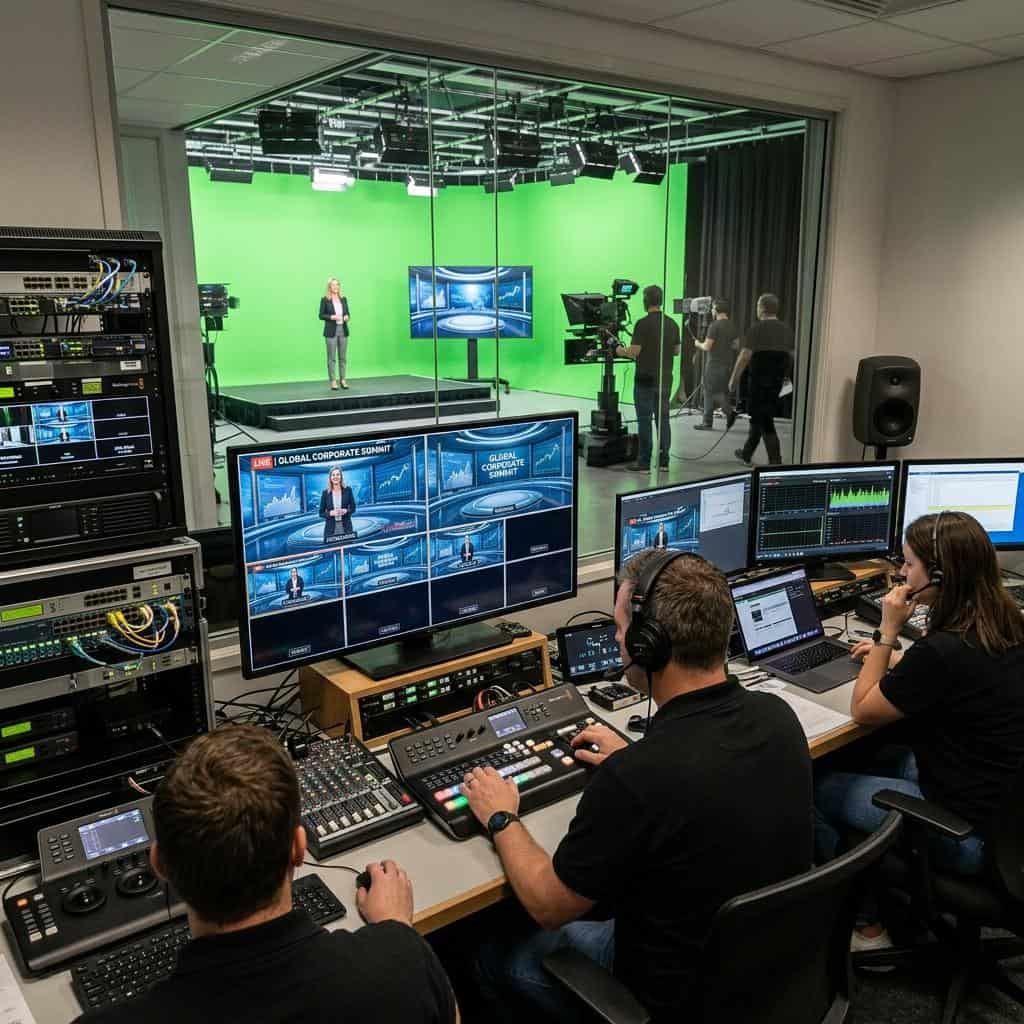
For corporate events, scalability remains a pressing challenge. 3D studios efficiently scale, accommodating thousands of virtual attendees without degrading quality. This is achieved through scalable encoding practices and cloud-based streaming solutions.
Quality of Service (QoS) Strategies
Ensuring consistent quality involves:
- Redundancy in network equipment and pathways.
- Intelligent bitrate management to adjust dynamically based on audience bandwidth conditions.
- Comprehensive failover mechanisms to switch seamlessly between cloud and on-premise servers.
Conclusion: Transforming Engagement with 3D Studios
Adopting 3D studio technology can transform corporate streaming events by not only enhancing visual appeal but also significantly increasing engagement metrics. Businesses looking to leverage such innovations must consider adequate infrastructure investments, protocol adoption, and rigorous quality assurance practices to maximize the value delivered to stakeholders.
For more information on integrating 3D studio technology into your hybrid events, consult Live Streaming Studio’s comprehensive guides and professional consulting services.

Michael Koh is a production specialist and entrepreneur who founded Spring Forest Studio in 2017 to provide event and virtual production solutions in Singapore. He specialises in hybrid live streaming, XR (Extended Reality) virtual production, and studio systems integration, transitioning the business from traditional videography to advanced corporate broadcasting. Operating out of a dedicated facility at NordCom2 in Singapore, he leads a technical crew to deliver multi-camera webcasts, digital sets, and technical consultations for large-scale corporate events.