
Singapore’s corporate event sector is under increasing pressure to reduce emissions, improve resource efficiency, and demonstrate measurable environmental performance without compromising production quality. For enterprise meetings, shareholder briefings, product launches, town halls, and regional conferences, hybrid event production has become a practical sustainability strategy because it reduces travel demand, consolidates venue utilization, and enables centralized technical operations with lower material waste. The challenge for AV professionals and production managers is to implement hybrid architectures that are not only reliable and high quality, but also energy conscious, scalable, and aligned with corporate ESG reporting requirements.
From a technical perspective, hybrid sustainability is not simply about replacing audience seats with a video stream. It is about optimizing the full signal chain, from camera acquisition and audio capture to encoding, transport, distribution, replay, and post-event asset reuse. In Singapore, where venue power density, network reliability, and enterprise governance standards are all high, hybrid event design must account for efficient infrastructure choices, protocol selection, equipment load, and operational planning. A sustainable hybrid production reduces avoidable truck rolls, minimizes on-site hardware duplication, lowers power consumption through right-sized systems, and creates reusable digital assets that extend event value beyond the live session.
For corporate event planners and IT stakeholders, the sustainability case becomes stronger when hybrid systems are engineered with broadcast discipline. That means selecting the correct transport protocol, specifying realistic bitrates, managing latency targets, implementing redundancy, and integrating cleanly with enterprise collaboration platforms such as Microsoft Teams, Zoom, and Webex. It also means understanding that sustainability and technical quality are not opposing goals. When a hybrid workflow is designed correctly, the same infrastructure can deliver lower carbon impact, better audience reach, and stronger operational control.
Why Hybrid Production Supports Corporate Sustainability Targets in Singapore
Singapore’s corporate environment places strong emphasis on carbon accountability, operational efficiency, and digital transformation. Hybrid events support these priorities by reducing the emissions associated with attendee travel, especially for regional meetings where stakeholders would otherwise fly in for a single-day conference. For multinational companies with APAC headquarters in Singapore, this is particularly relevant. A hybrid format allows executive teams, subject matter experts, and remote delegates to participate without unnecessary physical movement, while the core production remains centralized at a venue, studio, or enterprise office.
Reduced travel, lower venue load, and fewer material inputs
Travel reduction is the most visible sustainability benefit, but the technical gains extend further. Hybrid events often require fewer printed materials, fewer physical staging elements, fewer temporary AV rentals, and less waste from single-use signage and event décor. When paired with digital registration, e-programs, real-time polling, and on-demand playback, the event lifecycle becomes substantially more efficient. In Singapore, where many venues operate in dense commercial districts and logistics are tightly scheduled, reducing in-person footprint also lowers the frequency of courier runs, catering overage, and emergency equipment swaps.
On the production side, sustainable hybrid design also means consolidating resources. A well-built control room can support multiple sessions with reusable camera systems, switchers, playback devices, and audio infrastructure. Instead of deploying redundant gear to every room, production teams can standardize on a repeatable signal architecture. This reduces transport emissions, packing waste, and the energy cost of over-specifying equipment for every event.
ESG reporting and measurable technical efficiencies
Corporate sustainability teams increasingly expect event departments to provide measurable indicators. These can include estimated travel displacement, venue power usage, duration of equipment operation, and reuse rates for digital content. A technically mature hybrid workflow provides the data required for ESG narratives without resorting to unsupported claims. Production logs, encoder statistics, platform analytics, and attendance records can be used to quantify operational efficiency. The most credible sustainability programs are those that connect event design decisions to measurable technical outcomes, such as lower on-site hardware count, reduced encoded output duplication, and lower power draw through efficient codec settings and consolidated routing.
Engineering a Low-Impact Hybrid Event Infrastructure
Technical sustainability starts with infrastructure design. Hybrid events are often inefficient because teams duplicate systems unnecessarily or deploy architectures that are not right-sized for the audience and venue. In enterprise streaming, the key is to build a signal chain that delivers broadcast-grade reliability while avoiding wasteful overprovisioning.
Capture chain design, camera selection, and switching workflow
For most corporate hybrid events, multi-camera coverage remains essential. A typical setup may include a wide master camera, two or more presenter cameras, audience reaction coverage, and optional IMAG or breakout feeds. Cameras can output via SDI, HDMI 2.1, or IP-based transport depending on the production scale. SDI remains highly valued in professional live production because of its locking connectors, robust signal integrity, and predictable latency. HDMI is still common for presentation laptops and compact cameras, but it requires disciplined cable management and is less suited to long runs without conversion.
For production switching, hardware vision mixers with clean switching, keying, downstream key control, and multiview monitoring provide operational stability. In more advanced environments, IP-native switchers or software-defined production platforms can reduce cabling and allow remote production operation. Where sustainability is a priority, the production team should avoid unnecessary parallel systems. A switcher that supports multiple outputs, embedded audio routing, and redundant program feeds can replace several separate boxes and reduce rack power.
Audio transport and intelligibility as a sustainability factor
Audio quality is not only a user experience issue, it is an efficiency issue. Poor intelligibility increases repetition, extends session duration, and creates operational friction across both live and remote audiences. A sustainable hybrid event therefore needs a disciplined audio architecture. This usually includes a digital mixing console, wireless or wired microphones, a dedicated mix-minus for remote participants, and clear routing for program, aux, and communication feeds. In larger environments, audio over IP solutions using Dante or similar networked audio systems can reduce analog cabling bulk and simplify redeployment across rooms.
Talkback systems are also essential. A production team that can coordinate camera operators, audio engineers, and streaming technicians through clear intercom communication avoids wasted time, on-air errors, and post-event troubleshooting. Efficient operation lowers the time equipment stays powered, which contributes directly to lower energy use over the event lifecycle.
Encoding efficiency, bitrate management, and codec selection
The encoding layer has a direct impact on both bandwidth and power efficiency. For enterprise streaming, H.264 remains the most widely compatible codec for meeting platforms and browser delivery, while H.265, also known as HEVC, can provide improved compression efficiency in supported workflows. The choice depends on platform compatibility, available hardware acceleration, and target audience devices. If the stream is distributed to corporate collaboration platforms, H.264 is often the practical default. If the workflow includes controlled distribution or managed playback endpoints, HEVC can reduce transport bandwidth while maintaining visual quality, especially for 1080p and 4K/UHD contribution feeds.
Bitrate management must be based on content complexity, motion level, resolution, and delivery path. A static keynote may tolerate lower bitrates than a product demo with fast camera movement, graphics overlays, and motion-rich screen content. For resilient contribution, SRT, or Secure Reliable Transport, is widely used because it maintains quality across imperfect internet links through packet recovery and latency buffering. RTMP and RTMPS remain common for compatibility with various ingest endpoints, although they are less robust than SRT for unpredictable network conditions. For internal corporate distribution, NDI and NDI|HX are useful for local IP production, especially when paired with managed network switching and isolated VLAN design.
Network Architecture, Redundancy, and Sustainable Reliability
Network design is one of the most overlooked parts of sustainable hybrid production. A system that drops frames, buffers excessively, or requires repeated manual recovery consumes more resources and creates more waste than a properly engineered redundant environment. In Singapore, where enterprise connectivity is generally strong, the goal is not to overbuild indiscriminately. The goal is to create a resilient architecture that uses enterprise network services efficiently.
Primary and backup transport paths
A professional hybrid event should always define a primary contribution path and a separate backup path. The primary path may be a managed internet circuit or venue fiber connection, while the backup can be a secondary ISP, bonded cellular, or alternate venue uplink. SRT is well suited for this model because it supports secure transport, encryption options, and adaptive handling of variable network conditions. RTMPS may still be used as a fallback for platform compatibility, but it should not be the only resilience layer. For mission-critical enterprise events, dual encoders with automatic failover, mirrored recording, and health monitoring are standard practice.
Redundancy also applies locally. Critical devices such as the vision switcher, audio console, network switch, and recorder should be protected with clean power, UPS systems, and thermal management. Overheating and brownout events are avoidable failure modes that create both sustainability waste and operational risk. By engineering stable power delivery and minimizing emergency replacements, teams improve uptime and reduce the likelihood of disposable equipment loss during live operations.
QoS, VLANs, and traffic isolation
For IP-based production, quality of service, or QoS, is essential. Video, audio, control, and general office traffic should not share unmanaged pathways. VLAN segmentation allows production traffic to be isolated from guest internet access and corporate office applications, reducing congestion and packet loss. When NDI, Dante, control surfaces, tally, and intercom services are operating on the same network, proper switch configuration becomes a sustainability measure because it prevents inefficiencies caused by retransmission, troubleshooting time, and session failure.
Network monitoring should include latency, packet loss, jitter, bandwidth saturation, and encoder health. Sustainable operations depend on visibility. When engineering teams can identify bottlenecks before they cause failure, they avoid wasted event time, unnecessary reshoots, and additional power consumption from prolonged troubleshooting.
Cloud, On-Premise, and Hybrid Control Models
There is no universal rule that cloud production is always greener than on-premise production, or vice versa. The more responsible approach is to choose the model that matches the event profile, scale, and governance requirements. In Singapore corporate environments, many events benefit from a hybrid control model where contribution is local, but distribution, archiving, and analytics are partially cloud-based.
On-premise control for high-stakes events
For board meetings, investor communications, regulated industries, and confidential executive briefings, on-premise production remains the preferred choice. Local control offers deterministic latency, stronger data governance, and reduced reliance on external services. In this model, the venue or corporate studio handles switching, encoding, and recording on site, then distributes the output to enterprise-approved endpoints. This approach also enables repeated reuse of the same production assets, reducing setup time and minimizing equipment movement across locations.
Cloud distribution for scale and content reuse
Cloud services are valuable for transcoding, playback distribution, content archiving, and audience analytics. They also support rapid scaling when a Singapore event includes participants across APAC time zones. Cloud-based replay and on-demand hosting extend the life of a corporate event, reducing the need for repeated live sessions. From a sustainability standpoint, a single high-quality live production that can be clipped, indexed, and reused across internal training or stakeholder communication has significantly better resource efficiency than multiple duplicated events.
When integrating with Microsoft Teams, Zoom, or Webex, it is important to treat the platform as part of the distribution chain, not the production core. The cleanest workflow is often to generate a dedicated program feed from the switcher, embed a separate return feed for remote presenters, and provide separate audio mixes for virtual and in-room audiences. This reduces echo, simplifies moderation, and prevents over-engineering the platform layer.
Operational Recommendations for Sustainable Corporate Hybrid Events
Enterprise clients in Singapore can implement a more sustainable hybrid strategy by standardizing production architecture and treating every event as a repeatable technical system. The following recommendations improve both environmental performance and broadcast reliability.
- Use modular production kits with reusable camera, switcher, intercom, and encoding packages to reduce transport and re-rigging.
- Specify the lowest practical resolution and bitrate that still meets audience quality requirements, usually 1080p for most corporate events, with 4K/UHD reserved for premium use cases.
- Choose SRT for contribution over variable networks, and use RTMP or RTMPS only where platform compatibility requires it.
- Design dedicated audio routing for program, remote return, and communication feeds, with clear mix-minus architecture.
- Isolate production traffic on managed switches with VLANs and QoS settings to protect media flows from office congestion.
- Deploy UPS-backed power and redundant ingest paths for events that cannot tolerate interruption.
- Record ISO feeds where post-production, compliance review, or training reuse is expected, so the event can serve multiple business functions.
- Plan content reuse from the beginning, including lower-third templates, chapter markers, clipped highlights, and archive distribution.
For Singapore organizations, sustainable hybrid production is now a strategic capability rather than a tactical compromise. The most effective systems are built on broadcast-grade fundamentals, including disciplined signal flow, reliable synchronization, efficient transport protocols, and operational redundancy. When these elements are combined with thoughtful sustainability planning, corporate events become more efficient, more measurable, and more aligned with enterprise green goals.
The result is a hybrid model that serves both business continuity and environmental responsibility. It reduces unnecessary travel, increases audience reach, supports ESG reporting, and creates a reusable content library that continues to generate value after the live session ends. In a market like Singapore, where technical standards are high and corporate expectations are rigorous, that is the benchmark for modern event production.
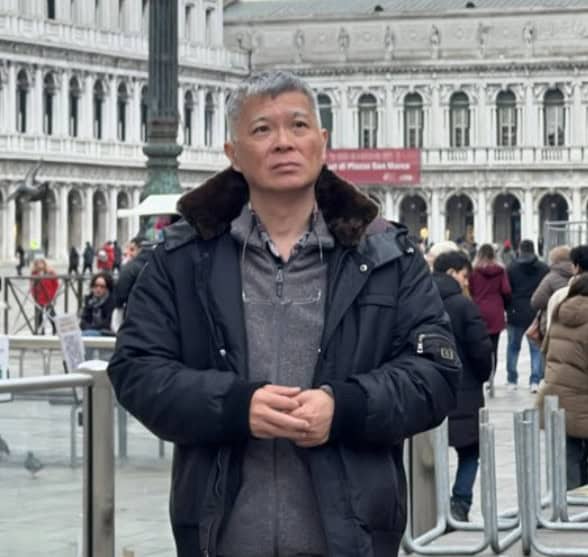
Michael Koh is a production specialist and entrepreneur who founded Spring Forest Studio in 2017 to provide event and virtual production solutions in Singapore. He specialises in hybrid live streaming, XR (Extended Reality) virtual production, and studio systems integration, transitioning the business from traditional videography to advanced corporate broadcasting. Operating out of a dedicated facility at NordCom2 in Singapore, he leads a technical crew to deliver multi-camera webcasts, digital sets, and technical consultations for large-scale corporate events.