
The Role of Unreal Engine in B2B Event Streaming
The integration of Unreal Engine in professional B2B event streaming has transformed how enterprises approach real-time interaction. By providing a dynamic framework for creating highly interactive visual content, Unreal Engine is standing at the forefront of hybrid production technology, enabling seamless experiences for both physical and virtual audiences. With industry-standard protocols such as RTMP and SRT, Unreal Engine facilitates the creation of engaging real-time environments that drive audience engagement and satisfaction.
Live Production Technology and Workflows
Implementing Multi-Camera Setups
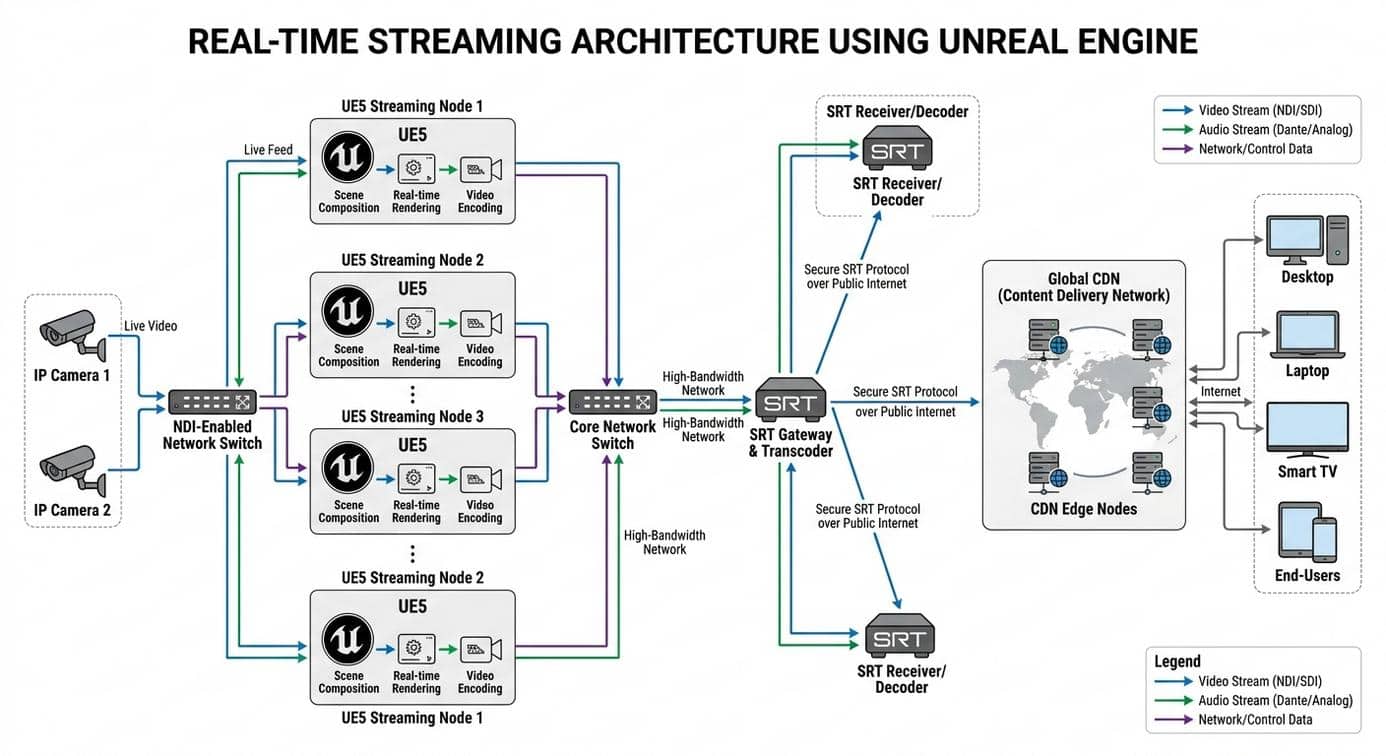
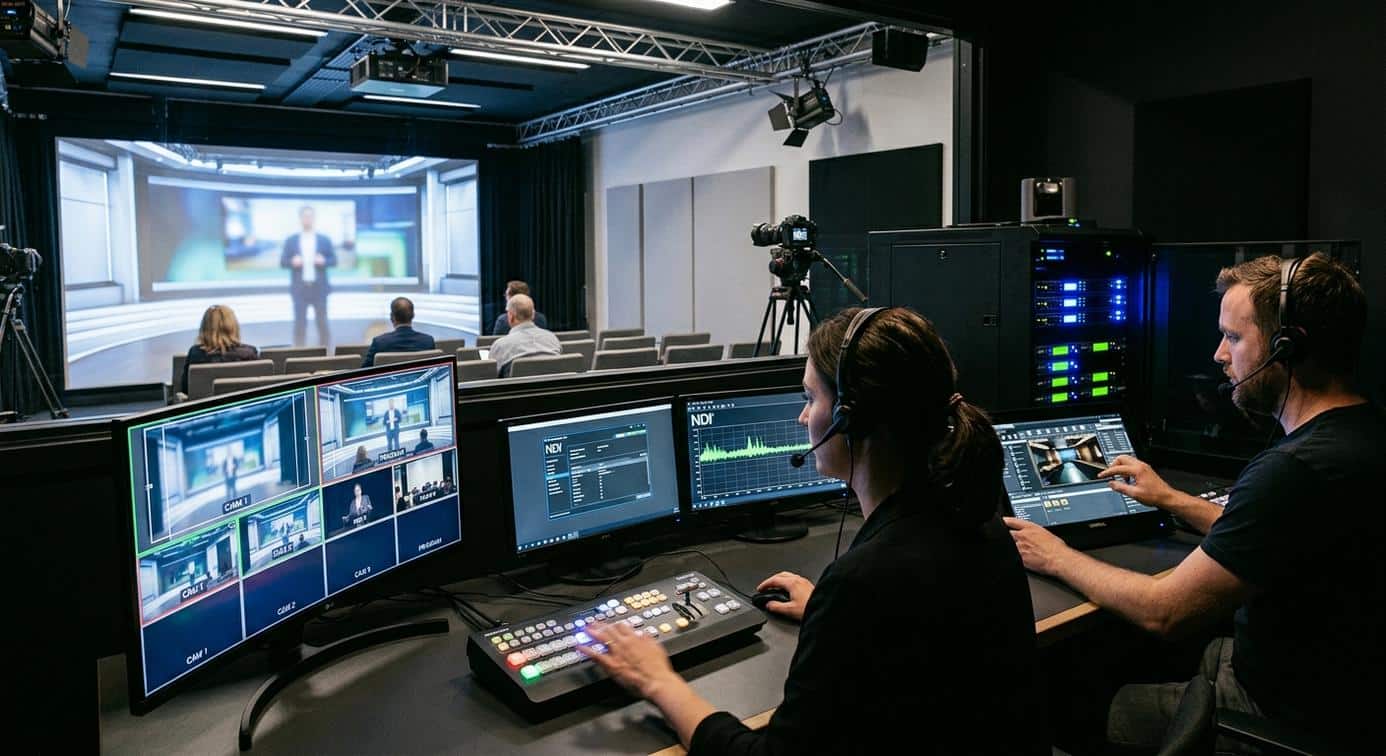
The real-time capabilities of Unreal Engine allow multiple camera angles and live switching with low latency. The integration of NDI | HX allows for high-quality video transmission over IP networks, essential for large venues where traditional cabling may be cumbersome. Cameras equipped with SDI outputs can seamlessly integrate into the production workflow, ensuring high-quality feeds are delivered without signal degradation.
Real-Time Rendering and Graphics
By leveraging Unreal Engine’s advanced rendering capabilities, event producers can integrate real-time graphics that interact dynamically with live video feeds. This technology is particularly beneficial in hybrid events where both in-person and online audiences need to see consistent and synchronized visual content.
Streaming Infrastructure and Protocols
Enterprise-Grade Streaming Protocols
RTSP and HLS are frequently used in conjunction with Unreal Engine for streaming, providing robust solutions for adaptive bitrate streaming that optimizes viewer experience across multiple devices. Secure Reliable Transport (SRT) ensures that streaming content remains uninterrupted even in challenging network conditions.
Network and Encoding Solutions
Efficient network management is critical when working with Unreal Engine in live event streaming. Bandwidth management tools help prevent network congestion, while H.264/H.265 encoding standards ensure that high-resolution visuals are maintained without excessive bandwidth consumption. Implementing a robust content delivery network (CDN) further guarantees worldwide distribution with minimal latency.
Integration with Enterprise Platforms
Seamless Hybrid Event Experiences
Unreal Engine’s compatibility with platforms like Microsoft Teams and Zoom enables seamless integration into corporate IT ecosystems. By providing attendees with an interactive and immersive experience, companies can foster a more engaging atmosphere, regardless of the audience’s physical location.
Scalability and Redundancy
Scalability is a paramount consideration in large-scale corporate events. The architecture of Unreal Engine supports expansion to accommodate thousands of concurrent viewers. Implementing load-balanced server clusters and employing redundancy strategies ensures stable and reliable streaming experiences even under heavy traffic.
Guidelines for Implementation
For enterprises looking to employ Unreal Engine in their streaming production, several steps can ensure success. Begin with a thorough assessment of networking capabilities to support real-time data flow. Utilize professional equipment that supports necessary protocols and integrate redundancy at multiple levels to safeguard against failures. Finally, engage with professional streaming services to refine the production workflow for maximum reliability and quality.
By adhering to these guidelines, organizations can leverage Unreal Engine to revolutionize their live event streaming, delivering cutting-edge interactive experiences to both in-person and virtual audiences.
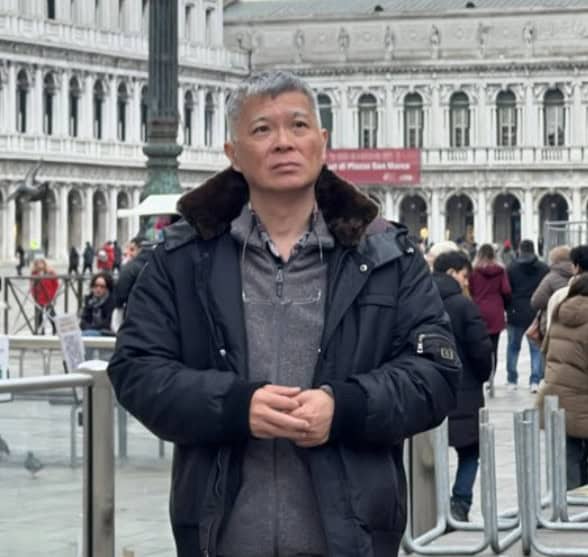
Michael Koh is a production specialist and entrepreneur who founded Spring Forest Studio in 2017 to provide event and virtual production solutions in Singapore. He specialises in hybrid live streaming, XR (Extended Reality) virtual production, and studio systems integration, transitioning the business from traditional videography to advanced corporate broadcasting. Operating out of a dedicated facility at NordCom2 in Singapore, he leads a technical crew to deliver multi-camera webcasts, digital sets, and technical consultations for large-scale corporate events.