
Luxury wedding streaming is not a camera pointed at a ceremony and a microphone near the aisle. It is a live production environment that combines multi-camera acquisition, disciplined audio engineering, resilient network transport, and client-facing editorial judgment under strict timing constraints. For corporate event planners, AV professionals, production managers, and enterprise decision-makers, the same standards that govern high-stakes hybrid conferences apply here, especially when the client expects a flawless experience for remote guests across multiple geographies, devices, and network conditions.
The wedding director functions as the technical and editorial control point of the entire live workflow. In a luxury environment, that role sits between the event producer, the camera operators, the audio engineer, the streaming engineer, and the venue operations team. The director is responsible for shot continuity, talent visibility, ceremony coverage, latency control, cue synchronization, backup routing, and quality assurance across the program feed. Without that professional eye, even a technically capable streaming stack can produce an output that feels disjointed, misses key emotional moments, or fails under load when the event reaches its most critical segment.
For enterprise clients, the relevance is immediate. A wedding may appear outside the usual scope of B2B streaming, but the infrastructure challenges are identical to those faced in executive town halls, private investor sessions, medical conferences, and global hybrid events. There are cameras to color match, audio sources to mix, redundant paths to maintain, and an audience that expects broadcast-grade polish. The difference is that the emotional stakes are higher, the pacing is less forgiving, and the visual composition must preserve intimacy while meeting technical standards associated with professional live production.
Why the Director Is the Control Layer in Luxury Live Production
In any multi-camera event, the director is the real-time decision engine. That person interprets the ceremony flow, monitors framing, selects the most appropriate source, and coordinates with the technical crew to maintain continuity. In a luxury wedding stream, the director is also responsible for preserving the visual narrative, which means understanding how to transition between wide establishing shots, medium coverage, close-ups, and reaction shots without creating abrupt visual discontinuity.
Shot selection, pacing, and story continuity
Professional live direction is not random switching. It is a structured editorial process executed in real time. The director anticipates the officiant’s cues, the couple’s movement, and the timing of vows, ring exchange, and recessional. A strong program feed typically balances long-lens emotional coverage with wider safety shots, especially when the ceremony space includes architectural constraints, restricted camera positions, or low-light conditions that limit mobility.
This becomes particularly important when the stream is being delivered to remote guests over enterprise platforms such as Microsoft Teams, Zoom, or Webex. Those platforms impose their own compression and conferencing behaviors, so the source feed must be clean, stable, and visually legible before it enters the platform encoder. The director ensures the program feed is composed for downstream compression, which means avoiding excessive motion, uncontrolled zooms, or poorly lit frames that degrade under H.264 or H.265 encoding.
Director communication and cue discipline
The wedding director also manages talkback systems, intercoms, and cueing among camera operators, audio, graphics, and streaming staff. In professional workflows, this communication often runs through wired or matrix-based intercom systems with dedicated channels for director to camera, director to audio, and director to engineering. This is critical when a ceremony is live and unscripted, because operator timing must align with the production plan without distracting the talent or the venue staff.
For enterprise-grade events, cue discipline reduces avoidable errors. That includes confirming when the stream is live, verifying slate and test patterns before transmission, coordinating transitions from pre-show holding content to the live ceremony, and monitoring any platform-side ingestion delays. A director with technical fluency can recognize when a problem originates in acquisition, encoding, contribution transport, or platform distribution, which shortens incident response and prevents cascading failures.
Production Architecture for a Luxury Wedding Stream
A luxury stream requires a production chain that is engineered end to end. The signal path typically begins at camera acquisition, passes through routing and switching, enters the encoder stack, and is then delivered via contribution transport to a cloud or platform ingest point. Each stage must be specified for reliability, color fidelity, audio integrity, and minimal latency.
Multi-camera acquisition and switching systems
Professional coverage usually starts with at least three camera perspectives, often more for large venues or complex ceremony layouts. A common configuration includes a locked-off wide master, a medium shot covering the couple and officiant, and a roaming or telephoto angle for emotional close-ups. In higher-end productions, additional cameras capture guest reactions, venue architecture, or secondary ceremony positions. Cameras may feed the switcher via SDI, HDMI 2.1, or networked video using NDI or NDI|HX, depending on distance, infrastructure, and latency tolerance.
SDI remains a preferred standard in many professional environments because of its reliability, locking connectors, and predictable signal behavior over long cable runs with proper infrastructure. HDMI 2.1 can support high-resolution camera sources, but it is more common in short-run, controlled setups. NDI, which is based on IP video transport, is useful in managed network environments and allows greater routing flexibility, especially when integrating remote or distributed camera positions. For mission-critical events, the director must understand the operational tradeoffs among these options, including bandwidth overhead, network segmentation, and the impact of packet loss on live switching.
Program feed versus ISO recording
Enterprise production teams often separate the live program feed from isolated source recordings, known as ISO recordings. The program feed is the live switched output, the version seen by remote attendees. ISO recordings preserve each camera individually, which is essential for post-event editing, compliance review, archival documentation, and highlight reel creation. In wedding production, ISO capture also supports recovery if a critical live shot fails or if a client later requests alternate editorial coverage.
A competent director works with the engineering team to ensure the switcher and recording architecture support both outputs without introducing unacceptable latency or storage bottlenecks. This may involve dedicated recording devices, redundant recording paths, or a workflow that captures the program and each camera feed separately at an appropriate bitrate and resolution. For 1080p production, many teams maintain acquisition and recording at 25 or 30 frames per second, while 4K/UHD workflows require greater storage, higher bandwidth, and more disciplined monitoring of thermal and network performance.
Color, exposure, and visual consistency
Luxury clients expect a coherent visual identity. That means matching white balance, exposure, and color response across cameras, especially when mixing different manufacturers or sensor sizes. The director frequently collaborates with the shading operator or camera control unit workflow to maintain a consistent look across the live feed. When a venue contains mixed lighting, such as daylight from windows combined with tungsten or LED practicals, color management becomes critical. Incorrectly balanced cameras create visible shifts in skin tone and dress color, which become more obvious after compression.
Where appropriate, the production should follow broadcast-friendly color workflows based on Rec. 709 or, when the infrastructure supports it, HDR-aware acquisition and management. Even when the final output remains SDR, disciplined color control produces a cleaner stream and improves perceived production value. The director must know when to preserve the ambience of the venue and when to prioritize exposure for faces and ceremonial action.
Audio Engineering and Signal Flow for Uncompromising Clarity
Audio often determines whether a luxury stream feels professional or amateur. A visually attractive feed with poor intelligibility fails the audience immediately. The wedding director does not replace the audio engineer, but the director must understand the audio chain well enough to coordinate with it, because lip sync, mic placement, gain structure, and mix decisions all affect the final program feed.
Microphone topology and mix priorities
A typical ceremony audio plan includes lavalier microphones on the officiant and, where appropriate, the couple, plus ambient microphones to capture room tone and guest response. Depending on venue layout and permit restrictions, additional boundary microphones or podium feeds may be used. The key is to maintain a clean speech path while preserving enough ambience to avoid an artificially isolated soundstage.
Audio is usually routed through a digital mixer with scene recall, dynamics processing, EQ, and auxiliary sends for stream and in-room monitoring. The director should understand when to prioritize direct speech over ambient pickup, particularly during vows, readings, and formal announcements. Proper gain staging should maintain headroom without raising the noise floor, and the final stream mix should be monitored on calibrated speakers and closed-back headphones to detect clipping, RF interference, or phase issues.
Lip sync and latency management
In live streaming, audio and video latency must remain aligned from capture to delivery. If the workflow includes network transport over SRT, Secure Reliable Transport, or RTMP, Real-Time Messaging Protocol, the director and engineer must account for buffering, encoder delay, platform ingest delay, and conferencing platform latency. A mismatch between the spoken word and the lip movement immediately undermines quality. Standard correction tools include frame delay adjustment in the switcher, audio delay in the mixer or encoder, and workflow tuning to reduce end-to-end lag.
For hybrid delivery, the goal is not merely low latency, but predictable latency. Remote attendees do not need sub-100 ms performance in most wedding contexts, but they do need stable synchronization and consistent playback across the audience. That consistency is especially important when the stream is routed into Teams, Zoom, or Webex for private attendance, since those platforms introduce their own buffering and processing behavior.
Network Infrastructure, Encoding, and Redundancy
Luxury streaming depends on network engineering as much as creative direction. A director operating without a resilient network plan is managing risk blind. The venue may have excellent aesthetics, but if the uplink is unstable, congested, or undersized, the live output will suffer regardless of camera quality.
Bandwidth planning and contribution transport
Enterprise live streaming should start with a measured assessment of upstream capacity, packet loss, jitter, and available failover. For a single 1080p program feed encoded in H.264, bitrate targets are often selected based on motion complexity and platform requirements rather than theoretical maximums. 4K/UHD workflows demand significantly more capacity and are more sensitive to encoder load, especially when multiple sources or overlays are used. The production team should perform pre-event network tests on the actual venue circuit and, where possible, use a dedicated bonded cellular or secondary internet path as backup.
SRT has become a standard choice for contribution because of its resilience to packet loss and its ability to operate more predictably over unmanaged networks than traditional unprotected UDP workflows. RTMP remains widely supported for ingest compatibility, particularly in legacy or platform-specific workflows, while RTMPS adds transport security. The production decision should be based on destination requirements, network conditions, and the tolerance for latency. A director familiar with these protocols can make better operational choices when changing delivery paths during an event.
Cloud-based versus on-premise streaming control
Cloud production offers geographic flexibility, remote monitoring, and scalable distribution, while on-premise systems provide direct control, reduced dependency on external orchestration, and predictable local signal routing. In luxury wedding production, hybrid architectures are common. The local crew handles acquisition, switching, and primary encoding, while cloud tools may be used for monitoring, backup distribution, or remote graphics insertion. This mirrors enterprise hybrid event practice, where control is kept local but delivery is extended outward through managed platforms.
The director’s role is to understand how each layer affects the viewer experience. Cloud workflows can simplify collaboration, but they also introduce additional points of failure, including login access, service outages, and platform-specific ingest constraints. On-premise systems offer more deterministic performance, but they require deeper local engineering support and redundant hardware planning. The strongest deployments combine both, using a primary local production chain and a secondary contingency route for event continuity.
Failover strategy and operational resilience
Professional redundancy should exist at every critical layer, including power, encoding, network transport, and recording. This can include uninterruptible power supplies for core devices, a secondary encoder ready for immediate switchover, dual internet paths, and backup recording on independent hardware. The director must know the failover sequence before the event starts. If the primary switcher fails, if the stream key changes, or if the uplink drops, the team needs an immediate rollback path that preserves the ceremony without visible panic.
Operational resilience also includes monitoring. Multiview monitoring should expose all active camera feeds, the program output, audio meters, encoder status, and transmission health. The director or technical producer can use this view to detect framing errors, sync drift, dropped frames, or unexpected source changes before the audience notices them. In a luxury context, this monitoring discipline is not optional. It is the mechanism that protects both brand perception and client trust.
Why Luxury Events Need Director-Led Technical Judgment
In premium live production, equipment alone does not create quality. The decisive factor is how those systems are operated under pressure. A wedding director brings the editorial judgment needed to interpret the event correctly, the technical awareness required to protect the signal chain, and the communication discipline necessary to coordinate every operator in real time. For enterprise clients, this is the same reason broadcast-trained personnel are preferred for high-value hybrid events. The technology can be state of the art, but without professional oversight, the output remains vulnerable to human error, poor timing, and inconsistent quality control.
For organizations evaluating live streaming vendors, the practical question is not whether the provider owns cameras or encoders. The question is whether the provider understands production as an integrated system, from audio capture to protocol selection to audience delivery. A director with broadcast literacy can shape the event into a coherent program feed, manage contingency without disruption, and deliver an experience that reflects the client’s standard of excellence.
In Singapore and across other high-expectation business markets, this level of execution is especially important because premium events are judged against a regional benchmark of precision, reliability, and presentation quality. Whether the live stream serves a private family celebration or a corporate hybrid showcase, the engineering logic remains the same. The best results come from disciplined planning, redundant infrastructure, accurate signal management, and a professional director who treats every frame, every audio source, and every transition as part of a controlled live system.
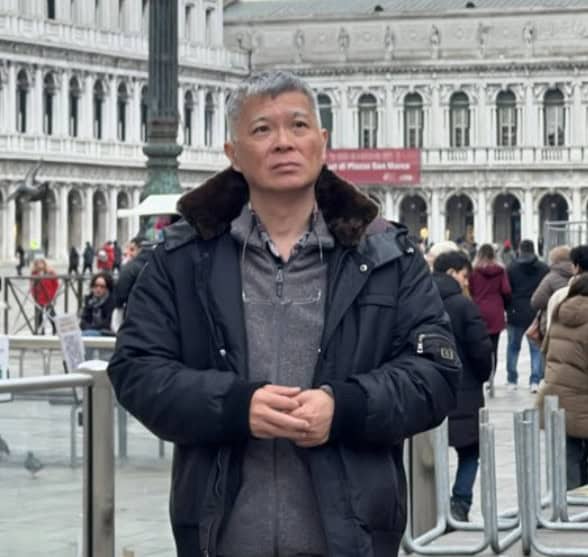
Michael Koh is a production specialist and entrepreneur who founded Spring Forest Studio in 2017 to provide event and virtual production solutions in Singapore. He specialises in hybrid live streaming, XR (Extended Reality) virtual production, and studio systems integration, transitioning the business from traditional videography to advanced corporate broadcasting. Operating out of a dedicated facility at NordCom2 in Singapore, he leads a technical crew to deliver multi-camera webcasts, digital sets, and technical consultations for large-scale corporate events.