
Introduction to Unreal Engine in B2B Event Streaming
In the rapidly evolving landscape of professional event streaming, Unreal Engine has emerged as a groundbreaking tool in revolutionizing B2B streams, particularly within the vibrant Singaporean market. With a robust suite of features, Unreal Engine elevates the production quality and visual storytelling of live events, transforming traditional methods into immersive experiences. This technical deep dive explores the pivotal role of Unreal Engine in addressing the challenges of hybrid event production, offering unprecedented visual fidelity and real-time rendering capabilities that meet the high expectations of corporate clients.
Advanced Visual Fidelity and Real-Time Rendering
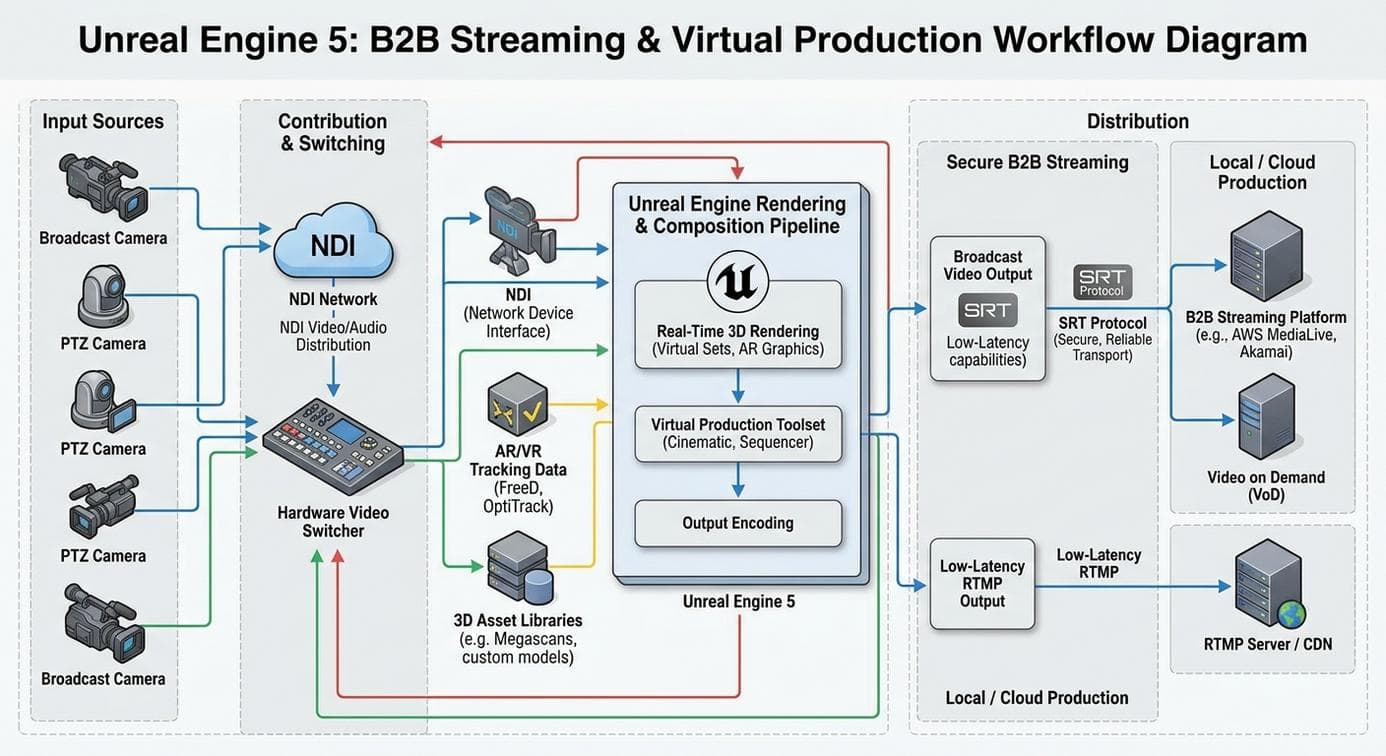
One of Unreal Engine’s distinct advantages is its ability to deliver high-quality, real-time rendering, which is crucial for live productions. Utilizing powerful rendering technologies, it achieves photorealistic scenes that enhance visual immersion, a critical factor in engaging virtual and physical audiences alike. This section examines the integration of Unreal Engine’s rendering pipeline with standard streaming protocols like RTMP (Real-Time Messaging Protocol) and SRT (Secure Reliable Transport), which ensures seamless delivery across varied platforms.
Hybrid Production Workflows and Infrastructure
Hybrid events necessitate a seamless integration between physical and virtual aspects, demanding robust infrastructure and dynamic production workflows. Unreal Engine supports this through its NDI (Network Device Interface) compatibility, facilitating efficient video signal distribution. This section delves into the networking requirements, audio/video signal flow, and routing architectures that leverage Unreal Engine to ensure synchronized production while maintaining quality and minimizing latency.
Scalability and Flexibility
Adopting Unreal Engine allows production teams to scale their efforts efficiently, adapting to varying event sizes without sacrificing performance. This flexibility is supported by both cloud-based and on-premises solutions, enabling tailored deployments that cater to specific enterprise needs. Technical insights into the network bandwidth necessities and encoding choices (like H.264 vs. H.265) are critically examined in this context.
Integration with Enterprise Platforms
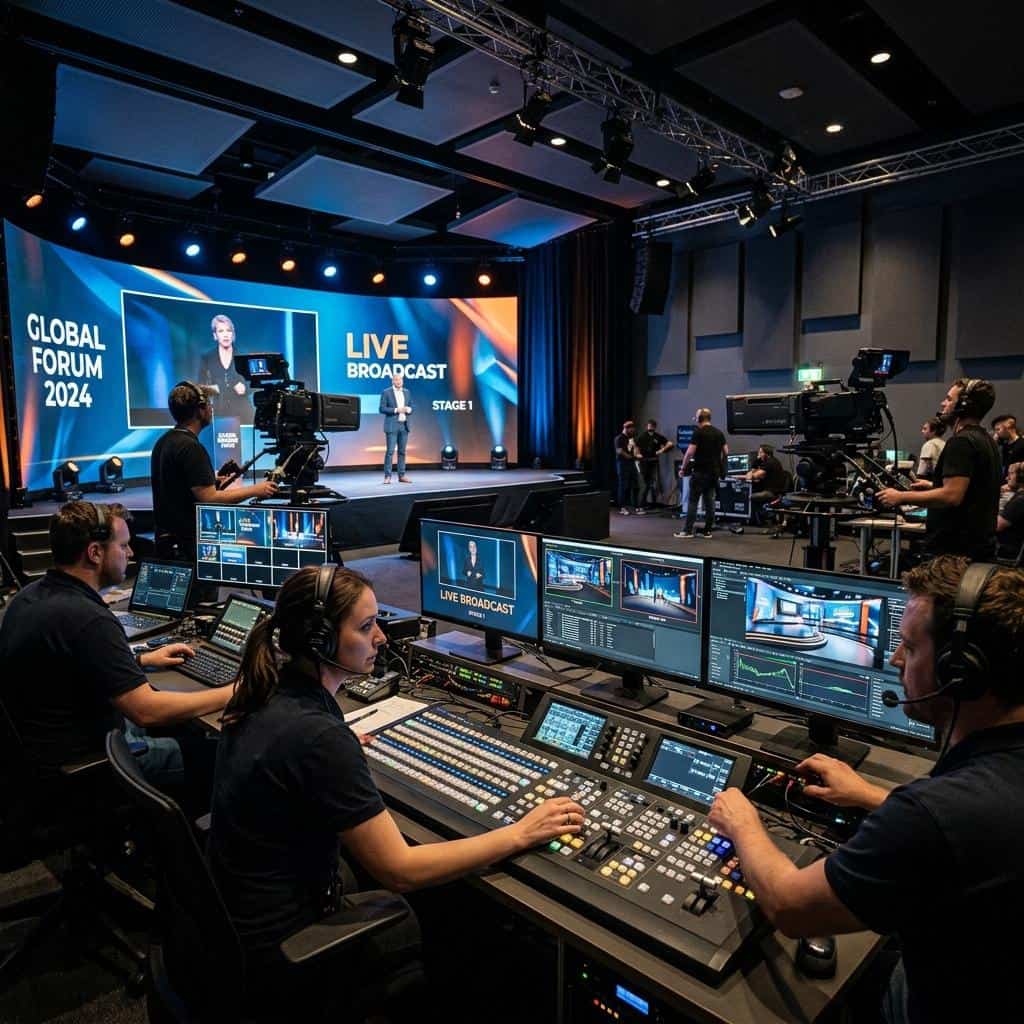
Unreal Engine’s capability to integrate with popular enterprise platforms such as Microsoft Teams, Zoom, and Cisco Webex is essential for hybrid event success. This section explores the technical specifics of connecting Unreal Engine-driven visuals with these platforms, ensuring compatibility and smooth operations. Emphasizing SMPTE (Society of Motion Picture and Television Engineers) standards, this integration is discussed in the context of professional broadcast specifications.
Recommendations for Implementation
For enterprises looking to enhance their streaming and production capabilities, adopting Unreal Engine requires strategic planning and investment in suitable hardware and network infrastructure. Key recommendations include utilizing SDI (Serial Digital Interface) for camera connections, optimizing encoding settings for chosen protocols, and adopting redundancy strategies for failover protection. The article concludes by reinforcing Unreal Engine’s transformative potential in achieving unreal results for corporate event streaming in Singapore.

Michael Koh is a production specialist and entrepreneur who founded Spring Forest Studio in 2017 to provide event and virtual production solutions in Singapore. He specialises in hybrid live streaming, XR (Extended Reality) virtual production, and studio systems integration, transitioning the business from traditional videography to advanced corporate broadcasting. Operating out of a dedicated facility at NordCom2 in Singapore, he leads a technical crew to deliver multi-camera webcasts, digital sets, and technical consultations for large-scale corporate events.