
Introduction: The Future of Corporate Keynotes
The emergence of Extended Reality (XR) technology has revolutionized the landscape of corporate events, especially in delivering compelling and immersive virtual keynotes. For corporate event planners and production managers, XR offers the unparalleled ability to transport a CEO or any executive into virtually any environment, providing an innovative way to engage audiences. The integration of live streaming protocols like RTMP (Real-Time Messaging Protocol) and SRT (Secure Reliable Transport) with advanced production technologies creates seamless hybrid event experiences. Understanding how to implement these technologies in a B2B setting is crucial for achieving success.
XR Technology in Live Event Production
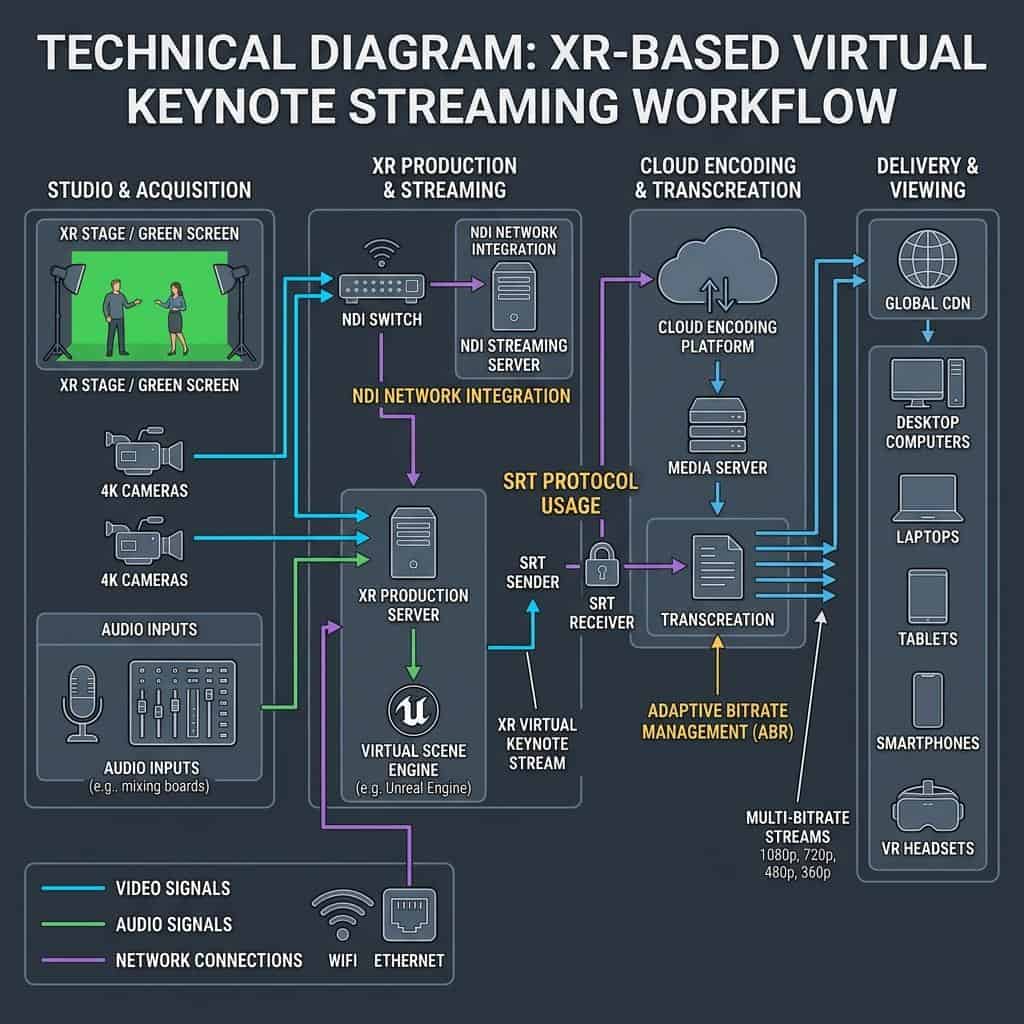
Incorporating XR into live event production allows for the creation of hyper-realistic environments. Utilizing tools such as Unity and Unreal Engine, production studios can craft virtual stages that provide dynamic backdrops, enhancing audience engagement. These virtual environments are often integrated with professional-grade equipment including 4K/UHD cameras and NDI|HX (Network Device Interface|High Efficiency) network protocols for optimal video transmission. This setup requires comprehensive knowledge of signal routing and video switching systems to maintain effective broadcasts.
Hybrid Streaming Infrastructure: Bridging Physical and Virtual
The infrastructure behind hybrid events involves a combination of on-premise and cloud-based solutions. On-premise setups typically involve using SDI (Serial Digital Interface) for robust video and audio signal transmission, while cloud-based platforms facilitate scalability. Enterprises lean towards platforms like AWS or Azure for cloud encoding and distribution. For IT directors, understanding bandwidth requirements and latency management, often within 100-200 ms range, is essential for maintaining quality of service.
Enterprise-Grade Streaming Protocols and Best Practices
Employing enterprise-grade streaming protocols like MPEG-DASH and HLS ensures high-quality video delivery across diverse network conditions. These protocols allow for adaptive bitrate streaming, maintaining visual quality by adjusting to the available bandwidth. Bitrate management, especially in corporate settings where secure data flow is crucial, is managed through advanced encoding standards such as H.264 or H.265, depending on whether low latency or high efficiency is prioritized.
Multi-Camera Production Setups and Workflow Optimization
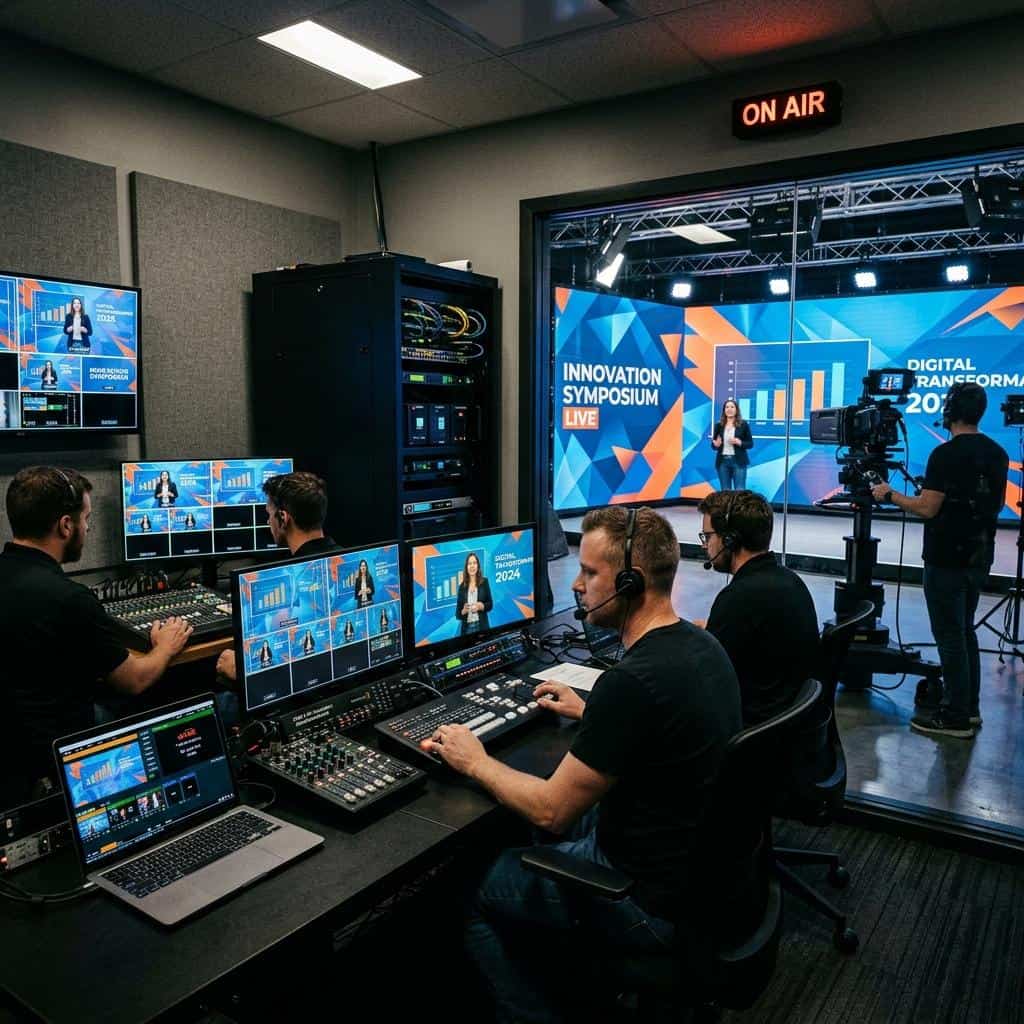
Implementing a multi-camera production setup involves not only positioning and calibrating multiple cameras but also integrating a live video switching system to manage the feed from various angles. Professional equipment such as ATEM switchers provide the capability to manage complex shoots effectively. Audio/video synchronization, integral for maintaining coherent broadcasts, is achieved through SMPTE (Society of Motion Picture and Television Engineers) standards.
Audio and Video Signal Flow: Best Practices
Ensuring pristine audio and video quality requires meticulous attention to signal flow. Utilization of professional-grade audio mixers and talkback systems ensures clear communication between crew members during live broadcasts. Video signal routing often incorporates both HDMI 2.1 and SDI connections, chosen based on the distance and resolution requirements. Redundancy in signal paths, a critical aspect of professional streaming, involves employing backup encoders and failover strategies to mitigate potential interruptions.
Conclusion: Embracing XR for Future Events
Virtual keynotes, powered by XR and bolstered by advanced streaming technologies, are poised to redefine corporate events. For AV professionals and enterprise decision-makers, the transition involves not only understanding these advanced technologies but also preparing comprehensive implementation strategies. As we continue to push the envelope of what’s possible in live broadcasting, the integration of XR into B2B streaming represents a transformative shift in corporate communication.
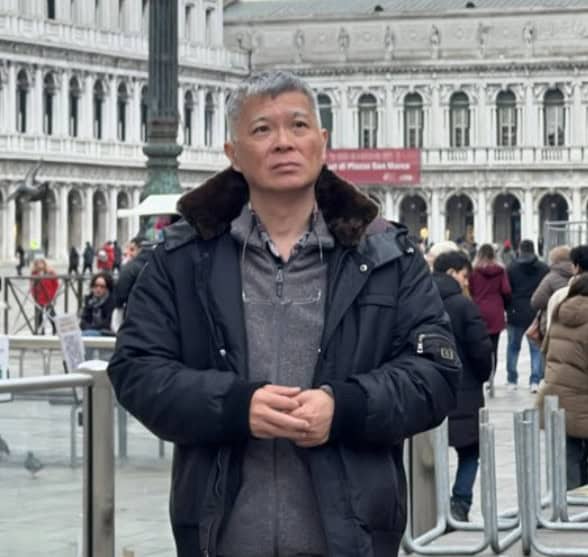
Michael Koh is a production specialist and entrepreneur who founded Spring Forest Studio in 2017 to provide event and virtual production solutions in Singapore. He specialises in hybrid live streaming, XR (Extended Reality) virtual production, and studio systems integration, transitioning the business from traditional videography to advanced corporate broadcasting. Operating out of a dedicated facility at NordCom2 in Singapore, he leads a technical crew to deliver multi-camera webcasts, digital sets, and technical consultations for large-scale corporate events.