
For Singaporean small and medium-sized enterprises, visual storytelling has moved far beyond static presentation decks and conventional live video. The modern corporate event audience expects immersive product launches, executive briefings, investor presentations, training sessions, and hybrid town halls to communicate with broadcast-level clarity. Three-dimensional visual storytelling, when engineered correctly, gives SMEs a practical way to present complex offerings, demonstrate manufacturing processes, visualize data, and create a more authoritative brand presence across physical and virtual audiences. In the context of live event streaming and hybrid production, 3D is not only a design choice, it is an infrastructure decision that affects camera planning, lighting, signal routing, rendering workflows, encoding load, latency budgets, and audience synchronization.
Singapore is a strong operating environment for this evolution because enterprise events are often compact, high-density, and internationally distributed. A single production may need to serve a ballroom audience, remote stakeholders across APAC, and internal participants joining through Microsoft Teams, Zoom, or Webex. That means the storytelling layer must be integrated with a technically disciplined delivery layer. For SMEs, the challenge is to achieve premium production value without compromising uptime, audio intelligibility, or encoding stability. The answer is a system architecture that treats 3D visuals as a live production asset, not as an isolated creative add-on.
Why 3D Visual Storytelling Matters in Enterprise Live Production
3D storytelling creates depth, spatial context, and process visibility in ways that flat graphics cannot. For B2B audiences, that distinction is critical. A manufacturing SME can use 3D environments to explain production flow, machine interactions, safety zones, and product assemblies. A professional services firm can translate complex workflows into layered motion graphics and spatial diagrams. A logistics or engineering company can present network topologies, site layouts, and digital twin-style visualizations with far greater clarity than traditional slide content.
In live production, these assets are most effective when they are built to survive the constraints of broadcast. That means rendering formats, aspect ratios, frame rates, and color pipelines must be planned alongside the show flow. Standard enterprise event delivery typically targets 1080p at 25 or 30 frames per second, with 4K/UHD used when the venue display system, graphics subsystem, and delivery bandwidth support it. If the 3D content is generated in real time, the render pipeline must be sized to maintain stable frame delivery without dropping below the production switcher’s cadence. When the content is pre-rendered, mastering should be aligned with the final program output, typically using mezzanine-quality files before encoding into H.264 or H.265.
Spatial Narrative as a Production Discipline
Effective 3D storytelling follows a spatial logic. The viewer should always understand where the product, process, or data object sits in relation to the rest of the system. That requires disciplined scene composition, consistent camera movement, and controlled transitions. In live corporate environments, abrupt motion, excessive parallax, or poorly timed transitions can compete with the presenter and reduce message retention. Production teams should therefore map each narrative beat to a visual event, such as an exploded assembly, a cutaway sequence, a 3D labeled environment, or a data-driven object reveal.
For hybrid events, this becomes even more important because the in-room audience and remote audience consume the same program differently. The room audience experiences ambient sound, sightlines, and physical staging, while remote participants rely on the program feed, graphics legibility, and speaker framing. A 3D sequence must therefore remain readable when compressed for streaming and displayed on laptop or mobile screens. High-contrast typography, limited on-screen clutter, and safe-title margins remain essential.
Engineering the Hybrid Event Pipeline for 3D Content
Hybrid production requires a signal chain that moves cleanly from source to switcher to encoder to platform. The moment 3D visuals are introduced, the workflow often expands to include graphics workstations, render nodes, media servers, and synchronization logic. A robust system should treat all sources, cameras, playback systems, and 3D graphics outputs as managed inputs within a controlled routing environment.
Signal Flow, Switching, and Source Management
A typical enterprise-grade signal flow begins with presentation sources, cameras, microphones, and graphics outputs entering a video switcher over SDI, HDMI 2.1, or IP-based transport such as NDI or NDI|HX. SDI remains highly valued in live production because of its deterministic behavior and mature infrastructure, especially in venues where cable runs, locking, and interoperability matter. HDMI 2.1 is useful for modern presentation devices and GPU outputs, but it should be converted or managed carefully for professional routing. NDI and NDI|HX are attractive for distributed production workflows, especially where quick deployment and flexible switching are priorities, but they must be evaluated against network capacity, latency, and bandwidth headroom.
For 3D visuals, a dedicated graphics workstation often feeds the switcher as a keyed source or full-frame program input. In more advanced setups, the workstation may render motion graphics, product visualizations, or interactive environments in real time, then output via SDI or NDI to an ATEM-class, TriCaster-class, or software-based switching platform. If the 3D material requires transparency, the key and fill path must be managed correctly so the switcher can composite it cleanly over live camera or background elements.
Multi-Camera Production and ISO Recording
Most corporate events benefit from multi-camera coverage, even when the visual language is highly graphic. A two- or three-camera configuration commonly includes a wide master, a presenter close-up, and a cutaway or audience reaction camera. For executive announcements, product launches, or analyst briefings, this structure improves pacing and credibility. When 3D story elements are embedded in the show, a multiview monitoring layout becomes essential, allowing the technical director to confirm camera framing, graphic timing, audio meters, and external feeds in one control surface.
ISO recording, the simultaneous capture of each source independently, is a critical enterprise safeguard. It allows post-event correction, alternate edits, and compliance review. If a remote executive drops in via Teams or Zoom, the ISO record preserves the clean camera feeds, the mixed program, and the incoming call source for reconstruction. This is especially useful for Singapore-based SMEs that repurpose a live launch into sales enablement assets, investor summaries, or internal training modules.
Network, Encoding, and Latency Design for Reliable Delivery
The network layer is where many hybrid productions succeed or fail. Enterprise streaming infrastructure must carry camera feeds, graphics traffic, intercom, remote contribution signals, and program delivery without congestion. For 3D-heavy productions, the data burden rises further because graphics systems may consume substantial GPU and network resources, especially when NDI is used for transport. The production LAN should be isolated from corporate office traffic whenever possible, with managed switches, quality of service, VLAN segmentation, and a clear addressing plan.
Bandwidth Planning and Protocol Selection
RTMP, or Real-Time Messaging Protocol, remains widely used for distribution because it is supported across many delivery endpoints, but it is not the preferred contribution protocol for fragile or loss-prone paths. SRT, or Secure Reliable Transport, is generally more suitable for contribution links where packet loss, jitter, or long-distance transport must be managed with better resilience. For remote guests, SRT, managed VPN paths, or platform-native ingest can be selected based on network conditions and operational complexity.
When selecting codecs, H.264 remains the most broadly compatible encoding format for hybrid delivery, while H.265, also called HEVC, can reduce bitrate for equivalent visual quality if the encoder, player environment, and destination platform support it. Typical enterprise streaming bitrates vary with resolution and motion complexity, but the production engineer should always provision with headroom. A 1080p program feed may be encoded in the 4 to 8 Mbps range for common delivery workflows, while a 4K/UHD stream generally requires significantly more bandwidth and more careful quality control. The final target should be validated against the platform, the network path, and the expected audience device mix.
Latency Management Across Physical and Virtual Audiences
Latency is not a single number. It exists at the camera stage, in the switcher, during encoding, across the network, through the platform buffer, and at the playback client. In a hybrid event, the in-room audience may see and hear the speaker in near real time, while remote participants experience multi-second delay depending on the delivery stack. If the event includes live Q and A, polling, or audience interaction, the production team must decide whether the in-room and remote experiences will be synchronized or intentionally separated by a controlled delay. Clear timing design prevents awkward speaker pauses and reduces crosstalk between venue and platform feeds.
For 3D content, latency also affects interaction. If a presenter is triggering visual states from a control surface, the system should minimize delay between cue and display. That can mean using local rendering on a dedicated workstation rather than cloud-rendered graphics, especially when the visual cue is tied to live speech or product demonstration timing.
Cloud-Based vs On-Premise Production Architectures
Singaporean SMEs often evaluate cloud production because it reduces upfront hardware cost and simplifies geographic reach. Cloud-based switching, graphics playback, and distribution can be effective for lower-complexity events or distributed teams. However, 3D storytelling often benefits from local compute, particularly when real-time rendering, low-latency switching, and venue-bound display systems are required. The most reliable approach for many corporate events is a hybrid architecture: on-premise capture, local switching, and selective cloud distribution or cloud backup.
When Local Infrastructure Delivers Better Control
On-premise production provides deterministic access to cameras, capture cards, SDI routers, audio mixers, and graphics workstations. This improves confidence when the event has strict timing, executive stakeholders, or high-value launches. It also simplifies control of color pipelines, keying, and frame synchronization. A well-designed on-premise rack may include a video router, UPS-backed power conditioning, managed network switching, encoder appliances, recording systems, and intercom support. Redundancy at each layer, including dual power supplies, bonded uplinks, and backup encoders, materially improves service continuity.
When Cloud Extends Reach and Flexibility
Cloud layers are especially useful for remote guest contribution, backup ingest, and multi-region delivery. They are also valuable when an SME must support multiple viewing cohorts, such as internal staff, distributors, and international clients. Cloud platforms can receive the program feed, generate alternate encodes, and distribute to web portals or meeting applications. The production team should still control the live show locally whenever possible, because local operator visibility is still the most reliable method of maintaining switching precision and audio consistency.
Audio, Graphics, and Quality Control in 3D Presentations
In enterprise live streaming, audio quality frequently determines perceived professionalism more than video resolution does. 3D visuals can attract attention, but voice intelligibility and stable levels create trust. A production should maintain clean microphone gain structure, controlled room acoustics, and coherent mix-minus routing for remote guests. Audio should be monitored on calibrated meters, with headroom preserved to avoid clipping. A remote executive joining through a conferencing platform should be integrated into the program with echo cancellation, return audio management, and proper talkback handling.
Integrating 3D Graphics with Audio Cues
3D sequences work best when synchronized with audio transitions, presenter emphasis, and lighting cues. Motion graphics can be timed to a voiceover or live narration, but the operator must avoid overloading the program with too many simultaneous effects. In a product launch, for example, an object reveal, a lower-third introduction, and a presenter cut should be staggered rather than stacked. This preserves clarity and allows the viewer to process the message.
Color management is equally important. If the event includes both camera footage and 3D rendered scenes, the production should define a consistent color space and monitor output across the chain. Display calibration, proper exposure, and matching white balance across camera angles reduce visual discontinuity. Broadcast-style color grading is not only for entertainment production, it is also a practical corporate communication tool because it standardizes the visual language of the brand.
Implementation Guidelines for Singaporean SMEs
SMEs do not need broadcast trucks to achieve premium hybrid production, but they do need disciplined architecture. The most effective deployments begin with a clear event brief, audience segmentation, delivery targets, and content format planning. Once those are defined, the technical team can specify camera count, switcher input requirements, 3D graphics workflow, network capacity, encoder profile, and platform integration.
- Define the delivery target early. Decide whether the event is optimized for in-room projection, hybrid streaming, or both. This determines camera placement, graphics legibility, and aspect ratio.
- Use managed network infrastructure. Separate production traffic from office traffic, prioritize critical streams, and validate throughput before show day.
- Plan for redundancy. Maintain backup encoders, spare capture paths, secondary recording, and failover connectivity wherever the event has executive or commercial significance.
- Match 3D asset creation to the distribution channel. Render assets at the correct frame rate and safe-title margin for the final program output and avoid over-detail that compresses poorly.
- Test the full chain. Verify source timing, audio routing, remote guest ingest, platform return paths, and playback synchronization in a complete rehearsal, not in isolated component tests.
For Singapore-based enterprises, the strongest results come from treating visual storytelling, streaming infrastructure, and audience experience as one integrated system. A 3D narrative can elevate an SME’s market presence, but only when the production workflow is engineered with the same rigor used in professional live broadcasting. That includes protocol selection, bandwidth planning, switcher design, audio discipline, camera coordination, and structured redundancy. When these elements are aligned, a compact corporate team can deliver a presentation that feels technically authoritative, visually sophisticated, and operationally dependable across every audience touchpoint.
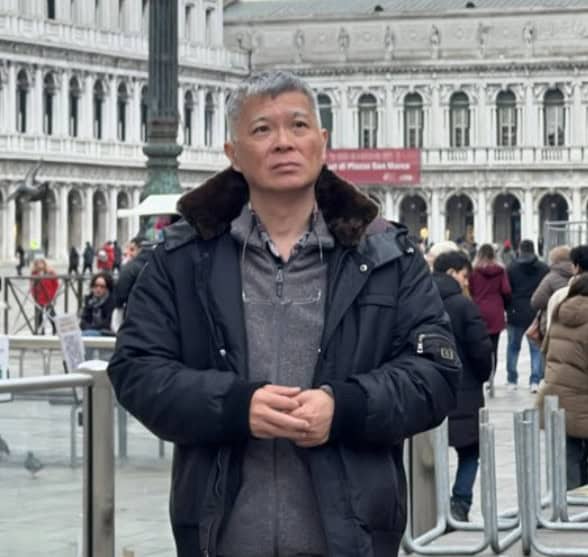
Michael Koh is a production specialist and entrepreneur who founded Spring Forest Studio in 2017 to provide event and virtual production solutions in Singapore. He specialises in hybrid live streaming, XR (Extended Reality) virtual production, and studio systems integration, transitioning the business from traditional videography to advanced corporate broadcasting. Operating out of a dedicated facility at NordCom2 in Singapore, he leads a technical crew to deliver multi-camera webcasts, digital sets, and technical consultations for large-scale corporate events.