
Introduction to XR in Medical Training
Singapore’s healthcare sector is rapidly advancing with the integration of cutting-edge technologies such as Extended Reality (XR) to enhance medical training. The adoption of high-fidelity streaming solutions is pivotal in creating immersive, interactive training environments that blend virtual reality (VR), augmented reality (AR), and mixed reality (MR). Understanding the technical challenges and solutions for effectively delivering XR content is crucial for AV professionals, production managers, and IT directors in the healthcare sector.
Enterprise-Grade Streaming Protocols
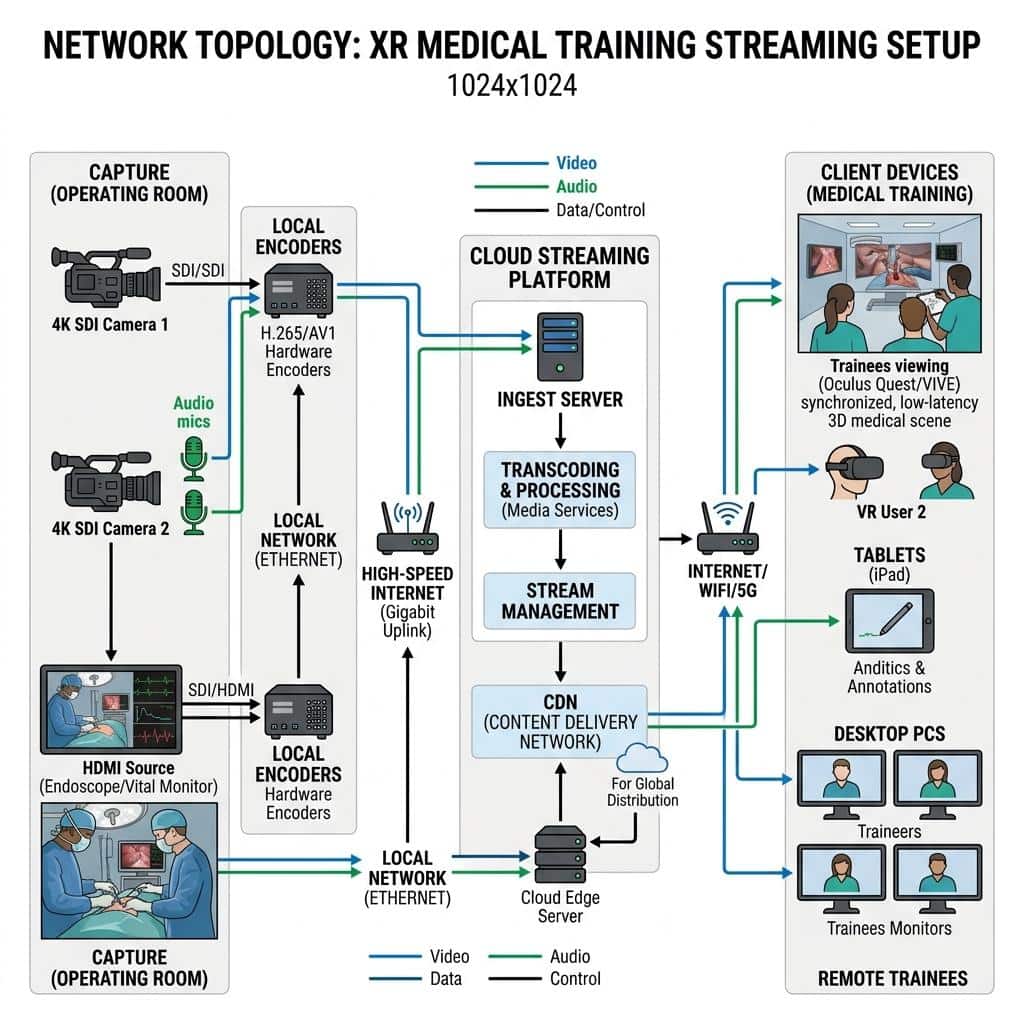
The foundation of high-quality XR streaming lies in robust streaming protocols. Secure Reliable Transport (SRT) and Real-Time Messaging Protocol (RTMP) are key to ensuring low-latency, high-fidelity audio and video transmission. SRT, with its ability to recover from packet loss, is particularly suitable for the variance in network conditions often encountered in Singapore’s healthcare facilities.
Hybrid Event Streaming Infrastructure
The hybrid nature of XR training involves both physical and virtual audiences. Multi-camera setups using NDI (Network Device Interface) technology allow for seamless integration of multiple video feeds, providing versatility in both local and remote viewing experiences. Leveraging cloud-based solutions like AWS Elemental MediaLive works to balance the load and enhance scalability for large-scale training events.
Practical Implementation and Scaling
A typical XR setup incorporates multi-camera production systems using devices such as SDI and HDMI 2.1 cameras, coupled with hardware encoders to manage H.264 and H.265 encoding standards. These setups ensure the delivery of 4K/UHD content with optimal bitrate management, critical for maintaining the quality of immersive XR environments.
Network Infrastructure and Signal Flow
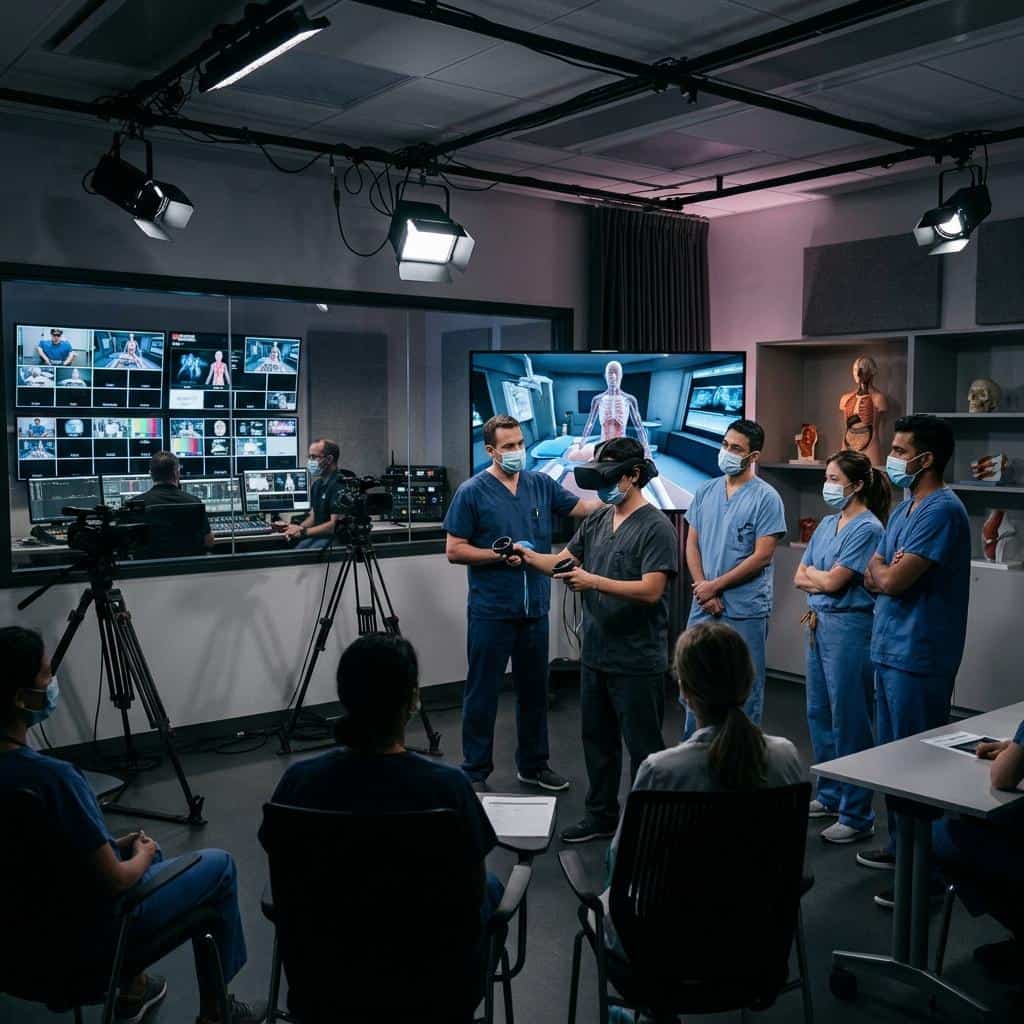
The core of any XR streaming solution is its network infrastructure. Ensuring sufficient bandwidth—often exceeding 100 Mbps depending on the resolution and frame rate—is essential. Advanced IP-based signal flow and routing architectures using Gigabit Ethernet or higher are recommended to support robust streaming workflows.
Integration with Enterprise Platforms
Integration with platforms like Microsoft Teams and Zoom enables interactive, scalable connections, extending the training’s reach while maintaining high security using ISO standards. Custom APIs facilitate real-time feedback and interaction, critical for a successful training session.
Quality of Service and Redundancy
A professional-grade streaming setup emphasizes service quality, redundancy, and failover strategies. Redundant encoders and failover internet paths ensure uninterrupted service delivery in mission-critical training sessions, adding reliability to the overall infrastructure.
Technical Recommendations
For healthcare institutions considering XR streaming implementations, partnering with experienced B2B solutions providers is highly recommended. Tailored solutions with enterprise-grade equipment, adherence to broadcast standards, and comprehensive technical support can greatly enhance the effectiveness of medical training.

Michael Koh is a production specialist and entrepreneur who founded Spring Forest Studio in 2017 to provide event and virtual production solutions in Singapore. He specialises in hybrid live streaming, XR (Extended Reality) virtual production, and studio systems integration, transitioning the business from traditional videography to advanced corporate broadcasting. Operating out of a dedicated facility at NordCom2 in Singapore, he leads a technical crew to deliver multi-camera webcasts, digital sets, and technical consultations for large-scale corporate events.