Corporate events increasingly depend on standard collaboration platforms for reach, accessibility, and immediacy, but the production expectation has moved far beyond a simple webcam feed. Enterprise audiences expect clean visuals, intelligible audio, stable latency, and a presentation layer that reflects the same discipline used in broadcast studios. The practical challenge is clear. Standard meeting applications such as Zoom, Microsoft Teams, and Webex are optimized for conferencing, not for full broadcast engineering. Yet with the right signal chain, encoding strategy, isolation workflow, and network design, these platforms can deliver a program output that meets broadcast-quality standards for hybrid conferences, executive town halls, product launches, investor meetings, and multi-site internal events.
At Live Streaming Studio, the goal is not to force a conferencing app to behave like a television network, but to build a production architecture around it that preserves signal integrity from camera to codec to platform delivery. That means treating the meeting platform as one distribution endpoint in a larger technical ecosystem that may include SDI camera chains, HDMI 2.1 presentation ingest, NDI and NDI|HX contribution paths, hardware switching, ISO recording, SRT contribution links, RTMP and RTMPS distribution, and on-site audio DSP routing. The standard app becomes the final transport layer, while the production system determines the quality of what the audience sees and hears.
Why Standard Apps Fail Without Broadcast Engineering
Meeting platforms compress, normalize, and prioritize for generalized connectivity. They are designed to maintain call stability across variable consumer and enterprise networks, which means they aggressively manage bitrate, resolution, frame rate, and audio processing. That behavior is useful for collaboration, but it introduces quality constraints that production teams must anticipate. If the upstream workflow is poorly designed, the application will expose every flaw in lighting, color balance, sync, audio gain staging, and network jitter.
Compression and platform constraints
Most standard apps support adaptive encoding and dynamic bandwidth negotiation, but they do not preserve a full contribution feed in the way a dedicated broadcast chain does. A production-grade output often begins with a 1080p or 2160p acquisition path, then is scaled and encoded to the platform’s accepted parameters. In many live event scenarios, a 1080p60 source is impractical to deliver directly, so the production switcher or encoder outputs a carefully managed 1080p30 or 720p30 program feed depending on platform behavior, audience device mix, and network conditions. H.264 remains the dominant real-time delivery codec for compatibility, while H.265 can be appropriate in internal contribution or archival workflows where endpoint support is controlled. The key is not maximum resolution alone, but predictable motion handling, clean chroma, and artifact resistance under movement, slides, and speaker cuts.
Audio is the first visible quality issue
Corporate viewers forgive modest video softness before they forgive poor audio. Standard apps apply echo cancellation, noise suppression, automatic gain control, and voice prioritization, which can be useful in conference-room conditions but harmful to mixed program audio if the wrong source is presented. A broadcast-quality workflow isolates microphones, playback, and room feeds before they enter the platform. That typically means digital mixing on a console or software mixer, with dedicated processing for speech intelligibility, limiting, de-essing, and bus routing. If the audience hears pumping, clipped peaks, or phase smear, the production chain failed long before the codec did.
Building the Production Chain Around Zoom ISO and Similar Workflows
Zoom ISO and comparable isolated recording workflows are powerful because they preserve discrete participant feeds, presentation sources, and speaker captures for post-production or simultaneous live remixing. ISO, or isolated recording, allows engineering teams to reconstruct a session with editorial control that a single composite program cannot provide. For hybrid events, this supports live confidence monitoring, rapid clip extraction, highlight generation, speaker corrections, and compliance archiving. The production objective is to combine live platform accessibility with studio-grade source control.
Camera acquisition and switching architecture
A multi-camera corporate event typically uses a combination of PTZ cameras, broadcast camcorders, or cinema-style cameras with SDI outputs. SDI, or Serial Digital Interface, remains the preferred transport for critical live video because it provides robust, locking, low-latency baseband signal transmission over professional cabling. HDMI 2.1 is suitable for short presentation paths, laptop ingest, and certain camera outputs, but it is not the preferred backbone for mission-critical event distribution. When multiple sources are present, a hardware switcher or live production engine handles cuts, dissolves, keying, lower-thirds, and graphics. Systems in this class may also manage tally, multiview, talkback, and remote source integration through NDI or SRT contribution.
The engineering decision is to keep every source in a known format from capture to switch. A common enterprise workflow is 1080p59.94 or 1080p50 acquisition inside the production environment, then output a conversion-ready program feed to the meeting app at the appropriate frame rate and bitrate. Frame rate conversion should be handled in the production switcher or dedicated scaler, not left to the conferencing platform. This reduces cadence artifacts and preserves clean motion on slides, speaker movement, and camera pans.
ISO recording and editorial resilience
ISO recording is essential when the live event must also support post-event editing, compliance review, or executive clip delivery. Each camera, each remote guest, and each presentation source is recorded independently to preserve control over timing, framing, and content sequencing. In enterprise environments, this reduces downstream rework and protects against a common live-event failure mode, where a usable composite exists, but the source material is insufficient for derivative content. With ISO, an on-site editor or technical director can rebuild the session with precise cuts, cleaner speaker framing, and improved pacing while the live audience still receives the program feed in real time.
Network Infrastructure, Protocols, and Latency Control
Broadcast-quality performance on standard apps depends on a disciplined network layer. Event teams often focus on cameras and encoders, but the actual differentiator is the transport path between the production core and the platform. Enterprise streaming infrastructure must be designed for throughput, jitter tolerance, packet loss control, and deterministic routing. For live events, basic internet access is not enough.
RTMP, RTMPS, SRT, and contribution strategy
RTMP, or Real-Time Messaging Protocol, remains a common distribution path because of broad platform compatibility. RTMPS adds TLS encryption for secure transport where supported. However, RTMP is not the most resilient contribution protocol for unstable networks. SRT, or Secure Reliable Transport, is preferred for contribution and remote source acquisition because it is designed to recover packet loss and maintain low-latency delivery over unpredictable internet paths. In hybrid event production, SRT is frequently used to bring remote executive speakers, satellite studios, or overflow rooms into the main switching environment with better resilience than consumer-grade video calls alone.
Latency management is a system-wide discipline. A well-designed corporate live stream usually separates contribution latency from audience latency. Contribution feeds from cameras, remote guests, and remote playback sources should remain as tight as the workflow permits, while the final delivery path to the platform will carry the unavoidable buffering and processing overhead of the app itself. Audio delay compensation is critical when using external processing, multi-camera switching, or remote contribution feeds. Even a small offset can produce unacceptable lip sync drift in a boardroom or auditorium.
Redundancy and failover design
Enterprise-grade productions require redundant encoding, backup internet, and power continuity. At minimum, this includes dual internet paths from separate providers, a bonded cellular backup where appropriate, UPS-backed switching and encoding equipment, and a tested fallback plan for the meeting platform itself. In higher-risk events, the stream can be sent simultaneously through a primary encoder path and a backup encoder path, with preconfigured RTMP or SRT destinations ready for rapid reassignment. The same principle applies to audio. A backup mix, spare wireless frequency coordination, and a secondary audio interface should be available whenever the event features executives, remote presenters, or mission-critical announcements.
QoS and managed switching
Quality of Service, or QoS, becomes relevant when the event uses a managed enterprise network, venue LAN, or dedicated production VLAN. Video and audio traffic should be segmented from guest Wi-Fi, office traffic, and nonessential services. Multicast routing, switch configuration, IGMP snooping where relevant, and proper DHCP reservation practices all contribute to a more stable environment. In NDI workflows, bandwidth planning is essential because full NDI is a high-bandwidth IP video format, while NDI|HX reduces bandwidth through compression and is often more practical on mixed infrastructure. The choice depends on latency budget, image quality expectations, and network capacity. No IP video workflow should be deployed without verified end-to-end bandwidth headroom.
Audio, Graphics, and Presentation Control at Broadcast Standards
Visual quality gets attention, but enterprise viewers judge production value through smooth transitions, clean speaker framing, polished graphics, and intelligible room sound. These elements are controlled through signal routing and show design, not by the meeting app alone. Broadcast quality on standard apps requires a layered production design where presentation content is treated as a mastered source rather than a shared screen.
Program feed design and multiview monitoring
The program feed is the final composite delivered to the standard app. It should be assembled from camera sources, presentation inputs, lower-thirds, stingers, and any remote guest windows in a way that feels intentional and stable. Multiview monitoring is essential so the technical director can verify camera framing, audio meters, upstream source status, return video, and active preview/program state at a glance. Professional multiview layouts often include redundant confidence monitoring on both the production side and the client side, ensuring that issues are detected before they reach the meeting platform.
Audio mixing and speech intelligibility
For hybrid events, speech reinforcement inside the room and audio capture for the stream are related but not identical problems. Room loudspeakers must be managed to avoid echo and feedback, while the stream mix should prioritize clarity and consistent level. This often means separate mixes for in-room playback and program output. The program mix should maintain disciplined gain staging, typically leaving adequate headroom to prevent digital clipping while preserving intelligibility. Remote presenters should be integrated through mix-minus or an equivalent routing strategy so they hear the room without hearing their own delayed return.
Graphics, captions, and accessibility
Professional corporate events increasingly require accessibility features such as captions, lower-thirds, and branded presentation overlays. These must be integrated cleanly into the production workflow. Captions may be generated through a stenography workflow, AI-assisted captioning platform, or platform-native accessibility tools, but they should always be monitored for accuracy, proper speaker attribution, and timing. Graphics should match enterprise brand standards, use readable safe-area placement, and remain legible after platform compression. Avoid excessive animation or fine text that will collapse under codec scaling.
Cloud, On-Premise, and Hybrid Production Models
There is no single architecture that fits every corporate event. The right design depends on venue conditions, security requirements, audience scale, stakeholder expectations, and technical staffing. Some productions are best handled entirely on-premise with local switching and direct app delivery. Others benefit from a cloud-assisted or distributed model where remote guests, remote directors, and off-site backup systems are integrated into the show control path.
On-premise control for high-stakes events
On-premise production remains the preferred model for board meetings, investor events, product launches, and executive communications that demand maximum control. In this model, cameras, audio, graphics, switching, and encoding occur at the venue or in a purpose-built studio. The team controls every input before it reaches Zoom, Teams, or Webex. This reduces variables and makes troubleshooting faster, especially when venue internet conditions are uncertain or when local AV integration is complex.
Cloud-assisted workflows for distributed teams
Cloud production tools extend the control surface beyond the venue. They support remote guests, remote graphics collaboration, distributed approval workflows, and simultaneous contribution from multiple sites. When implemented correctly, cloud tools do not replace production engineering, they extend it. The broadcast-quality standard still depends on careful source management, synchronization, and output discipline. Cloud workflows are strongest when paired with robust contribution protocols such as SRT and with clear operational procedures for cueing, backup, and final output verification.
Implementation Guidelines for Enterprise Clients
To achieve broadcast quality on standard apps, the event architecture should start with the audience goal and work backward through the signal chain. If the audience is primarily in a meeting platform, then the platform-specific output parameters define the final encoding targets. If the event requires archival value, ISO recording and source separation become mandatory. If the event includes remote speakers, then contribution transport and latency design must be validated before show day. If security is a concern, the network, account permissions, and destination access must be controlled as tightly as any internal IT deployment.
Practical production checklist
- Use SDI for core camera transport wherever possible, and reserve HDMI for short, controlled ingest paths.
- Set acquisition formats intentionally, then convert once at the production layer rather than repeatedly across devices.
- Maintain separate mixes for room reinforcement and platform delivery.
- Test RTMP, RTMPS, and SRT paths in advance, and confirm destination authentication, firewall permissions, and bitrate ceilings.
- Validate upstream and downstream latency, especially for remote speaker integration and return video monitoring.
- Deploy multiview monitoring with audio meters, tally, source status, and confidence displays.
- Record ISO sources whenever the event has post-production, legal, or executive reuse requirements.
- Provide redundant internet, power, and encoder paths for critical events.
- Design graphics for compression tolerance, readability, and brand compliance.
- Run full rehearsal with all stakeholders, including presenters, IT, venue AV, and production operators.
The operational difference between an average virtual meeting and a broadcast-quality corporate event is not the app itself. It is the architecture behind the app. With disciplined signal flow, reliable encoding, professional switching, network redundancy, and properly managed audio, standard collaboration platforms can carry an event that feels engineered rather than improvised. For enterprise organizations, that is the real standard. The audience does not need to know the workflow. They only need to experience the result, a clear, stable, polished program that reflects the authority of the brand and the seriousness of the message.
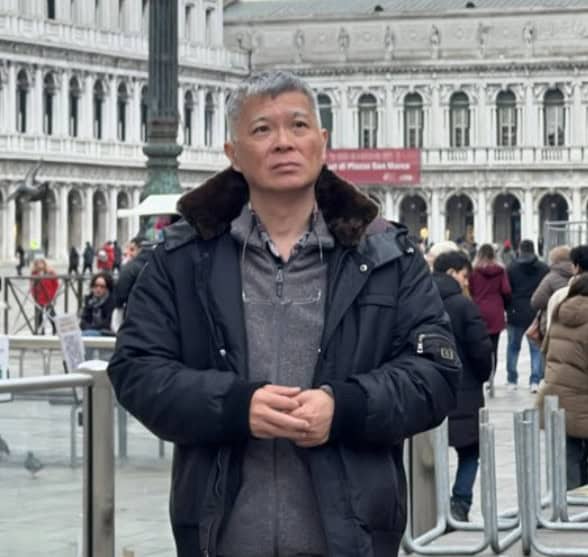
Michael Koh is a production specialist and entrepreneur who founded Spring Forest Studio in 2017 to provide event and virtual production solutions in Singapore. He specialises in hybrid live streaming, XR (Extended Reality) virtual production, and studio systems integration, transitioning the business from traditional videography to advanced corporate broadcasting. Operating out of a dedicated facility at NordCom2 in Singapore, he leads a technical crew to deliver multi-camera webcasts, digital sets, and technical consultations for large-scale corporate events.