
Extended reality, or XR, has moved from experimental demo territory into a practical production layer for enterprise events, executive broadcasts, product launches, training programs, and hybrid town halls. For corporate event planners, AV teams, production managers, and IT directors, the value of XR is not novelty. The value is audience retention, spatial storytelling, and controlled interaction at broadcast grade quality. In a hybrid environment, the challenge is not only to make virtual participants feel present, but to build a technically stable system that can support live switching, low-latency contribution, synchronized graphics, and reliable return video without compromising the in-room program feed.
Breaking the fourth wall in XR means designing the production so the presenter can acknowledge virtual attendees, incorporate their data or motion into the live scene, and use the environment itself as an interface. That requires more than a rendering engine. It requires a properly engineered signal chain that connects cameras, graphics, real-time engines, audio consoles, network switches, encoder hardware, collaboration platforms, and remote contributors into one coherent workflow. When executed correctly, XR becomes a high-value hybrid production format that can elevate executive messaging, drive engagement across distributed teams, and support enterprise communication strategies at scale.
XR as a Hybrid Production Layer, Not a Standalone Visual Effect
In professional live event streaming, XR should be treated as part of the core production architecture. The virtual environment is only effective when it is tightly integrated with the physical stage, the camera system, and the transmission path. For enterprise events, the production design often begins with the question of how the audience will interact with the presentation. Will remote attendees submit questions through Microsoft Teams, Zoom, or Webex? Will presenter graphics respond to live polling? Will a remote subject be brought into the XR environment as a keyed full frame guest or as a composited window inside a 3D scene? Each of these use cases imposes different requirements on routing, latency, and synchronization.
Real-Time Engines and Production Integration
Most XR stages used in B2B environments rely on a real-time graphics engine, camera tracking, and a switcher or media server that can blend foreground talent with virtual backgrounds. Common integration points include SDI and HDMI 2.1 ingest, NDI, NDI|HX, and IP-based media routing into render engines. Tracking systems feed lens metadata and camera position data so the rendered perspective matches the physical camera movement. This is essential for parallax correctness and for maintaining audience immersion when the presenter turns toward virtual participants or moves across the stage.
From a production engineering perspective, the key requirement is deterministic synchronization. Frame rate consistency is critical, particularly at 50 Hz or 59.94 Hz in corporate venues. If the camera chain, tracking data, render engine, and switcher are not genlocked or otherwise time-aligned, the XR illusion breaks immediately. SMPTE timecode can be used for synchronized recording and post-event deliverables, while an external reference such as tri-level sync or black burst is often used where compatible. In mixed vendor environments, engineers should confirm timing behavior across all devices, especially when routing through conversion boxes, scalers, and IP gateways.
Virtual Presence and Audience Interaction Models
Breaking the fourth wall in XR is most effective when audience interaction is designed as part of the show flow. For example, a keynote speaker can appear within a virtual command center and reference questions submitted through a moderated Q and A queue. The graphics operator can trigger an animated data wall that surfaces live poll results from a webinar platform, while the presenter maintains eye contact with the camera. A remote executive can appear as a tracked full-body or waist-up talent feed, keyed into the scene using a clean program return. In each case, the event is not merely streamed, it is orchestrated as an interactive broadcast system.
For enterprise clients, the interaction layer should be mapped to the content management and moderation workflow. Question intake, polling, sponsor overlays, and audience sentiment tools must be pre-integrated and tested under load. If the audience is distributed across locations in Singapore, regional APAC offices, and remote home endpoints, then latency and translation workflows must be planned so the interaction remains usable across time zones and network conditions.
Streaming Infrastructure for XR Events
An XR event relies on a streaming infrastructure that can sustain multiple concurrent signal paths. The physical stage feed may be captured in 1080p59.94 or 2160p29.97, encoded for distribution, recorded locally in ISO format, and simultaneously sent to a collaboration platform and an internal enterprise CDN. Each destination may require different codec profiles, audio mappings, and bitrates. The architecture must therefore separate acquisition, production, contribution, and delivery layers.
Protocol Selection, Latency, and Reliability
RTMP, or Real-Time Messaging Protocol, remains common for outbound platform delivery because of broad compatibility, but it is no longer the only transport layer worth considering. SRT, Secure Reliable Transport, is frequently preferred for contribution links because it provides encryption, packet loss recovery, and improved resilience over unpredictable networks. For internal production contribution, NDI and NDI|HX remain useful where low-latency IP transport is required within a controlled LAN. In larger enterprise deployments, SMPTE ST 2110 IP video may be used in broadcast-grade facilities, though it demands a mature network design and precise clocking via PTP, Precision Time Protocol.
Latency targets depend on the interaction model. For a one-way keynote stream with moderated audience chat, sub-10-second glass-to-glass latency may be acceptable. For active remote interaction, especially where the presenter responds in real time to virtual audience contributions, total workflow latency should be managed far more aggressively. SRT contribution links can be tuned for balance between latency and robustness, while adaptive bitrate delivery at the platform edge can absorb viewer-side variability. When integrating Teams, Zoom, or Webex into a live XR environment, teams should test round-trip audio delay, echo cancellation behavior, and return video delay, since those values affect presenter timing and stage direction.
Encoding Standards and Delivery Profiles
Enterprise XR streams commonly use H.264 encoding for broad compatibility, with H.265, also known as HEVC, considered where device support and platform requirements allow higher compression efficiency. Bitrate management must reflect content motion, output resolution, and target distribution path. A polished XR keynote with motion graphics, layered lower thirds, and rapid scene transitions can require significantly more bitrate than a static panel discussion. For example, 1080p60 corporate streaming often benefits from carefully controlled CBR, constant bitrate, or capped VBR settings, while 4K/UHD delivery may require stronger network headroom and more capable hardware encoders.
Audio should be encoded with equal discipline. An XR environment can fail if the visual scene is perfect but the mix is unstable. Voice must remain intelligible above graphics stings, ambient stems, and audience interaction cues. Production audio typically starts at the console with discreet channels for presenter microphones, playback, remote guest input, and IFB, interruptible foldback, or talkback communication. Loudness should be aligned to platform and organizational standards, with clean headroom and no clipping. For enterprise distribution, consistent gain staging across microphones, Dante or AES67 audio networks, and encoder input paths is essential.
Camera, Switching, and Signal Flow Design for Fourth Wall Interaction
The illusion of “breaking” the fourth wall depends on camera placement and switching discipline. In XR, the presenter often interacts with invisible data, virtual crowd graphics, or remote attendees that appear as composited elements. The camera operator must know exactly where the talent is looking, because even subtle eyeline errors become obvious in an immersive scene. Multi-camera coverage can include a hero camera for audience-facing address, a secondary angle for conversation segments, and an overhead or slider shot for transitions between content chapters.
Multi-Camera Switching and Program Structure
A professional live switching system should support clean cuts, transition layers, downstream keyers, and flexible aux outputs. Many enterprise productions use a vision mixer or software switcher with multiview monitoring so the technical director can verify camera framing, graphics status, and remote returns before taking the shot live. If the XR environment includes virtual set extensions or augmented data layers, then the switcher must remain synchronized with the graphics engine so keys and backgrounds stay aligned. ISO recording of individual camera feeds is strongly recommended, because it allows post-event editing, repurposing for internal comms, and correction of timing or cueing issues.
For events with remote presenters, the production must also manage clean return feeds. A remote speaker joining from another office or a secure external location should receive a return image that includes the program output, confidence monitoring, and possibly a prompt window with speaker cues. This is especially useful when the presenter must react to audience questions surfaced in the XR scene. The operator should confirm audio mix-minus routing to prevent echo and feedback when the remote guest hears the program feed.
Audio Routing and Talkback Systems
Audience engagement in XR often fails when the audio workflow is underdesigned. A talkback system between director, graphics operator, stage manager, and talent is essential. If virtual questions or comments are integrated into the show, production personnel must be able to signal timing, update the presenter, and coordinate scene transitions without audible disruption. In larger productions, matrix routing or IP audio ecosystems such as Dante enable flexible signal distribution, while traditional analog backup paths remain useful for fail-safe operation. The objective is always the same, predictable routing, low noise, and controllable latency.
Network Engineering, Redundancy, and Enterprise Reliability
XR events place unusual demands on network infrastructure because the production relies on both live media transport and interactive collaboration tools. A corporate venue or conference center should not be treated as a generic office network. Media traffic needs dedicated VLAN segmentation, managed switching, QoS, Quality of Service, planning, and sufficient uplink capacity for outbound contribution, platform distribution, and remote participant return paths. If NDI or SRT is used on-site, the network must be validated for throughput, jitter, packet loss, and multicast behavior where applicable.
Bandwidth Planning and QoS
Bandwidth sizing should be based on the full production chain, not just the main program stream. A single program output might require 8 to 15 Mbps for high-quality 1080p delivery depending on codec and motion complexity, but a production environment may also need contribution feeds, backup encoders, return video, control traffic, monitoring, and cloud synchronization. For 4K/UHD workflows, the headroom requirements rise significantly. Engineers should provision bandwidth with margin, especially when remote guest connections, file transfers, and cloud recording are active during the event.
QoS configuration should prioritize live media over general data traffic. Where ST 2110 or other IP media models are in use, timing discipline and network design become even more critical. For more common enterprise hybrid events, the practical recommendation is to separate control, media, and guest access networks, then validate each path under expected peak conditions. Latency testing should include both upstream and downstream paths, as well as failover behavior if the primary ISP link degrades.
Redundancy and Failover Strategy
For high-stakes corporate events, redundancy is not optional. At minimum, the design should include dual encoders, diverse network paths, backup power through UPS systems, redundant audio capture where possible, and a documented failover procedure for the control room. If the event is mission-critical, such as a global executive announcement or investor communication, teams should also consider secondary contribution links, backup recording on the local switcher or recorder, and a rehearsed plan for switching platforms if the primary destination becomes unavailable.
Operational resilience depends on testing. Every XR event should include a technical rehearsal that validates camera tracking, scene transitions, remote guest admission, latency behavior, and output continuity. Engineers should verify what happens if a remote participant drops, if a media server stalls, or if a graphics layer fails to update on cue. The production team must know whether the event can continue gracefully on a flat background and standard IMAG, image magnification, fallback, or whether it requires a full restart. This is the difference between a controlled enterprise event and an improvised presentation.
Implementation Guidance for Enterprise Hybrid Teams
For enterprise clients planning an XR event, the most reliable approach is to design the audience interaction model first, then build the signal chain around it. Start by defining whether the event is primarily broadcast, collaborative, or conversational. Broadcast-led events favor stability and polished visuals. Collaborative events require more remote contribution paths and a more responsive return feed. Conversational events need the lowest practical latency and the cleanest audio routing.
Practical Production Workflow
A typical enterprise XR workflow begins with preproduction, where show flow, cue sheets, graphics packages, and audience interaction triggers are mapped. The technical director then validates camera matching, lens calibration, and tracking alignment. Audio is checked for microphone gain structure, remote feed mix-minus, and backup paths. The streaming engineer confirms encoder profiles, destination endpoints, and monitoring dashboards. During rehearsal, the director confirms that the presenter can acknowledge virtual audience input without breaking eyeline continuity or stepping outside the tracked volume.
In post-event operations, ISO recordings, platform analytics, and audience engagement logs should be archived for internal reporting and content reuse. This matters in enterprise environments where marketing, HR, investor relations, and executive communications teams may all need versions of the same event for different channels.
Cloud-Based Versus On-Premise Deployment
Cloud workflows offer scalability and geographic reach, especially when remote attendees are spread across multiple regions. They are effective for distribution, transcription, cloud recording, and analytics. On-premise systems provide more deterministic control for switching, rendering, and low-latency production in the venue. Many of the most robust enterprise deployments use a hybrid model, with on-site production hardware handling live scene composition and cloud infrastructure handling distribution, archiving, and participation tools. This balanced architecture is often the best fit for Singapore-based corporate events that involve regional headquarters, multinational presenters, and secure enterprise communication requirements.
Breaking the fourth wall in XR is ultimately about designing meaningful interaction without sacrificing engineering discipline. The audience may see a presenter standing inside a digital environment, speaking to a virtual room, or responding to remote colleagues as if they were physically present. Behind that experience is a tightly controlled production stack built on SDI, HDMI 2.1, IP transport, synchronized switching, robust audio routing, and resilient network design. For enterprise teams, that is the standard that turns XR from a visual feature into a dependable business communication platform.
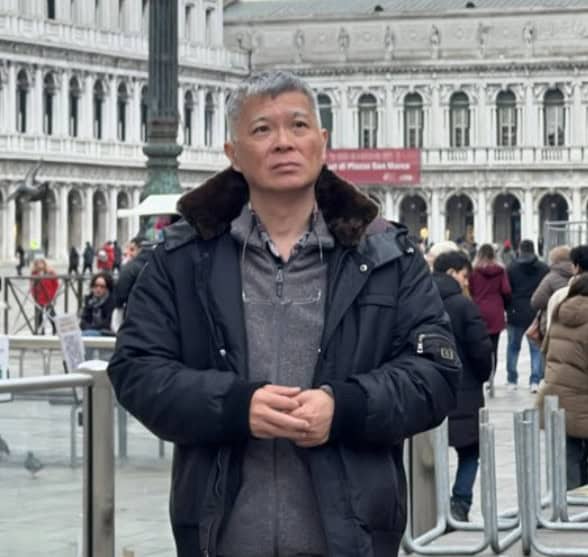
Michael Koh is a production specialist and entrepreneur who founded Spring Forest Studio in 2017 to provide event and virtual production solutions in Singapore. He specialises in hybrid live streaming, XR (Extended Reality) virtual production, and studio systems integration, transitioning the business from traditional videography to advanced corporate broadcasting. Operating out of a dedicated facility at NordCom2 in Singapore, he leads a technical crew to deliver multi-camera webcasts, digital sets, and technical consultations for large-scale corporate events.