
The Business of Immersion: Why Singapore is an XR Streaming Hub
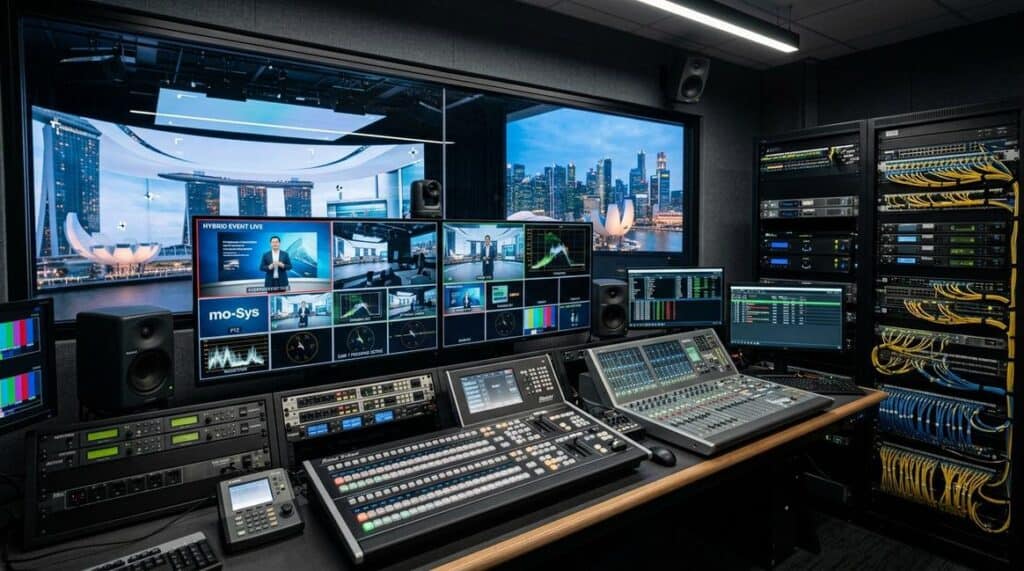
Singapore has become one of the most strategically important locations in Asia for extended reality, or XR, streaming production because it combines dense enterprise connectivity, mature broadcast infrastructure, strong venue engineering standards, and a business environment that supports high-value hybrid events. For corporate event planners, AV consultants, production managers, and enterprise IT teams, the relevance […]
Seamless Camera Tracking: Ensuring Realism in Virtual Environments
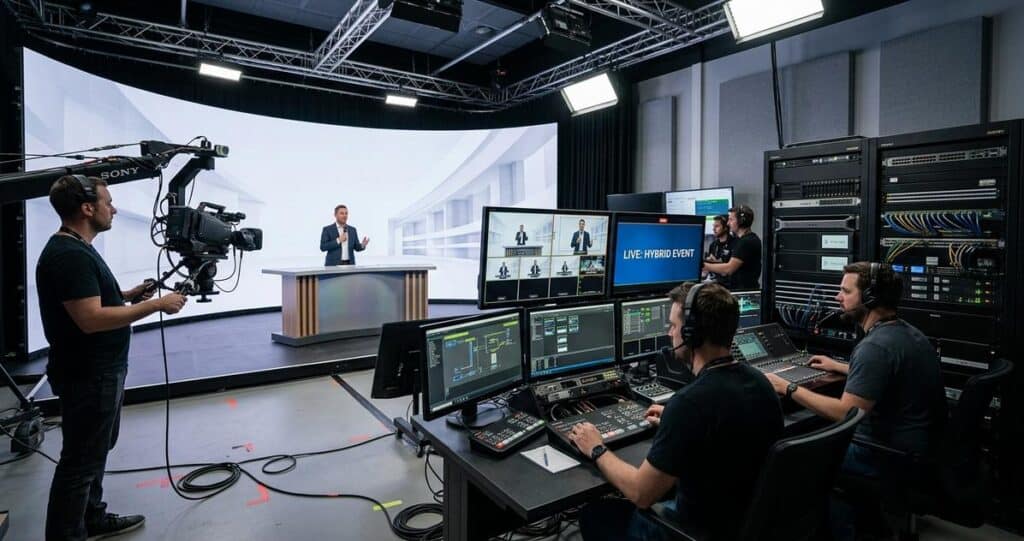
Why Camera Tracking Matters in Enterprise Virtual Production Seamless camera tracking is the control layer that makes a virtual environment behave like a physical stage. In B2B live event streaming, hybrid conferences, executive broadcasts, product launches, and enterprise town halls, tracking is not a visual luxury, it is a production requirement. When a camera pans, […]
Breaking the Fourth Wall: New Ways to Engage Virtual Audiences in XR
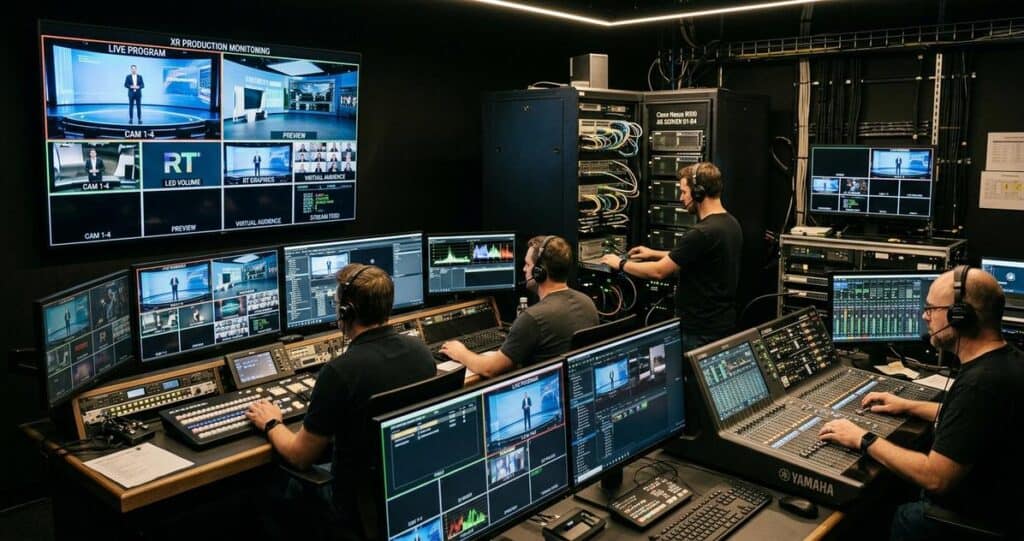
Extended reality, or XR, has moved from experimental demo territory into a practical production layer for enterprise events, executive broadcasts, product launches, training programs, and hybrid town halls. For corporate event planners, AV teams, production managers, and IT directors, the value of XR is not novelty. The value is audience retention, spatial storytelling, and controlled […]
Remote Attendance, Local Feeling: Using XR to Bridge the Distance
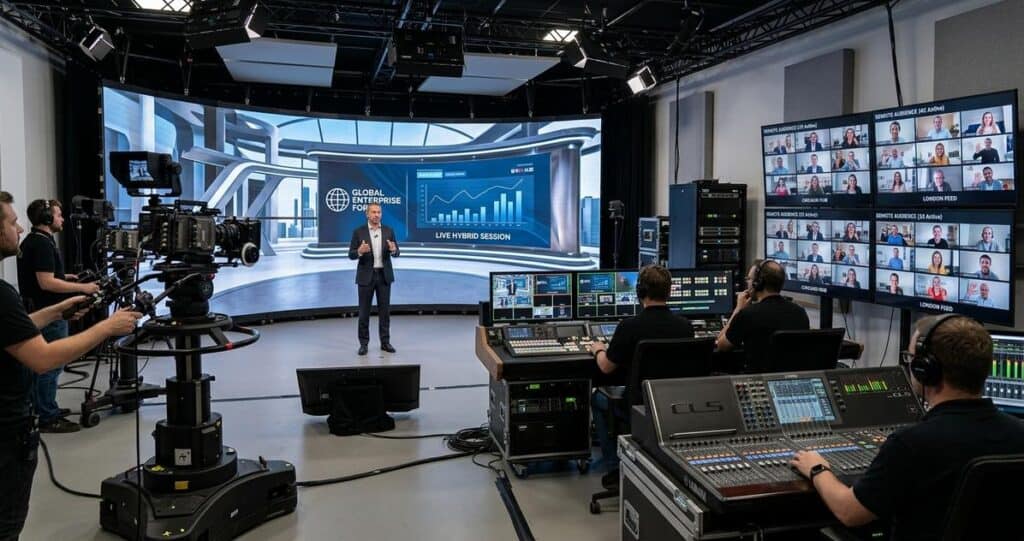
Extended reality, or XR, has moved from experimental stagecraft into a practical production layer for corporate events, executive broadcasts, annual meetings, product launches, and training programs that must serve both in room and remote audiences with equal fidelity. For enterprise event teams, the central challenge is no longer simply getting a camera feed to remote […]
The Technical Director’s Role in XR: Navigating Complex Virtual Workflows
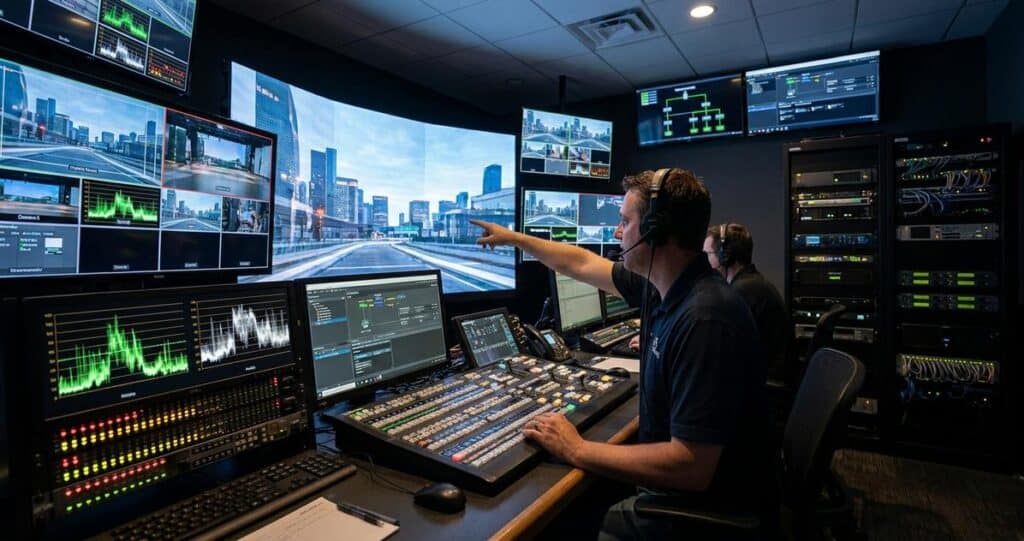
Extended reality, commonly abbreviated as XR, has moved from experimental stagecraft into a repeatable production method for corporate events, executive broadcasts, product launches, town halls, investor presentations, and hybrid conferences. For the technical director, XR is not a visual novelty. It is a systems engineering problem that combines real-time camera tracking, low-latency render pipelines, deterministic […]
Lighting in the Virtual World: Matching Physical Speakers to 3D Sets
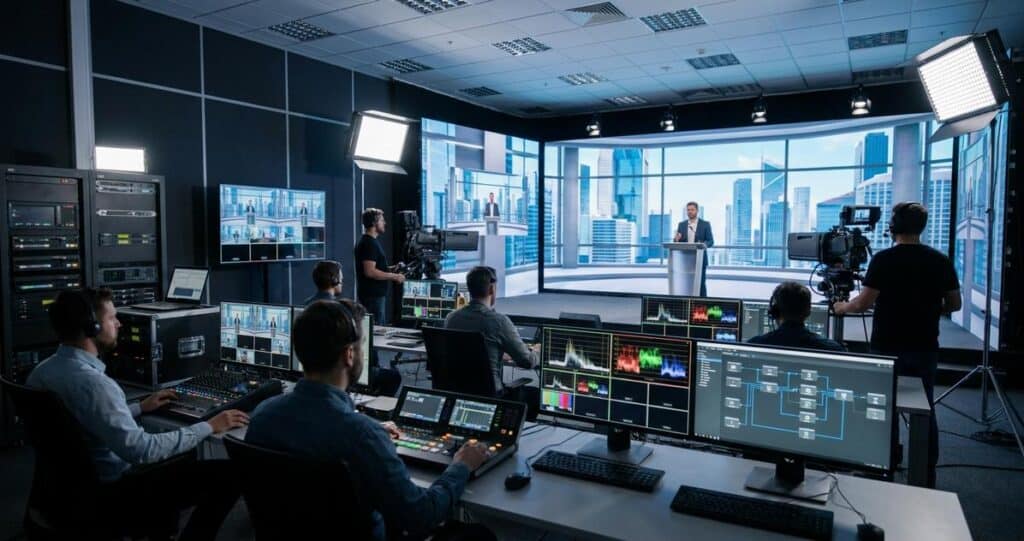
Hybrid event production has moved far beyond simply placing a webcam on a stage and sending a program feed to a remote platform. For enterprise meetings, investor presentations, product launches, executive town halls, and multi-site conferences, the virtual environment now has to feel spatially coherent, visually consistent, and technically reliable. One of the hardest parts […]
The ROI of Innovation: Measuring Success in XR-Enabled Broadcasts
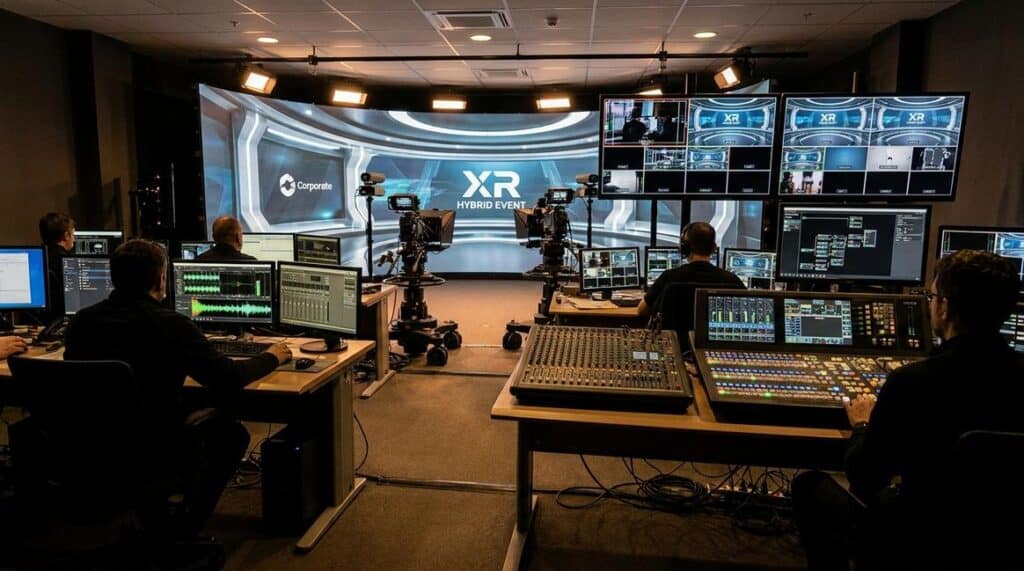
Extended reality, commonly abbreviated as XR, has moved from a specialized visual enhancement into a measurable production layer for enterprise events, executive broadcasts, product launches, training programs, and hybrid town halls. In B2B live streaming, the question is no longer whether XR can create a visually compelling program feed. The real question is how to […]
The Psychology of XR: Creating Memorable Experiences for Remote C-Suite
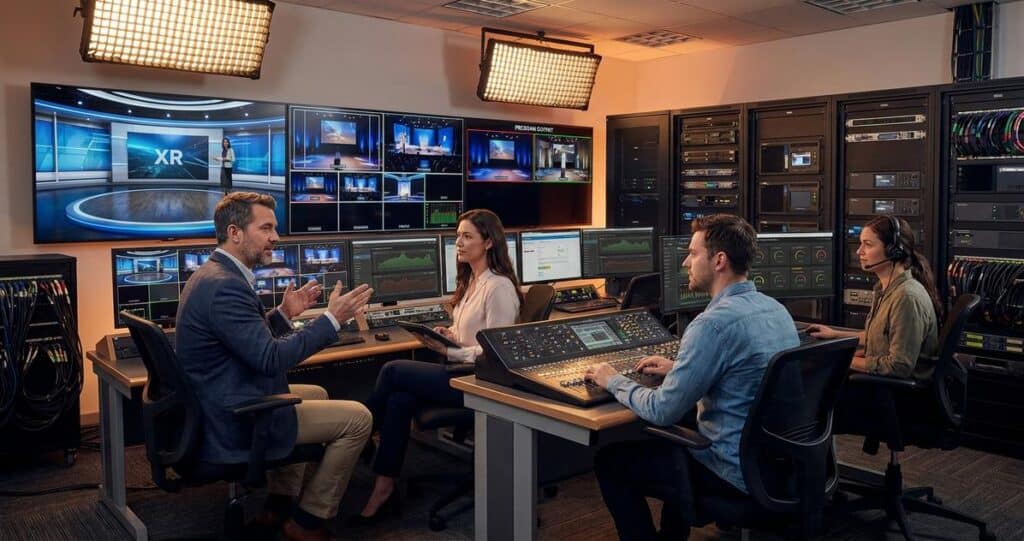
Remote C-suite audiences do not evaluate extended reality, XR, through the same lens as a consumer demo audience. They assess it through a combination of executive attention economics, perceived operational maturity, and decision confidence. In a corporate event environment, XR becomes effective when the production design supports three psychological outcomes at once: presence, clarity, and […]
From Concept to Camera: The Workflow of a 3D Virtual Corporate Stream
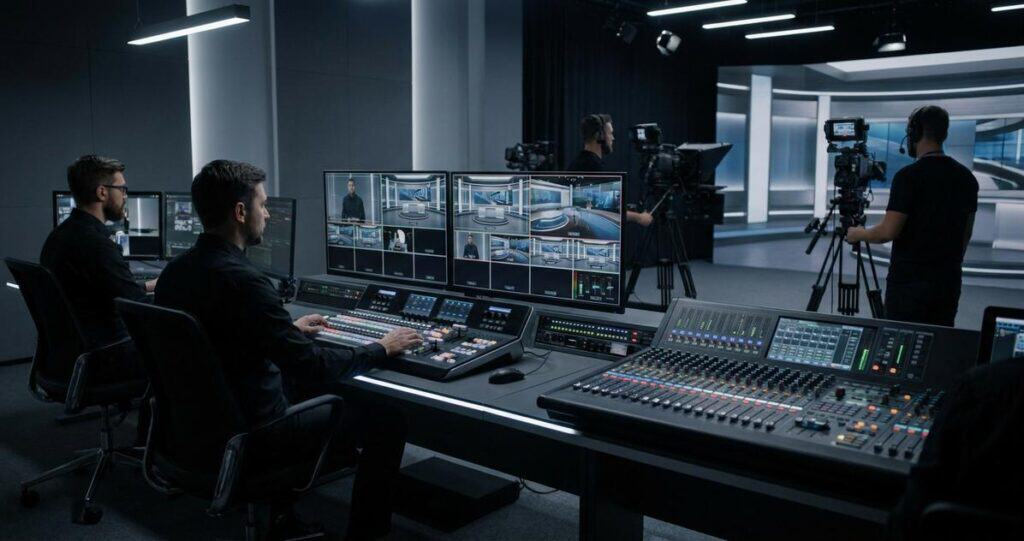
A 3D virtual corporate stream is not simply a camera feed placed inside a graphics package. It is a tightly engineered live production system that combines real-time camera acquisition, studio-grade audio, broadcast switching, 3D scene design, encoder configuration, network transport, and platform integration into a single end-to-end workflow. For enterprise events, the objective is not […]
Dynamic Data Visualisation: Using 3D Assets in Live Financial Streams
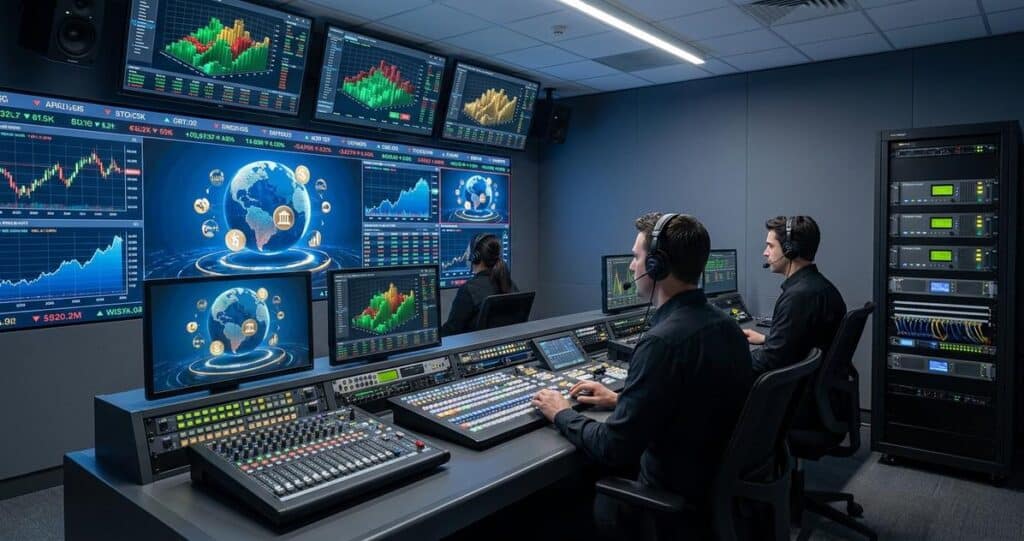
Live financial streaming places unusually high demands on production engineering. Market open broadcasts, earnings presentations, investor days, trading floor briefings, and macroeconomic updates require more than a stable video feed. They require low-latency, high-trust visual communication that can translate dense numerical movement into instantly readable, visually precise data narratives. When 3D assets are used correctly […]