
Singapore has become one of the most strategically important locations in Asia for extended reality, or XR, streaming production because it combines dense enterprise connectivity, mature broadcast infrastructure, strong venue engineering standards, and a business environment that supports high-value hybrid events. For corporate event planners, AV consultants, production managers, and enterprise IT teams, the relevance is practical rather than promotional. XR streaming, when executed correctly, is not a visual effect layered onto a webcast. It is a tightly integrated production workflow that depends on low-latency video transport, deterministic signal routing, calibrated display systems, real-time camera tracking, and resilient network architecture. Singapore is uniquely positioned to support that entire stack at a level expected by multinational organizations delivering product launches, leadership town halls, investor briefings, regional sales kickoffs, technical conferences, and internal hybrid experiences.
The demand profile in Singapore also reflects the realities of enterprise communication. Global firms operating across APAC need event formats that can unify physical and remote audiences without compromising production quality. That means the streaming platform, the rendering engine, the stage environment, the audio transport, and the encoding pipeline must all be engineered as a system. In XR environments, that system becomes more complex because the on-camera composite must remain coherent as talent moves inside a virtual scene, often with real-time graphics, keyed foregrounds, tracked camera motion, and synchronized return feeds. The business case for Singapore is strong because the market has the infrastructure density to support these requirements without the operational uncertainty that often affects less mature event centers.
Singapore’s Infrastructure Advantage for Enterprise XR Streaming
XR production for B2B events requires more than a room, a switcher, and an encoder. It demands a location where venue power, fiber availability, enterprise internet, and technical labor can all support high-bandwidth, low-latency, multi-system productions. Singapore offers a highly developed digital backbone, with carrier-grade connectivity, established data center ecosystems, and venue operators accustomed to international standards. For streaming teams, that reduces friction during deployment and improves predictability when building end-to-end workflows for hybrid events.
Connectivity, bandwidth, and network resilience
Enterprise XR events typically involve multiple simultaneous upstream and downstream data paths. A single program feed encoded at 1080p60 using H.264 might only require 6 to 10 Mbps for delivery, but the production workflow around it is much heavier. Camera tracking systems, control networks, NDI or NDI|HX sources, graphics engines, return video, intercom, cloud dashboards, and redundant contribution links all introduce additional load. In a properly designed Singapore venue, the network plan should include dedicated VLAN segmentation, QoS policy for time-sensitive traffic, and internet service with clear committed information rate targets. For mission-critical events, dual ISP uplinks, diverse physical paths, and failover-tested routing are standard design expectations.
Where latency matters, SRT, or Secure Reliable Transport, is often the preferred contribution protocol for remote ingest because it handles packet loss more gracefully than traditional unprotected UDP transport. For venue-to-cloud contribution, SRT offers encryption, configurable latency buffers, and useful resilience over public internet circuits. RTMP, or Real-Time Messaging Protocol, remains common for distribution to ingest points that still rely on it, but for enterprise contribution layers, SRT and RTP-based workflows are more practical. In hybrid Singapore events, it is common to use SRT for acquisition and remote transport, then transcode or repacketize for platform-specific delivery endpoints. This architecture gives production teams better control over jitter, retransmission, and recovery behavior during live sessions.
Venue engineering and signal infrastructure
XR staging typically relies on LED volumes, tracked camera systems, floor-based or ceiling-based tracking markers, and a controlled lighting environment. The venue must support high electrical load, cooling capacity, and clear cable pathways for SDI, fiber, and network infrastructure. SMPTE standards remain central to professional video transport, especially for SDI-based routing. In environments using 12G-SDI, teams can transport 4K UHD signals over a single coaxial path when cable quality and distance remain within engineering tolerance. For more distributed systems, fiber transport is often more efficient and scalable. HDMI 2.1 may appear in endpoint devices, but it is not the backbone of enterprise XR production. The core signal chain should prioritize SDI, fiber, and managed IP transport with known latency characteristics.
Singapore’s venue ecosystem is well aligned with these requirements because many corporate event spaces are built around international conferencing and broadcast expectations. That means more consistent rigging access, cleaner technical floor plans, and better coordination between venue IT, in-house AV teams, and external production partners. For enterprise clients, those are not cosmetic benefits. They directly affect rehearsal time, system integration risk, and operational continuity during live deployment.
How XR Production Workflows Are Built for Hybrid Corporate Events
XR streaming for corporate events is a multi-layer workflow that merges real-world presentation with real-time rendered environments. The production objective is to create a visually controlled scene where the speaker, the physical set, and the virtual background are rendered as one coherent broadcast image. In a business context, this is often used for executive keynotes, financial results presentations, technology launches, and partner conferences where brand control and visual polish are essential.
Camera tracking, switching, and compositing
The foundation of XR is camera tracking. Whether using optical, infrared, mechanical, or hybrid tracking systems, the render engine must receive accurate positional data so the virtual perspective aligns with the live camera. Even small errors in lens calibration, tracking drift, or genlock synchronization can break the realism of the composite. Production teams therefore need a tightly controlled camera chain, typically centered on broadcast cameras with deterministic output, matched lenses, proper shading, and stable synchronization.
Multi-camera switching is equally important. A corporate XR event rarely runs as a single-camera presentation. It usually includes a wide master shot, medium shot, close-up for presenters, confidence screen coverage, and occasional cutaways to product visuals or remote participants. A vision mixer or production switcher must manage these sources while maintaining program continuity and preserving the XR composite integrity. When ISO recording is required, each camera feed should be recorded separately for post-event edit, compliance review, or internal distribution. This is particularly important in enterprise environments where legal, regulatory, and communications teams may need an authoritative archive of the live session.
Audio architecture, talkback, and intelligibility
Corporate hybrid events fail most often on audio, not video. In XR environments, audio must support both in-room reinforcement and remote-stream intelligibility. A proper design includes wireless and wired microphones, digital mixing, processing for echo control, and a clear return path for remote presenters. Talkback systems allow technical teams to coordinate with camera operators, floor directors, and talent without interrupting the program feed. If remote speakers join via Teams, Zoom, or Webex, the audio interface must be configured with mix-minus routing to prevent feedback loops and latency collisions.
For enterprise decision-makers, speech clarity is the primary metric. That means targeting appropriate acoustic control, maintaining intelligible vocal levels, and managing dynamics so the stream remains consistent across headphones, laptops, and conference room playback systems. Low-quality acoustic treatment or poor gain staging can undermine even the most advanced XR visuals. The operational standard should be clean audio first, immersive visuals second, because the business audience prioritizes comprehension and confidence.
Enterprise Streaming Protocols, Encoding Standards, and Platform Integration
XR streaming in Singapore often feeds multiple destinations simultaneously. A single event may need an internal program feed for employee viewing, a platform feed for external stakeholders, and contribution feeds for archive or compliance. Each destination can require different bitrate, codec, and transport decisions. This is where the technical discipline of the streaming team becomes visible.
Encoding, bitrate management, and latency control
For most corporate live events, H.264 remains the dominant codec because of broad compatibility and predictable hardware support. H.265, also called HEVC, can improve compression efficiency, particularly for higher resolution contribution workflows, but it introduces additional decoding complexity and may not be appropriate for every enterprise playback endpoint. A typical 1080p30 webcast might operate at 4 to 6 Mbps for adaptive delivery, while 1080p60 can require 6 to 10 Mbps or more depending on motion complexity and platform requirements. For 4K UHD enterprise presentations, teams often use significantly higher contribution bitrates, and they must validate platform compatibility well in advance.
Latency optimization is a central concern in hybrid environments. A keynote delivered to both the room and a remote audience should avoid excessive delay between speech and response. Contribution latency can be kept low through direct encoder placement, efficient transport protocols, and well-tuned buffering. SRT is valuable here because the latency window is configurable, allowing engineers to balance resilience against interactivity. RTMPS, which is RTMP secured with TLS, remains relevant for distribution to some enterprise services, but it is not the only answer. The correct choice depends on the destination, the audience interaction model, and the tolerance for buffering during the event.
Integration with Teams, Zoom, and Webex
Hybrid events in Singapore often integrate Microsoft Teams, Zoom, or Webex for audience interaction, remote panel participation, or internal leadership broadcasts. These platforms impose their own encoding expectations and meeting-room constraints, which means the AV team must treat them as distinct endpoints rather than generic video destinations. Integration can be handled through dedicated hardware codecs, software-based conferencing bridges, or production PCs connected through virtual camera and audio interfaces. For reliability, enterprise teams often isolate conferencing traffic from the main program chain and use dedicated operator monitoring to verify remote participant quality before opening the feed to the audience.
When corporate sessions require interactivity, the producer must design for moderation, not just delivery. That means assigning a dedicated technician to monitor chat, handoffs, remote audio, and screen sharing while the primary director focuses on the program feed. In large Singapore events, this division of labor is essential because the technical complexity grows quickly when remote speakers, multilingual subtitles, live graphics, and internal chat moderation are all active at the same time.
Cloud-Based Versus On-Premise Streaming in Singapore
Enterprise buyers often ask whether XR production should be cloud-based, on-premise, or hybrid. The correct answer depends on control requirements, network topology, creative complexity, and security posture. Singapore is strong in all three models because it supports both highly capable physical venues and a mature cloud services ecosystem.
On-premise control for maximum determinism
On-premise production remains the preferred model when a client requires strict control over camera switching, graphics timing, confidence monitoring, and low-latency interaction between the stage and the control room. In an XR build, local rendering engines, video routers, GPU workstations, and storage arrays benefit from being physically close to the stage and switcher. This reduces latency, simplifies troubleshooting, and improves synchronization between key systems. For mission-critical investor relations events, product launches, and closed-door executive sessions, the deterministic behavior of on-premise control is often the deciding factor.
Cloud contribution and scalable distribution
Cloud-based streaming becomes advantageous when distribution scale, remote collaboration, or geographic redundancy is the priority. Cloud encoding, transrating, and multi-destination publishing can reduce the burden on the venue and allow content teams to route feeds to multiple regions. In Singapore, the combination of strong connectivity and regional cloud presence makes this especially practical. Production teams can send a high-quality contribution feed from the venue to a cloud ingest point, then distribute to internal portals, enterprise CDNs, or approved viewing environments with controlled access.
The best enterprise architecture is often hybrid. The local control room handles live switching, audio mixing, and XR compositing, while the cloud layer handles distribution, redundancy, archiving, and analytics. This model protects the creative integrity of the live show while adding operational resilience.
Quality of Service, Redundancy, and Implementation Guidelines for Enterprise Clients
The most important reason Singapore functions as an XR streaming hub is that the market understands reliability as a business requirement. Corporate events cannot afford unstable video transport, poor audio intelligibility, or untested failover behavior. A successful event architecture should be built around redundancy at every critical stage, from camera acquisition to encoder output to platform delivery.
Recommended engineering practices
- Use genlock and frame synchronization for all cameras and key video sources to reduce drift and simplify switching.
- Deploy dual encoders where the event is mission-critical, with automatic or manual failover tested in rehearsal.
- Separate program, preview, communication, and conferencing networks into distinct logical or physical paths.
- Use SRT for contribution paths over public internet, especially where packet loss and variable latency are realistic.
- Maintain a clean audio chain with dedicated mix-minus for remote participants and confirmed loudness targets across all destinations.
- Record ISO feeds of all relevant cameras, plus the final program output, for compliance and edit flexibility.
- Monitor end-to-end signal health with multiviewers, waveform scopes, audio meters, and network telemetry.
For enterprise clients planning an XR event in Singapore, the practical recommendation is to begin with a technical scoping session rather than a creative presentation. The production team should map camera count, audience format, destination platforms, latency tolerance, compliance requirements, and fallback scenarios before venue selection is finalized. That approach allows the engineering design to match the communication objective. A town hall, a product launch, and a partner summit all need different workflows even if they share the same stage footprint.
Singapore’s position as an XR streaming hub is therefore rooted in execution, not hype. The city-state offers the connectivity, technical labor, venue quality, and business-grade infrastructure required for immersive corporate production. For organizations that need to communicate with precision across physical and virtual audiences, that combination creates real operational value. When XR is built on solid streaming architecture, disciplined signal flow, and proven hybrid production methods, it becomes more than a visual upgrade. It becomes a strategic communication platform capable of delivering immersive, controlled, and highly reliable enterprise events at regional scale.
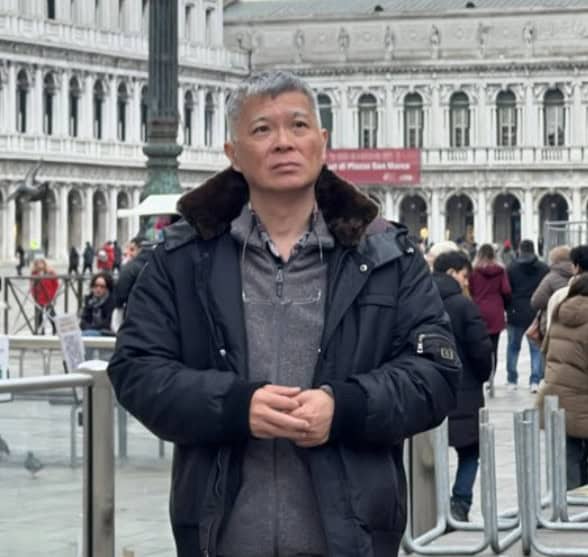
Michael Koh is a production specialist and entrepreneur who founded Spring Forest Studio in 2017 to provide event and virtual production solutions in Singapore. He specialises in hybrid live streaming, XR (Extended Reality) virtual production, and studio systems integration, transitioning the business from traditional videography to advanced corporate broadcasting. Operating out of a dedicated facility at NordCom2 in Singapore, he leads a technical crew to deliver multi-camera webcasts, digital sets, and technical consultations for large-scale corporate events.