
Extended reality, commonly abbreviated as XR, has moved from experimental stagecraft into a repeatable production method for corporate events, executive broadcasts, product launches, town halls, investor presentations, and hybrid conferences. For the technical director, XR is not a visual novelty. It is a systems engineering problem that combines real-time camera tracking, low-latency render pipelines, deterministic signal routing, color-managed display chains, and resilient networked control. In a B2B event streaming environment, the technical director is the person responsible for making all of those systems behave like one coherent production platform while supporting both the physical room and the remote audience.
In hybrid production, the technical director’s job becomes more demanding because XR workflows must coexist with conventional live streaming infrastructure. That means integrating SDI, HDMI 2.1, NDI, NDI|HX, SRT, RTMP, RTMPS, AES67, Dante, and sometimes ST 2110 environments into a single operational plan. It also means managing program outputs for enterprise platforms such as Microsoft Teams, Zoom, and Webex, while preserving production integrity for LED volume presentations, virtual sets, or augmented reality composites. The technical director must understand not only the creative intent, but also the timing budget, the latency chain, the failover strategy, and the practical limits of every device in the workflow.
For enterprise clients, the value of a skilled technical director in XR is simple. They reduce risk, stabilize quality, and keep the event serviceable under real-world conditions. A successful XR production depends on the technical director’s ability to align broadcast engineering discipline with the expectations of corporate communication, where reliability, brand consistency, security, and presentation clarity matter as much as visual impact.
Defining the Technical Director’s Scope in XR Production
The technical director in XR is the systems owner for the live production environment. This includes the switching architecture, graphics integration, camera control, tracking synchronization, display mapping, signal conversion, and the operational cues that keep the show on time. In a traditional studio, the technical director may focus on routing and switching. In XR, the role expands to include virtual scene coordination, real-time engine oversight, and synchronization between physical and rendered environments.
From live switcher to systems orchestrator
In practical terms, the technical director coordinates the following layers. First, the acquisition layer, which includes cameras, lenses, shading, tracking sensors, genlock, timecode, and audio sources. Second, the transport layer, where signals move through SDI, fiber, IP-based video, or a managed hybrid of all three. Third, the rendering layer, where a real-time engine such as Unreal Engine or equivalent visual system drives the virtual environment. Fourth, the display layer, which includes LED walls, confidence monitors, return feeds, and virtual camera outputs. Fifth, the distribution layer, which delivers the final program feed to on-site records, remote attendees, and enterprise collaboration platforms.
Each layer introduces its own failure modes. The technical director must map those risks in advance. For example, if the camera tracking system drifts by even a small amount, the parallax error becomes visible on an LED wall. If the renderer runs outside the production frame window, stutter appears in the composite. If the audio path is not locked to the same timing reference as the video chain, lip sync errors become obvious to remote attendees and difficult to correct in real time. The technical director is responsible for identifying these dependencies before they become audience-facing defects.
Operational ownership and cue discipline
XR productions require precise cue management. The technical director maintains show flow across rehearsals, talent moves, content playback, live camera cuts, and contingency conditions. They coordinate with the director, shader, audio engineer, playback operator, video engineer, and stage management team to ensure the virtual environment responds correctly to real-world action. In enterprise events, where presentations may include executive remarks, product demonstrations, or multilingual interpretation, the technical director also verifies that auxiliary outputs such as clean feeds, interpreters’ returns, and archival ISO recordings are consistent with the production plan.
XR Infrastructure: Signal Flow, Timing, and Format Discipline
XR workflows are unforgiving when signal integrity is weak. The technical director must specify the format chain from source to destination. That includes resolution, frame rate, color space, bit depth, scan type, and transport protocol. A common corporate XR configuration may operate at 1080p59.94 for compatibility, or 2160p29.97 or 2160p59.94 where the rendering pipeline and display infrastructure support UHD. The chosen format must be matched across cameras, switchers, converters, encoders, recorders, and streaming endpoints to prevent unnecessary format conversion and latency penalties.
Genlock, timecode, and synchronization control
Genlock remains fundamental in XR because it aligns the camera system with the rendering engine and LED processor. Without reference sync, the camera shutter and LED refresh relationship can produce scan-line artifacts, moiré, or tearing. The technical director ensures all devices receiving reference are properly terminated and that the house sync format is matched to the production frame rate. Timecode, typically delivered through LTC or via networked systems where appropriate, supports playback accuracy, multi-camera ISO alignment, and post-event editorial workflows.
For complex productions, the technical director establishes a single master clock domain wherever possible. In IP-based environments, PTP, the Precision Time Protocol defined by IEEE 1588, is often used in conjunction with SMPTE ST 2110 systems. Even when a production is not fully ST 2110, disciplined timing practices help keep capture, processing, and playout aligned. The operational goal is not simply synchronization, but predictable synchronization under load.
Camera tracking and virtual perspective management
Camera tracking is one of the most sensitive components of XR. Systems may use optical, inertial, mechanical, or hybrid tracking approaches, and each requires strict calibration. The technical director validates the tracking volume, lens metadata accuracy, lens distortion profiles, and camera pose data before talent enters the set. Any mismatch between actual lens behavior and virtual camera behavior can distort perspective and destroy the illusion of depth.
In multi-camera corporate events, the technical director must determine whether all cameras are tracked, only hero cameras are tracked, or the production will use a mixed model where only selected angles enter the XR environment. That decision affects budget, rehearsal time, and overall risk. For fast-moving executive events, many teams prefer a limited tracked camera count with carefully defined shot language, because operational simplicity often matters more than visual complexity.
Networked Video, Audio, and Control in Enterprise XR Environments
Enterprise XR productions increasingly rely on network transport, but networked systems demand strict engineering. Unlike office IT networks, live production networks are latency-sensitive and highly dependent on predictable packet delivery. The technical director must work with network engineers to define VLAN segmentation, QoS, bandwidth reserve, multicast strategy, and equipment redundancy. In facilities with NDI or NDI|HX workflows, the director must also account for network switch capability, uplink capacity, and the cumulative impact of multiple high-bitrate streams.
Choosing between SDI, NDI, SRT, and RTMP
SDI remains the most robust baseband transport for many XR venues because it is deterministic and simple to troubleshoot. 3G-SDI and 12G-SDI are commonly used where bandwidth and cable distance requirements support them. NDI provides flexible IP contribution and routing within controlled LAN environments, especially for control rooms, graphics systems, and auxiliary ingest. NDI|HX reduces bandwidth but introduces more compression and depends more heavily on decoder and encoder behavior. SRT, Secure Reliable Transport, is useful for contribution links over unmanaged or semi-managed networks because it adds packet recovery and encryption options suited to remote feeds. RTMP and RTMPS are still used for legacy streaming integrations and compatibility layers, though they are less favored for low-latency contribution in modern corporate productions.
The technical director decides which transport belongs in each segment of the chain. A clean internal XR render loop may remain entirely local and genlocked over SDI or direct GPU output, while an external executive remote speaker feed may enter the venue over SRT, then be decoded into SDI for switching. The final distribution stream may be encoded in H.264 for broad platform compatibility, or H.265 where platform and hardware support justify it. The decision is based on operational objectives, not technology fashion.
Audio architecture and intelligibility control
Audio in XR must be managed with the same discipline as video. The technical director ensures that microphones, playback sources, intercom, mix-minus feeds, remote return audio, and interpreter paths are routed without feedback loops or timing mismatches. Dante and AES67 are frequently used for scalable digital audio transport, especially in enterprise venues with multiple rooms, breakout sessions, and distributed production positions. In addition to routing, the technical director validates gain structure, headroom, and program loudness targets so that speech remains intelligible for both room attendees and remote participants.
Hybrid events often fail when audio is treated as secondary to visual design. In practice, the remote audience experiences the program primarily through audio clarity. A technical director working in XR must keep the dialogue path clean, monitor for network jitter in remote contribution, and coordinate talkback systems so that operators, talent, and stage management can communicate without bleeding into the program feed.
Rendering Pipelines, LED Volumes, and Virtual Production Control
XR environments rely on real-time rendering, and the technical director must understand the operational constraints of the render pipeline. Whether the production uses an LED wall, a projection surface, or a composited virtual set, the render engine must maintain stable frame delivery, color consistency, and GPU headroom. Corporate productions often compress rehearsal time, which means the technical director cannot depend on trial and error. The scene graph, texture load, lighting design, and camera frustum settings must be tested before live operation.
LED wall management and color pipeline alignment
LED volumes and large-format display walls introduce their own technical variables, including pixel pitch, brightness, refresh rate, scan rate, processor latency, and color calibration. The technical director validates that the camera exposure, shutter angle, wall brightness, and virtual lighting match closely enough to preserve the illusion of physical continuity. Color management is critical. The production should use a known workflow for camera shading, LUT application, and display calibration so that skin tones, corporate branding, and product colors remain consistent across camera angles and output destinations.
When multiple LED processors, graphics sources, or playback systems are involved, the technical director must confirm that the final mapping is correct and that any edge blending, panel rotation, or output scaling has been completed without introducing artifacting. If the content includes live data visuals, remote speaker windows, or animated lower-thirds, the technical director ensures those assets are tested at full resolution and in the actual display configuration.
Rehearsal strategy and shot design
Successful XR production is built on rehearsal. The technical director structures rehearsals to validate tracking, switching logic, lens data, and scene transitions in the same order they will occur live. Corporate events often include schedule compression, so the director uses a prioritized rehearsal plan. Critical shots, key executive entrances, remote speaker transitions, and sponsored content segments are rehearsed first. Secondary camera positions and decorative shots are validated after the core operational path is stable.
Shot design in XR must also account for audience perspective. A wide virtual shot may look impressive on a stage monitor, but it may not translate well to a webinar layout or a Teams distribution feed. The technical director therefore maintains separate monitoring views for the in-room audience, the program output, and any auxiliary delivery stream. This practice keeps the live experience aligned with the communication goal of the event.
Cloud, On-Premise, and Redundancy Strategies for Scalable Corporate XR
Enterprise clients increasingly ask for scalable production models that combine on-premise control with cloud-based contribution or distribution. The technical director must determine what belongs on site and what can be virtualized. For highly time-sensitive XR rendering, on-premise systems remain the standard because they provide lower and more predictable latency. Cloud services may be appropriate for remote contribution, asset distribution, archive management, transcription, analytics, and overflow distribution, but they should not be assumed to replace core real-time rendering infrastructure in a demanding live XR session.
Failover design and service continuity
Redundancy in XR is not optional. The technical director designs backup paths for power, networking, signal transport, and encoding. This may include redundant encoders, mirrored media servers, backup playback devices, spare reference generators, dual internet paths, and uninterruptible power supplies sized for the actual load. For larger corporate deployments, the technical director also specifies whether failover is hot, warm, or manual, based on budget and risk tolerance.
Operational continuity also depends on documentation. The technical director maintains routing maps, IP plans, source naming conventions, and contingency cue sheets. In the event of a failure, the team must know exactly which device owns which function and what the fallback route is. In hybrid events, this includes a defined plan for switching from a tracked XR presentation to a conventional camera-led backup program if the render system becomes unstable.
Security and enterprise governance
Corporate XR events often carry internal security requirements. Guest presenters, financial data, unreleased product visuals, and confidential leadership content may move through the workflow. The technical director works with IT and production stakeholders to ensure access control, device segmentation, password discipline, and network isolation where required. For enterprise governance, the production environment should be designed so that collaboration platforms, remote speaker endpoints, and control systems do not expose unnecessary attack surfaces. Security is not separate from production quality. A secure system is usually a more predictable system.
Practical Recommendations for Enterprise Technical Directors
Technical directors managing XR for B2B events should begin with a full systems design review that covers video format, audio transport, network topology, synchronization, display calibration, and distribution architecture. They should insist on end-to-end testing with actual show content, not placeholder media, because real presentations often expose codec stress, font issues, motion artifacts, and bandwidth constraints that synthetic tests miss. They should also preserve headroom in every part of the chain, from switcher inputs and audio buses to encoder bitrate and network capacity.
A stable enterprise XR workflow typically includes a locked frame rate, consistent reference sync, proven signal conversion hardware, clear operator roles, and a rehearsed backup path. For hybrid delivery, the final stream should be monitored separately from the in-room program feed so the remote audience experience can be evaluated independently. If the event uses Teams, Zoom, or Webex for remote presenters or audience participation, the technical director should integrate those platforms as controlled contribution sources rather than treating them as unmanaged endpoints.
Most importantly, the technical director should treat XR as an integrated production ecosystem. The visual engine, the audio path, the switching core, the network layer, and the distribution path must all be engineered as one interdependent system. When that discipline is in place, XR becomes a reliable corporate communications tool rather than an experimental feature. For enterprise event streaming, that difference determines whether the production simply looks advanced or actually performs at a professional standard under live conditions.
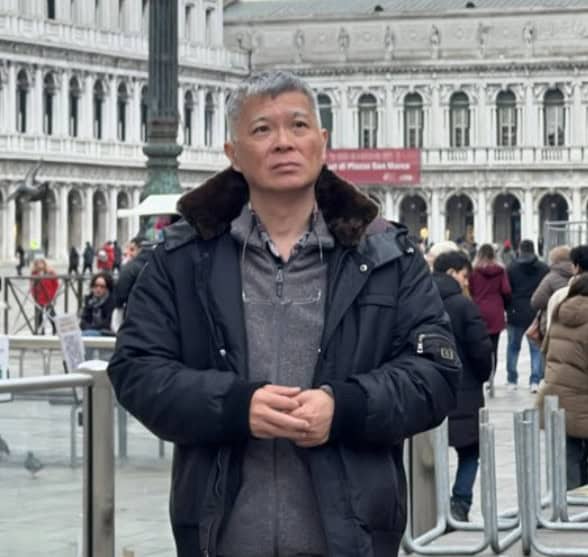
Michael Koh is a production specialist and entrepreneur who founded Spring Forest Studio in 2017 to provide event and virtual production solutions in Singapore. He specialises in hybrid live streaming, XR (Extended Reality) virtual production, and studio systems integration, transitioning the business from traditional videography to advanced corporate broadcasting. Operating out of a dedicated facility at NordCom2 in Singapore, he leads a technical crew to deliver multi-camera webcasts, digital sets, and technical consultations for large-scale corporate events.