Why Camera Tracking Matters in Enterprise Virtual Production
Seamless camera tracking is the control layer that makes a virtual environment behave like a physical stage. In B2B live event streaming, hybrid conferences, executive broadcasts, product launches, and enterprise town halls, tracking is not a visual luxury, it is a production requirement. When a camera pans, tilts, dollies, cranes, or zooms, the rendered background, keyed talent integration, augmented graphics, and composite set extensions must respond with frame-accurate motion. Any drift, latency mismatch, or calibration error breaks realism immediately, especially on large LED volumes, green screen stages, and mixed-reality broadcast sets.
For corporate events, tracking systems sit at the intersection of video engineering, network infrastructure, rendering pipelines, and streaming delivery. A stable tracking workflow must align camera metadata, lens calibration, timecode, genlock, and switcher output with the final contribution path, whether the event is delivered over RTMP, RTMPS, SRT, NDI, or a managed cloud contribution platform. In enterprise environments, the objective is not only cinematic realism, but operational resilience. That means deterministic latency, clean failover, predictable color response, and integration with existing AV-over-IP infrastructure, corporate collaboration platforms, and production control systems.
In practice, tracking accuracy affects every downstream layer. A camera pose that is even slightly delayed relative to the rendered scene can create parallax mismatch, floating edges, warped perspective lines, and perceptible disconnect between presenter and environment. For live corporate productions, particularly those involving remote executives, product visualization, financial reporting, or technical demonstrations, realism is directly tied to audience trust and message clarity.
Core Tracking Architectures for Hybrid Production
Optical, Inertial, and Hybrid Tracking Systems
Professional camera tracking systems typically rely on one of three approaches, optical tracking, inertial measurement, or hybrid fusion. Optical tracking uses external cameras, infrared markers, or feature recognition to determine camera position and orientation. Inertial systems use IMUs, or inertial measurement units, to capture motion through accelerometers and gyroscopes. Hybrid systems combine both to reduce drift and improve long-duration stability.
For enterprise production, hybrid tracking is often the most practical choice because it balances accuracy, responsiveness, and setup efficiency. Optical systems provide strong positional reference, which is useful in large studios and on stages with repeatable geometry. Inertial data provides fast rotational response and smooth motion during handheld or pedestal operation. When fused correctly, these systems can support cameras on tripods, dollies, jibs, remote heads, and robotic PTZ platforms.
Tracking selection should align with the event format. A boardroom keynote in a controlled venue may benefit from optical tracking with tight calibration. A multi-day corporate summit in a convention center often requires a more rugged hybrid design that can tolerate stage reconfiguration, temporary cabling, lighting changes, and fast reset cycles. In Singapore and other dense urban venue environments, where event spaces can be constrained and changeovers are rapid, production teams often favor modular tracking kits that can be deployed and recalibrated quickly without disrupting the show schedule.
Camera, Lens, and Metadata Alignment
Realism depends on more than position and orientation. Lens data must also be captured and synchronized. Focus distance, iris, zoom position, and lens distortion characteristics affect the rendered perspective. Broadcast-calibrated tracking workflows often include lens files that map focal length and distortion curves across the zoom range. Without this data, virtual camera movement can appear technically stable but visually wrong, especially on wide-angle shots or when the operator executes quick reframes.
To maintain accuracy, production engineers should verify lens metadata at system start, after any lens swap, and whenever the zoom range changes materially. A common failure mode in hybrid events is inconsistent lens calibration between rehearsal and live show. The rendered set may look aligned during scene lock, then drift once the operator changes framing for a speaker change or panel discussion. The remedy is disciplined camera shading, consistent lens file versioning, and documented camera presets tied to the show rundown.
Synchronizing Tracking with Video, Audio, and Control Infrastructure
Timecode, Genlock, and Frame-Accurate Systems Design
Camera tracking only works correctly when the video chain is synchronized. Genlock is the reference signal that keeps cameras, switchers, graphics engines, and render servers locked to a common timing source. Timecode provides event-level temporal alignment for recording, replay, and post-event archive. In a live hybrid production, the tracking engine, rendering platform, and video mixer should all operate on a shared sync domain to minimize phase error and motion discontinuity.
For corporate applications, especially those using multiple cameras and simultaneous ISO recording, the production topology should include a master sync generator feeding the camera chain, switcher, graphics system, and replay infrastructure. If remote contribution is involved, SRT and RTMP can carry program feeds and remote guest returns, but the upstream camera tracking path must remain synchronized locally before encoding. Once compression is introduced, latency increases and cannot be allowed to influence the camera pose interpolation path.
Audio synchronization is equally important. If virtual environment motion is aligned to the camera but presenter audio or comms are late, the overall experience still feels disconnected. Talkback systems, IFB feeds, and program audio should be managed through the same production clocking strategy as video. In large enterprise shows, intercom latency and production comms routing should be tested alongside camera movement cues and graphics triggers.
Signal Flow, Routing, and Production Switching
A professional tracking workflow typically begins with the camera output over SDI, HDMI 2.1 for shorter high-bandwidth paths, or IP-based transport such as NDI or NDI|HX, depending on the facility architecture. The camera tracking data, often carried as Ethernet or serial metadata, is ingested by a tracking interface or render controller. The switcher or vision mixer then receives the camera feed while the render engine receives the pose data in parallel.
In mixed environments, a video router, SDI matrix, or IP fabric distributes signals to the switcher, multiview monitoring, recording, and distribution encoders. Production engineers should preserve a clean separation between the contribution path and the monitoring path. Multiview latency is acceptable for operator awareness, but the tracked program feed requires the most stable, lowest-latency path available. For complex events, ISO recording of every camera source and the program output supports post-event review, compliance workflows, and content repurposing.
Network and Encoding Requirements for Virtual Realism
Bandwidth Planning and Protocol Selection
Hybrid productions depend on a predictable network layer. Camera tracking data itself is relatively lightweight, but the associated video, control, and return feeds can be bandwidth intensive. Uncompressed or lightly compressed contribution over IP can require substantial throughput, particularly when moving 1080p60 or 2160p30 signals across a facility. NDI is widely used for IP video transport inside controlled networks, while NDI|HX reduces bandwidth at the cost of compression latency. For contribution across public internet links or less controlled circuits, SRT is preferred for resilient transmission because it includes packet loss recovery and adaptive jitter handling.
RTMP and RTMPS remain common for platform distribution and legacy integration, but they are not ideal as the primary low-latency transport for tracking-critical production paths. When the objective is live realism in a virtual environment, the tracking and render pipeline must remain local or on a highly controlled private network. Any remote distribution layer should be treated as the final output stage, not the motion-synthesis stage.
Enterprise teams should size network capacity based on the full event stack. A multi-camera hybrid event with render servers, backup encoders, collaboration platform returns, and remote speaker ingest can quickly consume switch capacity and uplink headroom. Managed VLANs, QoS policies, and dedicated production subnets help isolate tracking traffic from corporate office traffic, guest Wi-Fi, and non-production services. In mission-critical events, dual WAN circuits, bonded uplinks, and separate contribution paths provide the resilience expected by enterprise stakeholders.
Encoding, Bitrate, and Latency Management
Encoder selection affects how smoothly the virtual environment is perceived by both in-room and remote audiences. H.264 remains widely deployed for compatibility, while H.265, also known as HEVC, can improve compression efficiency at higher resolutions when hardware support is available. For hybrid corporate events, 1080p30 or 1080p60 remains a practical operating point for many distribution workflows, while 2160p delivery is reserved for venues, displays, and encoders that can sustain the added bitrate and processing load.
Latency management requires a balanced approach. Lower latency improves responsiveness for presenter interaction and virtual camera movement, but aggressive latency reduction can destabilize network resilience, particularly on congested links. Production teams should define acceptable end-to-end latency targets based on the use case. Internal control room monitoring can tolerate more delay than the stage-facing confidence feed. Remote guest returns via Teams, Zoom, or Webex need their own audio and video buffering strategy so that conversational turn-taking remains natural even when the main program is tracking-enabled and locally rendered.
Virtual Environment Realism and Rendering Discipline
Parallax, Perspective, and Scene Scale
The visual realism of a virtual environment depends on accurate spatial behavior. Parallax, the apparent change in object position relative to the background as the camera moves, must match physical camera motion exactly. If the virtual set scale is incorrect, a small physical pan can produce exaggerated background motion. If the horizon line is misaligned, the audience subconsciously detects the mismatch even when the image appears clean.
Production teams should validate scene scale against known stage dimensions, marker positions, and sightline geometry. In a corporate keynote with a tracked presenter camera, the set walls, floor plane, and background elements should be modeled to the correct proportions. Lighting design also matters. Virtual shadows, reflections, and emissive elements must follow the same directionality and intensity logic as the physical lighting plot. A realistic hybrid production is the result of coordinated camera, lighting, and rendering departments, not isolated system tuning.
Color, Keying, and Edge Integrity
Even when tracking is precise, poor keying can undermine realism. Chroma key performance depends on illumination uniformity, subject separation, camera exposure, and codec quality. For enterprise stages, the floor wash, spill control, and backlight ratio should be designed to support stable matte extraction. If the camera feed is overly compressed or the bandwidth is constrained, fine edge detail degrades and keyed subjects begin to shimmer against the rendered background.
Color management should be standardized across the entire chain. Cameras, switchers, render engines, and confidence displays should be profiled to maintain consistent white balance, gamma response, and luminance mapping. This is especially important in corporate environments where branded colors, product surfaces, and presentation slides must remain visually accurate across both physical and virtual layers.
Deployment Models, Redundancy, and Operational Best Practices
On-Premise Versus Cloud-Enhanced Production
On-premise production remains the most reliable model for tracking-dependent realism because it keeps the camera pose engine, render server, and baseband or IP video path inside the same low-latency environment. This is the preferred architecture for high-stakes corporate events, annual general meetings, executive announcements, and product showcases where uptime and visual consistency matter more than geographic flexibility.
Cloud-enhanced workflows can be effective for graphics rendering, archive workflows, remote collaboration, and distribution scaling, but they should not introduce unstable dependency into the primary tracking loop. If cloud rendering is used, latency budgeting becomes critical. The tracking feed, render response, and encoded output must be measured end to end before show day, not assumed. Many enterprise teams adopt a hybrid model, local tracking and video switching on site, with cloud-based monitoring, remote production support, or backup distribution paths.
Redundancy, Failover, and Show Control
Enterprise-grade reliability requires redundancy at every critical point. Tracking sensors should have calibration backups. Render nodes should be mirrored or hot-standby capable. Switcher outputs should be duplicated to recorder, confidence monitor, and distribution encoder paths. Network paths should have alternate uplinks where the event scale justifies it. Power should be conditioned through UPS systems and, for larger venues, coordinated with facility-grade backup power.
Show control should include documented fallbacks for tracking loss. A well-designed virtual production can degrade gracefully to a clean non-tracked camera shot, a static branded background, or a simpler graphics layer without interrupting the live program. Operators should rehearse these transitions as part of the run-of-show. In large corporate events, the ability to preserve continuity is often more valuable than preserving every advanced visual effect if a subsystem encounters a fault.
Practical Implementation Guidance for Enterprise Clients
For enterprise event planners, AV teams, production managers, and IT directors, the most effective way to deploy seamless camera tracking is to treat it as an integrated systems project. Start with the venue survey, camera positions, rigging constraints, cable paths, and network topology. Define the required resolutions, frame rates, codec profiles, and delivery endpoints early. Verify whether the event needs local IMAG, virtual set extension, remote presenter integration, or all three. Then map the signal flow from camera capture to switcher, tracking engine, render server, encoder, distribution platform, and monitoring endpoints.
Before the live event, perform a full rehearsal that includes motion calibration, lens metadata validation, sync verification, latency checks, encoder stress testing, and failover drills. Confirm that Teams, Zoom, or Webex integration does not compromise the primary production chain. Measure network throughput, packet loss, and jitter under realistic load. If the event is in Singapore or another high-density commercial venue, coordinate early with building services, internet provision, and venue IT to ensure the required circuits, wireless exclusions, and equipment access windows are in place.
For high-value corporate productions, the best practice is to standardize the workflow around documented engineering principles, not ad hoc troubleshooting. Use SMPTE-aligned timing practices, controlled signal routing, disciplined color management, and production-grade monitoring. Select tracking technology based on venue geometry, operator movement, and required realism, not on marketing claims. When these elements are engineered correctly, camera tracking becomes invisible to the audience, which is the clearest sign that the virtual environment is being rendered with professional precision.
Seamless camera tracking is ultimately a systems discipline. It combines mechanical precision, network engineering, broadcast timing, and visual design to create a believable environment for remote and in-room audiences. In hybrid corporate production, that realism directly supports executive communication, brand credibility, and audience engagement. The production teams that succeed are the ones that treat tracking as part of a larger enterprise streaming architecture, with the same rigor applied to redundancy, protocol design, audio coherence, and show control.
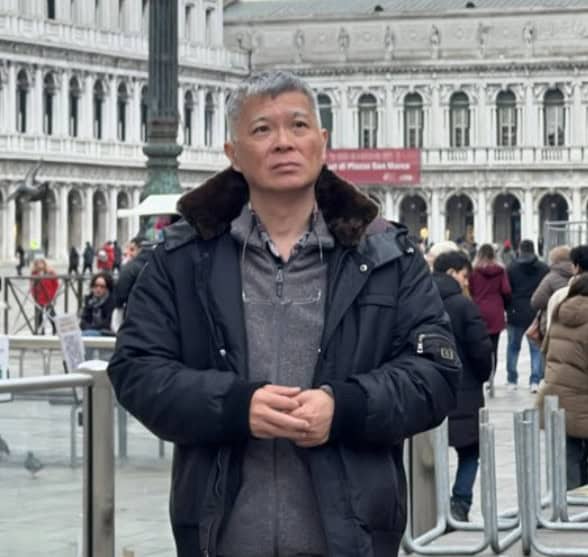
Michael Koh is a production specialist and entrepreneur who founded Spring Forest Studio in 2017 to provide event and virtual production solutions in Singapore. He specialises in hybrid live streaming, XR (Extended Reality) virtual production, and studio systems integration, transitioning the business from traditional videography to advanced corporate broadcasting. Operating out of a dedicated facility at NordCom2 in Singapore, he leads a technical crew to deliver multi-camera webcasts, digital sets, and technical consultations for large-scale corporate events.