
Scaling Your Reach: How Hybrid Formats Double Your Singaporean Audience
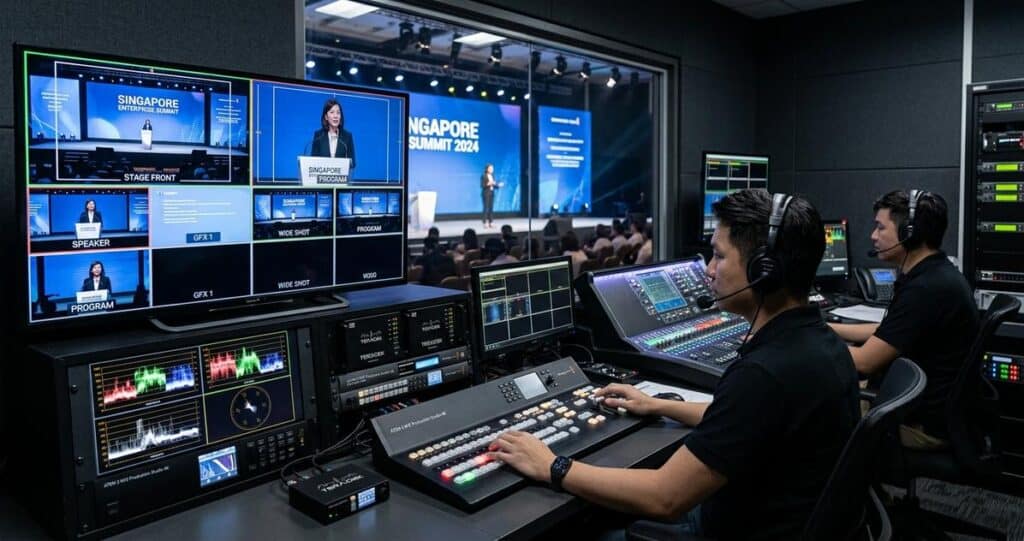
Singapore has become one of the most demanding environments for professional live event production. Corporate audiences expect broadcast-grade picture quality, intelligible audio, low-latency access, and seamless interaction across physical venues and remote platforms. For enterprise planners, AV teams, production managers, and IT directors, the technical question is no longer whether an event should be hybrid, […]
The Hybrid Tech Stack: Essential Hardware for Singaporean Conferences
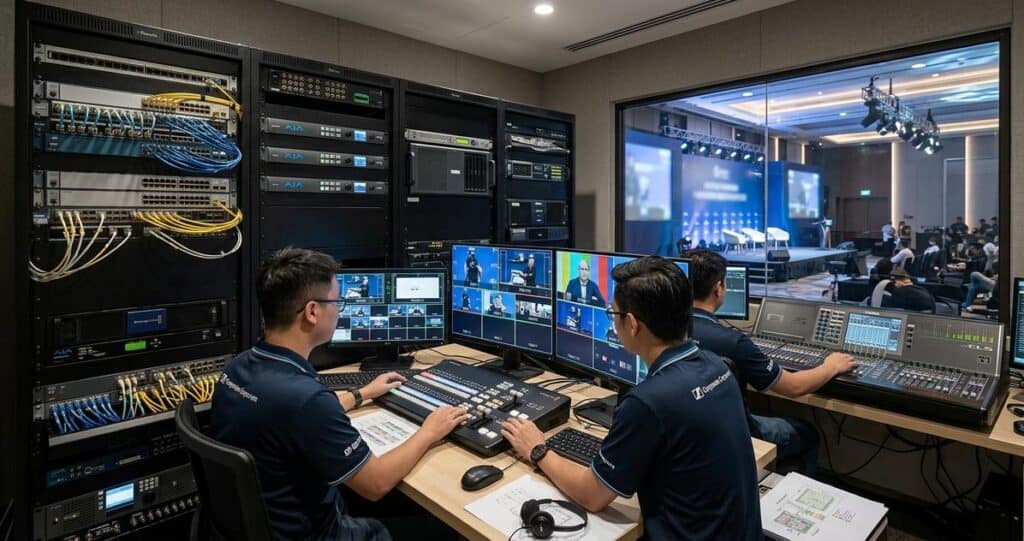
Singapore has become one of Asia’s most demanding conference environments for live production teams. The city-state hosts executive summits, regional sales kickoffs, investor briefings, medical congresses, technology launches, and government-facing forums that increasingly require a hybrid delivery model. That means one production system must serve a physical audience in the room, remote attendees on enterprise […]
Maximising Sponsorship ROI in Hybrid Event Formats
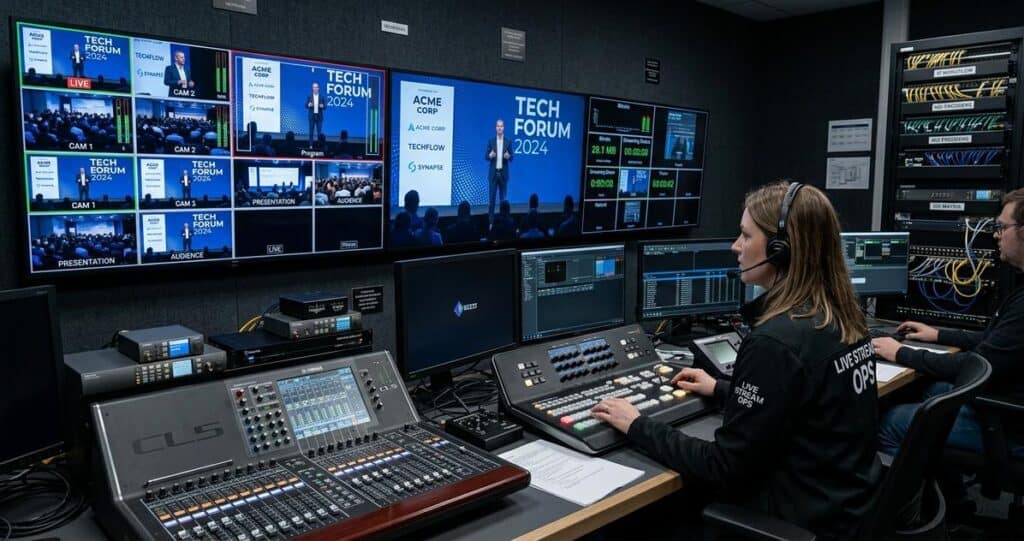
Hybrid event sponsorship has moved far beyond logo placement on a lower-third or a slide deck footer. For enterprise event planners, AV engineers, production managers, and IT directors, sponsorship ROI now depends on how effectively the event production stack converts physical and virtual attention into measurable engagement, qualified leads, brand recall, and post-event pipeline activity. […]
Maximising Studio Space: The Versatility of Virtual Set Design
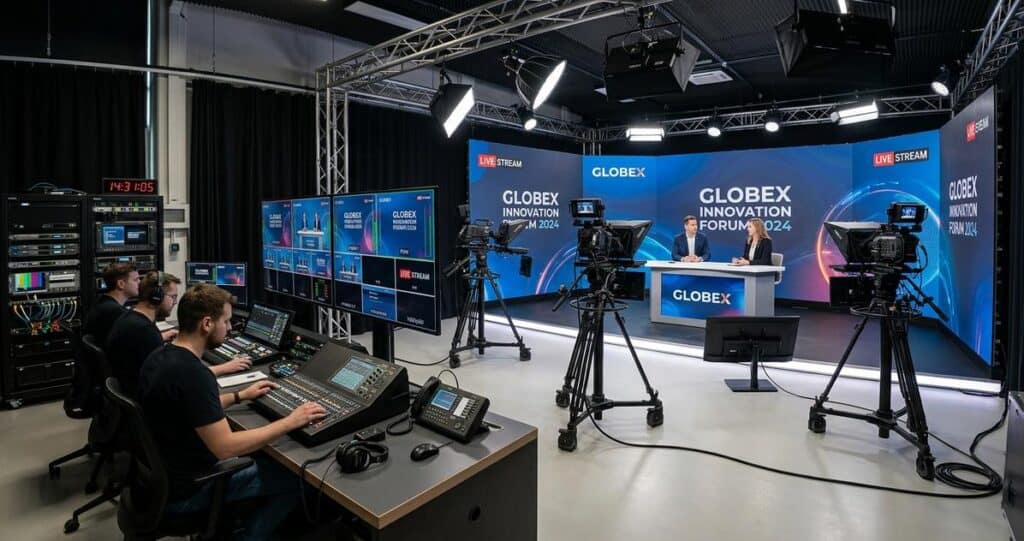
Why Virtual Set Design Matters in B2B Live Production For corporate events, executive broadcasts, investor updates, product launches, training sessions, and hybrid conferences, studio space is no longer defined only by physical square footage. It is defined by how efficiently the environment can be reconfigured for different formats, camera blocking requirements, brand identities, and audience […]
Seamless Camera Tracking: Ensuring Realism in Virtual Environments
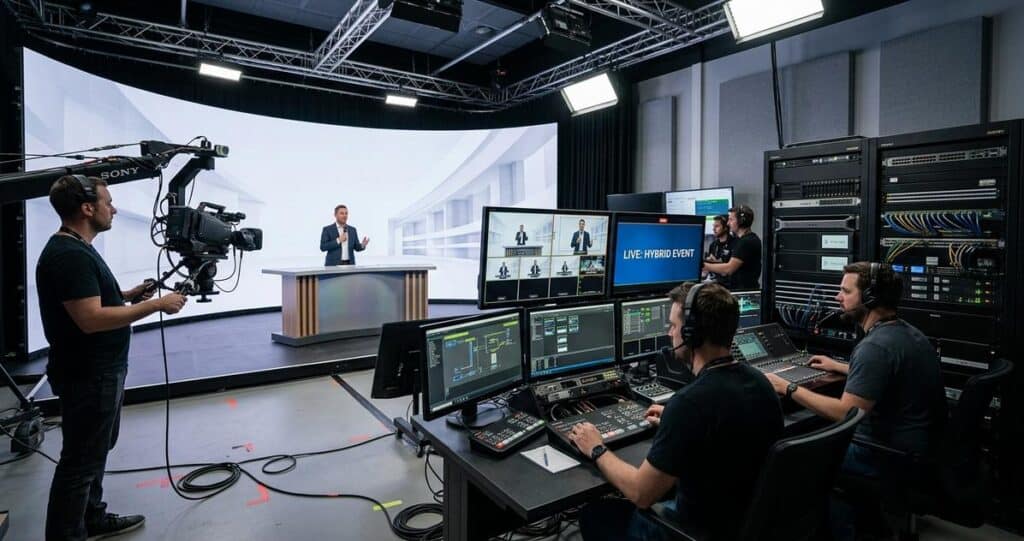
Why Camera Tracking Matters in Enterprise Virtual Production Seamless camera tracking is the control layer that makes a virtual environment behave like a physical stage. In B2B live event streaming, hybrid conferences, executive broadcasts, product launches, and enterprise town halls, tracking is not a visual luxury, it is a production requirement. When a camera pans, […]
XR Training Simulators: Streaming High-Risk Scenarios for Industry
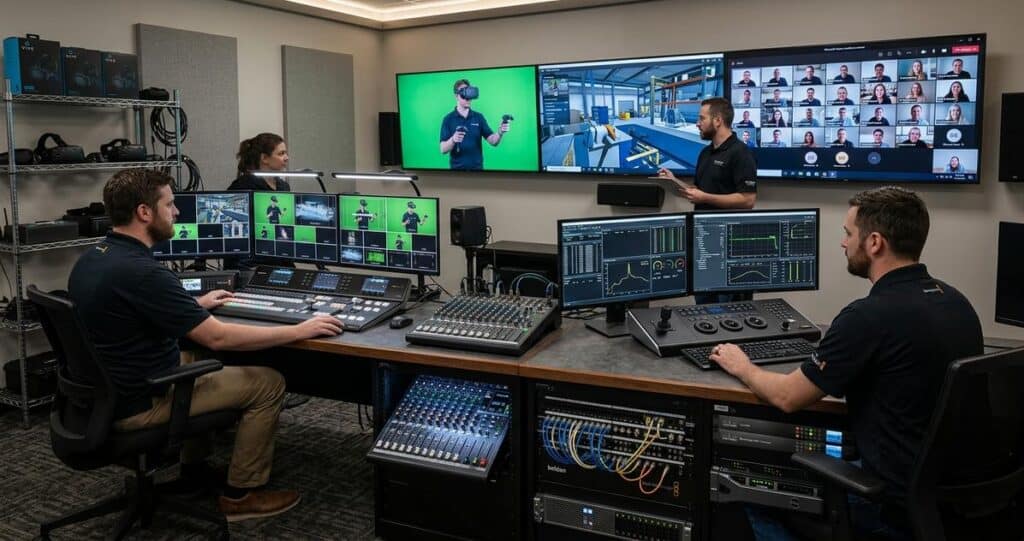
Extended reality, or XR, training simulators have become a serious operational tool for industries where procedural accuracy, environmental awareness, and controlled repetition are critical. In sectors such as energy, manufacturing, logistics, aviation support, emergency response, maritime operations, and heavy equipment handling, the ability to rehearse high-risk scenarios without exposing personnel or assets to live danger […]
The Scalability of Virtual Production: From Small SMEs to Global MNCs
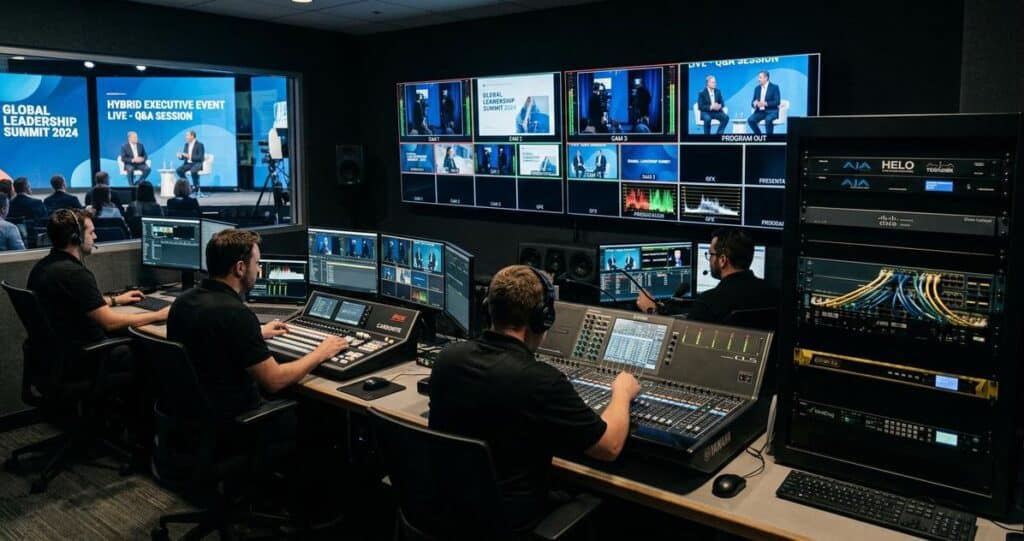
Virtual production has moved from a niche capability into a core enterprise communication infrastructure for organizations that depend on high-quality live event delivery, hybrid collaboration, and distributed audience engagement. For small and medium-sized enterprises, the challenge is usually to create a professional broadcast-style experience with limited staff, controlled budget, and minimal operational risk. For multinational […]
Real-Time Physics in XR: Adding Realism to Virtual Product Demos
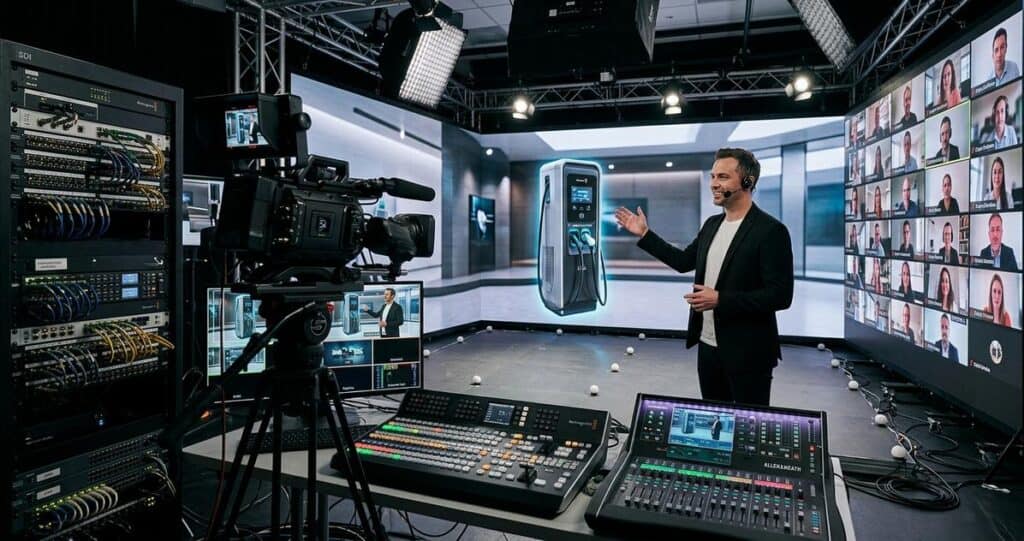
Why Real-Time Physics Matters in Enterprise XR Product Demos Real-time physics is becoming a core production requirement for enterprise XR, because virtual product demonstrations must behave like engineering tools, not like static visual mockups. In B2B environments, buyers, field engineers, procurement teams, and executive stakeholders expect an accurate representation of motion, mass, collision, constraint behavior, […]
The Virtual Gala: Bringing Elegance to Digital Events via XR
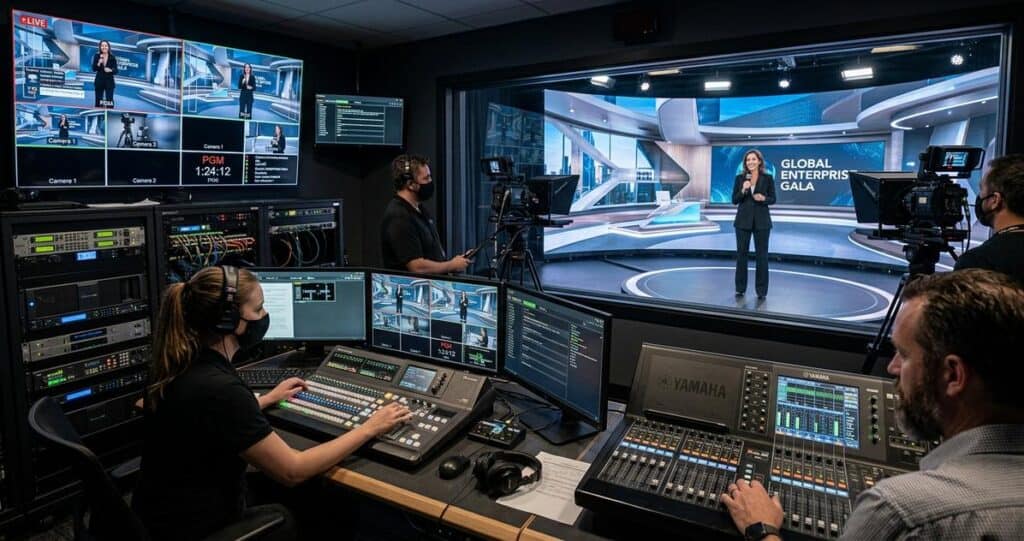
A virtual gala built with extended reality, or XR, is no longer a novelty format for corporate fundraising, executive briefings, product launches, and brand celebration events. In the enterprise streaming environment, XR enables a hybrid production language that combines live camera acquisition, real-time graphics compositing, virtual environments, and low-latency distribution into a single broadcast-grade workflow. […]
The Future of Singaporean Trade Shows: Virtual 3D Pavilions
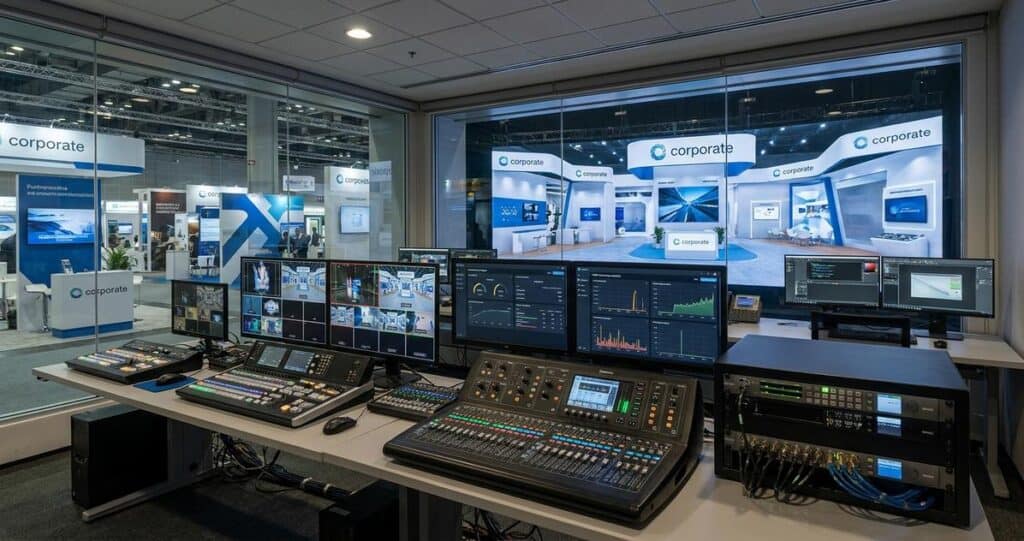
Singapore’s trade show sector is entering a new production model where the exhibition floor is no longer defined only by physical booth architecture, but by a tightly engineered hybrid environment that combines in-person attendance, remote participation, and persistent virtual 3D pavilions. For enterprise organizers, this shift is not a design trend. It is a systems […]
Real-Time Environment Switching: Managing Multi-Topic Events in One Studio
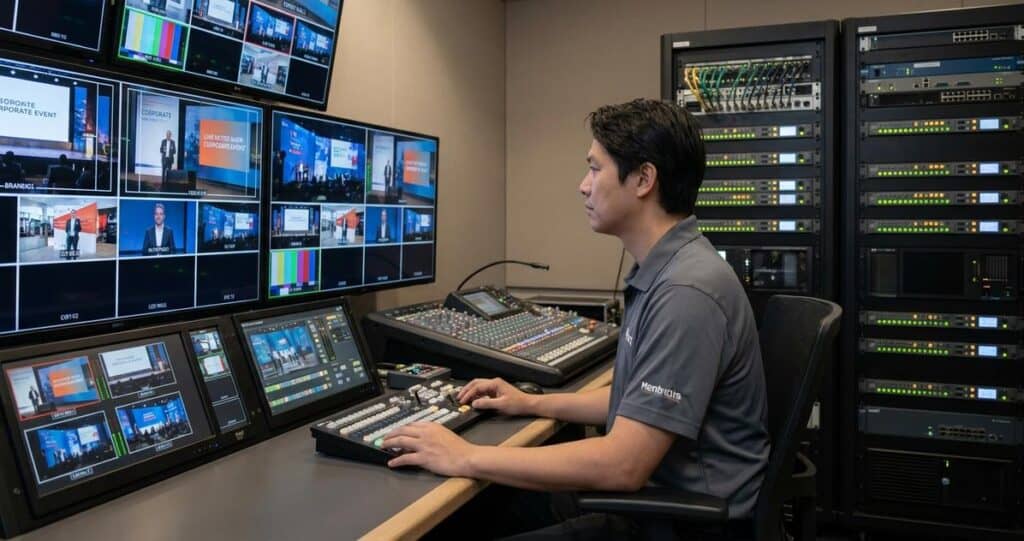
Why Real-Time Environment Switching Matters in Enterprise Event Production Corporate events increasingly demand studio environments that can pivot between multiple topics, formats, and presentation styles without breaking the technical chain of custody for video, audio, and interactivity. A single executive broadcast might begin with a keynote in a polished branded set, move into a panel […]